Axolotl — Chimera
Ambystoma mexicanum
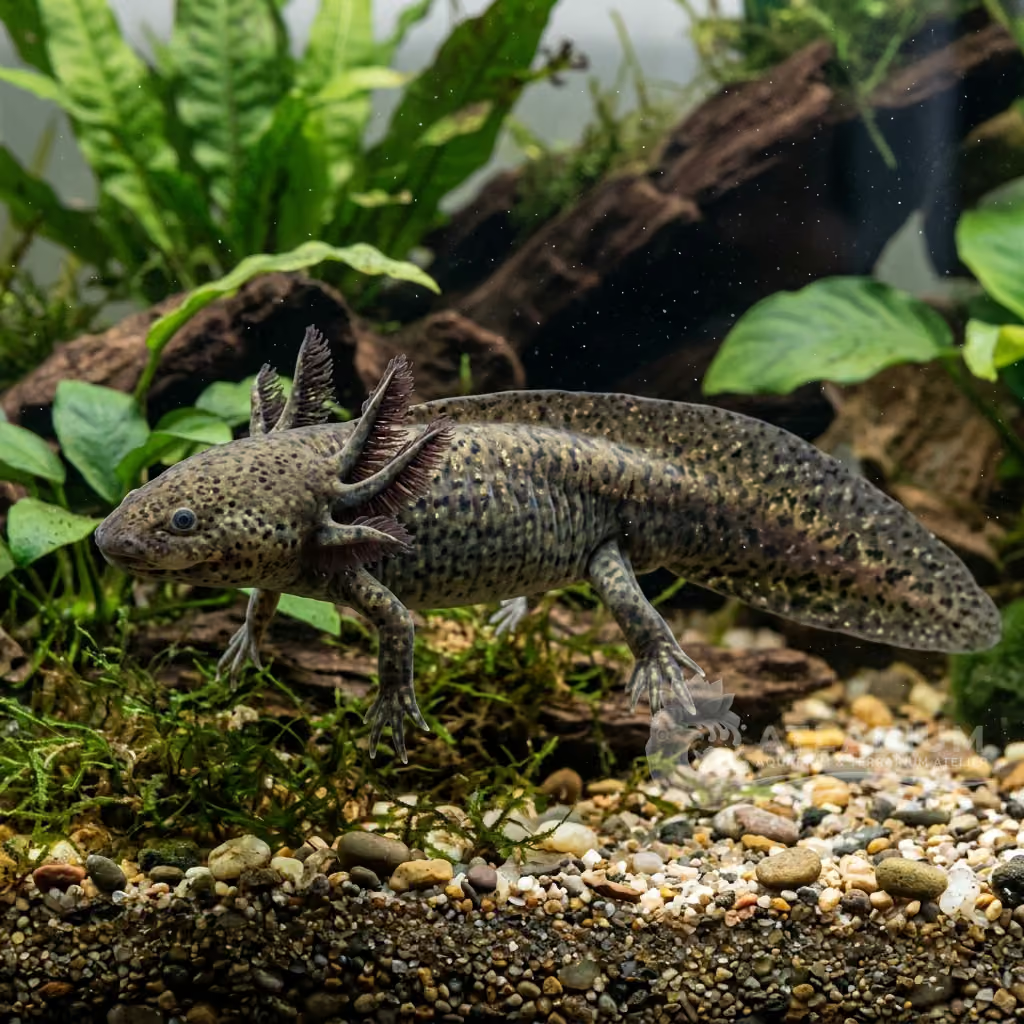
A rare genetic chimera morph, showing a split coloration down the middle of the body, usually half leucistic and half wild-type.
Environnement
Terrestre
Humidité
100 %
Température diurne
14 - 20 °C
Température nocturne
14 - 20 °C

Description de l'espèce
Geographical Origin and Habitat: Originally endemic to the high-altitude lake system of the Valley of Mexico (Lake Xochimilco and Lake Chalco). They are critically endangered in the wild. They inhabit the cold, dark bottoms of lakes, sheltered by aquatic plants and root systems.
Taxonomy and Genetics: Family Ambystomatidae. Commonly known as the Axolotl. It is a neotenic salamander, meaning it reaches sexual maturity without undergoing metamorphosis, retaining larval characteristics such as external gills and a tail fin.
Behavior and Habits: Quiet, sedentary, bottom-dwelling animal. They move slowly along the substrate but can swim rapidly using tail movements when startled. They possess a powerful suction feeding mechanism and will consume any moving prey that fits in their mouth.
Morphology: Flattened head with a wide mouth and lidless eyes. Features three pairs of external gills with vascularized filaments. The Chimera morph is a rare developmental anomaly resulting in a split coloration down the center of the body (typically half wild-type and half leucistic).

Soins, reproduction et cohabitation
Terrarium Setup: Strictly aquatic. Requires a large aquarium (minimum 80-100 cm in length). Maintain very low water flow using a spray bar to avoid stress. Use fine sand or leave the bottom bare; never use small gravel, as it can be ingested and cause fatal impaction.
Lighting and Heating: Keep water cold, strictly below 20°C. Temperatures above 24°C cause severe stress and fungal infections. Chillers are mandatory in warm climates. Provide dim, shaded lighting using floating plants.
Humidity and Hydration: Aquatic species. Requires clean, hard, and well-oxygenated water. Perform large weekly water changes and siphon organic waste. Always use a high-quality water dechlorinator; reverse osmosis water should be remineralized.
Feeding and Supplementation: Carnivorous. Feed earthworms, blackworms, or high-quality sinking salmon pellets. Do not feed mammalian or avian meat (like beef heart) as they cannot digest it properly.
Compatibility: Must be kept in a species-only tank, or only with individuals of the exact same size. Larger individuals will bite limbs or gills off smaller ones. Do not house with sucker-mouth fish (like Plecostomus), which graze on the axolotl's skin.
Health and Common Diseases: Prone to fungal infections (Saprolegnia) if temperatures rise. Extremely sensitive to heavy metals (copper, iron) in tap water. Possesses remarkable regenerative abilities, able to regrow lost limbs and organs.

Origine et répartition géographiques
Originally endemic to the high-altitude lake system of the Valley of Mexico (Lake Xochimilco and Lake Chalco). They are critically endangered in the wild. They inhabit the cold, dark bottoms of lakes, sheltered by aquatic plants and root systems.
Origine
Sélection et cultivarsAmérique centrale et CaraïbesAmérique du NordEurope, Méditerranée et Asie occidentaleAsie de l'EstCosmopolite ou introduit

Profil d'amphibien
- Régime alimentaire
- Carnivore
- The Chimera Axolotl is a strictly carnivorous amphibian with a diet primarily consisting of aquatic invertebrates and soft-bodied prey. In captivity, high-quality sinking carnivore pellets or specialized axolotl pellets should form the core of their diet. Live foods such as earthworms, blackworms, and bloodworms are excellent staples or treats and stimulate their natural hunting instincts. Feeder fish can be offered occasionally but must be quarantined to prevent the introduction of parasites or diseases. It is essential to remove uneaten food promptly to maintain pristine water quality, which is critical for their health.
- Espérance de vie
- 10-15 years
- Taille adulte
- 25 cm
- Mode de vie/microhabitat
- Aquatic
- As fully aquatic amphibians, the Chimera Axolotl requires an aquarium with excellent filtration and carefully monitored water parameters. They thrive in cool water, ideally between 60°F and 64°F (15°C - 18°C), and temperatures above 70°F (21°C) can cause severe stress and illness. Their habitat should include a fine sand substrate or large, smooth stones that cannot be accidentally swallowed, as they are prone to impaction from gravel. Strong water flow can stress them and damage their delicate external gills, so gentle filtration is necessary. Regular water changes and siphon cleaning of the substrate are vital to prevent ammonia spikes.
- Cycle d'activité
- Nocturnal
- Axolotls do not have a strictly defined diurnal or nocturnal activity pattern, often showing activity sporadically throughout the day and night. The Chimera Axolotl tends to be slightly more active in lower light conditions, as their lack of eyelids makes them sensitive to bright lighting. Providing shaded areas with plants, caves, or PVC pipes is essential for them to retreat from intense light. They will frequently explore their tank by walking along the bottom rather than swimming freely, saving bursts of swimming for hunting or escaping perceived threats. Maintaining a consistent day-night cycle helps simulate a natural environment.
- Sociabilité
- Solitary
- The Chimera Axolotl is a generally peaceful but opportunistic bottom-dweller. They are not highly active, often spending long periods resting on the substrate or hovering in the water column. They lack true teeth and instead use a sudden vacuum-like suction to draw prey into their wide mouths. Because of their poor eyesight, they rely heavily on their sense of smell and the lateral line system to detect movement and food. They can be prone to nipping at the gills or limbs of tank mates, so housing them with similarly sized axolotls is crucial, and mixing them with other species is strongly discouraged.
- Reproduction
- Oviparous
- Breeding the Chimera Axolotl is relatively straightforward if appropriate temperature cues are provided. A sudden drop in water temperature, often achieved by doing a cool water change, usually triggers courtship behaviors. The male will deposit small packets of sperm called spermatophores on the tank floor, which the female then picks up to fertilize her eggs internally. Shortly after, the female will lay anywhere from 100 to over 1,000 eggs, carefully attaching them individually to aquatic plants or decor. The eggs hatch in about two weeks, and the tiny larvae require microscopic live foods like brine shrimp nauplii or daphnia immediately.
- Toxicité
- Harmless
- The Chimera Axolotl is entirely non-toxic and lacks any venomous capabilities. They are completely safe for humans to keep as pets. However, axolotls are extremely sensitive to chemicals, heavy metals, and toxins in their environment. Tap water must always be thoroughly conditioned to remove chlorine and chloramines before being introduced to their tank. Lotions, soaps, or oils on human skin can be highly detrimental to their permeable skin, underscoring the importance of washing hands thoroughly or using gloves if hands must enter the water.
- Stade de vie
- Neotenic
- Axolotls are famous for exhibiting neoteny, meaning the Chimera Axolotl reaches sexual maturity without ever undergoing metamorphosis into a terrestrial adult. They retain their larval features, such as external gills and a finned tail, for their entire lives. With proper care and optimal water conditions, they can live for 10 to 15 years in captivity. While they technically remain in a larval physical state, they transition from fragile juveniles that require daily feeding to robust adults that need feeding only a few times a week. Very rarely, severe environmental stress or iodine treatments can trigger metamorphosis, but this drastically shortens their lifespan and should never be attempted.
- Tolérance aux manipulations
- Display only
- The Chimera Axolotl should almost never be handled outside of the water, as their bodies have zero structural support for a terrestrial environment. Their skin and slime coat are incredibly fragile and can easily be damaged by human hands, leading to serious bacterial or fungal infections. If an axolotl must be moved, it is best done using a soft, fine-mesh net or by gently coaxing them into a submerged container. Any contact with the hands should be done only after thoroughly rinsing off all soaps and with completely wet hands. Respecting their aquatic nature and keeping hands out of the tank as much as possible is key to their health.
- Brumation
- Non requise
- Axolotls do not brumate in the traditional sense, but they are cold-water animals that naturally experience seasonal temperature fluctuations. The Chimera Axolotl can tolerate temperatures down to the low 50s Fahrenheit (10-12°C), during which their metabolism will significantly slow down. In captivity, maintaining a stable, cool temperature year-round is generally preferred to avoid the stress of temperature swings. 'Fridging'—temporarily placing an axolotl in a refrigerator—is a common and effective emergency treatment to slow down their metabolism and immune response during severe illness or impaction, but it is a medical intervention, not a natural brumation cycle.
- Mue
- Yes
- A scientific review documents routine outer-skin renewal (sloughing) in amphibians and notes that the shed skin is often eaten, but it does not establish a fixed species-specific interval for Ambystoma mexicanum. The scalar is therefore “Yes”, not “Regular”. Repeated conspicuous peeling, a damaged mucus layer or abnormal behaviour should not be dismissed as normal sloughing and warrants an immediate water-quality check and, when persistent, veterinary assessment.

Espèces associées
Recommandations regroupées par proches parents, compagnons et soins similaires.