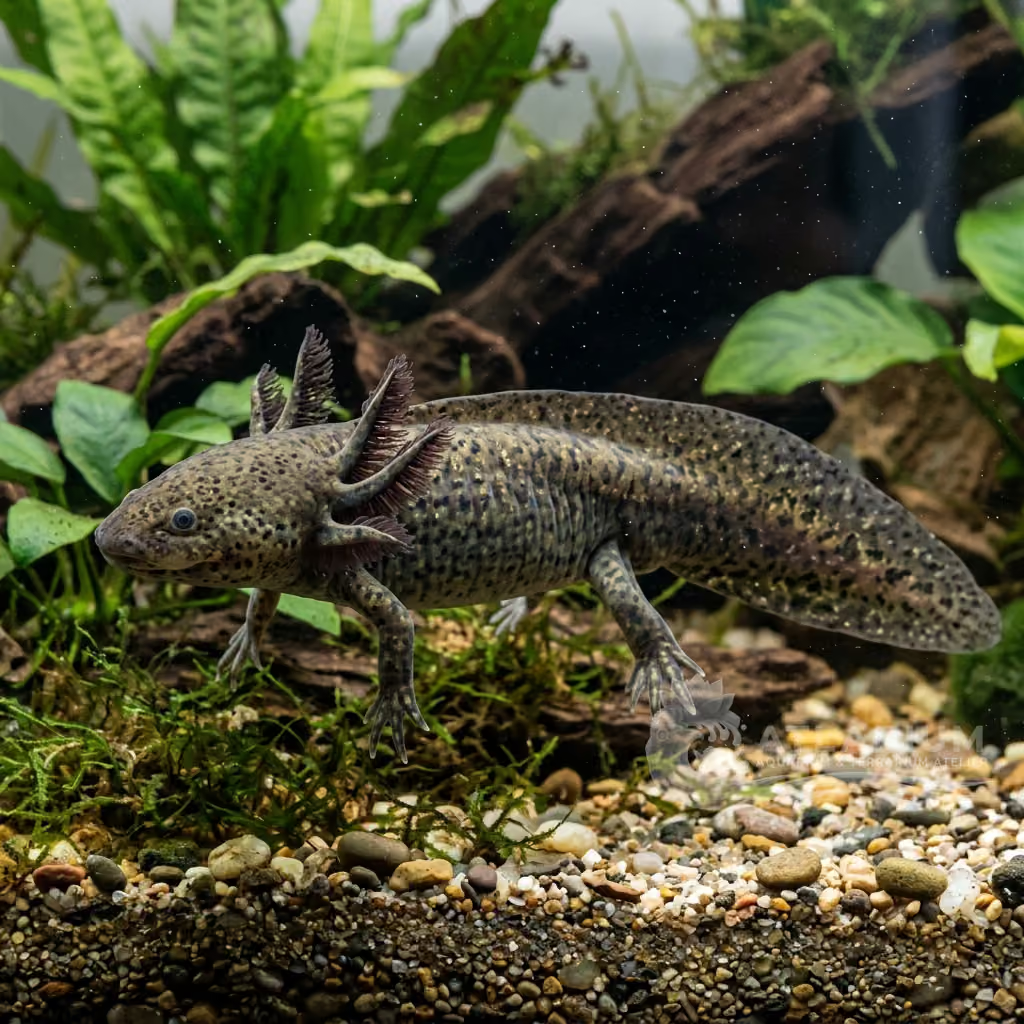
Barred Tiger Salamander
Ambystoma mavortium
The Barred Tiger Salamander is a breathtaking Western subspecies that displays highly defined, stark yellow and black vertical barring. It is a robust, terrestrial burrower that appreciates deep soil.
Environnement
Terrestre
Humidité
50 - 70 %
Température diurne
18 - 22 °C
Température nocturne
12 - 15 °C
Température ambiante
18 - 22 °C
Enclos minimal
>= 45 L

Description de l'espèce
Nota Morph/Variante: The western subspecies of the tiger salamander. Noticeably flashier, exhibiting stark, highly defined yellow and black vertical barring like a tiger.
Geographical Origin and Habitat: Extremely adaptable amphibians, populating deciduous forests, damp grasslands, and agricultural fields from Canada down to Mexico. They are fossorial (burrowing) creatures: they avoid the sun and dehydration by living buried in muddy soil, emerging only at night, after heavy rains, or to migrate seasonally towards ephemeral ponds where they breed.
Taxonomy and Genetics: Ambystomatidae family (the 'Mole Salamanders'). They are close cousins to the famous Mexican Axolotl, but unlike the axolotl (which remains fully aquatic its entire life in larval form via neoteny), the Tiger Salamander undergoes full metamorphosis, losing its gills and emerging onto land for its lunged adult phase.
Behavior and Habits: Placid 'mud submarines'. They spend 90% of their lives safely underground. When they surface, however, they are driven by a legendary voracity: they chase prey with slow, clumsy movements, gaping an oversized mouth to swallow entire insects, worms, or even other small amphibians. They quickly learn to associate their owner with food, confidently waddling out to beg for worms.
Morphology: It is the largest terrestrial salamander in North America, nearing 12-14 inches (30-35 cm) in length and displaying a thick, cylindrical, sausage-like build. The livery is unmistakable and beautiful: a velvety black or olive-blue base, splashed with bright yellow-cream bands, spots, or stripes (hence 'Tiger'). Very wet skin. Slight dimorphism: males have slightly flatter tails at the base and a very swollen cloaca during the breeding season.

Soins, reproduction et cohabitation
Terrarium Setup: A very large faunabox or a horizontal glass terrarium (minimum 36x18x18 inches) is perfect. Aerial decor is USELESS (they do not climb). The single vital requirement is DIGGING CAPACITY: they need 6-8 inches (15-20 cm) of organic substrate composed of coco coir, sphagnum moss, and clean topsoil, kept soft to allow them to bury themselves comfortably. Add large hides (cork half-logs) and decaying oak leaves on the surface.
Lighting and Heating: They shine in COLD temperatures. The ideal room is a basement or a cool room: daytime temperature 64-72°F (18-22°C) (absolutely never exceeding 77°F / 25°C, which causes fatal stress). At night they can comfortably drop to 55-60°F (12-15°C) without blinking an eye. They do not need UVB, nor heating lamps (a heat mat should only be used if living in a freezer).
Humidity and Hydration: Constant humidity of 70-80%. The deep soil MUST be perpetually damp to the touch, but never soaking wet or waterlogged (squeezing it in your hand should not drip mud). Salamander respiration occurs largely through the skin (cutaneous respiration), which must remain wet to exchange gases. Mandatory water bowl: must be huge but very shallow (they swim poorly and can drown) where they love to soak for hours.
Feeding and Supplementation: Bottomless pits. Opportunistic carnivores. The diet of choice is giant Canadian nightcrawlers, waxworms, crickets, locusts, and slugs. Avoid insects with very hard shells (beetles) due to the risk of intestinal impaction. Never feed them mouse pinkies except on very rare occasions, to avoid lethal fatty liver disease. Calcium and vitamin powder once a week.
Compatibility: Very peaceful, they are not territorial and can live in large groups if the tank is immense, provided the specimens are of the *exact same size*. Never place a small one with an adult, because cannibalism (not out of malice but blind hunger) is guaranteed: they will swallow anything that fits in their mouth.
Health and Common Diseases: Never handle them with bare or dry hands! The salts, oils, or even just the heat of a 98.6°F human hand destroys their vital mucous layer, intoxicating or burning them. Always use wet nitrile gloves. They risk lethal bowel impaction if kept on gravel or small pebbles, which they accidentally ingest when snapping at worms.

Origine et répartition géographiques
Extremely adaptable amphibians, populating deciduous forests, damp grasslands, and agricultural fields from Canada down to Mexico. They are fossorial (burrowing) creatures: they avoid the sun and dehydration by living buried in muddy soil, emerging only at night, after heavy rains, or to migrate seasonally towards ephemeral ponds where they breed.
Origine
Sélection et cultivarsAmérique centrale et CaraïbesAmérique du Nord

Profil d'amphibien
- Régime alimentaire
- Carnivore
- Ambystoma mavortium is a carnivorous amphibian that primarily feeds on small invertebrates. In its natural habitat, its diet consists of earthworms, insects, spiders, and small crustaceans. For optimal health in captivity, a varied diet supplemented with calcium and vitamins is highly recommended. Overfeeding should be avoided to prevent obesity, which is common in captive amphibians. A consistent feeding schedule helps maintain their metabolic balance.
- Espérance de vie
- 15-25 years
- Taille adulte
- 28 cm
- Mode de vie/microhabitat
- Fossorial
- The lifestyle of Ambystoma mavortium is closely tied to moisture, oscillating between aquatic and terrestrial phases depending on the season. They require habitats with high humidity and access to clean water to keep their permeable skin hydrated. They spend much of their time foraging in leaf litter or resting in shallow pools. A bio-active enclosure that mimics the forest floor or a marshy bank is ideal for this species. Environmental stability is key to their long-term thriving.
- Cycle d'activité
- Nocturnal
- As a predominantly nocturnal species, Ambystoma mavortium is most active during the night and twilight hours. During the day, they remain sheltered in cool, damp microhabitats to prevent moisture loss. Their activity levels spike significantly during rainy or highly humid conditions. In a terrarium, they will often emerge to forage once the lights are turned off. Simulating natural light cycles is crucial for maintaining their circadian rhythms.
- Sociabilité
- Solitary
- Ambystoma mavortium is known for its secretive and generally docile behavior, preferring to stay hidden under debris. They are mostly solitary, only seeking out others during the breeding season. When threatened, they may adopt a defensive posture or secrete mildly toxic substances from their skin glands. Providing ample hiding spots in their enclosure is essential to reduce stress and promote natural behaviors. They rarely show aggression unless competing for limited resources.
- Reproduction
- Oviparous
- The reproductive cycle of Ambystoma mavortium typically coincides with seasonal changes, especially increased rainfall. Males will often display complex courtship behaviors to attract females before depositing a spermatophore. Once fertilization occurs, the female lays her eggs in slow-moving water or attached to aquatic vegetation. The eggs hatch into aquatic larvae equipped with external gills, which they retain until metamorphosis. Breeding in captivity requires careful manipulation of temperature and humidity.
- Toxicité
- Harmless
- While not dangerously toxic to humans, they secrete a thick, milky substance from their skin when threatened or handled roughly. This secretion is foul-tasting and mildly poisonous, designed to deter predators like snakes and small mammals. Always wash your hands after handling a Tiger Salamander, as these secretions can irritate the eyes or mouth.
- Stade de vie
- Metamorphosis
- Eggs hatch into fully aquatic larvae boasting large external gills and broad tail fins for swimming. Under optimal conditions, larvae grow rapidly and metamorphose into terrestrial adults within a few months. Interestingly, in permanent, fish-free water bodies, some individuals may exhibit neoteny, reaching sexual maturity while retaining their aquatic larval traits.
- Tolérance aux manipulations
- Expert only
- Handling should be kept to an absolute minimum. While sturdy, their skin is highly permeable and sensitive to oils, salts, and chemicals on human hands.
- Brumation
- They naturally brumate during the cold winter months underground. Providing a cooling period in captivity is beneficial for their health and is required to stimulate breeding.
- Mue
- Periodic
- They shed their skin regularly. Adequate substrate moisture is crucial; if kept too dry, sheds can become stuck and cause serious health issues. They typically eat the shed skin.

Espèces associées
Recommandations regroupées par proches parents, compagnons et soins similaires.