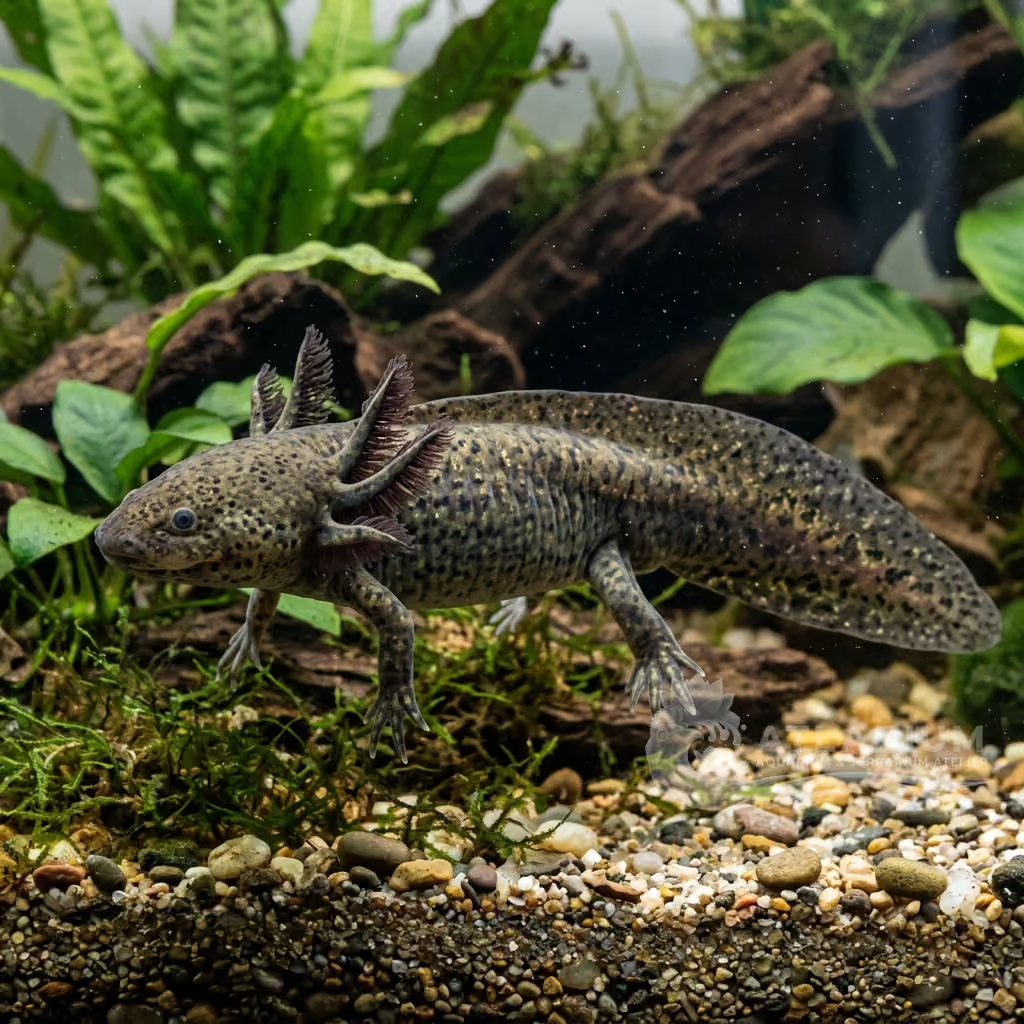
Red Salamander
Pseudotriton ruber
A striking North American lungless salamander, famous for its bright red body dotted with small black spots. Requires cool temperatures and highly moist substrates.
Température de l’eau
10 - 18 °C
Valeur du pH
6.5 - 7.5
Environnement
Eau douce / Semi-aquatique
Humidité
80 - 100 %
Température diurne
12 - 18 °C
Température nocturne
8 - 12 °C

Description de l'espèce
Geographical Origin and Habitat: Endemic to the eastern United States, ranging from southern New York to Indiana, south to northern Florida and the Gulf Coast. It inhabits moist deciduous forests, montane woodlands, floodplains, and areas near clean springs, cold rocky streams, and seepages. It spends much of its life hidden under wet rocks, decaying logs, moss beds, and inside muddy burrows.
Taxonomy and Genetics: Belongs to the family Plethodontidae (lungless salamanders), genus Pseudotriton. Described by Sonnini de Manoncourt and Latreille in 1801. It includes several recognized subspecies (including P. r. ruber, P. r. schencki, and P. r. vioscai). Since it breathes entirely through its moist skin and oral mucosa, its survival is deeply linked to pristine environments.
Behavior and Habits: Primarily terrestrial, nocturnal, and solitary. It is active during cool, rainy nights when it leaves its underground retreats to forage for small invertebrates. During the day, it stays hidden to prevent dehydration. Its metabolism is slow and highly dependent on cool ambient temperatures. Larvae are fully aquatic, lasting 2-3 years before metamorphosis.
Morphology: Features a robust, cylindrical body with short limbs. It reaches a total length of 11-18 centimeters (4.3-7 inches), including the tail. The head is rounded with small eyes featuring a distinctive yellow iris. Coloration is striking: juveniles and young adults display a brilliant coral-red or bright orange body covered with numerous irregular black spots, which darkens to purplish-brown in old specimens.

Soins, reproduction et cohabitation
Terrarium Setup: Requires a specialized cool-temperate terrarium measuring at least 60x40x40 cm (24x16x16 inches) for a pair. The substrate must consist of a mix of organic soil, peat moss, and sphagnum moss at least 10 cm deep, kept constantly moist, and covered with a thick layer of damp oak leaves and flat cork bark. Provide plenty of flat stones and live moss hides.
Lighting and Heating: This is the primary challenge: requires cool temperatures, ideally between 15°C and 20°C (59°F - 68°F). Temperatures exceeding 24°C (75.2°F) for extended periods are quickly fatal. A cooling system or chiller may be required during summer. Lighting must be minimal, using low-heat LEDs. A low-output 2.0% UVB bulb is optional but recommended.
Humidity and Hydration: Humidity must be kept high, consistently between 80% and 95%. The substrate must never dry out. Mist daily with cool, dechlorinated water. Provide a shallow aquatic zone (3-4 cm deep) filled with clean, dechlorinated, well-oxygenated water, preferably utilizing a gentle sponge filter, as these salamanders enjoy soaking.
Feeding and Supplementation: Carnivorous. Feeds on live earthworms (cut to size if necessary), mealworms, small crickets, fruit flies, and other soil invertebrates. Feed adults 2-3 times a week. Dust prey with pure calcium powder once a week; multivitamin supplements should be used sparingly once a month to avoid hypervitaminosis.
Compatibility: Can be housed in male-female pairs in a sufficiently sized enclosure. Avoid keeping multiple males together during the breeding season. Do not house with other amphibian or reptile species to prevent food competition and pathogen transmission. Handling must be minimized, always using wet nitrile gloves.
Health and Common Diseases: Main health risks include heat shock (from temperatures that are too high), bacterial or fungal skin infections caused by stagnant water or dirty substrates, and internal parasites. Extremely sensitive to chemical residues (soaps, chemical disinfectants) on the terrarium or the keeper's hands; rinse all decor thoroughly.

Origine et répartition géographiques
Endemic to the eastern United States, ranging from southern New York to Indiana, south to northern Florida and the Gulf Coast. It inhabits moist deciduous forests, montane woodlands, floodplains, and areas near clean springs, cold rocky streams, and seepages. It spends much of its life hidden under wet rocks, decaying logs, moss beds, and inside muddy burrows.
Origine
Amérique du NordAsie du Sud et du Sud-Est

Profil d'amphibien
- Régime alimentaire
- Carnivore
- The diet of Pseudotriton ruber consists primarily of appropriately sized prey items found in its natural habitat. In captivity, they should be offered a varied selection of live insects, worms, or small invertebrates to ensure nutritional balance. It is important to gut-load the feeder insects and occasionally dust them with high-quality calcium and vitamin supplements. Monitoring their food intake helps prevent obesity and maintains optimal health. Fresh water must always be available to aid in digestion.
- Espérance de vie
- 10-20 years
- Taille adulte
- 18 cm
- Mode de vie/microhabitat
- Semi-aquatic
- Pseudotriton ruber leads a specialized lifestyle adapted to the specific niches of its ecosystem, whether that involves climbing, burrowing, or swimming. Its daily routine is a delicate balance of thermoregulation, seeking out hydration, and avoiding predators. In a captive environment, replicating these microhabitats—such as providing ample climbing branches or deep substrate—is crucial for their well-being. They generally thrive when left undisturbed to carry out their natural routines. A proper setup dramatically improves their lifespan and overall vitality.
- Cycle d'activité
- Crepuscular
- The activity pattern of Pseudotriton ruber is heavily influenced by the specific light cycle and ambient temperatures of its native range. It may be primarily diurnal, nocturnal, or crepuscular, meaning its peak activity times align with the safest and most optimal conditions for survival. During these active periods, they can be seen exploring, hunting, or patrolling their territory. Careful regulation of the enclosure's lighting and heating schedules will help maintain these natural circadian rhythms. Disruptions to this pattern can cause significant stress or lethargy.
- Sociabilité
- Solitary
- Pseudotriton ruber is known for its fascinating and unique behavioral traits that reflect its evolutionary adaptations. Observers may notice periods of active foraging interspersed with long spells of resting or hiding. They interact with their environment carefully, using their specialized senses to navigate and detect both prey and potential threats. While some individuals can be quite shy and reclusive, others may exhibit bold and curious behavior when comfortable in their enclosure. Providing a complex habitat with plenty of enrichment is essential for expressing natural behaviors.
- Reproduction
- Oviparous
- Reproduction for Pseudotriton ruber typically follows a seasonal pattern, often triggered by specific environmental changes such as temperature or humidity fluctuations. Mating behaviors can include complex courtship displays or specific vocalizations to attract a partner. After successful mating, the female will carefully deposit eggs or give birth, depending on the reproductive strategy of the species. Incubation or gestation periods require stable, precise conditions to ensure the healthy development of the offspring. Breeders must pay close attention to providing the right nesting environment.
- Toxicité
- Harmless
- The bright red coloration of this salamander serves as an aposematic warning to potential predators regarding its toxicity. They produce toxic skin secretions that act as a strong deterrent against predation by birds and small mammals. While the toxins are generally mild to humans, they can cause significant irritation if they come into contact with open wounds or mucous membranes. Proper hygiene and handwashing are essential after any rare handling.
- Stade de vie
- Metamorphosis
- They exhibit a complex life cycle beginning with an aquatic larval stage that features distinct external gills. The larval period can be quite extended, often lasting between two to three years before metamorphosis occurs. Once transformed into terrestrial adults, they reach sexual maturity within a few years and can live up to 20 years in ideal wild or captive conditions.
- Tolérance aux manipulations
- Display only
- Handling should be kept to an absolute minimum to avoid stressing the animal and damaging its sensitive skin. The oils, salts, and potential chemicals on human hands can be readily absorbed and cause severe health issues for the salamander. When handling is unavoidable for maintenance or health checks, it must be done using clean, wet hands or moistened gloves.
- Brumation
- Requise
- Red salamanders naturally undergo brumation during the cold winter months, seeking refuge below the frost line in deep burrows or submerged in spring heads. In captivity, simulating a gentle winter cool-down can promote long-term health and is often necessary to trigger successful reproductive behaviors. The enclosure must remain adequately moist and well-oxygenated throughout this resting period.
- Mue
- Periodic
- Shedding occurs at regular intervals as the salamander grows, with the frequency decreasing as the animal reaches full adult size. The shedding process begins with the skin appearing dull or cloudy before splitting and peeling off. They almost always consume the shed skin immediately, an act that helps recover vital nutrients and energy expended during the process.

Espèces associées
Recommandations regroupées par proches parents, compagnons et soins similaires.