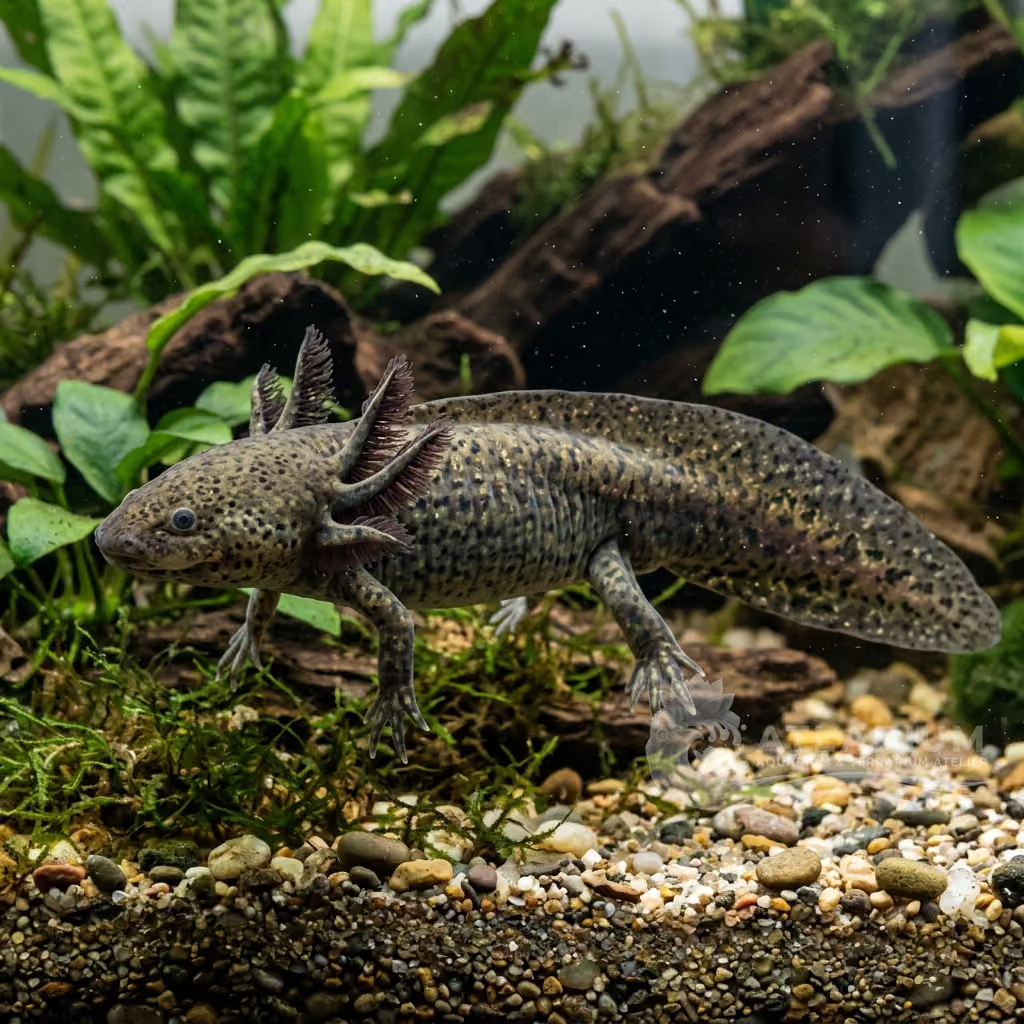
Red-backed Salamander
Plethodon cinereus
The Eastern Red-backed Salamander is a ubiquitous, small terrestrial lungless amphibian. Frequently found hiding under damp logs, it is an excellent and low-maintenance subject for cool forest terrariums.
Température de l’eau
10 - 18 °C
Valeur du pH
6.5 - 7.5
Environnement
Eau douce / Semi-aquatique
Humidité
80 - 100 %
Température diurne
23 - 24 °C
Température nocturne
11 °C
Température ambiante
23 - 24 °C
Enclos minimal
>= 45 L

Description de l'espèce
Geographical Origin and Habitat: Plethodon cinereus is native to eastern North America, widely distributed from southeastern Canada down to North Carolina and west to Illinois. It inhabits the damp forest floors of deciduous and mixed hardwood-conifer forests. It is commonly found beneath leaf litter, rotting logs, and damp stones. As a fully terrestrial species, it does not require open water for reproduction, completing its entire life cycle in damp soil.
Taxonomy and Genetics: It belongs to the family Plethodontidae, characterized by the absence of lungs and a reliance on cutaneous respiration. Plethodon cinereus displays color polymorphism, with two main genetic color morphs coexistence in most populations: the "red-backed" morph (with a red dorsal stripe) and the "lead-backed" morph (completely dark grey). These morphs are studied for their links to microhabitat preference and thermal tolerance.
Behavior and Habits: It is a nocturnal and highly territorial salamander. Individuals actively defend small territories under logs or stones using chemical markers and aggressive threat displays to ward off conspecifics. During periods of summer drought or winter freezing, they migrate deep underground into worm burrows or soil cracks to maintain moisture levels.
Morphology: This is a small salamander, with adults reaching a total length of 5 to 10 cm. The body is slender and elongated, with short, delicate limbs. The tail is cylindrical and roughly equal in length to the snout-vent length. In the common red-backed morph, a prominent red, orange, or yellow stripe runs down the back from the head to the tail, while the flanks and belly are mottled grey and white.

Soins, reproduction et cohabitation
Terrarium Setup: A small terrarium of 40 to 50 liters is sufficient for a single specimen or a small group of 2-3 individuals. The substrate should consist of damp coconut fiber, sphagnum moss, and a thick layer of dried oak or beech leaves to replicate the forest floor. Provide decaying wood pieces and curved cork bark to offer multiple hiding spots.
Lighting and Heating: This species must be kept cool, ideally between 15°C and 20°C. Continuous temperatures above 23-24°C are highly dangerous and can be fatal. No artificial heating is required. Keep lighting to a minimum; ambient room light or a low-intensity LED bar is sufficient to establish a day-night cycle without raising the temperature.
Humidity and Hydration: Constant high humidity of 75% to 85% is essential. Mist the enclosure 1-2 times daily with dechlorinated water. A deep water dish is not required and poses a drowning risk; instead, provide a very shallow dish with a thin film of water or simply rely on keeping the substrate damp but not waterlogged.
Feeding and Supplementation: Feeds on small, live invertebrates. In captivity, they readily accept wingless fruit flies (Drosophila), springtails, pinhead crickets, micro-earthworms, and small isopods. Food should be lightly dusted with calcium powder once a week. Feed 2 to 3 times a week, adjusting the quantity based on the salamander's activity.
Compatibility: Can be kept in small groups if the terrarium is spacious and has plenty of hiding places to minimize territorial conflicts. Do not house with other amphibian or reptile species. Handling should be avoided completely; their skin is highly sensitive to the salts, oils, and chemical residues present on human hands.
Health and Common Diseases: Heat stress and desiccation are the primary causes of death. Fungal skin infections can occur if the substrate is excessively wet and air circulation is stagnant. Regularly spot-clean the enclosure to remove waste and uneaten food, and monitor the salamander's skin to ensure it remains moist and healthy.

Origine et répartition géographiques
Plethodon cinereus is native to eastern North America, widely distributed from southeastern Canada down to North Carolina and west to Illinois. It inhabits the damp forest floors of deciduous and mixed hardwood-conifer forests. It is commonly found beneath leaf litter, rotting logs, and damp stones. As a fully terrestrial species, it does not require open water for reproduction, completing its entire life cycle in damp soil.
Origine
Amérique du Nord

Profil d'amphibien
- Régime alimentaire
- Insectivore
- The diet of Plethodon cinereus consists primarily of appropriately sized prey items found in its natural habitat. In captivity, they should be offered a varied selection of live insects, worms, or small invertebrates to ensure nutritional balance. It is important to gut-load the feeder insects and occasionally dust them with high-quality calcium and vitamin supplements. Monitoring their food intake helps prevent obesity and maintains optimal health. Fresh water must always be available to aid in digestion.
- Espérance de vie
- 8-25 years
- Taille adulte
- 12.7 cm
- Mode de vie/microhabitat
- Terrestrial
- Plethodon cinereus leads a specialized lifestyle adapted to the specific niches of its ecosystem, whether that involves climbing, burrowing, or swimming. Its daily routine is a delicate balance of thermoregulation, seeking out hydration, and avoiding predators. In a captive environment, replicating these microhabitats—such as providing ample climbing branches or deep substrate—is crucial for their well-being. They generally thrive when left undisturbed to carry out their natural routines. A proper setup dramatically improves their lifespan and overall vitality.
- Cycle d'activité
- Nocturnal
- The activity pattern of Plethodon cinereus is heavily influenced by the specific light cycle and ambient temperatures of its native range. It may be primarily diurnal, nocturnal, or crepuscular, meaning its peak activity times align with the safest and most optimal conditions for survival. During these active periods, they can be seen exploring, hunting, or patrolling their territory. Careful regulation of the enclosure's lighting and heating schedules will help maintain these natural circadian rhythms. Disruptions to this pattern can cause significant stress or lethargy.
- Sociabilité
- Solitary
- Plethodon cinereus is known for its fascinating and unique behavioral traits that reflect its evolutionary adaptations. Observers may notice periods of active foraging interspersed with long spells of resting or hiding. They interact with their environment carefully, using their specialized senses to navigate and detect both prey and potential threats. While some individuals can be quite shy and reclusive, others may exhibit bold and curious behavior when comfortable in their enclosure. Providing a complex habitat with plenty of enrichment is essential for expressing natural behaviors.
- Reproduction
- Oviparous
- Reproduction for Plethodon cinereus typically follows a seasonal pattern, often triggered by specific environmental changes such as temperature or humidity fluctuations. Mating behaviors can include complex courtship displays or specific vocalizations to attract a partner. After successful mating, the female will carefully deposit eggs or give birth, depending on the reproductive strategy of the species. Incubation or gestation periods require stable, precise conditions to ensure the healthy development of the offspring. Breeders must pay close attention to providing the right nesting environment.
- Toxicité
- Harmless
- To protect themselves from predation, they secrete a thick, sticky mucus from glands on their tail and back. This unpalatable substance effectively deters small predators like birds and snakes, often causing them to drop the salamander. While not toxic to humans, the sticky residue is difficult to wash off, making it advisable to handle them as little as possible.
- Stade de vie
- Direct development
- A defining characteristic of the red-backed salamander is its direct development, meaning they do not have an aquatic tadpole or larval stage. Young salamanders emerge from their eggs as terrestrial juveniles, possessing lungs and the general appearance of adult salamanders. They grow and mature entirely on land, spending their entire lives in the moist microhabitats of temperate forests.
- Tolérance aux manipulations
- Display only
- Visual display only. As tiny, lungless salamanders, the heat and oils from human hands are quickly detrimental to their health.
- Brumation
- Brumates during freezing winter months by moving deep into the soil profile or retreating into rotting root systems.
- Mue
- Periodic
- High humidity is non-negotiable for their periodic shedding. The skin usually comes off in one piece and is quickly eaten.

Espèces associées
Recommandations regroupées par proches parents, compagnons et soins similaires.