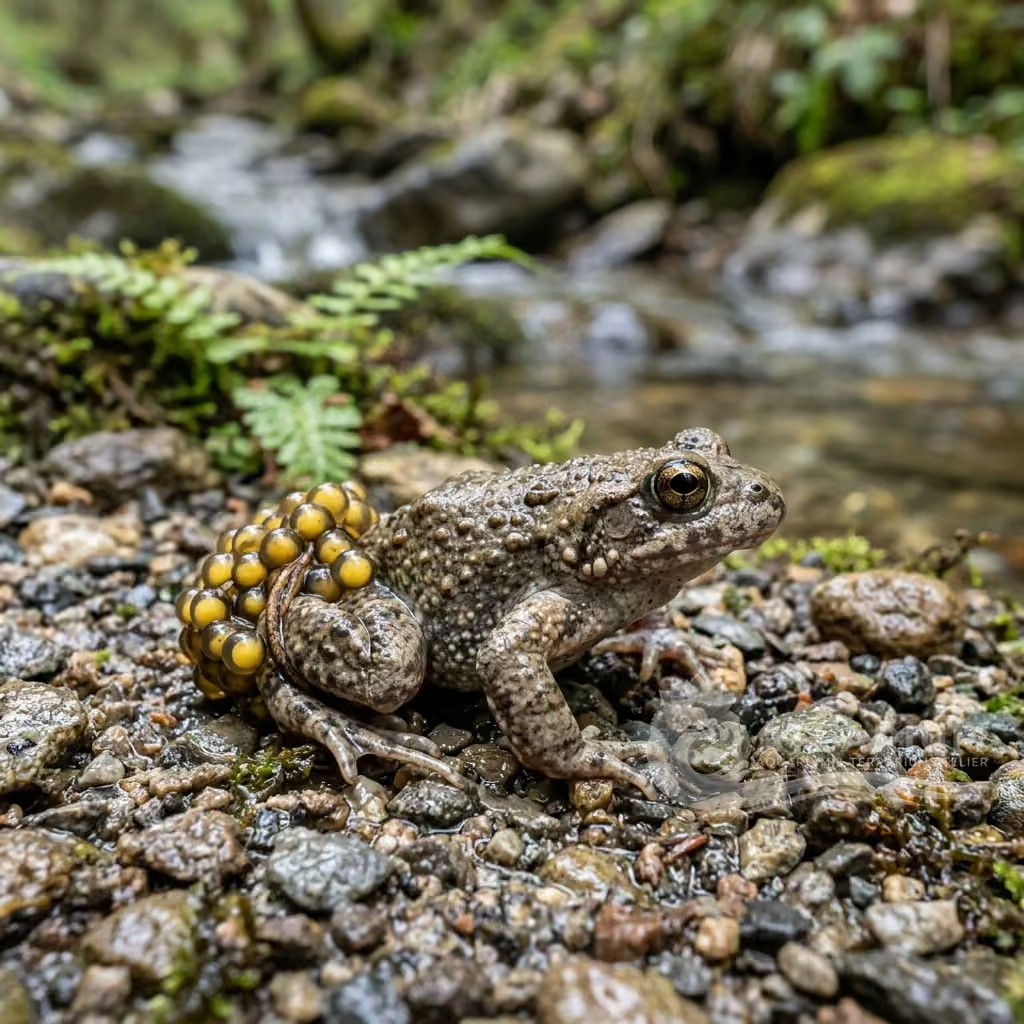
Green Toad
Anaxyrus debilis
The North American Green Toad is a small, striking green and black amphibian from semi-arid grasslands. Very hardy, it is highly secretive, nocturnal, and highly active after summer thunderstorms.
Environnement
Terrestre
Humidité
30 - 50 %
Température diurne
26 - 30 °C
Température nocturne
18 - 22 °C
Température ambiante
26 - 30 °C
Enclos minimal
>= 45 L

Description de l'espèce
Geographical Origin and Habitat: Native to the semi-arid regions of North America, including the southwestern United States (Texas, New Mexico, Arizona, Oklahoma) and northern Mexico. It lives in arid grasslands, scrub deserts, and savannas, seeking shelter under rocks, logs, or in rodent burrows.
Taxonomy and Genetics: A small toad reaching only 3–5 cm in size. The skin is covered with small warts and is colored bright green, yellowish-green, or olive with irregular black spots or streaks. The parotoid glands are large, long, and low.
Behavior and Habits: Secretive and terrestrial. During dry periods, it remains buried in soil or hidden in deep shelters, emerging during summer rainstorms to breed and hunt. It is a nocturnal predator of small insects. Males call at night, producing a high-pitched, insect-like buzz.
Morphology: Sexual dimorphism is visible in size and throat color: adult females are larger and heavier than males, while adult males are smaller and have a darkened, greyish or blackish throat due to their vocal sac.

Soins, reproduction et cohabitation
Terrarium Setup: Require a terrestrial horizontal terrarium of at least 60x45x30 cm. Provide a deep, diggable substrate of dry sand mixed with organic soil or coconut fiber. Include flat stones, cork bark, and shallow shelters. Maintain a very shallow water dish.
Lighting and Heating: Require warm conditions representing their semi-arid origin. Maintain daytime temperatures of 26–30°C with a warm basking spot. Provide a night drop to 18–22°C. A winter brumation at cool temperatures is beneficial. Low to moderate UVB (5–10%) is highly recommended.
Humidity and Hydration: Maintain relatively low ambient humidity of 40–50%. Good ventilation is critical. Mist the substrate lightly once a week, keeping most of the terrarium dry. Use dechlorinated water for misting and for the shallow water dish.
Feeding and Supplementation: Insectivorous with small mouths. Offer small live prey such as micro-crickets, fruit flies, and small roaches in a smooth feeding bowl to prevent sand ingestion. Dust prey with calcium and vitamin D3 supplements regularly.
Compatibility: Very peaceful and highly gregarious. They can be safely kept in small groups or colonies. Do not house them with much larger animals that could view them as prey, or with other species to prevent stress.
Health and Common Diseases: Highly susceptible to fungal and bacterial skin infections (Red Leg syndrome) if kept in excessively wet or poorly ventilated conditions. Do not handle with bare hands. Clean the terrarium regularly to prevent ammonia accumulation.

Origine et répartition géographiques
Native to the semi-arid regions of North America, including the southwestern United States (Texas, New Mexico, Arizona, Oklahoma) and northern Mexico. It lives in arid grasslands, scrub deserts, and savannas, seeking shelter under rocks, logs, or in rodent burrows.
Origine
Amérique centrale et CaraïbesAmérique du NordEurope, Méditerranée et Asie occidentale

Profil d'amphibien
- Régime alimentaire
- Insectivore
- The Green Toad primarily sustains itself on a diet of small crawling and flying insects native to its arid environment. Its prey largely consists of ants, small beetles, grasshoppers, and flies, which it hunts during the cooler, humid hours of the evening or after rains. They are active foragers, roaming across the sparse vegetation and rocky terrain to find their food. Their relatively small size limits them to smaller invertebrate prey compared to larger toad species.
- Espérance de vie
- 5-12 years
- Taille adulte
- 5.4 cm
- Mode de vie/microhabitat
- Terrestrial
- They are a terrestrial species associated with arid and semi-arid environments, utilizing burrows or natural fissures to survive dry spells.
- Cycle d'activité
- Crepuscular
- Green Toads are most active during rainy conditions or at twilight, preferring to hide in deep rock crevices during dry, hot daytime conditions.
- Sociabilité
- Solitary
- Green Toads are highly adapted to arid and semi-arid plains, spending significant portions of the year underground or sheltering beneath rocks to survive dry periods. They are secretive and nocturnal, emerging mostly during or immediately after significant rainfall when humidity is high. Their striking green and yellow coloration provides excellent camouflage against the sparse grass and scrub of their natural environment. Due to their flat body shape, they can squeeze into tight rock crevices for protection.
- Reproduction
- Oviparous
- Reproduction is entirely dependent on heavy summer rainstorms that create temporary, shallow pools in their otherwise dry habitats. Once the rains fall, males quickly congregate at these ephemeral water sources and emit high-pitched, buzzing calls to attract females. Females lay small clutches of eggs that develop incredibly fast to beat the rapid evaporation of the desert sun. The entire cycle from egg to metamorphosis can be completed in just a few weeks.
- Toxicité
- Harmless
- Like other members of the Anaxyrus genus, Green Toads possess parotoid glands that secrete defensive toxins. These bufotoxins help protect the small toads from a variety of predators in their harsh environment. The secretions can be harmful or distasteful to animals that attempt to ingest them, causing irritation or illness. Humans should avoid handling them to prevent irritating sensitive areas, though the toxins are not lethal to humans.
- Stade de vie
- Metamorphosis
- The eggs hatch into small, dark tadpoles that must grow rapidly in the warm, shallow, and temporary rainwater pools. These tadpoles feed voraciously on algae and suspended organic matter to fuel their accelerated development. Upon metamorphosis, the tiny toadlets are perfectly formed but incredibly vulnerable to the harsh desert environment. They must quickly find shelter and begin feeding on small insects to survive the ensuing dry season.
- Tolérance aux manipulations
- Display only
- Display only. They are small and delicate, and the salts and oils on human hands can severely compromise their skin health.
- Brumation
- They undergo prolonged periods of dormancy (aestivation or brumation) depending on the season, awakening triggered by heavy rainfall.
- Mue
- Regular
- Shedding is regular. While they tolerate drier environments than many amphibians, a humid microclimate is essential for successful molting.

Espèces associées
Recommandations regroupées par proches parents, compagnons et soins similaires.