
dGH
General hardness (GH)

What is it
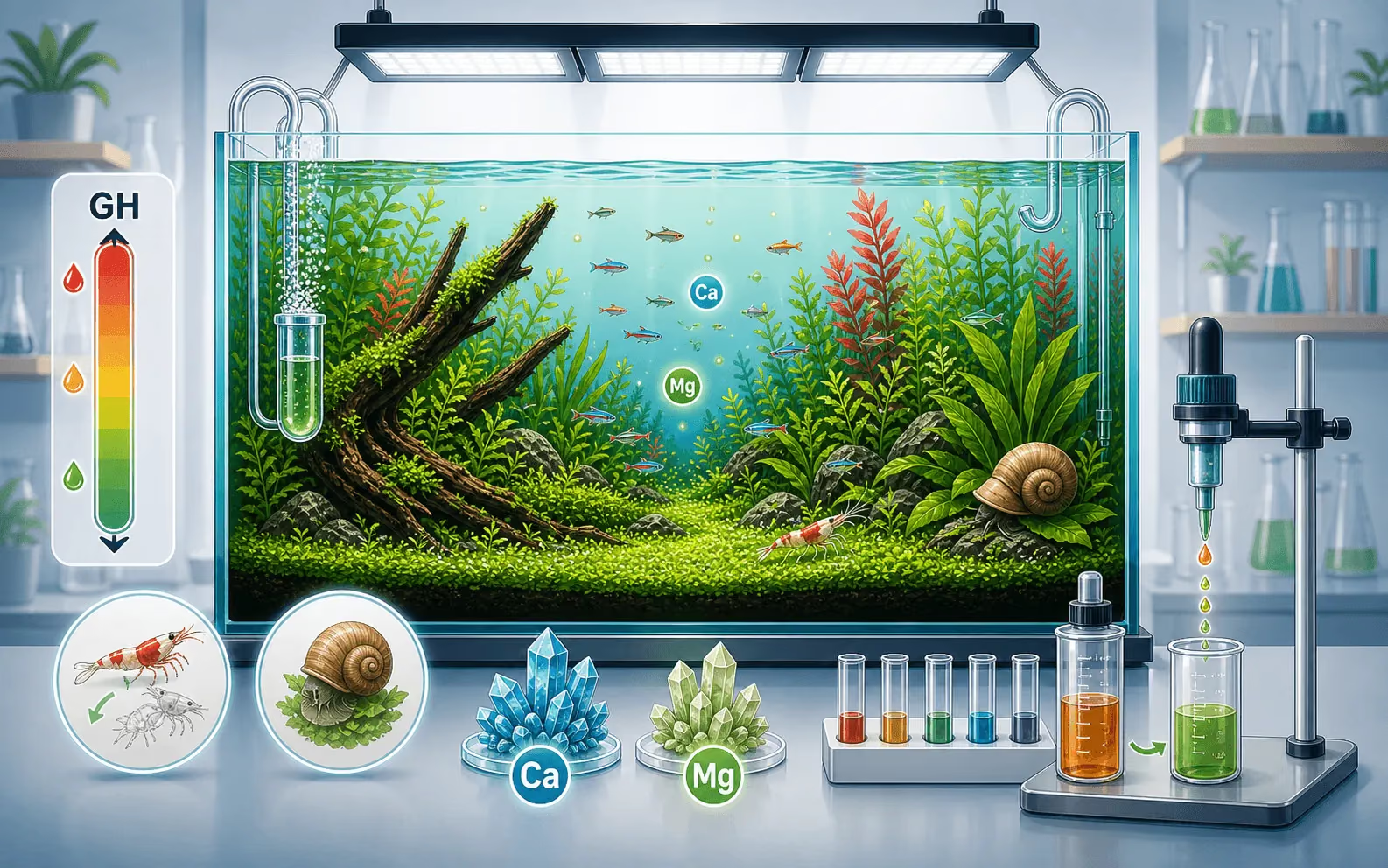
General hardness (GH) measures dissolved calcium (Ca²⁺) and magnesium (Mg²⁺) ions, expressed in German degrees (dGH). One degree equals 17.8 mg/L of calcium carbonate.
Tap water varies greatly: areas with limestone geology can have GH 15-25, while granite areas or deep groundwater can have GH 2-5. Reverse-osmosis water has almost zero GH.
GH is fundamental when selecting species: Amazonian fish such as cardinal tetras, discus and Apistogramma come from water with GH 0-3, whereas African cichlids and livebearers such as guppies and platies prefer GH 10-20.
Why it matters
Calcium and magnesium are essential to fish osmoregulation: gills exchange ions across membranes that are sensitive to hardness. Soft-water fish kept in hard water must work harder to expel excess minerals, causing chronic stress.
GH is critical for invertebrates. Shrimp and snails need calcium and magnesium to build and maintain their exoskeletons and shells. Too little GH causes failed molts, including the shrimp “ring of death,” and thin, pitted snail shells.
For plants, magnesium is part of chlorophyll, so a lack of Mg yellows leaves between the veins, while calcium strengthens cell walls. A minimum GH of 3-4 is needed for healthy growth.

Ideal ranges
Interactions with other parameters
High GH blocks potassium uptake in plants. If water is very hard (GH > 15), you may need to double potassium dosing to prevent holes in older leaves.
| Tank type | Min | Max | Unit |
|---|---|---|---|
| Tropical community | 4 | 12 | dGH |
| Planted high-tech | 4 | 8 | dGH |
| Planted low-tech | 4 | 14 | dGH |
| Shrimp tank | 4 | 7 | dGH |
Out of range: what happens
GH that is too low (below 3 dGH) can cause failed invertebrate molts, eroding snail shells, impaired fish osmoregulation, and visible calcium and magnesium deficiencies in plants.
GH that is too high (above 15 dGH for soft-water species) causes chronic osmotic stress in Amazonian fish, can stop breeding, leaves mineral deposits on glass and equipment, and may precipitate nutrients.
Rapid GH swings (more than 3-4 degrees in a water change) can cause osmotic shock, especially in shrimp and small fish. Always match the GH of new water before changing it.
Common Myths
- Adding RO water removes bad salts and leaves good ones; reverse osmosis removes everything, including vital calcium and magnesium.
- Limestone rocks do no harm when pH is high; they keep releasing GH until the water is saturated.
Measurement and adjustment
How to measure
A liquid titration reagent test is the standard method: add drops to a water sample until the colour changes from orange/red to green. The number of drops equals dGH. It is precise and reliable (±1 dGH).
TDS meters provide only an indirect indication: TDS includes GH as well as other dissolved solids, so they do not replace a dedicated GH test.
For shrimp keeping and breeding, use a quality GH kit such as JBL, Sera or Salifert and test weekly, especially after remineralizing with GH+ salts.
How to adjust
To raise GH, dissolve GH+ remineralizing salts, such as Salty Shrimp GH+ or Seachem Equilibrium, in new water before the water change. Limestone rocks and shells raise GH slowly but uncontrollably.
To lower GH, mix reverse-osmosis (RO) water with tap water in the required proportion. Pure RO water has GH 0 and must never be used alone: always remineralize it.
For Caridina shrimp such as Crystal and Bee, use RO water plus specific salts, for example Salty Shrimp GH+ for Caridina, which contains no KH. For Neocaridina, use RO water plus GH/KH+ salts, or tap water when local GH is within range.
Pro Tips
- In planted tanks, distorted or crumpled new leaves often indicate calcium deficiency from low GH. Older leaves that yellow while their veins stay green indicate magnesium deficiency.
- When remineralizing RO water, aim for a calcium-to-magnesium ratio of about 3:1.