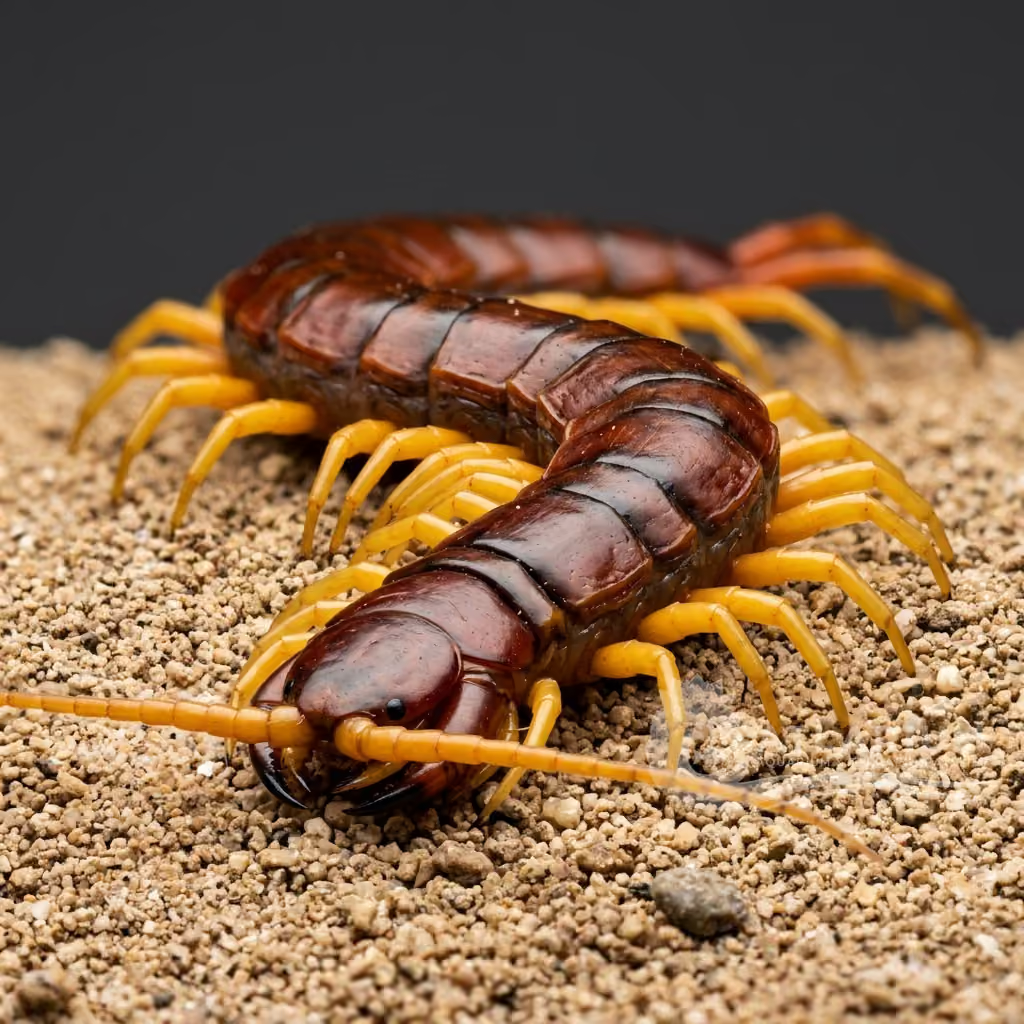
Asian Forest Centipede
Scolopendra subspinipes
A massive, fiercely aggressive, and highly venomous tropical centipede that undeniably demands extreme caution, tight security, and significant prior experience to keep safely in captivity.
Umgebung
Terrestrisch
Luftfeuchtigkeit
70 - 80 %
Umgebungstemperatur
24 - 28 °C
Tagestemperatur
27 °C
Nachttemperatur
23 °C
Untergrundtiefe
>= 8 cm

Artbeschreibung
Geographical Origin and Habitat: Native to the tropical and subtropical regions of East and Southeast Asia. It has been introduced to many tropical areas worldwide. It inhabits humid rainforests, hiding under leaf litter, decaying logs, rocks, and occasionally human dwellings.
Taxonomy and Genetics: Classified in the class Chilopoda, order Scolopendromorpha, and family Scolopendridae. It exhibits high genetic polymorphism, resulting in several regional subspecies that display distinct adult sizes and color morphs.
Behavior and Habits: Solitary, strictly nocturnal, and highly aggressive. It is a relentless hunter that uses speed, strength, and sharp venomous claws to overpower invertebrates and small vertebrates like lizards, frogs, and mice.
Morphology: Can reach lengths of 20 to 25 cm (8-10 inches). Features a flattened, segmented body with 21 pairs of legs. The head possesses a pair of antennae and highly modified front legs called forcipules, which deliver potent venom.

Pflege, Zucht und Mitbewohner
Terrarium Setup: A highly secure, escape-proof terrestrial terrarium of at least 50x30x30 cm is required, as they can lift heavy lids. Provide 10 cm of damp coconut fiber and peat moss substrate, decorated with cork bark flats and hollow logs.
Lighting and Heating: Maintain daytime temperatures between 24°C and 28°C (75-82°F) with a mild thermal gradient. Night temperatures can drop to 20°C (68°F). UVB lighting is not required; keep the enclosure in a dimly lit area.
Humidity and Hydration: Requires high humidity levels of 70% to 80%. Mist the substrate regularly to keep it moist but not soggy. Provide a shallow, heavy water dish to ensure access to clean water while preventing accidental drowning.
Feeding and Supplementation: Feed gut-loaded crickets, roaches, and mealworms once a week. Overfeeding must be avoided. Calcium or vitamin supplementation is unnecessary if the prey insects are fed a high-quality, nutritious diet.
Compatibility: Strictly solitary. Conspecific cohabitation will result in immediate, fatal combat and cannibalism. Never attempt to handle this species; the venomous bite causes extreme pain, swelling, and potential systemic complications.
Health and Common Diseases: Highly susceptible to rapid dehydration if the humidity drops too low. Fungal infections can occur if the substrate is waterlogged and ventilation is poor. Keep the enclosure clean to prevent mites from infesting the centipede.

Geografische Herkunft und Verbreitung
Native to the tropical and subtropical regions of East and Southeast Asia. It has been introduced to many tropical areas worldwide. It inhabits humid rainforests, hiding under leaf litter, decaying logs, rocks, and occasionally human dwellings.
Ursprung
Selektive Züchtung und SortenNordamerikaOstasienKosmopolitisch oder eingeführt

Profil der terrestrischen Wirbellosen
- Diät
- Carnivore
- The Asian Forest Centipede is a fierce, aggressive carnivore that actively hunts down almost any living creature it can overpower. In the wild, its varied diet includes large insects, spiders, scorpions, small rodents, frogs, and small reptiles. They capture their prey using lightning-fast reflexes, wrapping their numerous legs around the victim while simultaneously delivering a paralyzing venom bite. In captivity, they must be fed carefully with tongs, offering robust feeder insects or appropriately sized thawed rodents.
- Erwachsenengröße
- 25 cm
- Lebensstil/Mikrohabitat
- Terrestrial
- This species is primarily terrestrial and semi-fossorial. It relies heavily on a deep, structured substrate to construct burrows, which help it regulate its body temperature and hydration levels in its native habitat.
- Aktivitätszyklus
- Nocturnal
- The Asian Forest Centipede is a highly active nocturnal predator. During the daylight hours, it remains concealed beneath rocks, logs, or deep within burrows to conserve moisture. Once darkness falls, it emerges to actively patrol the substrate for invertebrate and small vertebrate prey.
- Sozialität
- Solitary
- This centipede is an intensely solitary, nervous, and highly aggressive invertebrate that views virtually any movement as a potential threat or meal. They are strictly cannibalistic and will not hesitate to kill and eat other centipedes, even those of the same species and size. They must never be housed together under any circumstances, as the enclosure will rapidly become a battleground resulting in a fatality. A deeply solitary environment with ample damp substrate and hiding places is mandatory for their care.
- Reproduktion
- Oviparous
- Following a tactile courtship where the male deposits a spermatophore for the female to retrieve, reproduction can yield a significant number of offspring. The female seeks out a dark, highly humid underground cavity to lay a cluster of 50 to 80 eggs. She wraps her long, segmented body entirely around the egg mass, protecting it from fungi, predators, and drying out. She fiercely guards the hatchlings until after their first molt, at which point the aggressive, independent juveniles disperse.
- Giftig
- Yes
- Handhabungstoleranz
- Display only
- As a highly venomous and unpredictable centipede, it is strictly a display animal. Handling is strongly discouraged due to its aggressive feeding response, fast movements, and capability of delivering a medically significant, agonizing bite. Always use long tongs for enclosure maintenance.
- Brumation
- Nicht erforderlich
- Native to warm climates, it does not undergo brumation and requires stable, warm temperatures year-round.
- Häutung
- Periodic
- Molting occurs periodically as the centipede grows, requiring elevated humidity to prevent fatal molting complications. It will retreat to a secure, moist burrow and refuse food for several days before shedding, typically consuming the exuviae afterward.

Verwandte Arten
Empfehlungen gruppiert nach nahen Verwandten, Auswahl von Begleitern und ähnlicher Betreuung.