Mueller's termite frog
Dermatonotus muelleri
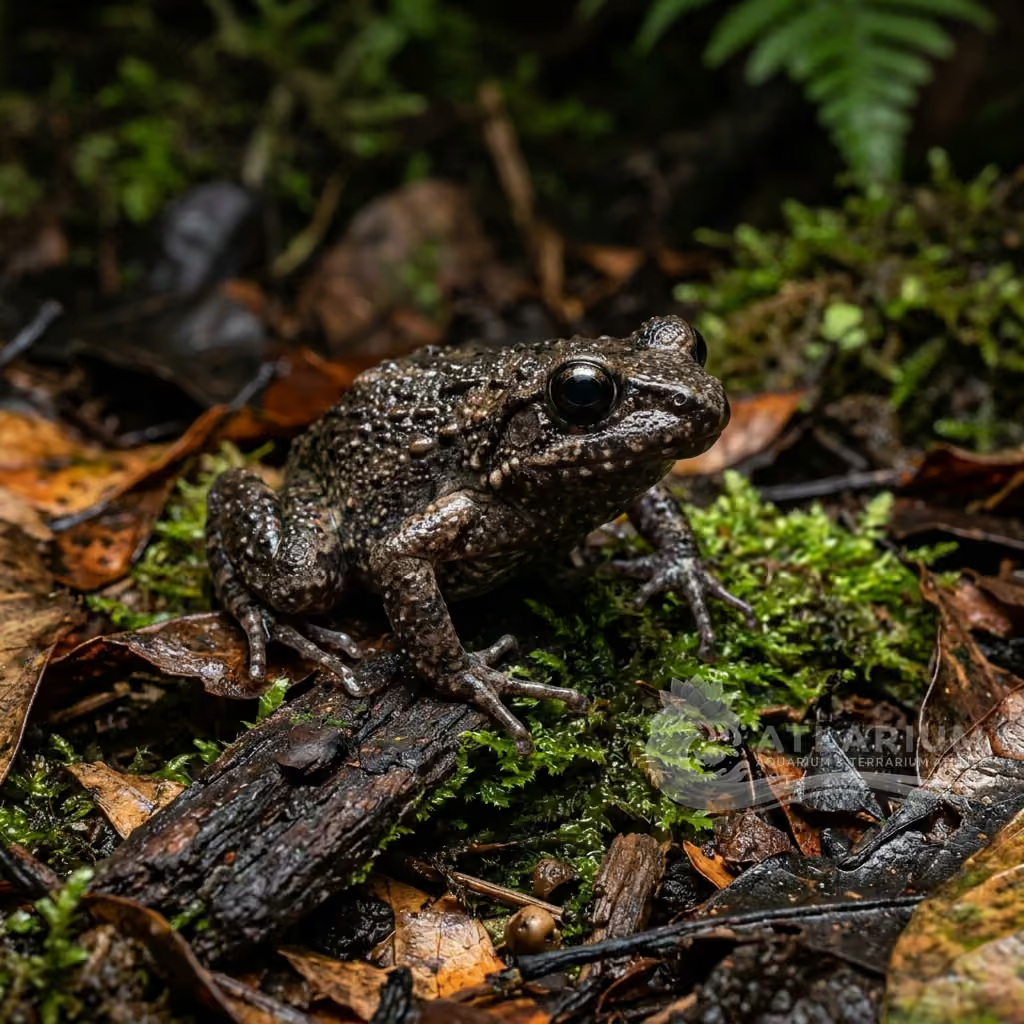
Mueller's termite frog is a unique South American species perfectly adapted for a subterranean life. It features a globose body specialized for excavating and feeding on termites.
Umgebung
Terrestrisch
Luftfeuchtigkeit
60 - 80 %
Tagestemperatur
25 - 27 °C
Nachttemperatur
20 - 22 °C
Umgebungstemperatur
25 - 27 °C
Brumationstemperatur
15 - 18 °C
Mindestgehäuse
>= 45 L

Artbeschreibung
Geographical Origin and Habitat: Native to southern South America, distributed in Argentina, Bolivia, Brazil, and Paraguay. Inhabits Chaco grasslands, open savannas, and seasonal dry forests, adapted to survive underground during dry spells.
Taxonomy and Genetics: The sole representative of the genus Dermatonotus, belonging to the family Microhylidae. It is a highly specialized fossorial species, with genetics and morphology tailored to subterranean life and myrmecophagous feeding.
Behavior and Habits: Primarily fossorial and nocturnal animal. Spends most of the year buried in moist soil, emerging to the surface almost exclusively during heavy seasonal rains to breed and feed.
Morphology: Extremely stocky, almost globose body, with a small head and very narrow mouth. Reaches 6-8 cm in length. Skin is thick and wrinkled, olive-gray or dark brown with large yellow or cream spots on the flanks.

Pflege, Zucht und Mitbewohner
Terrarium Setup: Requires a spacious terrarium (at least 60x40x40 cm) with a very deep (at least 15-20 cm) and soft substrate, composed of moist coco fiber, peat, and unfertilized sand. Insert flat bark slabs as daytime hides.
Lighting and Heating: Weak LED light to simulate the photoperiod. The temperature should be maintained between 24°C and 28°C during the day, with a night drop to 20-22°C. Use a thermostat-controlled heat cable on a side wall.
Humidity and Hydration: Ambient humidity around 70-80%. The substrate must be kept constantly moist but not waterlogged. Provide a wide but very shallow water bowl to allow skin hydration.
Feeding and Supplementation: Highly specialized diet. In the wild, it consumes huge quantities of termites and ants. In captivity, it accepts small crickets, fruit flies, and very small mealworms. Supplement with calcium and vitamins regularly.
Compatibility: Peaceful species towards conspecifics. Can be kept in small groups in the same terrarium, provided there is enough space and substrate depth to dig separate burrows without mutual interference.
Health and Common Diseases: The main risk is dehydration if the substrate dries out completely, or the onset of skin infections if the soil becomes soiled and is not replaced regularly. Monitor for snout abrasions.

Geografische Herkunft und Verbreitung
Native to southern South America, distributed in Argentina, Bolivia, Brazil, and Paraguay. Inhabits Chaco grasslands, open savannas, and seasonal dry forests, adapted to survive underground during dry spells.
Ursprung
Kosmopolitisch oder eingeführtExtra-Amazonas-SüdamerikaNordamerika

Amphibienprofil
- Diät
- Insectivore
- This species is primarily insectivorous in the wild, feeding on a wide variety of small forest invertebrates. In captivity, their diet should consist of appropriately sized crickets, fruit flies, and small worms. It is important to dust the feeder insects with calcium and vitamin supplements to ensure proper nutrition. Feeding them every other day is usually sufficient for adult frogs. Clean, fresh water must be available at all times.
- Lebenserwartung
- 3-5 years
- Erwachsenengröße
- 5 cm
- Lebensstil/Mikrohabitat
- Fossorial
- These amphibians lead a primarily terrestrial and scansorial lifestyle within tropical forest ecosystems. They navigate the complex structure of the forest floor, frequently climbing on small shrubs, roots, and rocks. A heavily planted terrarium with a deep substrate layer best replicates their natural habitat. They thrive in environments with very high humidity and dense vegetation. Consistent environmental conditions are key to keeping them healthy.
- Aktivitätszyklus
- Nocturnal
- They are predominantly nocturnal animals, becoming most active after the sun goes down. During the day, they remain well hidden in the damp, shaded parts of the forest floor to avoid desiccation and predators. Once night falls, they emerge to actively forage for small insect prey. Captive environments should mimic this cycle with appropriate lighting periods. A strict day and night cycle is crucial for their overall well-being.
- Sozialität
- Solitary
- As small forest dwellers, these frogs are generally quite shy and reclusive by nature. They spend the majority of their time hidden among leaf litter, under decaying logs, or in the crevices of low-hanging vegetation. When threatened, they rely heavily on their natural camouflage to blend into the forest floor. They may vocalize during the breeding season with distinct calls to attract mates. Providing ample hiding spots in captivity helps reduce their stress levels.
- Reproduktion
- Oviparous
- These frogs are known for their unique reproductive strategy, often involving direct development in moist terrestrial environments. Rather than having a free-swimming tadpole stage, females lay eggs in damp leaf litter. Inside the egg capsules, the embryos develop fully and hatch as miniature, fully formed froglets. This adaptation allows them to reproduce without relying on standing bodies of water. Maintaining adequate moisture in the breeding enclosure is strictly required.
- Toxizität
- Mildly toxic
- Secretes a mild, sticky mucus from its skin when agitated to deter predators. While not highly toxic, this secretion can irritate mucous membranes and cause discomfort if handled without washing hands.
- Lebensphase
- Metamorphosis
- Develops from aquatic eggs into free-swimming tadpoles before metamorphosing into terrestrial, burrowing adult frogs.
- Handhabungstoleranz
- Display only
- This is a hands-off, display-only species. Handling them is highly stressful, can damage their sensitive skin, and disrupt their natural burrowing behaviors. They are rarely seen and should be left undisturbed in the substrate.
- Brumation
- Erforderlich
- While not a true brumation, they enter a period of prolonged aestivation during the dry season, burrowing deep and sometimes forming a protective cocoon to conserve moisture until the rains return.
- Häutung
- Regular
- Shedding occurs primarily underground and is rarely observed. The frog relies on adequate soil moisture to facilitate the shedding process, subsequently eating the shed skin.

Verwandte Arten
Empfehlungen gruppiert nach nahen Verwandten, Auswahl von Begleitern und ähnlicher Betreuung.