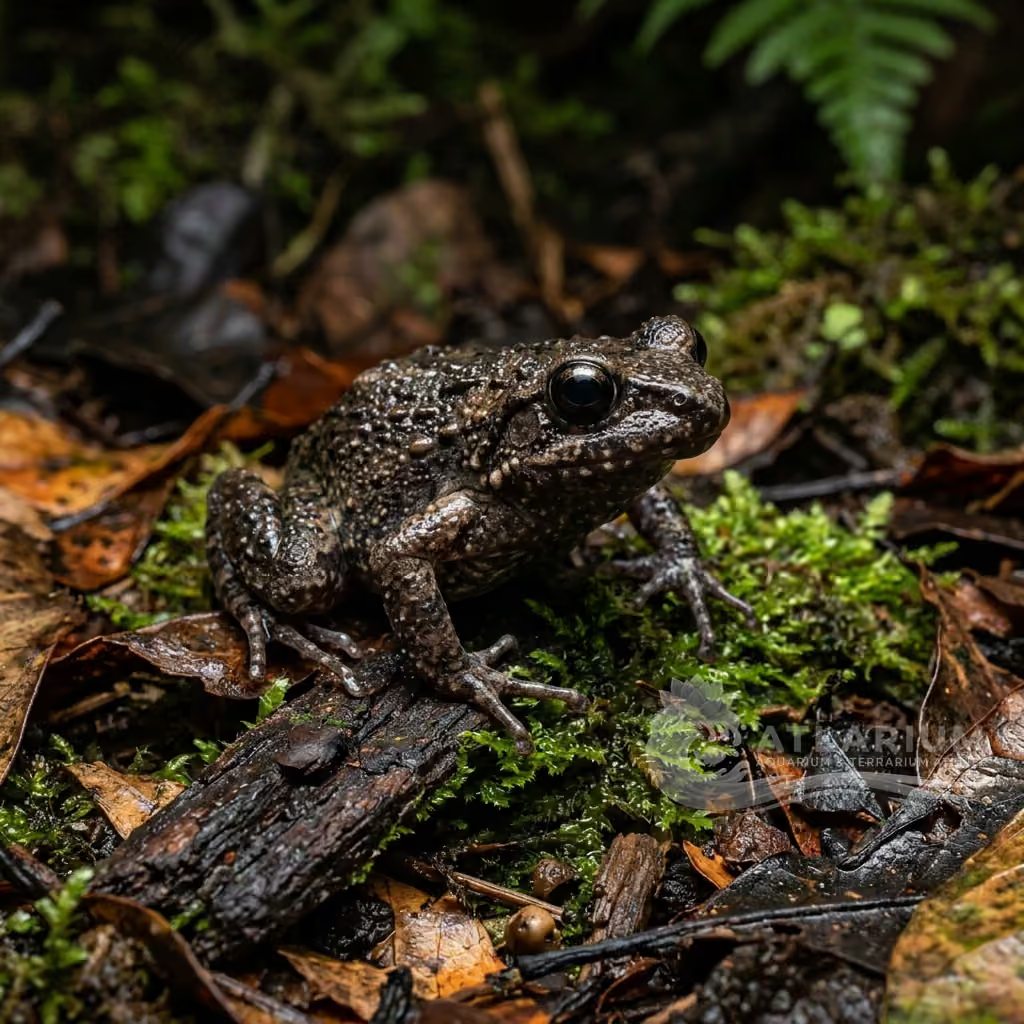
Chubby Frog (Banded Bullfrog)
Kaloula pulchra
The Chubby Frog is an extremely hardy, burrowing Asian amphibian resembling a two-toned brown and orange butterball. It inflates like a spherical balloon when frightened and is ideal for beginners.
Umgebung
Terrestrisch
Luftfeuchtigkeit
60 - 80 %
Tagestemperatur
24 - 29 °C
Nachttemperatur
21 - 25 °C

Artbeschreibung
Geographical Origin and Habitat: Specie colossale, fossoria e sferica diffusa in tutto il Sud-est asiatico (dall'India fino al sud della Cina, Thailandia, Malesia, Indonesia). Altro dinosauro scavatore, abita foreste secche, boscaglie, risaie umide ma anche giardini urbani muri case fuggendo predatori siccità sepolta profondamente nel fango o terra morbida trascorrendo estivazione letargica asiatica natura ruda dura fiera fango pozze.
Taxonomy and Genetics: Famiglia Microhylidae. Volgarmente battezzata *Chubby Frog*, *Banded Bullfrog* o Asian Painted Frog (Rana cicciottella, Rana asiatica dipinta). Il nome 'Chubby' (cicciottella) descrive perfettamente questo pallone da spiaggia asiatico: sferica, inetta, inarrestabile, feticcio adorato terraristica europea neofiti entry level indistruttibile buffa docile palla rospo ruspante alieno cb.
Behavior and Habits: Rospetto sferico, inetto, letargico goffo sordo diurno (dorme sepolto per metà o totalmente nella terra argillosa mimetico inerte sordo buio). Di notte o dopo i monsoni estivi cacciatore instancabile camminatore inetto balzatore passi lenti caccia formiche termiti fionda lingua. Se minacciata SI GONFIA COME UN PALLONCINO letale sferico enorme. Maschio canta un muggito boato sordo simile a una mucca o corno 'Waahnk' notti piovose pozze fango rospi grassi fieri asiatici.
Morphology: Palle da bowling tozze panciuti tarchiate sfere fango (6-8 cm adulte femmine rospi enormi pance sode goffe palloni inetti arti cortissimi inabili salti lunghi). Pelle liscissima, viscida e gommosa finta plastica non verrucosa. Dorso Marrone Scuro inchiostro o mogano finto fango, solcato da due IMMENSE E SPESSE BANDE laterali color ocra, giallo senape o salmone vivo finto dipinto aposematico avvertimento. Maschi gola nerastra lottatori sordi, femmine sfere titaniche uova.

Pflege, Zucht und Mitbewohner
Terrarium Setup: The Singapore National Parks Board profile records Kaloula pulchra in urban settings, parks and gardens, and terrestrial habitat, and notes that it can be found on tree trunks. These are local natural-history observations, not captive setup instructions.
Lighting and Heating: This recovery does not formulate a datum on lighting or heating beyond the facts cited above.
Humidity and Hydration: The profile states that calls are usually heard before and after heavy rain. This is a reported local ecology observation, not a humidity or hydration parameter for captivity.
Feeding and Supplementation: This recovery does not formulate a datum on feeding or supplementation beyond the facts cited above.
Compatibility and Coexistence: This recovery does not formulate a datum on compatibility or coexistence beyond the facts cited above.
Health and Common Diseases: This recovery does not formulate a datum on health or common diseases beyond the facts cited above.

Geografische Herkunft und Verbreitung
Specie colossale, fossoria e sferica diffusa in tutto il Sud-est asiatico (dall'India fino al sud della Cina, Thailandia, Malesia, Indonesia). Altro dinosauro scavatore, abita foreste secche, boscaglie, risaie umide ma anche giardini urbani muri case fuggendo predatori siccità sepolta profondamente nel fango o terra morbida trascorrendo estivazione letargica asiatica natura ruda dura fiera fango pozze.
Ursprung
Kosmopolitisch oder eingeführtNordamerikaEuropa, Mittelmeerraum und WestasienSüd- und SüdostasienOstasien

Amphibienprofil
- Diät
- Insectivore
- The Asian Painted Bullfrog has a specialized diet predominantly consisting of ants and termites in the wild. Their narrow mouth is perfectly adapted for consuming large quantities of small, ground-dwelling insects. In captivity, they will readily accept small to medium-sized crickets, roaches, and earthworms, supplemented with appropriate reptile vitamins.
- Lebenserwartung
- 5-10 years
- Erwachsenengröße
- 7.5 cm
- Lebensstil/Mikrohabitat
- Fossorial
- As a fossorial species, they spend the vast majority of their life buried in damp soil or hiding under thick leaf litter. They thrive in tropical environments where the substrate remains consistently moist but not waterlogged. A terrarium must feature a deep, soft substrate like coco coir to accommodate their constant burrowing needs.
- Aktivitätszyklus
- Nocturnal
- They are strictly nocturnal, emerging from their burrows only under the cover of darkness to forage. During the dry season, they remain completely inactive and buried deep underground to conserve their body moisture. Captive specimens will typically only be seen at night or when heavily misted with water.
- Sozialität
- Solitary
- This frog is an adept burrower, using its hind legs to quickly bury itself backwards into loose soil or leaf litter. They are secretive and generally stay hidden underground unless forced out by rain or hunger. If cornered by a predator, they dramatically inflate their bodies like a balloon to appear too large to swallow.
- Reproduktion
- Oviparous
- Reproduction occurs explosively following the onset of heavy monsoon rains, which fill the necessary temporary breeding pools. Males float on the water surface and emit a surprisingly loud, bellowing call to attract passing females. After amplexus, the female lays eggs that form a floating film on the water's surface, ensuring rapid development.
- Toxizität
- Toxic
- When threatened, this frog can exude a sticky, toxic secretion from its skin that deters many predators. This milky substance is particularly unpalatable and can cause a burning sensation if it comes into contact with mucous membranes. Handlers must wash their hands thoroughly after any contact to avoid accidental irritation to the eyes.
- Lebensphase
- Metamorphosis
- The eggs are laid in temporary pools where they rapidly hatch into highly transparent tadpoles. These tadpoles are filter feeders and grow very quickly, metamorphosing into fully formed froglets in just a few weeks. The adults are characteristically round and stout, built for a life of burrowing into the soft earth.
- Handhabungstoleranz
- Display only
- Handling should be avoided as much as possible, as these frogs stress easily and have highly permeable skin. If they must be handled, they should be scooped gently from below rather than grabbed, using moistened gloves. Prolonged handling can trigger their sticky toxic secretions, making cleanup and handwashing mandatory.
- Brumation
- Nicht erforderlich
- In their natural range, they experience an estivation period during the hot, dry season rather than a cold brumation. They burrow deep into the mud and wait in a state of dormancy until the monsoon rains return. In captivity, simulating this dry period followed by heavy watering is often the key to successfully triggering reproduction.
- Häutung
- Periodic
- The molting process occurs regularly to rid the frog of parasites and allow its round body to grow. They utilize their limbs to rub and stretch the shedding skin, pulling it towards their mouth. As is typical for amphibians, the skin is entirely consumed as a way to recycle valuable proteins and nutrients.

Verwandte Arten
Empfehlungen gruppiert nach nahen Verwandten, Auswahl von Begleitern und ähnlicher Betreuung.