Hagen's pit viper
Trimeresurus hageni
A strikingly bright green, arboreal pit viper hailing from Southeast Asia. It is powerfully venomous and demands specialized, highly humid tropical terrarium environments.
Umgebung
Terrestrisch
Luftfeuchtigkeit
70 - 90 %
Tagestemperatur
22 - 30 °C
Umgebungstemperatur
22 - 30 °C
Nachttemperatur
22 - 24 °C
Sonnenplatz
29 - 30 °C
Erwachsenengröße
90 cm
Mindestgehäuse
>= 250 L

Artbeschreibung
Geographical Origin and Habitat: Hagen's Pit Viper is native to Southeast Asia, ranging through Peninsular Malaysia, Singapore, Sumatra, and adjacent Indonesian islands. It inhabits pristine lowland tropical rainforests, dense riverine vegetation, and bamboo groves, staying on branches from near ground level up to several meters high.
Taxonomy and Genetics: Belonging to the family Viperidae, subfamily Crotalinae, and genus Trimeresurus. Scientifically classified as Trimeresurus hageni. It belongs to the complex of green Asian pit vipers and is closely related to Trimeresurus sumatranus, sharing overlapping habitats but differing in scale counts.
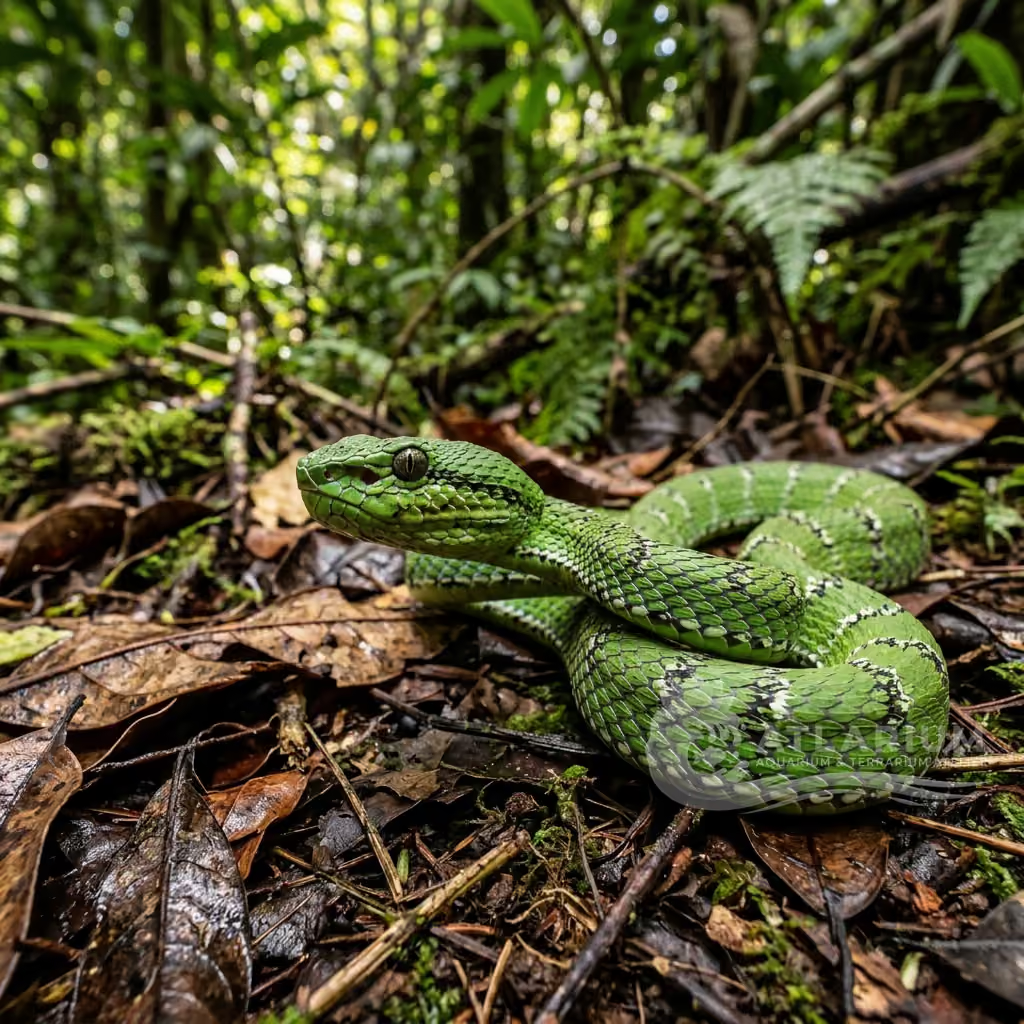
Behavior and Habits: Strictly solitary, nocturnal, and arboreal. It utilizes its strong prehensile tail to anchor itself to branches while waiting in ambush for prey. It has highly sensitive heat-sensing loreal pits located between the nostril and eye. The venom is primarily hemotoxic.
Morphology: Features a slender body and a large, distinct triangular head. The dorsal coloration is bright grass-green, sometimes with light green or yellow lateral spots. The eyes are pale green or yellowish with vertical pupils. Adults typically range from 80 to 100 cm in length.

Pflege, Zucht und Mitbewohner
Terrarium Setup: A vertically oriented enclosure measuring at least 60x50x90 cm is required. Furnish with a network of climbing branches of varying thicknesses, secure artificial or live plants (such as Philodendron or Pothos) to provide hiding spots and cover.
Lighting and Heating: Maintain daytime temperatures between 24-27°C (75-81°F), with a localized basking spot of 29-30°C (84-86°F). Nighttime temperatures should drop to 20-22°C (68-72°F). Install a 2-5% UVB light source on a 12-hour cycle.
Humidity and Hydration: Demands high humidity levels, between 70% and 80%. Mist the enclosure thoroughly once or twice daily with clean, reverse osmosis water. These snakes drink droplets from leaves; they rarely use standard water dishes, though one should still be present.
Feeding and Supplementation: Feed thawed mice or small rats of appropriate size every 10-14 days using extra-long feeding tongs. Juvenile specimens may prefer geckos or frogs. Supplementation is rarely necessary if rodents are gut-loaded, but calcium can be used monthly.
Compatibility: Strictly solitary and dangerously venomous. Must be housed individually in locked terrariums. Specialized handling tools, such as snake hooks and shifting cages, are mandatory. Direct handling is strictly forbidden due to bite risk.
Health and Common Diseases: Poor ventilation combined with high humidity causes respiratory tract infections and mouth rot (infectious stomatitis). Dehydration is a common issue if the snake refuses to drink from spray water; monitor skin folds for signs of dry skin.

Geografische Herkunft und Verbreitung
Hagen's Pit Viper is native to Southeast Asia, ranging through Peninsular Malaysia, Singapore, Sumatra, and adjacent Indonesian islands. It inhabits pristine lowland tropical rainforests, dense riverine vegetation, and bamboo groves, staying on branches from near ground level up to several meters high.
Ursprung
Süd- und SüdostasienOstasien

Reptilienprofil
- Diät
- Carnivore
- Hagen's pit viper primarily targets frogs, small lizards, and occasionally small rodents found in its tropical forest environment. It relies on a sit-and-wait ambush strategy, using its green and patterned coloration to blend flawlessly into the surrounding foliage. The snake utilizes its heat-sensitive facial pits to locate warm-blooded prey, even when visual cues are minimal. A quick, venomous strike ensures the prey is immobilized before it is swallowed whole.
- Erwachsenengröße
- 90 cm
- Lebensstil/Mikrohabitat
- Arboreal
- Being predominantly arboreal, this pit viper spends its life in the canopy of trees, shrubs, and bamboo thickets. They possess a prehensile tail that aids in navigating branches and striking prey from elevated positions. The terrarium must be vertically oriented, equipped with numerous climbing branches and dense foliage to satisfy their climbing instincts.
- Aktivitätszyklus
- Nocturnal
- This species is primarily nocturnal, remaining hidden during the daylight hours to avoid extreme heat and predators. As dusk approaches, the Trimeresurus hageni becomes active, emerging from its diurnal retreat to forage and hunt. Enclosure lighting should reflect a natural day-night cycle, but the snake will exhibit its most natural active behaviors after the lights go out.
- Sozialität
- Solitary
- This pit viper is predominantly nocturnal and strongly arboreal, spending most of its time curled around branches or hidden in dense bushes. During the day, it is extremely sluggish and relies entirely on its cryptic coloration to avoid detection by predators like birds of prey. When darkness falls, it becomes highly alert, shifting into a striking position to intercept passing prey. If disturbed, it is quick to defend itself by vibrating its tail and delivering rapid strikes.
- Reproduktion
- Viviparous
- Hagen's pit viper gives birth to live young (viviparous), an adaptation that is highly advantageous in the humid rainforests it inhabits. The female carries the developing embryos internally for several months, helping regulate their temperature through her own basking behavior. She eventually gives birth to a litter of small, fully independent neonates equipped with functional fangs. These young snakes disperse rapidly to begin foraging for appropriately sized prey.
- Handhabungstoleranz
- Display only
- Due to its highly potent and medically significant venom, the Trimeresurus hageni is strictly a display-only species. Under no circumstances should this snake be free-handled. All interactions, enclosure maintenance, and feeding must be performed using professional snake hooks, secure lockable terrariums, and strict safety protocols to prevent life-threatening envenomation.
- Brumation
- Nicht erforderlich
- Originating from relatively stable, warm climates, this species does not require a true winter brumation period. Maintaining consistent ambient temperatures year-round is ideal for their health. However, slight nocturnal temperature drops and seasonal changes in rainfall or humidity can be provided to mimic their native environment and stimulate natural behaviors.
- Häutung
- Periodic
- Originating from highly humid tropical environments, this snake requires consistently elevated ambient humidity to shed its skin properly. Frequent daily misting or a rain system should be utilized when the snake goes into blue. A properly humidified enclosure prevents dysecdysis (abnormal shedding), which can lead to restricted blood flow or infection.

Verwandte Arten
Empfehlungen gruppiert nach nahen Verwandten, Auswahl von Begleitern und ähnlicher Betreuung.