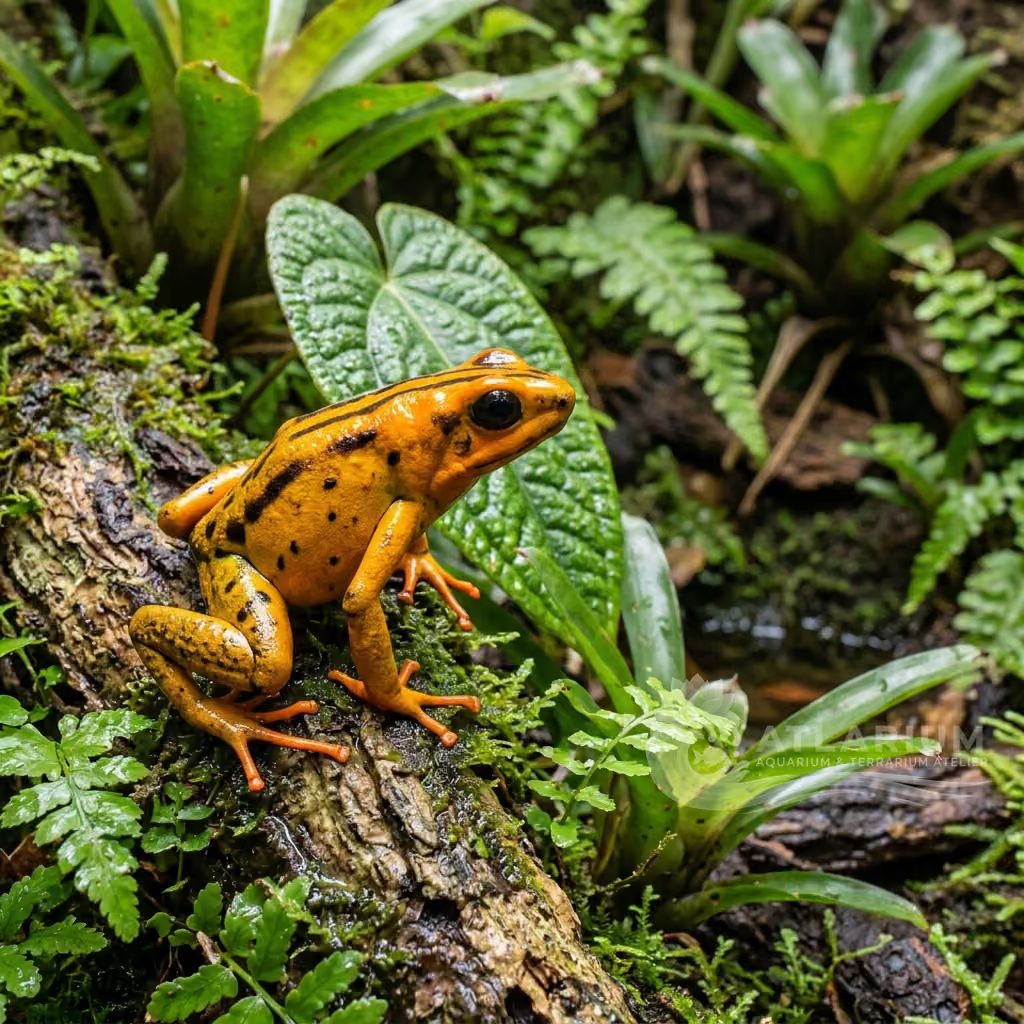
Cane Toad
Rhinella marina
Cane toad. One of the largest amphibian species in the world, famous for its extreme hardiness, voracious appetite, and highly invasive nature. Highly toxic due to cardiotoxic bufotoxins secreted by its large parotoid glands.
Umgebung
Terrestrisch
Luftfeuchtigkeit
60 - 80 %
Tagestemperatur
22 - 28 °C
Nachttemperatur
18 - 22 °C
Umgebungstemperatur
22 - 28 °C
Mindestgehäuse
>= 150 L

Artbeschreibung
Geographical Origin and Habitat: Native to Central and South America, ranging from southern Texas to the Amazon basin. It was widely introduced by humans to Australia, Florida, Hawaii, and the Caribbean to control agricultural pests, becoming a highly destructive invasive species. It adapts to forests, grasslands, suburban gardens, and urban areas.
Taxonomy and Genetics: A massive, heavily built toad. Females are colossal, reaching over 20-25 cm in length and up to 2 kg in weight. The skin is dry, thick, and covered in warts, with greyish-brown or olive coloration. Features prominent, triangular parotoid glands behind the eyes that secrete a milky, toxic fluid.
Behavior and Habits: Strictly nocturnal, terrestrial, and bold. It wanders openly in search of food. Possesses a legendary appetite, attempting to consume anything that fits into its wide jaws, including large insects, small mammals, and even pet food.
Morphology: Females are significantly larger, heavier, and rounder than males. Males are smaller (around 10-15 cm) and have rougher skin with darker throat color during the breeding season.

Pflege, Zucht und Mitbewohner
Terrarium Setup: Requires a very large, heavy terrestrial enclosure (minimum 100x50 cm for an adult). Substrate should consist of 15-20 cm of organic coco fiber or topsoil to allow burrowing. Provide heavy cork bark caves and a large, heavy water bowl that cannot be easily tipped over.
Lighting and Heating: Keep temperatures between 24°C and 26°C during the day, with a night drop to 20°C. Avoid intense lighting; bland, shaded illumination is preferred. They are extremely hardy and tolerate minor temperature fluctuations well.
Humidity and Hydration: Maintain moderate humidity levels (60-70%). The substrate should be damp but not waterlogged. Water must be changed daily, as they produce massive amounts of waste that can cause fatal self-poisoning if substrate hygiene is neglected.
Feeding and Supplementation: Voracious generalists. Feed roaches, earthworms, locusts, and occasional thawed mice (mice should be fed sparingly to prevent obesity). Use long tongs to feed them to avoid painful bites. Dust prey with calcium and D3 regularly.
Compatibility: Can be housed with other cane toads of identical size. Any smaller tankmate will be immediately swallowed. Keep separately or in same-size groups.
Health and Common Diseases: Highly susceptible to obesity, fatty liver disease, and toxic shock from dirty substrate. When stressed or grabbed roughly, they secrete highly toxic bufotoxins from their parotoid glands. Wear gloves when handling and keep away from domestic pets.

Geografische Herkunft und Verbreitung
Native to Central and South America, ranging from southern Texas to the Amazon basin. It was widely introduced by humans to Australia, Florida, Hawaii, and the Caribbean to control agricultural pests, becoming a highly destructive invasive species. It adapts to forests, grasslands, suburban gardens, and urban areas.
Ursprung
Kosmopolitisch oder eingeführtAmazonas, Orinoco und GuayanaMittelamerika und KaribikNordamerikaAfrika und MadagaskarSüd- und SüdostasienAustralien, Neuguinea und OzeanienTropische Ozeane und Riffe

Amphibienprofil
- Diät
- Omnivore
- The cane toad is notorious for its incredible appetite and will eat practically anything it can swallow, alive or dead. Their natural and invasive diets include a massive variety of insects, spiders, small reptiles, mammals, and even human refuse and pet food left outside. In captivity, they require careful feeding management as they will gorge themselves on mice, large insects, and fish to the point of severe obesity.
- Lebenserwartung
- 10-20 years
- Erwachsenengröße
- 15 cm
- Lebensstil/Mikrohabitat
- Terrestrial
- As one of the largest toads, its voracious appetite is legendary. As a highly adapted terrestrial species, the Rhinella Marina utilizes its environment to the fullest. This lifestyle requires a terrarium setup that mimics such conditions, focusing on floor space and hiding spots. Proper enrichment should be provided to allow for natural behaviors.
- Aktivitätszyklus
- Nocturnal
- The Rhinella Marina is predominantly nocturnal in its natural habitat. It typically exhibits its highest levels of activity during the night, emerging to forage for food and explore its surroundings while resting during the alternating periods to conserve energy and avoid predators.
- Sozialität
- Solitary
- Cane toads are highly adaptable, bold, and entirely terrestrial, preferring open areas, grasslands, and human-modified habitats over dense forests. They are nocturnal and sit patiently near light sources to ambush insects attracted to the glow. They move via short, rapid hops rather than large leaps and are generally unfazed by the presence of larger animals or humans.
- Reproduktion
- Oviparous
- Breeding can occur year-round in tropical climates, typically stimulated by rainfall. The females are incredibly prolific, capable of laying up to 30,000 eggs in a single clutch in almost any available body of water. This explosive reproductive rate has been a primary factor in their devastating success as an invasive species across the globe.
- Toxizität
- Highly toxic
- This species possesses enormous parotoid glands that secrete a highly toxic milky fluid called bufotoxin when the animal is threatened. This toxin is lethal to many predators, including large snakes, crocodiles, and domestic dogs, causing rapid cardiac arrest. Handling cane toads requires extreme care and immediate handwashing, as the toxins can be absorbed through human mucous membranes.
- Lebensphase
- Metamorphosis
- The eggs hatch into tiny, highly toxic black tadpoles that group together in massive swarms. Unlike most amphibians, the tadpole stage is very brief, sometimes lasting only a few weeks before they metamorphose into miniature toads. These tiny toadlets grow at an astonishing rate, rapidly reaching their massive adult size in a highly competitive environment.
- Handhabungstoleranz
- Expert only
- When it comes to interactions, the Rhinella Marina is generally considered requires experience. It requires an experienced keeper to handle safely, often due to speed, venom, or stress susceptibility.
- Brumation
- Regarding seasonal cycles, brumation is no for the Rhinella Marina. It does not require a brumation period and should be maintained at consistent optimal temperatures year-round to ensure proper digestion and health.
- Häutung
- Regular
- The Rhinella Marina requires moderate humidity conditions for a successful molt. Maintaining standard ambient humidity is usually sufficient, though a slight bump in humidity during the shed cycle can be beneficial.

Verwandte Arten
Empfehlungen gruppiert nach nahen Verwandten, Auswahl von Begleitern und ähnlicher Betreuung.