Aponogeton longiplumulosus
Aponogeton longiplumulosus
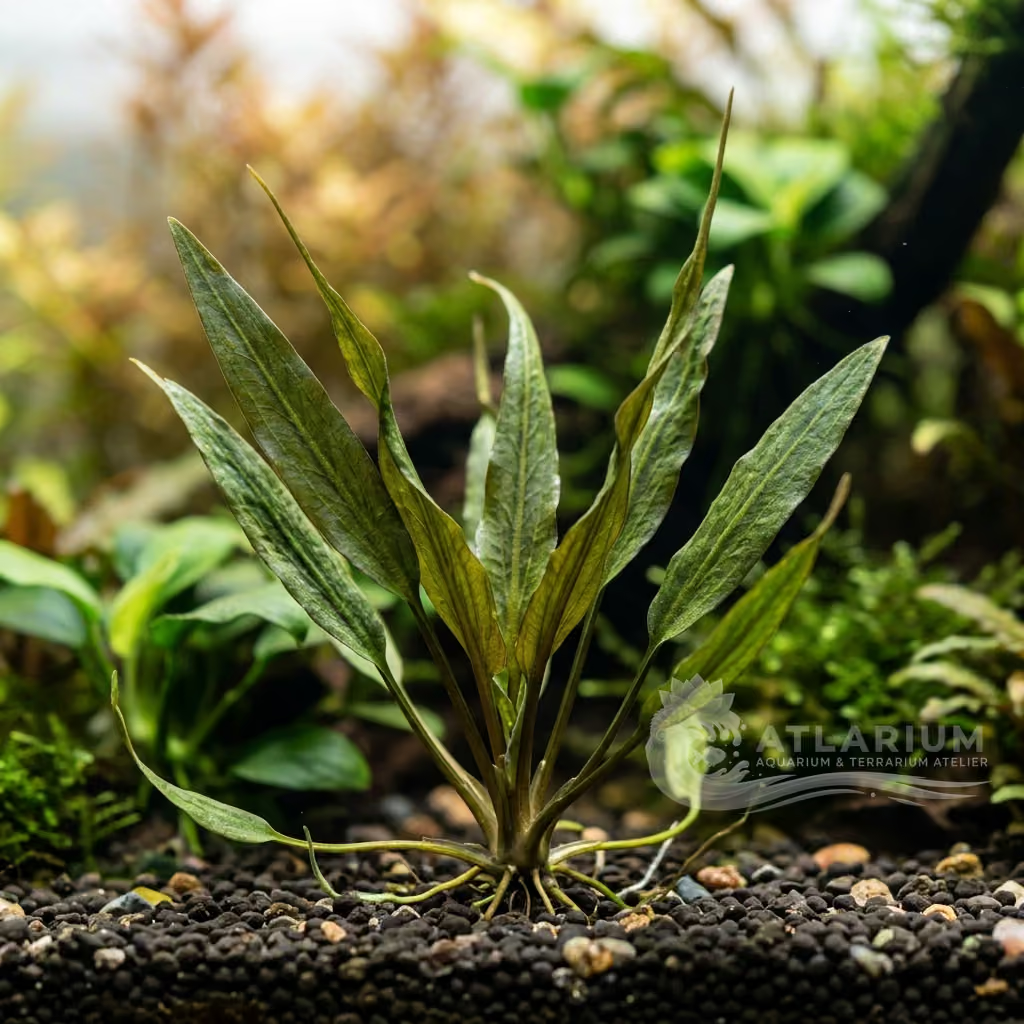
Madagascar native with stunning long, wavy leaves. Requires medium-high lighting and CO2 dosing to support massive leaf production and thick roots.
Wassertemperatur
12 - 28 °C
pH-Wert
5 - 7
Wassertyp
Süßwasser
Licht
Mittel - Hoch
CO2
Niedrig - Hoch
Erwartete Höhe
60 cm
Erwartete Breite
40 cm
KH
4 - 12 dKH

Artbeschreibung
Geographical Origin and Habitat: The species Aponogeton longiplumulosus is native to the flowing waters and rivers of Madagascar, where it grows anchored to rocky and sandy beds in the presence of constant water flow. In its natural environment, it is typically found in slow-flowing or stagnant waters, such as swamps, ponds, and tropical riverbanks, where it adapts beautifully to seasonal water level variations. This habitat provides a rich organic substrate and consistent, filtered light exposure. The plant's ability to grow both submersed and emersed is a testament to its extraordinary evolutionary resilience in these humid ecosystems.
Taxonomy & Genetics: From a taxonomic perspective, the plant belongs to the genus Aponogeton within the Aponogetonaceae family. It is one of the most fascinating species due to its unique leaf morphology. This phylogenetic placement places it within a group of vascular plants highly specialized for aquatic life. Genetically, species in this genus exhibit high phenotypic plasticity, meaning their outward appearance can vary drastically based on available light and nutrient conditions. Selection and hybridization efforts have led to the development of specific cultivars suited for aquarium cultivation.
Physical Structure: The morphology of this plant is characterized by an imposing rosette developing from a basal tuber or bulb, characterized by long, ribbon-like, and extraordinarily ruffled leaves. This structural conformation allows the plant to withstand moderate water currents and maximize the absorption of carbon dioxide and light. The root system is designed to anchor the plant firmly to the soil and absorb mineral nutrients. In aquariums, the vertical or creeping development provides excellent natural barriers and shelter zones for small fish and invertebrates.
Color & Texture: Aesthetically, the plant offers translucent bottle-green or olive-green leaves, with a ruffled, twisted texture that beautifully catches the light and water movement. The leaf texture, soft yet resilient to the touch, adds visual depth and a sense of naturalness to any aquascaping composition. The chromatic variation serves as an excellent color contrast compared to traditional, all-green plants. Under strong lighting and targeted fertilization, the intensity of the color reaches its maximum visual splendor.

Pflege, Zucht und Mitbewohner
Lighting & CO2: For optimal growth, the plant requires medium-high lighting and regular CO2 dosing to support its massive leaf production and stimulate flower development. Intense light promotes shorter internodes and the development of more saturated colors, while the CO2 supply ensures stable photosynthesis, preventing plant tissue decay. In the absence of these elements, the plant will tend to stretch excessively towards the light, losing its lower leaves and exhibiting weak, stunted growth.
Nutrition & Substrate: Nutrition must be managed by providing consistent root fertilization using root tabs inserted near the tuber, as it features a highly demanding root system. A fertile substrate or the use of root tabs near the root system significantly accelerates growth, while
Water Chemistry: This species prefers clean, flowing water with pH 5.0-7.0, KH 4-12, and cool to temperate temperature between 12 and 28 °C, benefiting from good water flow. Regular water changes are recommended to maintain stable parameters and low levels of pollutants such as nitrates and phosphates. Good mechanical and biological filtration will ensure an environment free of suspended particles, which could settle on the leaves and limit photosynthesis.
Space Management & Placement: The ideal placement is the background of the aquarium in large tanks, given its imposing size which can easily reach 60 cm in height. As a plant that can expand laterally or vertically, it is important to carefully calculate distances from neighboring species to avoid mutual shading. Proper water circulation among the foliage also prevents the formation of stagnant zones susceptible to bacterial infections.
Pruning: Maintenance is carried out by removing only older or damaged leaves by cutting them near the base of the tuber, avoiding any damage to the central bulb. Periodically removing older or damaged leaves at the base stimulates the plant to focus energy on new growth. Using sterile, very sharp tools is essential to avoid crushing stem tissues, which could lead to necrosis or fungal infections.
Risks & Diseases: The main risks include tuber rot if buried too deeply in the substrate, and the spontaneous entry into a vegetative dormancy phase where it sheds its leaves. Under conditions of poor water movement or nutrient imbalance, the leaves can be colonized by filamentous or green spot algae. In cases of severe stress, the stems can rot from the inside; if this occurs, damaged parts must be removed immediately to prevent infecting the entire plant.

Geografische Herkunft und Verbreitung
The species Aponogeton longiplumulosus is native to the flowing waters and rivers of Madagascar, where it grows anchored to rocky and sandy beds in the presence of constant water flow. In its natural environment, it is typically found in slow-flowing or stagnant waters, such as swamps, ponds, and tropical riverbanks, where it adapts beautifully to seasonal water level variations. This habitat provides a rich organic substrate and consistent, filtered light exposure. The plant's ability to grow both submersed and emersed is a testament to its extraordinary evolutionary resilience in these humid ecosystems.
Ursprung
Afrika und Madagaskar

Pflanzenprofil
- Platzierung
- Hintergrund
- This large plant must be placed in the background or as a striking centerpiece in very spacious aquariums. Ensure the tuber is only lightly pressed into the substrate with the tip fully exposed. It needs considerable room to spread out, as its leaves can easily exceed two feet in length.
- Botanische Form
- Rosette, Knolle
- It boasts incredibly distinctive, long, deeply fluted and wavy leaves that are truly eye-catching. The foliage is relatively robust and exhibits a beautiful translucent green appearance under aquarium lights. The structural complexity of the leaves makes it one of the most recognizable aquatic plants.
- Wachstum
- Mittel
- The growth rate is fast during its active phase, quickly producing numerous, large leaves. This rapid production requires the aquarist to provide consistent fertilization to keep up with the demand. The plant will eventually slow down and enter a dormant phase after several months of vigorous growth.
- Substrat
- Hoch
- Because of its very large potential size, Aponogeton longiplumulosus needs an expansive, deep, and nutrient-packed substrate layer. Its large tuber sends thick roots deep into the soil to seek out iron and trace elements vital for its ruffled, dark-green leaves. A depth of 7-10 cm (3-4 inches) of high-quality aqua soil is recommended to securely anchor this robust plant. Strategic placement of iron-rich root tabs directly beneath the bulb will drastically improve the vibrancy and longevity of its foliage.
- Säulendüngung
- Empfohlen
- A comprehensive liquid fertilizer is necessary to supply the trace elements needed for such expansive foliage. Maintaining sufficient potassium levels in the water column is crucial to prevent the leaves from deteriorating. Regular dosing helps sustain the plant during its intense growth spurts.
- Wurzeldüngung
- Erforderlich
- A highly fertile substrate is non-negotiable for achieving the maximum potential of this species. Heavy supplementation with root tabs is required to feed its extensive root system. Substrate feeding ensures the bulb stores enough energy to survive its eventual resting period.
- Trimmen
- Gelegentlich
- Prune by removing the oldest leaves at the base near the tuber to keep the plant looking tidy. Never cut across the leaf blade, as the remaining portion will quickly rot. If the plant loses all its leaves during dormancy, leave the tuber alone to rest and recover.
- Ausbreitung
- Samen
- Like most Aponogetons, it is propagated by germinating seeds from its surface flowers. Vegetative propagation by cutting the tuber is highly discouraged and usually fails. Seed cultivation is a rewarding but slow process requiring specialized care.
- Empfindlichkeit
- Mäßig
- It is highly sensitive to having its tuber buried, which almost always results in fatal rot. The plant prefers moderate temperatures and may struggle in tanks kept above 82°F (28°C). It requires excellent water circulation to keep its complex leaves free of algae and detritus.
- Layoutrolle
- Hintergrund
- It is the ultimate background focal point, providing unparalleled texture and movement. Its massive, wavy leaves create a dramatic, jungle-like atmosphere in the aquascape. It is best used in minimalist layouts where its unique form can be appreciated without visual clutter.

Verwandte Arten
Empfehlungen gruppiert nach nahen Verwandten, Auswahl von Begleitern und ähnlicher Betreuung.