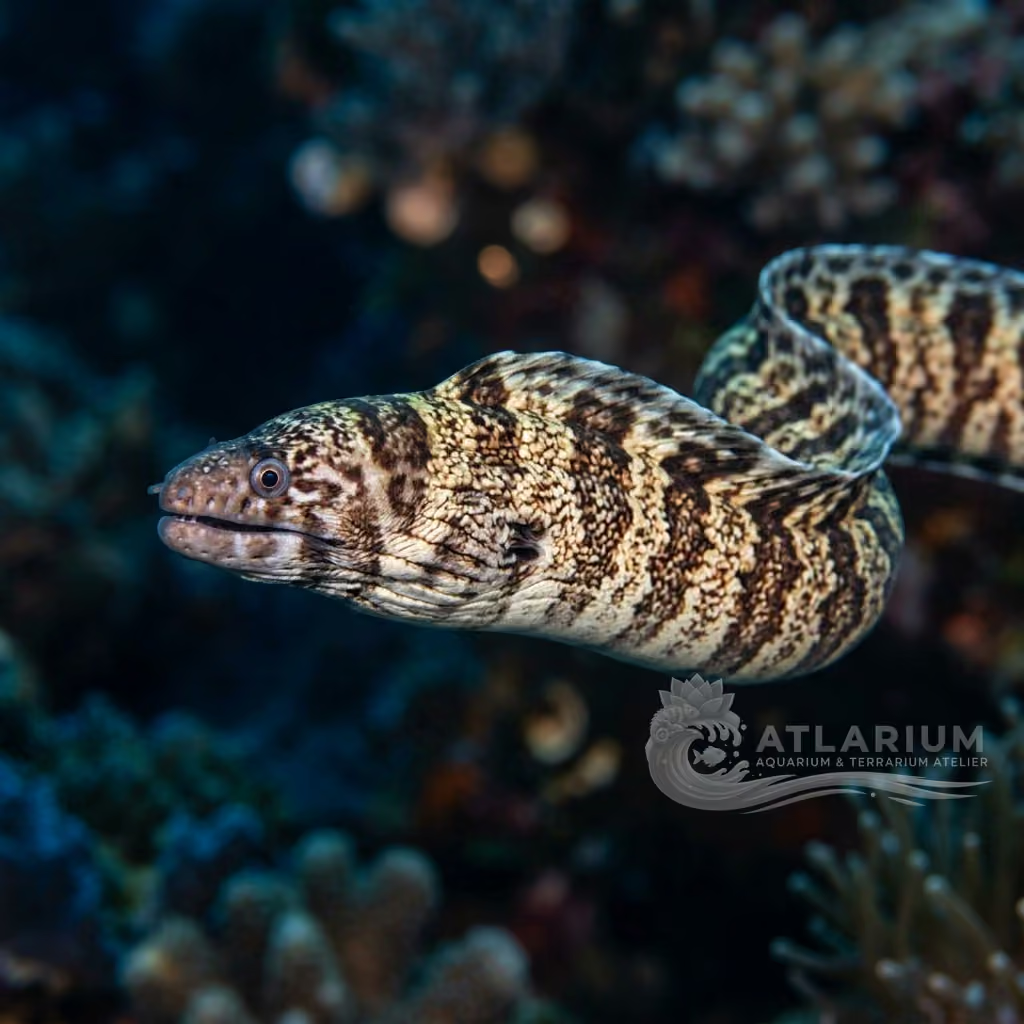
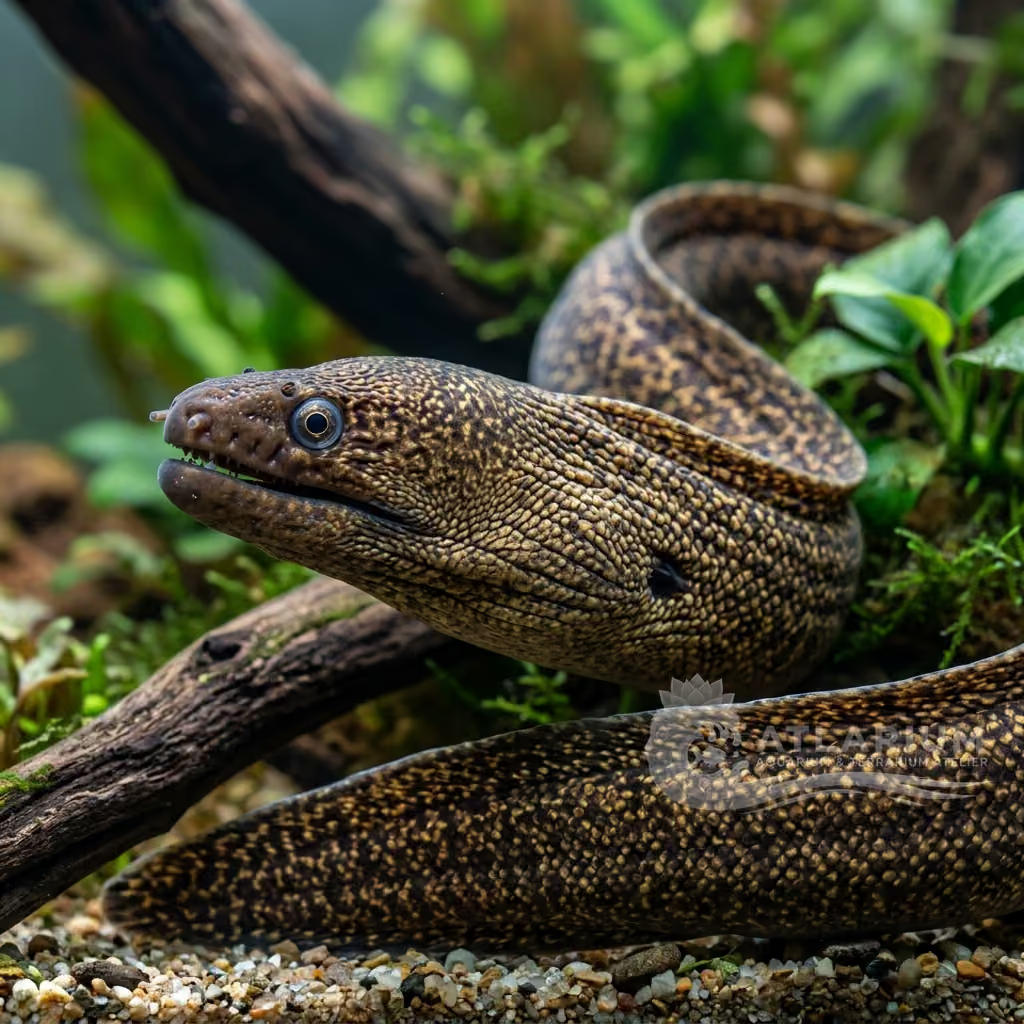
Ribbon Eel
Rhinomuraena quaesita
The ribbon eel is an elegant, incredibly long predator noted for drastic color changes across its lifespan. It requires deep sand beds or buried PVC pipes for secure burrowing and an escape-proof lid.
Wassertemperatur
23 - 27 °C
pH-Wert
8.1 - 8.4
Wassertyp
Meerwasser
Tankfüllstand
Unten
Erwachsenengröße
100 cm
Mindesttankvolumen
300 L
Mindestgruppe
>= 1

Artbeschreibung
Geographical Origin and Habitat: Native to the Indo-Pacific, where it lives on sandy slopes and muddy bottoms near reefs, often burrowing deep into the substrate. Found throughout the Indo-Pacific, this species inhabits sand-covered lagoons and coastal reef slopes, often burying its long body in the substrate.
Taxonomy and Morphology: Classified under the Muraenidae family. It features a ribbon-like, extremely slender body and unique leaf-like nasal appendages. A member of the Muraenidae family, it is easily recognized by its extremely slender, ribbon-like body and fan-like nasal extensions.
Social Behavior: Shy and generally peaceful towards non-prey tankmates. It spends its time buried in the sand with only its head poking out, mouth open to breathe. Shy and reclusive, it remains anchored in its burrow during the day, opening its mouth constantly to pump water over its gills for respiration.
Coloration and Sexual Dimorphism: A protandric hermaphrodite. Juveniles are black, males are bright electric blue with yellow fins, and females turn completely yellow. Exhibits protandrous hermaphroditism, shifting from black juveniles to blue adult males, and finally to bright yellow spawning females.

Pflege, Zucht und Mitbewohner
Aquarium Setup: Requires a tank of at least 75 gallons with a deep sand bed (3-4 inches) or buried PVC pipes to provide secure artificial burrows. A tightly secured aquarium lid is mandatory, as this eel can escape through the smallest openings. Provide buried PVC pipes for shelter.
Diet and Feeding: Notoriously difficult to feed. Initial feeding requires live feeder shrimp or small fish, which can slowly be transitioned to frozen silversides. Feeding is the greatest challenge; start with live feeder fish or ghost shrimp, slowly transitioning to frozen silversides using feeding tongs.
Water Quality: Demands pristine, highly filtered water. Keep temperature at 23-27°C, pH at 8.1-8.4, specific gravity at 1.023-1.025, and run a powerful skimmer. Requires high-capacity filtration to manage biological waste, alongside moderate flow and regular water maintenance schedules.
Compatibility and Cohabitation: Safe with medium to large peaceful fish. Small fish or shrimp are potential prey. Aggressive tankmates will cause it to stop eating. Avoid keeping with small fish or ornamental shrimp, which are natural prey. Suitable for tanks with large, non-aggressive fish.
Aquarium Breeding: Unrecorded in home aquariums due to their complex sex changes, pelagic spawning habits, and sensitive larvae. Captive breeding has not been documented, as their unique sexual transition and pelagic larval stages require open ocean dynamics.
Risks and Diseases: An extreme risk of starvation due to food refusal. Exceptional escape capability; the tank must be completely escape-proof with a locked lid. High risk of starvation due to stress-induced fasting. Minimize changes to the tank decoration and provide dim, stress-free lighting.

Geografische Herkunft und Verbreitung
Native to the Indo-Pacific, where it lives on sandy slopes and muddy bottoms near reefs, often burrowing deep into the substrate. Found throughout the Indo-Pacific, this species inhabits sand-covered lagoons and coastal reef slopes, often burying its long body in the substrate.
Ursprung
Tropische Ozeane und RiffeNordamerika

Fischprofil
- Temperament
- Semi-aggressive
- Despite its fearsome appearance, it actually possesses a surprisingly shy and easily intimidated temperament. It is frequently outcompeted for food by aggressive tank mates and requires a very tranquil environment. Once successfully established, it becomes a fascinating and graceful observer of the aquarium.
- Diät
- Omnivore
- This species can be notoriously difficult to feed and often requires live food, such as ghost shrimp or small fish, to trigger a feeding response. Once acclimated, they can be slowly transitioned to frozen silversides or strips of raw fish. Patience and persistence are absolutely necessary when weaning them onto frozen diets.
- Lebenserwartung
- 20 years
- Erwachsenengröße
- 100 cm
- Geschlechterverhältnis
- Pair
- This species is a protandrous hermaphrodite, radically changing its striking coloration as it matures from juvenile to male, and eventually to female. They are best kept alone, as their behavior toward conspecifics in a confined tank is often completely unpredictable. Forced pairing attempts frequently result in severe injury to the weaker individual.
- Fütterungsfrequenz
- Twice daily
- They generally do best when offered food two to three times per week, depending on meal size. Frequent small feedings can sometimes be used to transition them onto frozen foods. Once established, regular but infrequent large meals will keep them perfectly healthy.
- Bioload
- Extreme
- The bioload for this species is moderately high, requiring a well-established filtration system. Oversized protein skimmers and frequent mechanical filter cleaning are recommended. Regular and substantial water changes are crucial to keep the water parameters completely stable.
- Fluss
- Strong
- Rhinomuraena quaesita needs brisk, oxygen-rich circulation, with the strongest return flow spread through open water rather than aimed continuously at one refuge. Requires a tank of at least 75 gallons with a deep sand bed (3-4 inches) or buried PVC pipes to provide secure artificial burrows. A tightly secured aquarium lid is mandatory, as this eel can escape through the smallest openings. Keep solid cover available so the fish can leave the fastest water whenever it chooses.
- Sprungrisiko
- Yes
- Their slender, elongated bodies allow them to escape through unbelievably small holes or overflow slots. Every single opening, including pipe clearances and heater cables, must be meticulously sealed. They are incredibly prone to escaping and drying out on the floor if the tank isn't perfectly secured.
- Reproduktion
- Oviparous
- Reproduction in this species involves the release of massive amounts of gametes into the pelagic zone. Their complex lifecycle involves an extended leptocephalus larval stage that drifts in the ocean for months. Because of this monumental biological hurdle, captive breeding has never been successfully documented.
- Kompatibilität & Tankkameraden
- Peaceful
- Generally peaceful towards medium and large tank mates, it primarily poses a threat to very small fish. It works well in a specialized predator tank or a community of peaceful, larger species. Despite its predatory nature, it is quite shy and easily intimidated by overly aggressive companions.
- Tankfüllstand
- Bottom
- It requires a deep, fine sandy substrate where it can burrow securely and create stable homes. It typically remains anchored in its burrow at the bottom of the tank, extending its body outwards to catch passing food. Without a proper sandbed and PVC pipes for structural support, it will become chronically stressed.

Wissenschaftliche Modelle & Parameter
FishBase
Zugang zu den offiziellen wissenschaftlichen Daten der Art
FishBase v25.04Daten synchronisiert am: 15.06.2026
- Trophäenniveau
- 3,5

Verwandte Arten
Empfehlungen gruppiert nach nahen Verwandten, Auswahl von Begleitern und ähnlicher Betreuung.