Schooling bannerfish
Heniochus diphreutes
The Schooling Bannerfish is a deep-water pelagic swimmer ideal for tall marine aquariums. A voracious planktivore, it requires a tank featuring significant vertical open space and minimal live rock.
Wassertemperatur
24 - 28 °C
pH-Wert
8.1 - 8.4
Wassertyp
Meerwasser
Tankfüllstand
Oberfläche und Mitte
Erwachsenengröße
20 cm
Mindesttankvolumen
>= 500 L
Mindestgruppe
>= 5

Artbeschreibung
Geographical Origin and Habitat: Indo-Pacific Ocean and tropical coasts. Deep water pelagic swimmer: rarely explores the bottom, preferring to stay very high among the outer reef walls swept by currents.
Taxonomy and Morphology: Schooling Bannerfish (Heniochus diphreutes). Very often confused with the identical H. acuminatus, it is distinguished from the latter by the slightly shorter snout and by the fact that it forms cohesive schools.
Social Behavior: Exceptional Marine schooling species. Unlike many butterfly and angelfish (isolated and aggressive), the Heniochus loves to be kept in small groups (3-5), swimming in mid-water like true angels.
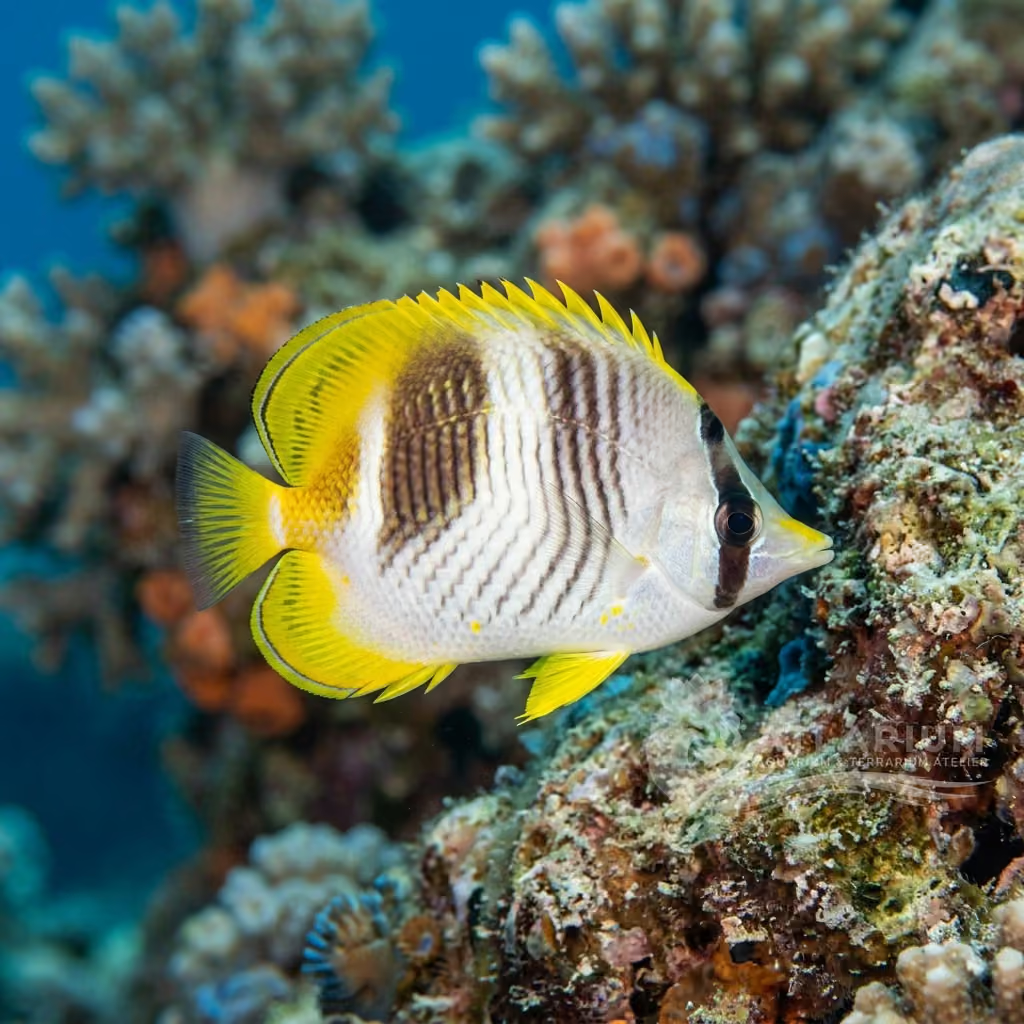
Coloration and Sexual Dimorphism: Back and belly with alternating very black and white oblique stripes, with the anal and caudal fin bright yellow. But the real crown is the very long pure white "banner" dorsal filament, enormous.

Pflege, Zucht und Mitbewohner
Aquarium Setup: Tank for large marines (Minimum 120-150 cm / 48-60 inches). Must be developed in HEIGHT (their filaments are long) and needs 50% open space on the water column. Not recommended to overfill the tank with "Live-Rocks".
Diet and Feeding: Planktivore. Extremely voracious, takes no prisoners (will swallow anything that enters the water). Mysis, brine shrimp, clam pulp. They are exceptional scavengers and rarely bite corals (unlike H. acuminatus).
Water Quality: Very clean marine water, with a very reactive skimmer because their huge ingestions lead to large excretions. Salinity (1.020 - 1.025).
Compatibility and Cohabitation: Reef Safe with caution! (Unlike its cousin acuminatus which is 100% NON-reef safe). Perfect with Tangs (Zebrasoma, Acanthurus), Anthias, and clownfish. Not recommended with Triggerfish that would bite the long dorsal filaments.
Aquarium Breeding: Non-existent in hobby aquariums. They lay pelagic eggs that follow ocean currents, impossible for the common citizen to raise.
Risks and Diseases: The species error (The Coral Nightmare): there is a very high risk of mistakenly buying H. acuminatus (visually almost identical), which overnight will devastate and eat half of your prized LPS corals in the tank.

Geografische Herkunft und Verbreitung
Indo-Pacific Ocean and tropical coasts. Deep water pelagic swimmer: rarely explores the bottom, preferring to stay very high among the outer reef walls swept by currents.
Ursprung
Tropische Ozeane und RiffeAfrika und Madagaskar

Fischprofil
- Temperament
- Territorial
- This fish has a very peaceful and relatively docile temperament. It enjoys the company of its own kind and often forms cohesive schools in larger aquariums. While peaceful, it can hold its own against mildly boisterous tank mates if sufficient space is provided. It rarely bothers other fish species and makes an excellent community reef addition.
- Diät
- Omnivore
- In the wild, this fish feeds primarily on zooplankton in the water column. In the aquarium, it should be offered a varied diet of meaty foods such as mysis shrimp, brine shrimp, and finely chopped seafood. It will also accept high-quality flakes and pellets once acclimated. Adding vitamin-enriched foods will help maintain its vibrant colors and overall health.
- Lebenserwartung
- 5-10 years
- Erwachsenengröße
- 20 cm
- Geschlechterverhältnis
- Group
- There are no easily distinguishable external differences between males and females of this species. They can generally be kept in groups without strict attention to sex ratios. Maintaining a small school of three or more individuals helps disperse any minor conspecific aggression. It is best to introduce all individuals simultaneously to avoid territorial disputes.
- Fütterungsfrequenz
- Twice daily
- Because of its active swimming and high metabolic rate, it needs to be fed small amounts multiple times a day. Feeding two to three times daily is considered optimal for this species. Ensure that each feeding is consumed within a few minutes to prevent excess food from decaying in the tank. Consistent feeding schedules promote better health and reduce stress.
- Bioload
- High
- This marine species produces a moderate bioload due to its active nature and frequent feeding. Regular water changes and a robust filtration system are necessary to manage the waste effectively. Efficient protein skimming is highly recommended for maintaining pristine water quality. Overfeeding should be avoided to prevent sudden spikes in nitrate and phosphate levels.
- Fluss
- Strong
- This species thrives in environments with moderate to strong water flow, mimicking its natural reef edge habitat. Good water movement helps keep suspended food particles in the water column where the fish can catch them. Ensure there are also some calmer areas in the tank where the fish can rest when needed. Proper flow also aids in overall oxygenation of the aquarium.
- Sprungrisiko
- No
- Reproduktion
- Oviparous
- Breeding this species in a home aquarium is extremely difficult and rarely documented. They are pelagic spawners, releasing eggs and sperm into the water column during broadcast spawning. The microscopic larvae drift with the ocean currents, making them nearly impossible to raise in captivity. Most specimens available in the hobby are collected from the wild.
- Kompatibilität & Tankkameraden
- Territorial
- It is generally peaceful and thrives when kept in small groups or schools. It is considered reef-safe with caution, as it typically ignores corals but may occasionally nip at some polyps. It gets along well with other peaceful or moderately aggressive marine fish. Keep it away from very aggressive tank mates that might harass or outcompete it for food.
- Tankfüllstand
- Top/Middle
- This active species primarily occupies the middle and upper levels of the water column. It appreciates plenty of open swimming space to cruise around and exhibit natural schooling behaviors. While it stays in the open, it also needs tall rock formations or caves for shelter. It will occasionally graze along the reef structure but mostly stays elevated.

Wissenschaftliche Modelle & Parameter
FishBase
Zugang zu den offiziellen wissenschaftlichen Daten der Art
FishBase Catalog curation 2026-05-09Daten synchronisiert am: 15.06.2026
- Trophäenniveau
- 3,3 ± 0,4 se
- Belastbarkeit
- Hoch (weniger als 15 Monate)
- Phylogenetische Einzigartigkeit (PD50)
- 0.5039
- Bayessche Längen-Gewichts-Beziehung
- a = 0.02239, b = 3.01
- AnfälligkeitGeringe Anfälligkeit (11 / 100)

Bildergalerie
Lizenzierte Bilder, die mit der Art oder, wenn markiert, mit dem nächstgelegenen repräsentativen Taxon verknüpft sind.

Verwandte Arten
Empfehlungen gruppiert nach nahen Verwandten, Auswahl von Begleitern und ähnlicher Betreuung.