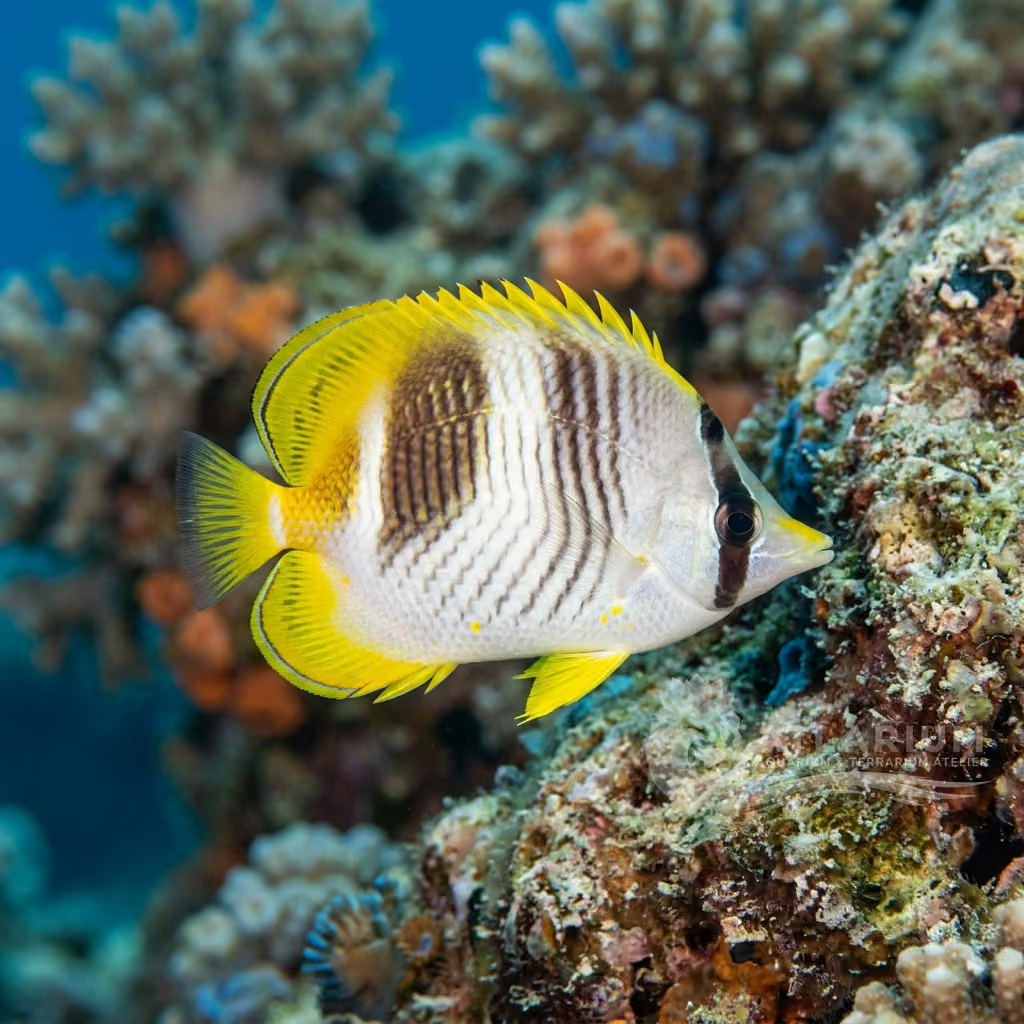
Saddleback Butterflyfish
Chaetodon ephippium
The Saddleback Butterflyfish is a large, elegant species characterized by a black, white-edged saddle patch. It needs a massive tank and a varied omnivore diet.
Wassertemperatur
24 - 28 °C
pH-Wert
8.1 - 8.4
Wassertyp
Meerwasser
Tankfüllstand
Unten und in der Mitte
Erwachsenengröße
30 cm
Mindesttankvolumen
>= 600 L
Mindestgruppe
>= 1
KH
8 - 12 dKH

Artbeschreibung
Geographical Origin and Habitat: Widespread in the tropical Indo-Pacific, from Sri Lanka and Cocos-Keeling Islands to Hawaii, the Marquesas, and Tuamotu, north to southern Japan, and south to New South Wales (Australia). Inhabits coral-rich lagoons and seaward reefs down to 30 meters.
Taxonomy and Morphology: Member of the family Chaetodontidae, subgenus Rabdophorus. A large butterflyfish growing up to 30 cm in length. Adults develop a long trailing filament extending from the soft portion of the dorsal fin.
Social Behavior: Diurnal species, found singly or in stable monogamous pairs that defend large territories. Generally peaceful toward other families, but territorial toward conspecifics or similarly patterned species.
Coloration and Sexual Dimorphism: Silvery-grey body with wavy blue lines on the lower half. Features a large, white-edged black saddle-like patch on the upper rear of the body and dorsal fin. No visible sexual dimorphism exists.

Pflege, Zucht und Mitbewohner
Aquarium Setup: Demands a very large aquarium of at least 600 liters for adults, offering vast swimming space and a sturdy live rock structure. A secure lid is mandatory as they are highly prone to jumping.
Diet and Feeding: Omnivore. Feeds naturally on filamentous algae, coral polyps, fish eggs, and small invertebrates. Feed 3–4 times daily with mysis, brine shrimp, clams, spirulina, and nori. May take time to accept pellets.
Water Quality: Pristine and stable water parameters. Temperature 24–28°C, pH 8.1–8.4, salinity SG 1.020–1.025, GH 15–25, and KH 8–12. High biological load requires robust filtration and protein skimming.
Compatibility and Cohabitation: Best kept in large Fish-Only With Live Rock (FOWLR) systems. Not reef-safe under any circumstances, as it will decimate hard and soft corals, anemones, feather dusters, and small shrimps.
Aquarium Breeding: Undocumented in captivity due to extreme difficulties in rearing its pelagic larvae. Monogamous broadcast spawners in the wild.
Risks and Diseases: Highly susceptible to marine velvet (Oodinium) and ich (Cryptocaryon) if stressed. Demands strict quarantine and patience during feeding acclimation.

Geografische Herkunft und Verbreitung
Widespread in the tropical Indo-Pacific, from Sri Lanka and Cocos-Keeling Islands to Hawaii, the Marquesas, and Tuamotu, north to southern Japan, and south to New South Wales (Australia). Inhabits coral-rich lagoons and seaward reefs down to 30 meters.
Ursprung
Tropische Ozeane und RiffeSüd- und SüdostasienOstasienAustralien, Neuguinea und Ozeanien

Fischprofil
- Temperament
- Semi-aggressive
- The Saddleback Butterflyfish is generally a peaceful and social species towards non-related fish, making it a good candidate for large community tanks. However, they can display strong territorial aggression towards other butterflyfish, especially members of their own species or similarly patterned competitors. They are active and inquisitive, spending their day scanning the environment and inspecting the substrate for food. When acclimated, they are bold but should not be housed with highly aggressive tankmates that might intimidate them.
- Diät
- Omnivore
- In the wild, Chaetodon ephippium is an omnivore that feeds on filamentous algae, coral polyps, anemones, fish eggs, and small benthic invertebrates. In the aquarium, they must be offered a diverse diet that includes high-quality frozen foods like mysis shrimp, brine shrimp, and marine chopped seafood. They also benefit from the addition of herbivorous preparations containing Spirulina and Nori to satisfy their grazing instincts. Freshly opened clams or mussels on the half-shell can be used as an excellent food source to entice newly introduced or stubborn individuals to feed.
- Lebenserwartung
- 8-12 years
- Erwachsenengröße
- 30 cm
- Geschlechterverhältnis
- 1:1 ratio
- In their natural habitat, adult Saddleback Butterflyfish are commonly observed in pairs or occasionally in small groups, while juveniles remain solitary. In a home aquarium, it is generally best to keep them singly unless a confirmed male-female mated pair can be acquired and introduced simultaneously. Attempting to house multiple individuals of unknown sex in the same tank will often lead to severe territorial aggression. A large tank with plenty of hiding spaces is necessary if attempting to keep a compatible pair together.
- Fütterungsfrequenz
- 3-4 times daily
- Due to their high metabolic rate and active behavior, Saddleback Butterflyfish require multiple small feedings throughout the day. It is highly recommended to feed them at least three times daily to maintain their body weight and overall health. Providing small, frequent portions helps mimic their natural continuous grazing behavior on the reef. Regular feedings also keep the fish active and reduce the likelihood of them nipping at sessile invertebrates or corals out of hunger.
- Bioload
- Medium to High
- The Saddleback Butterflyfish is a large species that can grow up to 9-12 inches, producing a significant amount of biological waste in captivity. To manage this high bioload, a robust filtration system, including an efficient protein skimmer and regular water changes, is absolutely critical. They require extremely clean and well-oxygenated water with low nitrate levels to remain healthy. High-quality biological filtration and active carbon usage are highly recommended to keep the water parameters stable and pristine.
- Fluss
- Strong
- The Saddleback Butterflyfish prefers moderate to strong water flow, reflecting the conditions of their natural coral reef habitats. A good water turnover rate helps oxygenate the water and keeps detritus suspended, which is vital for maintaining high water quality. However, there should always be quieter zones within the aquarium where the fish can rest without constantly battling strong currents. Utilizing variable wavemakers is an excellent way to create natural water movement that simulates reef conditions.
- Sprungrisiko
- Yes
- While not classified as chronic jumpers, Saddleback Butterflyfish can easily leap out of the water when startled, stressed, or chased by tankmates. To prevent tragic accidents, a secure, tight-fitting lid or a mesh jump guard is highly recommended for the aquarium. Spooked individuals may also accidentally jump into open filtration systems or overflow boxes. Providing adequate hiding spaces where the fish can retreat when frightened will significantly reduce the risk of jumping behavior.
- Reproduktion
- Oviparous
- Breeding the Saddleback Butterflyfish in captivity is exceptionally difficult and rarely achieved by home aquarists. In the wild, they are pelagic spawners that release eggs into the water column, which float and drift with ocean currents. While pioneering researcher Frank Baensch successfully raised them from wild-collected eggs, spawning and raising their larvae in home systems remains highly impractical. The larvae go through a complex tholichthys stage, requiring specialized live feeds like copepods under precise laboratory conditions to survive.
- Kompatibilität & Tankkameraden
- Not reef safe
- The Saddleback Butterflyfish is compatible with a wide variety of peaceful to semi-aggressive marine fish, such as tangs, wrasses, and larger clownfish. However, they should not be housed with other butterflyfish species or conspecifics unless they are a matched pair, due to territorial disputes. Because they naturally feed on coral polyps, anemones, and small invertebrates, they are not suitable for reef aquariums. They are best housed in a fish-only-with-live-rock (FOWLR) system with larger, peaceful tankmates that will not outcompete them for food.
- Tankfüllstand
- Middle/Bottom
- The Saddleback Butterflyfish is a highly active swimmer that utilizes the middle and bottom zones of the aquarium. They spend much of their time grazing on live rock and exploring the aquascape for food, but also require large open areas for free swimming. Providing a balance of structured rockwork and open water is essential to accommodate their natural swimming behavior. They rarely venture to the absolute surface except during feeding, making them primarily middle to bottom dwellers in a tank environment.

Wissenschaftliche Modelle & Parameter
FishBase
Zugang zu den offiziellen wissenschaftlichen Daten der Art
FishBase v25.04Daten synchronisiert am: 15.06.2026
- Trophäenniveau
- 3 ± 0,43 se
- Belastbarkeit
- Hoch (weniger als 15 Monate)
- Phylogenetische Einzigartigkeit (PD50)
- 0.5
- Bayessche Längen-Gewichts-Beziehung
- a = 0.02291, b = 3.01
- AnfälligkeitGeringe Anfälligkeit (20 / 100)

Verwandte Arten
Empfehlungen gruppiert nach nahen Verwandten, Auswahl von Begleitern und ähnlicher Betreuung.