Hoefler's butterflyfish
Chaetodon hoefleri
A robust butterflyfish native to the Eastern Atlantic, exhibiting a golden-yellow body with fine horizontal stripes. It thrives in cooler water temperatures and large setups.
Wassertemperatur
20 - 26 °C
pH-Wert
8.1 - 8.4
Wassertyp
Meerwasser
Tankfüllstand
Unten und in der Mitte
Erwachsenengröße
20 cm
Mindesttankvolumen
>= 350 L
Mindestgruppe
>= 1

Artbeschreibung
Geographical Origin and Habitat: Hoefler's butterflyfish is native to the Eastern Atlantic Ocean. Its distribution extends from the coasts of Mauritania down to Angola, including the Gulf of Guinea. It inhabits rocky reefs and sandy or muddy substrates at relatively deep levels, typically between 10 and 150 meters, preferring cooler subtropical waters.
Taxonomy and Morphology: Belonging to the family Chaetodontidae, Chaetodon hoefleri has a deep, oval, and laterally compressed body. The snout is pointed and protruded, adapted for feeding on small invertebrates in narrow cracks. Adults can reach a maximum length of 20 centimeters, representing a robust species of Atlantic butterflyfish.
Social Behavior: It is a relatively shy and solitary species in its natural habitat, occasionally forming stable pairs during spawning. In captivity, it behaves peacefully toward unrelated species but can exhibit strong territoriality and aggression toward other butterflyfishes or members of its own species.
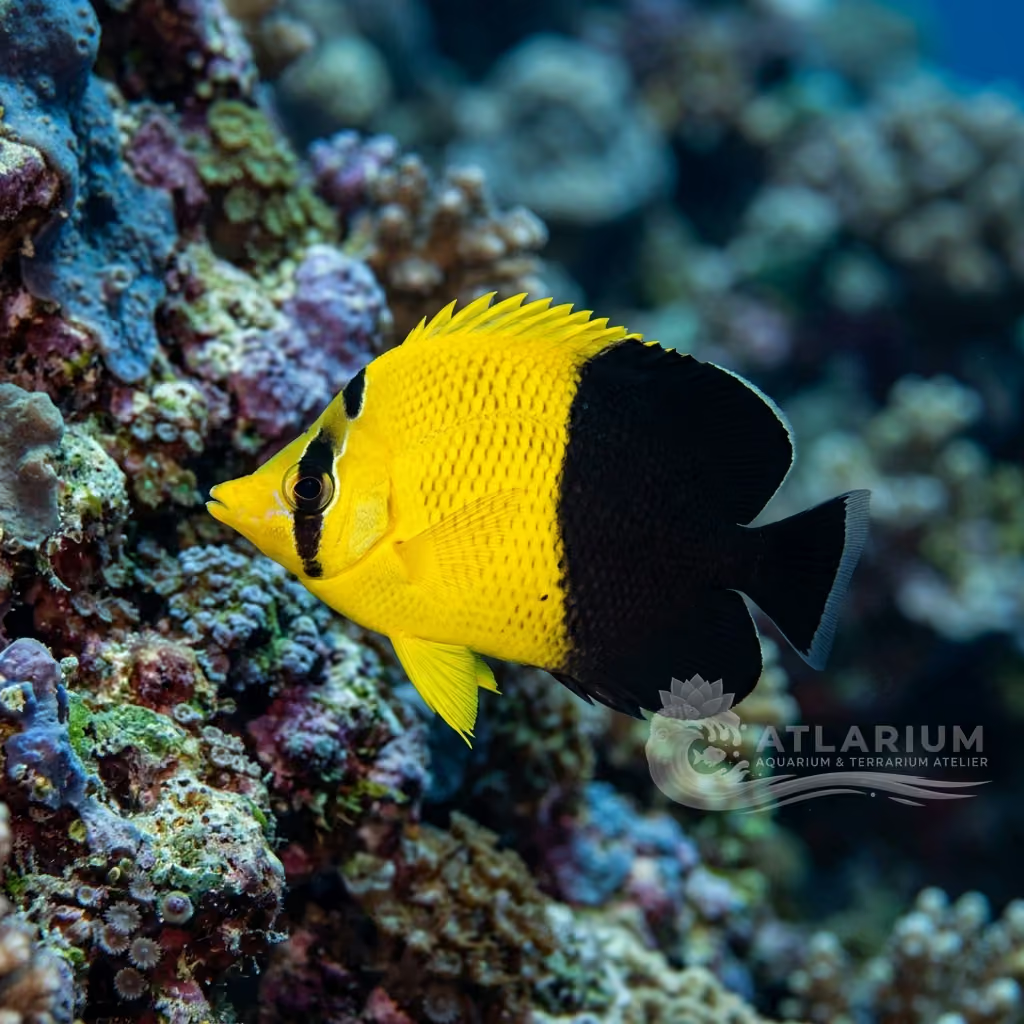
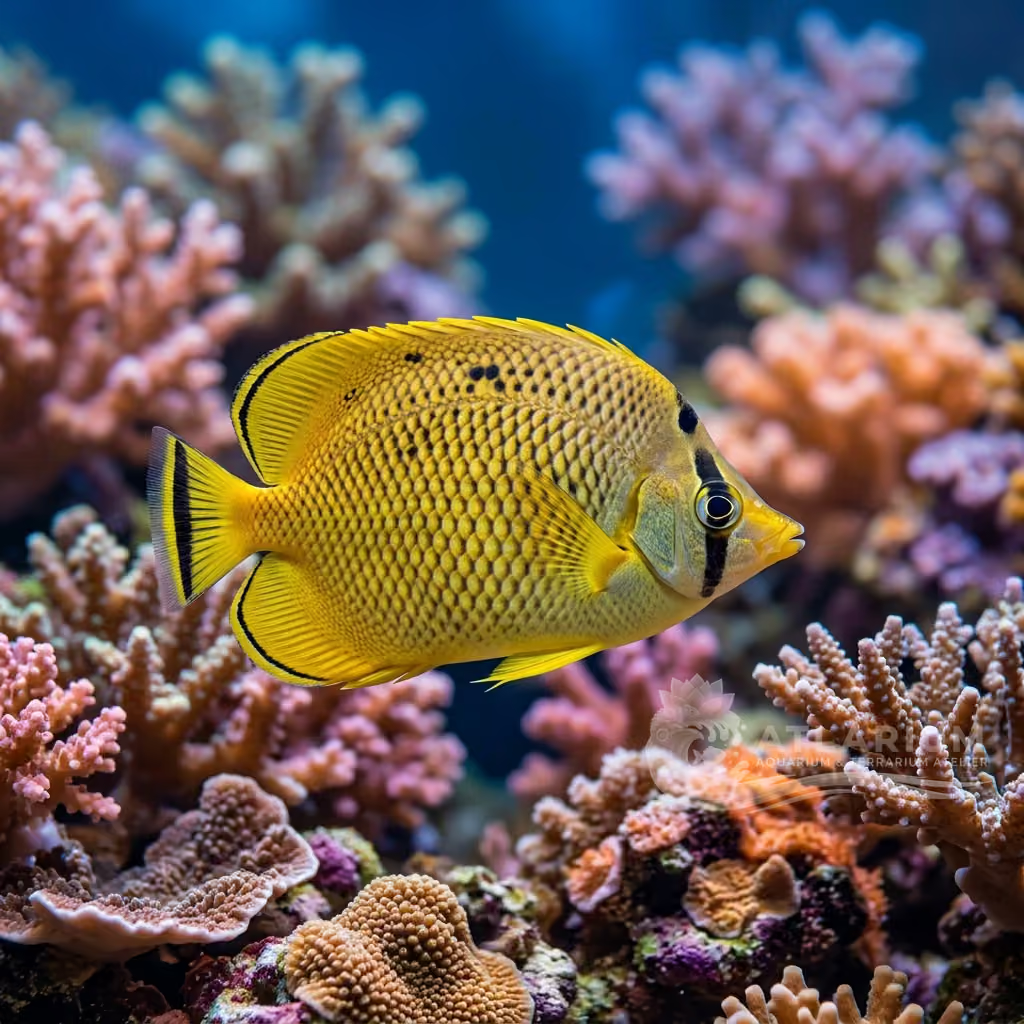
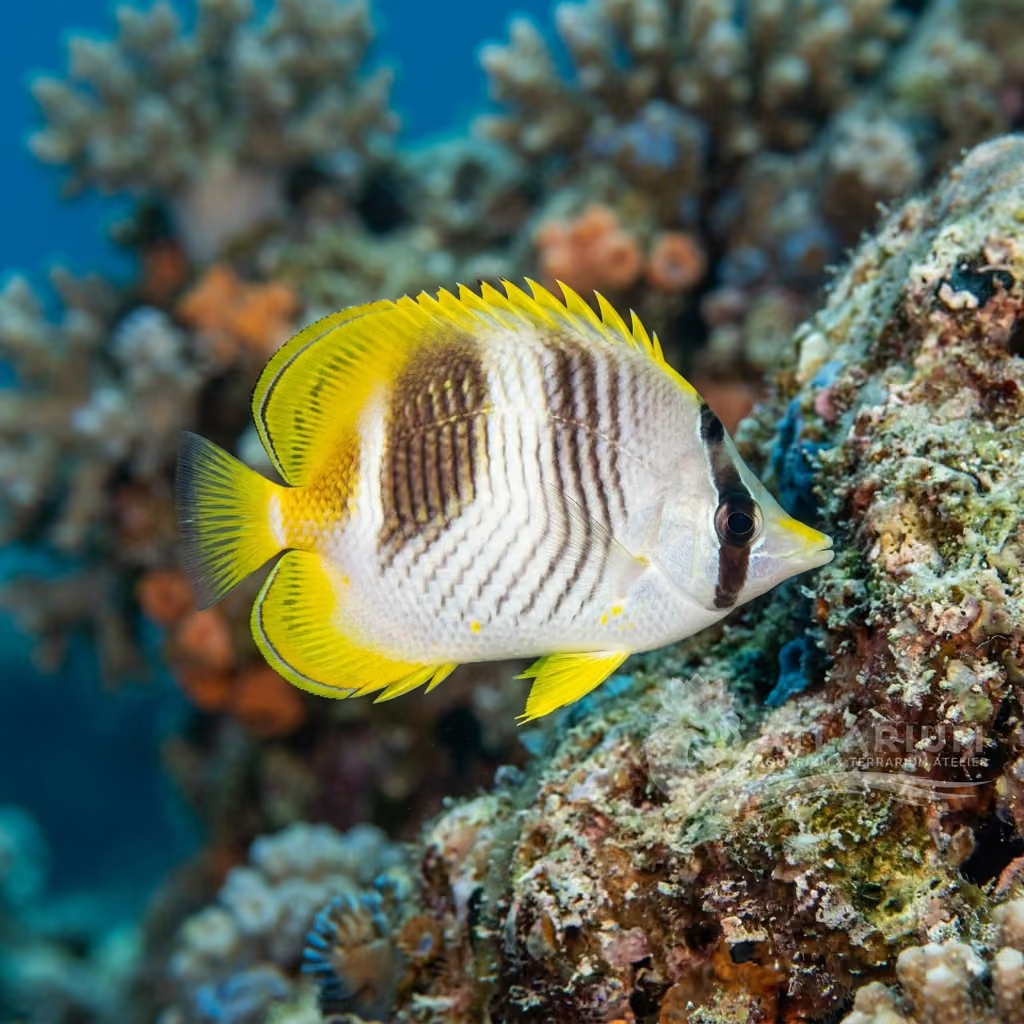
Coloration and Sexual Dimorphism: The body coloration is mainly golden-yellow or yellowish, highlighted by fine brownish horizontal stripes. It features two prominent dark vertical bands: one passing through the eye and another located on the posterior part of the body. There is no visible external sexual dimorphism.

Pflege, Zucht und Mitbewohner
Aquarium Setup: A large aquarium of at least 350-400 liters is required, structured with plenty of live rock to form caves, crevices, and swim-throughs for shelter. It is vital to maintain a generous open swimming area in the center of the tank, as this species requires ample space to feel secure and swim freely.
Diet and Feeding: Omnivorous, feeding on benthic invertebrates and organic matter. In captivity, feed a varied diet multiple times a day with high-quality frozen foods like brine shrimp, mysis, chopped seafood, and vitamin-enriched formulas. Incorporating marine algae into the diet is essential for long-term health.
Water Quality: Due to its deep-water Atlantic origin, it prefers cooler water than standard tropical species, ideally between 18°C and 23°C. The pH should be kept stable between 8.1 and 8.4, salinity at 1.021-1.025, and nitrates must be kept as close to zero as possible with strong, efficient filtration.
Compatibility and Cohabitation: Recommended for fish-only-with-live-rock (FOWLR) systems. It is not reef-safe, as it will damage and feed on stony and soft corals, anemones, and small ornamental tube worms. Good tankmates include peaceful, medium-sized reef fish such as large wrasses, tangs, and hawkfishes.
Aquarium Breeding: Breeding in home aquariums has not been successfully achieved. In the wild, they are pelagic spawners, releasing their eggs directly into the water column to drift with the currents. Replicating these oceanic conditions and providing the necessary diet for the larvae is extremely difficult.
Risks and Diseases: Highly susceptible to marine white spot disease (Cryptocaryon irritans) and velvet (Oodinium). They can be delicate during acclimatization, especially if kept at elevated temperatures. A quiet environment and a strict quarantine protocol are essential for new arrivals.

Geografische Herkunft und Verbreitung
Hoefler's butterflyfish is native to the Eastern Atlantic Ocean. Its distribution extends from the coasts of Mauritania down to Angola, including the Gulf of Guinea. It inhabits rocky reefs and sandy or muddy substrates at relatively deep levels, typically between 10 and 150 meters, preferring cooler subtropical waters.
Ursprung
Tropische Ozeane und RiffeAfrika und Madagaskar

Fischprofil
- Temperament
- Semi-aggressive
- Chaetodon hoefleri is a generally peaceful to semi-aggressive species that shows minimal aggression toward unrelated tank mates. However, they are highly territorial toward other members of the Chaetodon genus and species with a similar appearance or niche. They exhibit active, diurnal behavior, meaning they are active and curious during the day and seek shelter in rocky crevices to rest at night.
- Diät
- Omnivore
- As carnivores and benthic feeders, their natural diet consists of small marine invertebrates, polychaete worms, algae, and small crustaceans. In captivity, they must be offered a varied diet consisting of high-quality frozen foods like mysis shrimp, krill, and brine shrimp, alongside chopped fresh seafood. For newly introduced or finicky individuals, offering fresh clams or mussels on the half-shell is an effective technique to stimulate their feeding response.
- Lebenserwartung
- 7-12 years
- Erwachsenengröße
- 20 cm
- Geschlechterverhältnis
- 1:1 ratio
- In their natural habitat, adult four-banded butterflyfish are typically observed either singly or in pairs. For home aquaria, they are best housed individually or as a confirmed male-female mated pair to avoid territorial aggression. Stocking them in groups or harems is generally discouraged unless the aquarium is exceptionally large, as conspecifics are prone to intense territorial battles.
- Fütterungsfrequenz
- Twice daily
- Due to their active nature and relatively fast metabolism, these butterflyfishes should be fed small portions two to three times daily. Spreading out their meals ensures they receive a constant supply of nutrients, preventing weight loss and keeping them in optimal condition. Consistent feeding also helps reduce potential foraging behaviors directed at corals or other delicate aquarium inhabitants.
- Bioload
- Medium to High
- Chaetodon hoefleri is a relatively large butterflyfish that can grow up to 27 cm in length, which translates to a significant biological load in the aquarium. To manage their waste effectively and maintain pristine water conditions, a high-capacity filtration system, a robust protein skimmer, and regular water changes are essential. Keeping this species requires a mature aquarium with stable water parameters, as they are sensitive to spikes in ammonia, nitrite, and nitrate.
- Fluss
- Strong
- This species prefers moderate water movement, which simulates the coastal rocky reef environments they inhabit in the tropical eastern Atlantic. The flow should be sufficient to maintain high oxygenation levels and clear water without creating excessive currents that exhaust the fish. Incorporating various flow patterns and low-flow resting zones within the rockwork will replicate their natural habitat most effectively.
- Sprungrisiko
- No
- Reproduktion
- Oviparous
- Chaetodon hoefleri is an oviparous pelagic spawner that forms pairs during breeding seasons to release gametes into the water column. Breeding this species in a home aquarium is exceptionally difficult, and there are no documented cases of successful captive propagation. The complex planktonic larval stage and the specific environmental cues required for spawning present major challenges that currently limit breeding to wild-caught individuals.
- Kompatibilität & Tankkameraden
- Peaceful
- They are compatible with a variety of peaceful to semi-aggressive community fish such as tangs, larger wrasses, and dwarf angelfish. However, they are not reef-safe, as they will readily nip at stony corals, soft corals, zoanthids, and small ornamental invertebrates. Consequently, they are best suited for large fish-only-with-live-rock (FOWLR) systems where their natural foraging behaviors will not damage expensive corals.
- Tankfüllstand
- Middle/Bottom
- This species is an active, open-water swimmer that spends most of its time in the middle and bottom-middle zones of the water column. They are closely associated with rocky reefs and structures, navigating crevices and caves in search of food. An ideal aquarium setup should provide a combination of ample swimming room and complex rockwork to support their natural movement patterns.

Wissenschaftliche Modelle & Parameter
FishBase
Zugang zu den offiziellen wissenschaftlichen Daten der Art
FishBase v25.04Daten synchronisiert am: 15.06.2026
- Trophäenniveau
- 3,5 ± 0,37 se
- Belastbarkeit
- Hoch (weniger als 15 Monate)
- Phylogenetische Einzigartigkeit (PD50)
- 0.5
- Bayessche Längen-Gewichts-Beziehung
- a = 0.02291, b = 3
- AnfälligkeitGeringe Anfälligkeit (17 / 100)

Verwandte Arten
Empfehlungen gruppiert nach nahen Verwandten, Auswahl von Begleitern und ähnlicher Betreuung.