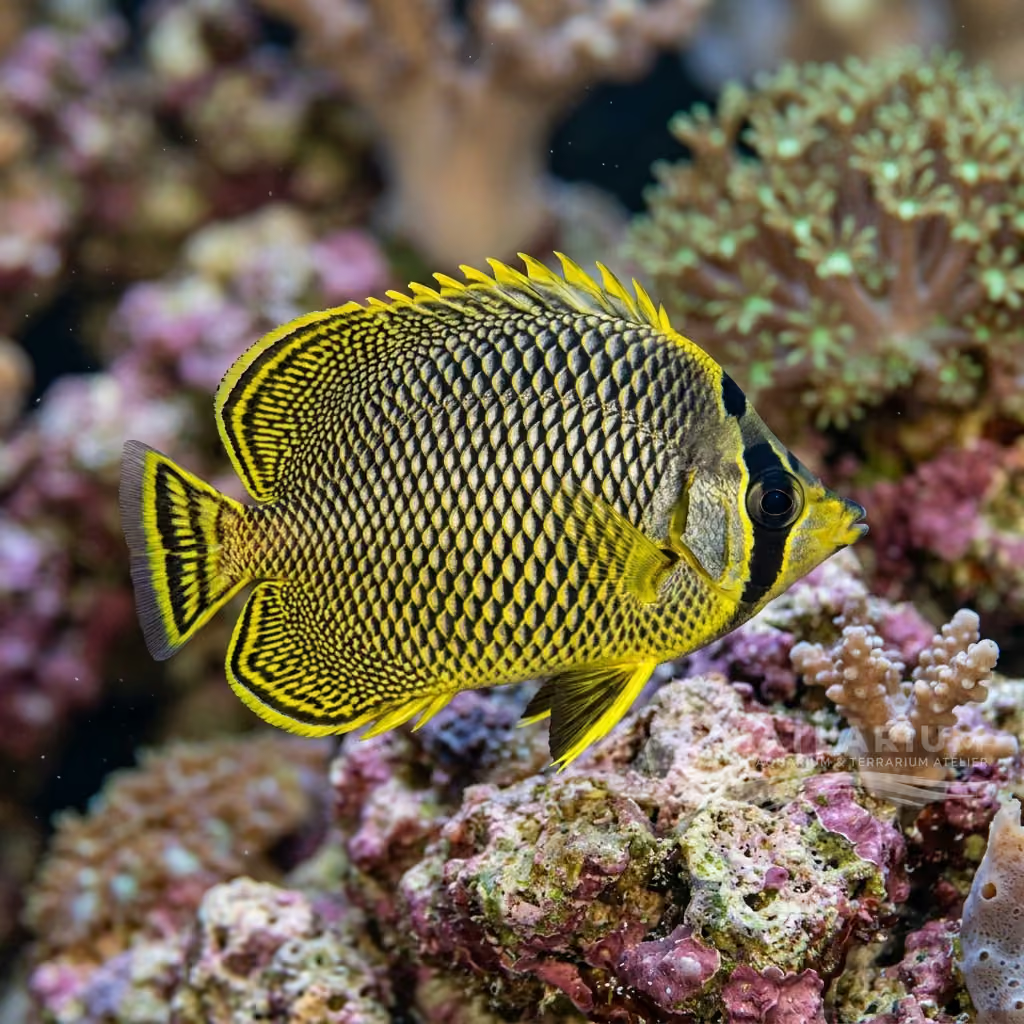
Indian mitre butterflyfish
Chaetodon mitratus
A prized deep-water beauty from the Indian Ocean, this vibrant orange-yellow fish sports bold diagonal black bands. It requires cool, dim setups and a varied carnivorous diet.
Wassertemperatur
22 - 26 °C
pH-Wert
8.1 - 8.4
Wassertyp
Meerwasser
Tankfüllstand
Unten und in der Mitte
Erwachsenengröße
14 cm
Mindesttankvolumen
>= 300 L
Mindestgruppe
>= 1

Artbeschreibung
Geographical Origin and Habitat: Chaetodon mitratus is native to the Indian Ocean, with populations localized around Mauritius, Reunion, the Maldives, Cocos-Keeling Islands, and Christmas Island. It is a deep-water species, typically found on steep outer reef slopes, drop-offs, and rocky walls at depths ranging from 30 to 80 meters. It prefers cool, clear currents and rocky overhangs.
Taxonomy and Morphology: Belongs to the family Chaetodontidae and is classified under the subgenus Roa. It reaches a maximum total length of approximately 14 cm. The body is deep, strongly compressed laterally, with a slightly pointed snout adapted for pulling small prey from narrow crevices. It is a robust species compared to shallow-water butterflyfishes.
Social Behavior: In the wild, it is found either solitary or in stable pairs. It has a peaceful temperament toward unrelated species but can exhibit territorial aggression toward conspecifics or closely related butterflyfish of similar shape. It spends its time patrolling rock walls for food.
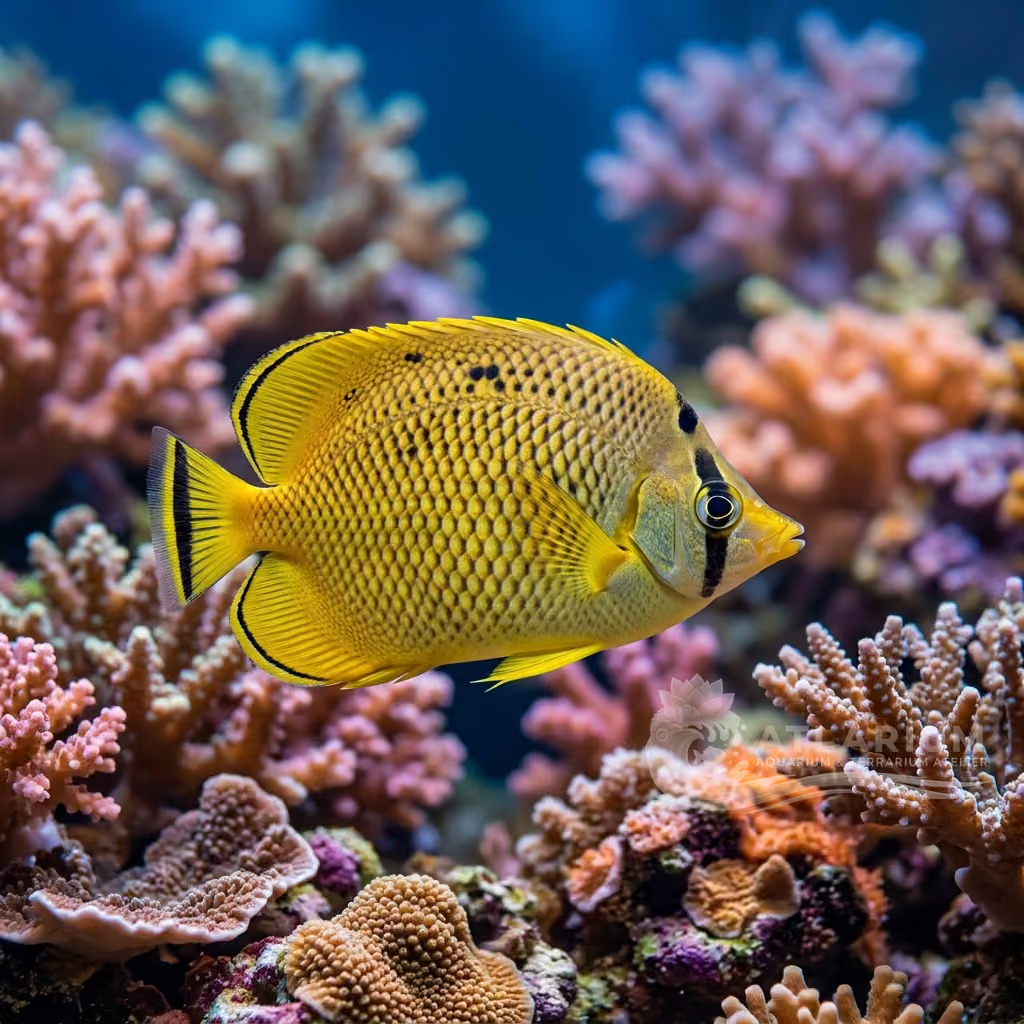
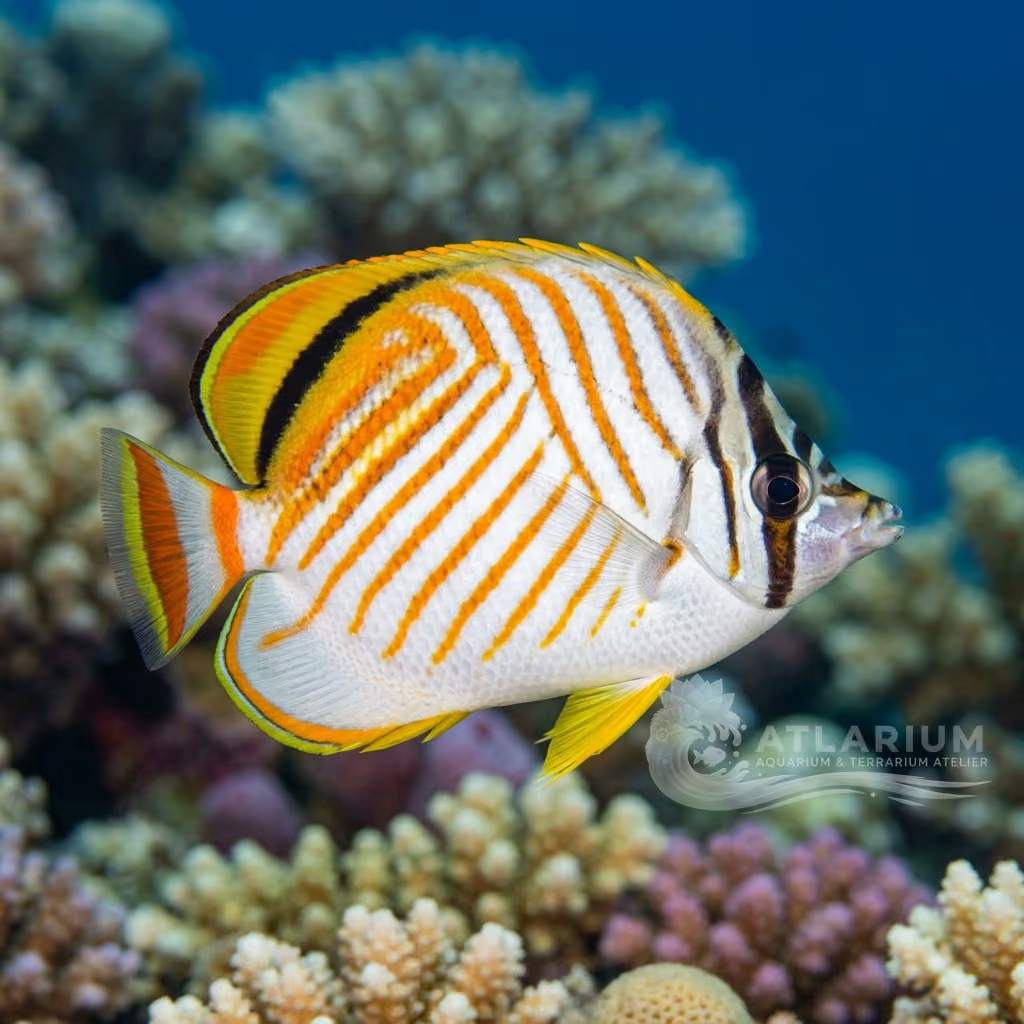
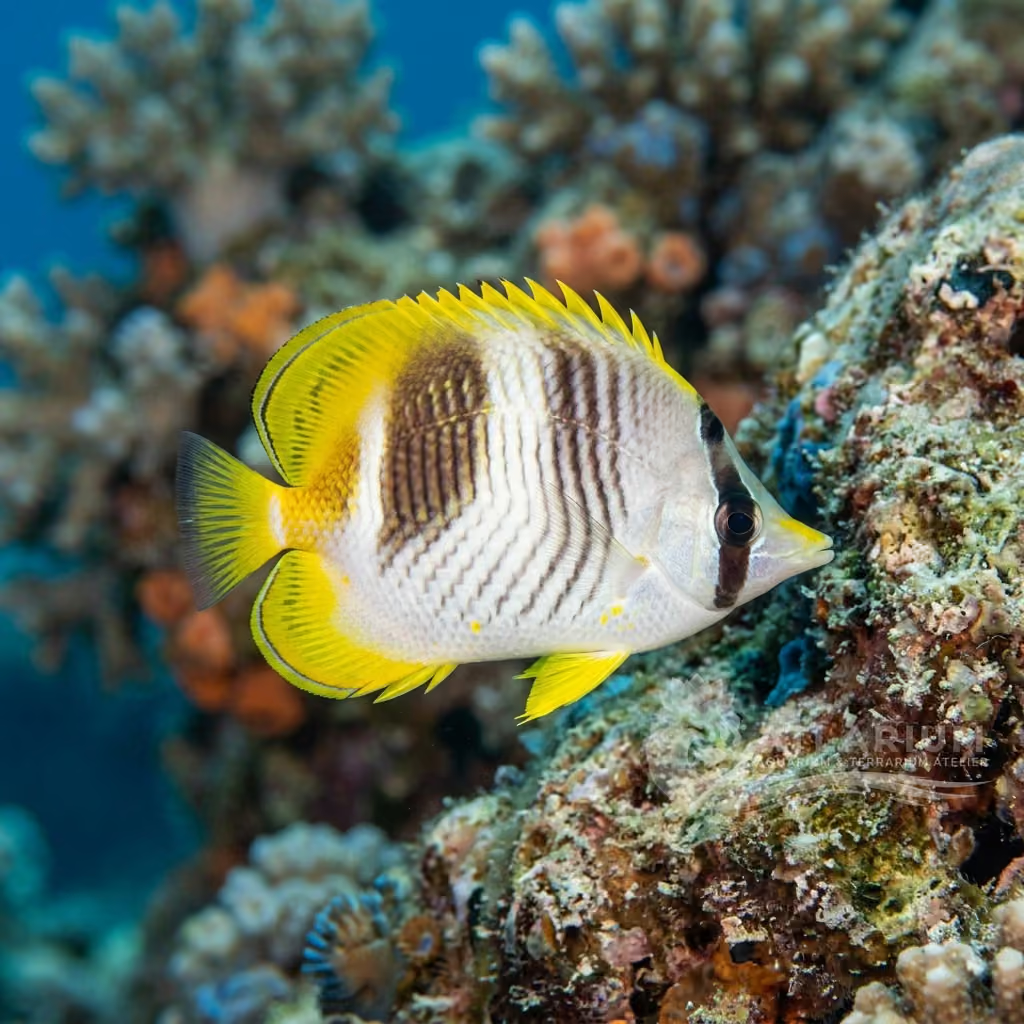
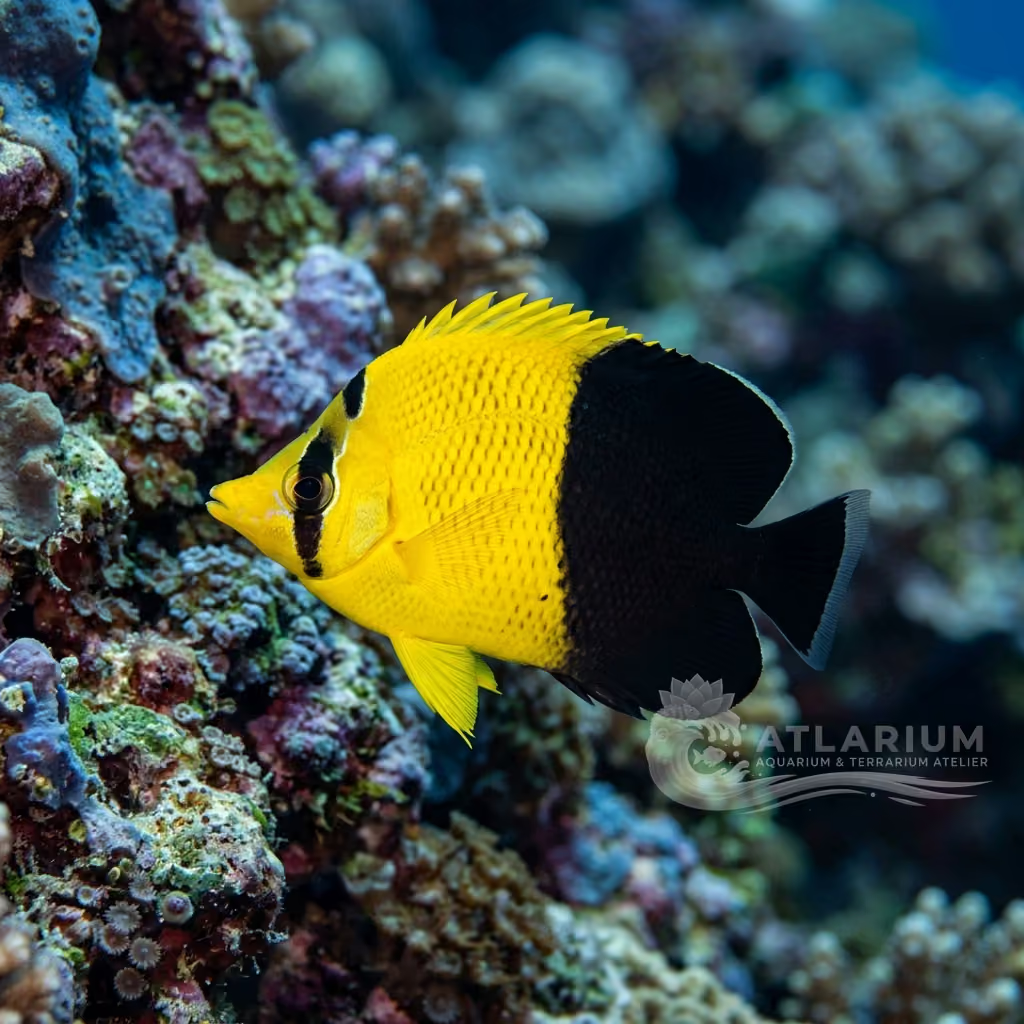
Coloration and Sexual Dimorphism: Features a vibrant orange-yellow body color crossed by two broad, dark brown to black diagonal bands running from the dorsal area backward. A third black stripe runs vertically through the eye. The fins are mostly yellow. There is no visible external sexual dimorphism.

Pflege, Zucht und Mitbewohner
Aquarium Setup: Requires an aquarium of at least 300 liters. Since it is a deep-water fish, it is best kept under moderate or dim lighting. Provide extensive rockwork to create large caves, overhangs, and shaded areas where it can retreat. Ensure plenty of open water is available for swimming.
Diet and Feeding: Carnivorous, feeding on zooplankton and small benthic invertebrates. In captivity, offer a varied diet of high-quality frozen foods, such as mysis shrimp, brine shrimp, chopped clams, krill, and commercial preparations for carnivores. Feed small portions 2 to 3 times daily.
Water Quality: Prefers slightly cooler water temperatures than typical reef fish, ideally between 22 °C and 25 °C. Maintain stable marine parameters: pH of 8.1 to 8.4, specific gravity of 1.020 to 1.025. Excellent oxygenation, low nitrate levels, and efficient protein skimming are critical for its health.
Compatibility and Cohabitation: Not reef-safe. It will nip at large-polyp stony (LPS) corals, zoanthids, and some soft corals, although it may ignore noxious soft corals. Ideal tankmates include peaceful deep-water anthias, wrasses, and gobies. Keep only one per aquarium unless a mated pair is obtained.
Aquarium Breeding: Breeding in captivity has not been achieved. They are pelagic spawners, releasing eggs into the water column. The larvae develop through a unique, armored post-larval stage known as 'tholichthys', which is extremely difficult to rear in a closed aquarium system.
Risks and Diseases: Sensitive to transport stress, temperature fluctuations, and poor water quality. Prone to marine Ich (Cryptocaryon) and bacterial infections of the skin. A thorough quarantine period is highly recommended to ensure the fish is acclimated and feeding before display tank introduction.

Geografische Herkunft und Verbreitung
Chaetodon mitratus is native to the Indian Ocean, with populations localized around Mauritius, Reunion, the Maldives, Cocos-Keeling Islands, and Christmas Island. It is a deep-water species, typically found on steep outer reef slopes, drop-offs, and rocky walls at depths ranging from 30 to 80 meters. It prefers cool, clear currents and rocky overhangs.
Ursprung
Tropische Ozeane und RiffeAfrika und MadagaskarSüd- und Südostasien

Fischprofil
- Temperament
- Territorial
- The Mitratus Butterflyfish is generally peaceful toward most tankmates but can exhibit territorial behavior toward other butterflyfish. It is a relatively shy species that will benefit from being housed with other non-aggressive marine fish. However, they can show aggression toward conspecifics or similar-looking species if the aquarium is too small. Providing plenty of hiding spots helps reduce territorial tension and allows the fish to feel secure in its environment.
- Diät
- Omnivore
- In the wild, Chaetodon mitratus feeds on zooplankton, small benthic invertebrates, and occasionally coral polyps. In the aquarium, they adapt well to a variety of prepared foods, including high-quality frozen mysis shrimp, krill, and brine shrimp. Offering nutrient-rich flake food, pellets, and algae-based preparations will help round out their diet. Providing a diverse selection of food items is essential to prevent nutritional deficiencies and maintain their vibrant colors.
- Lebenserwartung
- 5-10 years
- Erwachsenengröße
- 14 cm
- Geschlechterverhältnis
- 1:1 ratio
- In the wild, Chaetodon mitratus is typically found living singly or in mated pairs. In an aquarium setting, keeping them singly is usually the safest approach unless a confirmed male-female pair can be acquired. If attempting to keep a pair, they should be introduced to the tank simultaneously to prevent territorial aggression. Keeping multiple individuals of the same sex or adding them at different times often leads to severe fighting over territory.
- Fütterungsfrequenz
- Twice daily
- The Mitratus Butterflyfish has a high metabolic rate and should be fed two to three times daily. Providing multiple small meals throughout the day mimics their natural constant grazing behavior on the reef. Regular feeding prevents them from losing weight and helps reduce their propensity to pick at corals. Care should be taken to ensure they receive food quickly, especially if housed with faster, more aggressive feeders.
- Bioload
- Medium
- The Mitratus Butterflyfish produces a moderate amount of waste, classifying it as having a medium bioload. Because it requires pristine water quality and is sensitive to organic buildup, a highly efficient filtration system is essential. Utilizing a high-performance protein skimmer, along with regular water changes, is strongly recommended to maintain low nitrate and phosphate levels. A well-established aquarium with mature biological filtration will help ensure their long-term health and stability.
- Fluss
- Strong
- Originating from deep reef walls, the Mitratus Butterflyfish prefers moderate to strong water flow in the aquarium. This flow helps maintain high oxygen levels, which are critical for their health, and replicates the active currents of their natural habitat. However, it is important to provide lower-flow areas or caves where they can rest and escape the current when needed. A balance of strong water movement and calm sanctuaries creates the ideal environmental dynamic.
- Sprungrisiko
- Yes
- While the Mitratus Butterflyfish is not considered a notorious jumper, it still poses a significant jump risk if startled or chased. In a home aquarium, sudden lighting changes or aggressive tankmates can cause this species to bolt and leap out of the water. Therefore, a secure, tight-fitting lid or mesh cover is highly recommended to prevent accidental escapes. Ensuring adequate cover is especially important during the initial acclimation period when the fish is most stressed.
- Reproduktion
- Oviparous
- Breeding the Mitratus Butterflyfish in captivity is extremely difficult and has rarely been accomplished by hobbyists. In the wild, they are pelagic spawners, releasing eggs and sperm into the open water column where the larvae drift before settling. Replicating the environmental triggers and providing the appropriate microscopic live foods for the developing larvae represent significant challenges. Consequently, almost all specimens available in the aquarium hobby are wild-caught.
- Kompatibilität & Tankkameraden
- Peaceful
- The Mitratus Butterflyfish is compatible with a wide range of peaceful to semi-aggressive marine community species. Ideal tankmates include wrasses, anthias, gobies, and small tangs that will not compete aggressively for territory. Because it is not fully reef-safe, caution is required if housing it with stony corals and certain sessile invertebrates, as it may nip at them. It should not be kept with other butterflyfish unless the aquarium is exceptionally large and has plenty of visual barriers.
- Tankfüllstand
- Middle/Bottom
- The Mitratus Butterflyfish is an active swimmer that primarily occupies the bottom and middle levels of the aquarium. It spends much of its time navigating through rockwork, caves, and overhangs, reflecting its natural deep-water reef habitat. While it will occasionally venture to the upper levels during feeding times, it generally prefers to stay close to structural cover. Providing plenty of live rock with open swimming paths is crucial for its comfort.

Wissenschaftliche Modelle & Parameter
FishBase
Zugang zu den offiziellen wissenschaftlichen Daten der Art
FishBase v25.04Daten synchronisiert am: 15.06.2026
- Trophäenniveau
- 3,5 ± 0,37 se
- Belastbarkeit
- Hoch (weniger als 15 Monate)
- Phylogenetische Einzigartigkeit (PD50)
- 0.5
- Bayessche Längen-Gewichts-Beziehung
- a = 0.02291, b = 3
- AnfälligkeitGeringe Anfälligkeit (10 / 100)

Verwandte Arten
Empfehlungen gruppiert nach nahen Verwandten, Auswahl von Begleitern und ähnlicher Betreuung.