Somali Butterflyfish
Chaetodon leucopleura
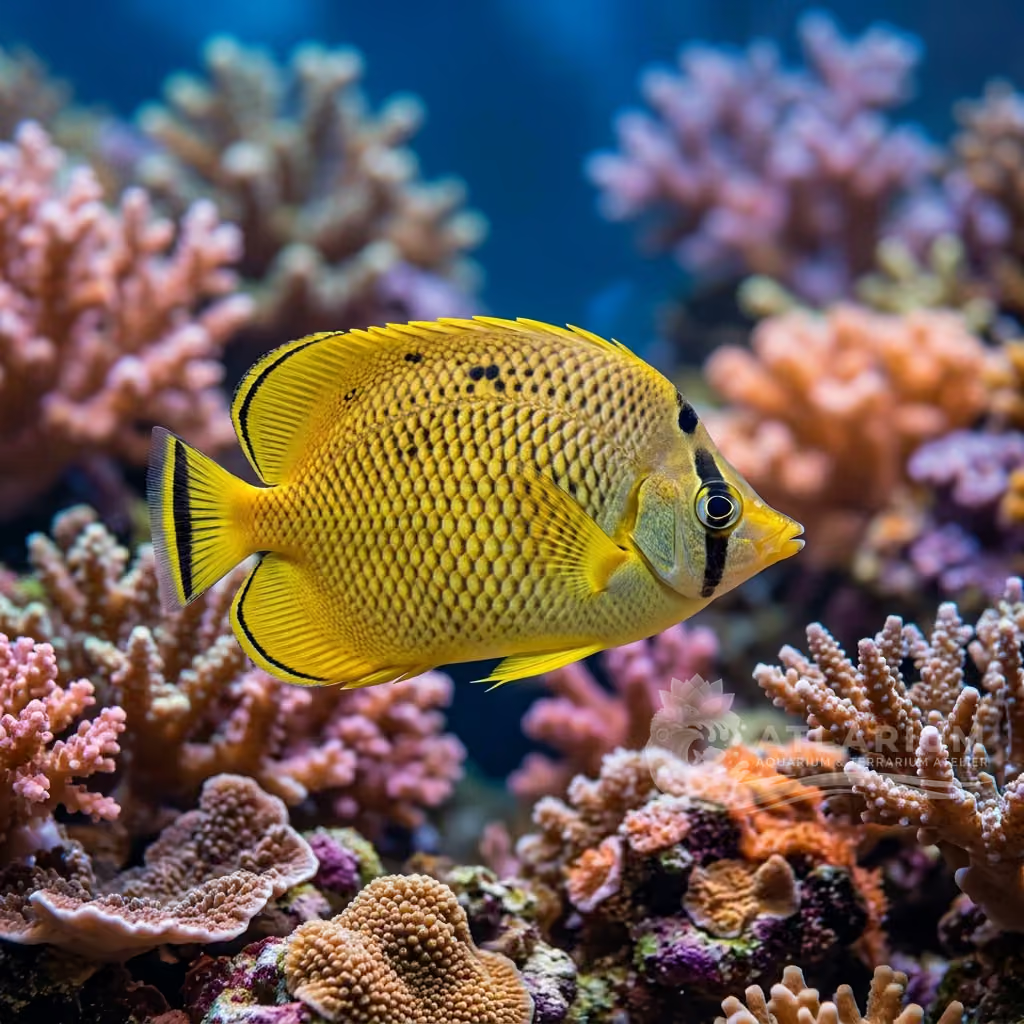
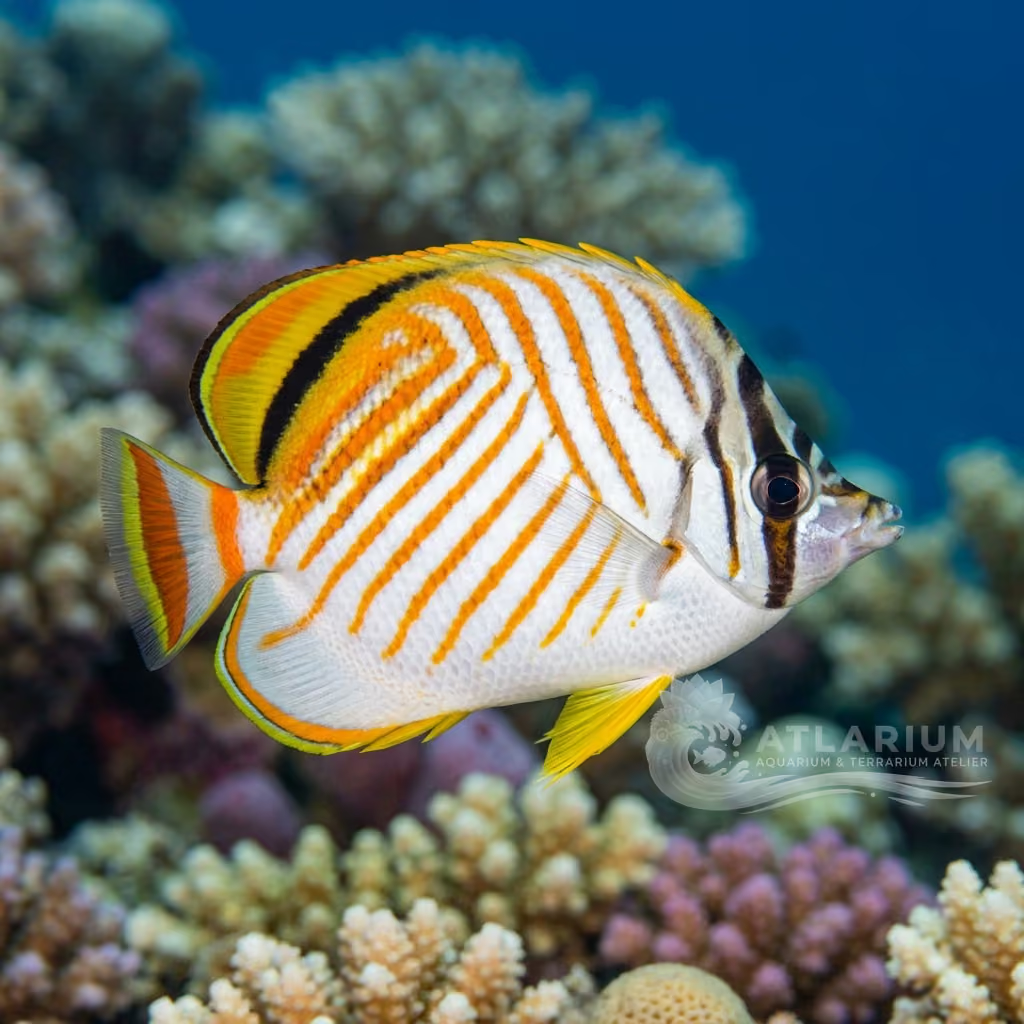
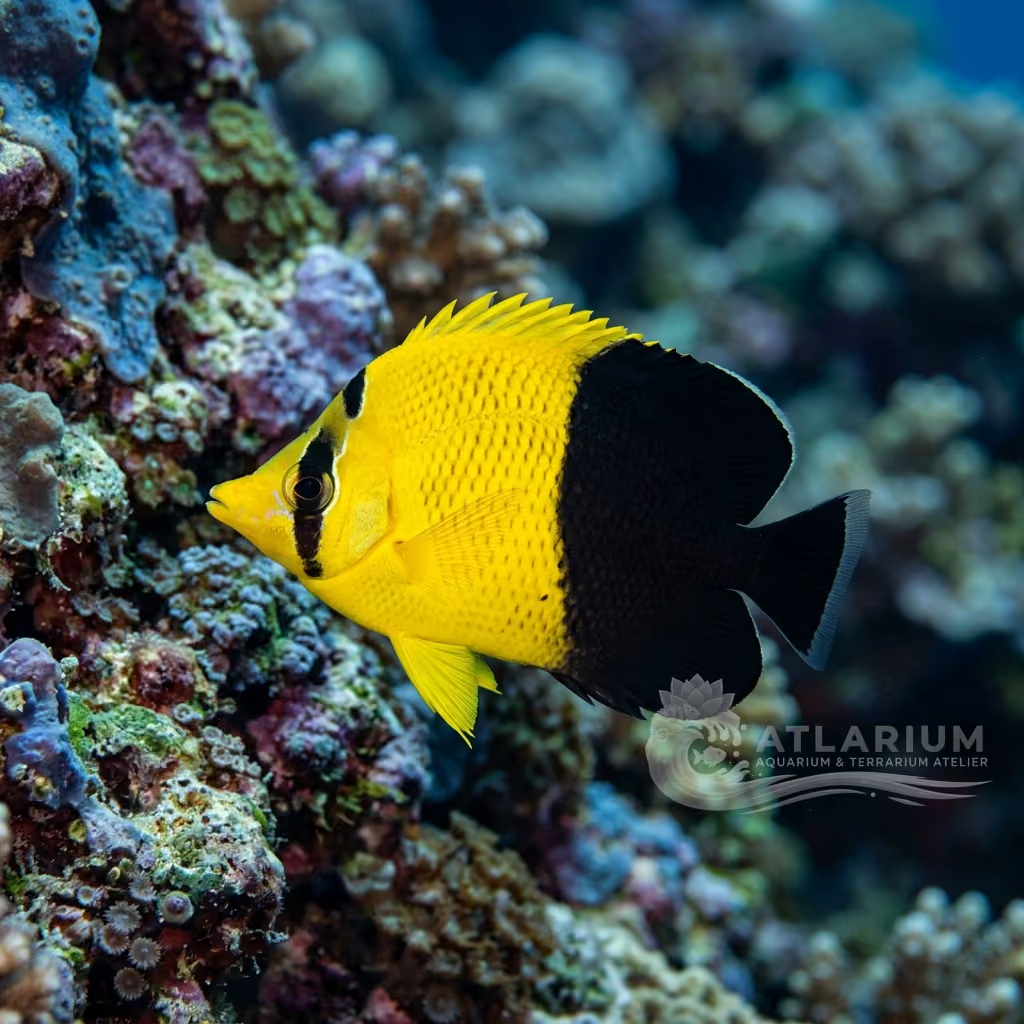
A gorgeous marine species native to the Western Indian Ocean, showcasing a light grey body that transitions into a vibrant yellow-orange rear. It is entirely not reef-safe.
Wassertemperatur
23 - 28 °C
pH-Wert
8.1 - 8.4
Wassertyp
Meerwasser
Tankfüllstand
Unten und in der Mitte
Erwachsenengröße
18 cm
Mindesttankvolumen
>= 300 L
Mindestgruppe
>= 1

Artbeschreibung
Geographical Origin and Habitat: Western Indian Ocean, including the coasts of Somalia, Kenya, Madagascar, Oman, and Yemen. It inhabits outer coral reefs and rocky shores at shallow depths of 5 to 30 meters, usually in areas with rich coral growth.
Taxonomy and Morphology: Belongs to the Chaetodontidae family, genus Chaetodon. It grows to a length of approximately 18 cm (7 inches). Features the classic disc-like, laterally compressed shape of butterflyfishes, with a snout adapted for crevices.
Social Behavior: Generally found singly or in stable monogamous pairs. It may exhibit territorial behavior towards other butterflyfishes of similar shape and size in confined spaces, but generally ignores other marine fish families.
Coloration and Sexual Dimorphism: Body is light grey-white (hence "leucopleura", meaning white-sided) transitioning to a bright yellow-orange coloration on the posterior section and fins. A vertical black bar runs through the eye. No sexual dimorphism.

Pflege, Zucht und Mitbewohner
Aquarium Setup: Requires a large aquarium of at least 400 liters (100 gallons) to allow active swimming. Provide plenty of matured live rock for grazing, hiding spots, and nocturnal retreats to mimic natural reef structures.
Diet and Feeding: Partial corallivore and omnivore. Can be difficult to feed initially. Provide a varied diet of high-quality frozen foods (mysis, chopped krill, clams on the half-shell) and preparations containing sponge and algae.
Water Quality: Demands optimal and highly stable water parameters: temperature 24-27°C (75-81°F), pH 8.1-8.4, salinity 1.022-1.025. Highly sensitive to nitrates and phosphates; a powerful filtration system and protein skimmer are required.
Compatibility and Cohabitation: Not reef-safe. It will actively nip and feed on soft and stony coral polyps, as well as feather dusters. Best housed in a fish-only-with-live-rock (FOWLR) tank with peaceful to moderately active tankmates.
Aquarium Breeding: Spawning in captivity has not been successfully achieved in home aquariums due to the complexity of pelagic spawning rituals and the difficulty of feeding and rearing the delicate planktonic larvae.
Risks and Diseases: Highly susceptible to marine ich (Cryptocaryon) and velvet (Oodinium) under stress. Food acclimation is the most critical stage; offering open fresh clams or mussels is often required to trigger feeding behavior.

Geografische Herkunft und Verbreitung
Western Indian Ocean, including the coasts of Somalia, Kenya, Madagascar, Oman, and Yemen. It inhabits outer coral reefs and rocky shores at shallow depths of 5 to 30 meters, usually in areas with rich coral growth.
Ursprung
Tropische Ozeane und RiffeAfrika und MadagaskarSüd- und Südostasien

Fischprofil
- Temperament
- Territorial
- The temperament of the Somali Butterflyfish is generally peaceful and somewhat shy toward unrelated species. However, it can display territorial behavior against other butterflyfishes or species sharing a similar body shape and coloration. During the initial introduction phase, it may appear particularly reclusive and requires a calm environment to avoid stress from food competition.
- Diät
- Omnivore
- In the wild, this species is primarily corallivorous, feeding on coral polyps, especially from the genus Acropora. In the aquarium, transitioning them to prepared foods represents the primary husbandry challenge and demands significant patience. It is highly recommended to initially offer a variety of high-quality frozen foods, such as mysis shrimp, enriched brine shrimp, and fish eggs, alongside clam or mussel meat pressed onto live rock to encourage natural grazing behavior.
- Lebenserwartung
- 8-12 years
- Erwachsenengröße
- 18 cm
- Geschlechterverhältnis
- 1:1 ratio
- In the wild, the Somali Butterflyfish is primarily observed either singly or in bonded pairs. In an aquarium setting, it is recommended to keep them individually or as a confirmed pair (1:1 ratio), provided the tank offers ample swimming space. Introducing multiple individuals of the same sex or keeping them in loose, unpaired groups should be avoided, as this can trigger intense intraspecific aggression over territorial boundaries.
- Fütterungsfrequenz
- Twice daily
- Due to their active metabolism and natural habit of constant grazing, these fish must be fed frequently throughout the day. It is recommended to offer food at least 3 to 4 times daily in small portions that can be consumed quickly. Frequent feedings help prevent muscle wasting and support their transition to commercial foods during the delicate acclimation period.
- Bioload
- Medium
- The biological load of the Somali Butterflyfish is considered medium due to its maximum size of approximately 18 cm and its active metabolism. As a species highly sensitive to water quality, it requires a robust and efficient filtration system, ideally supported by a high-capacity protein skimmer. Regular and frequent water changes are critical to keeping nitrate and phosphate levels as close to zero as possible, since this fish does not tolerate accumulated waste.
- Fluss
- Strong
- The Somali Butterflyfish prefers a moderate to strong water flow, which mimics the currents of the outer reef slopes and drop-offs where it naturally resides. Well-distributed flow ensures proper oxygenation of the water column and stimulates the fish to swim actively. It is important to avoid dead zones in the tank, while still providing a few areas of lower current where the fish can rest comfortably during the night.
- Sprungrisiko
- Yes
- Although butterflyfish are not historically classified as notorious jumpers compared to other marine families, the risk remains present if they are startled. Sudden noises, abrupt lighting changes, or chase sequences by more aggressive tank mates can prompt the fish to leap from the water surface. Consequently, securing the aquarium with a tight-fitting lid or a protective mesh screen is highly recommended to prevent accidental escapes.
- Reproduktion
- Oviparous
- Breeding the Somali Butterflyfish in the aquarium has not yet been documented and is extremely difficult, if not impossible, in a home setting. In the wild, they are pelagic spawners that release eggs and sperm into the water column, where the fertilized eggs float and hatch into planktonic larvae. The complexity of the larval stage and its unique nutritional requirements make artificial rearing currently beyond the reach of most hobbyists.
- Kompatibilität & Tankkameraden
- Peaceful
- This species is ideal for fish-only marine aquariums with live rock (FOWLR) alongside peaceful tank mates that will not aggressively compete for food. It is strictly not reef-safe, as it will nip at and consume hard corals, particularly SPS. Suitable tank mates include peaceful surgeonfish, clownfish, and other non-aggressive species that occupy different areas of the aquarium.
- Tankfüllstand
- Middle/Bottom
- This species predominantly occupies the bottom-to-middle zones of the aquarium, actively swimming among rockwork and hovering near the substrate. In its natural habitat, it favors areas near the base of reef slopes and coral rubble zones, maintaining a swimming pattern close to the floor. The aquascaping layout should therefore provide plenty of open swimming space in the lower half of the tank, combined with cave structures and pass-throughs.

Wissenschaftliche Modelle & Parameter
FishBase
Zugang zu den offiziellen wissenschaftlichen Daten der Art
FishBase v25.04Daten synchronisiert am: 15.06.2026
- Trophäenniveau
- 2,8 ± 0,26 se
- Belastbarkeit
- Hoch (weniger als 15 Monate)
- Phylogenetische Einzigartigkeit (PD50)
- 0.5
- Bayessche Längen-Gewichts-Beziehung
- a = 0.02291, b = 3
- AnfälligkeitGeringe Anfälligkeit (12 / 100)

Verwandte Arten
Empfehlungen gruppiert nach nahen Verwandten, Auswahl von Begleitern und ähnlicher Betreuung.