Bennett's Butterflyfish
Chaetodon bennetti
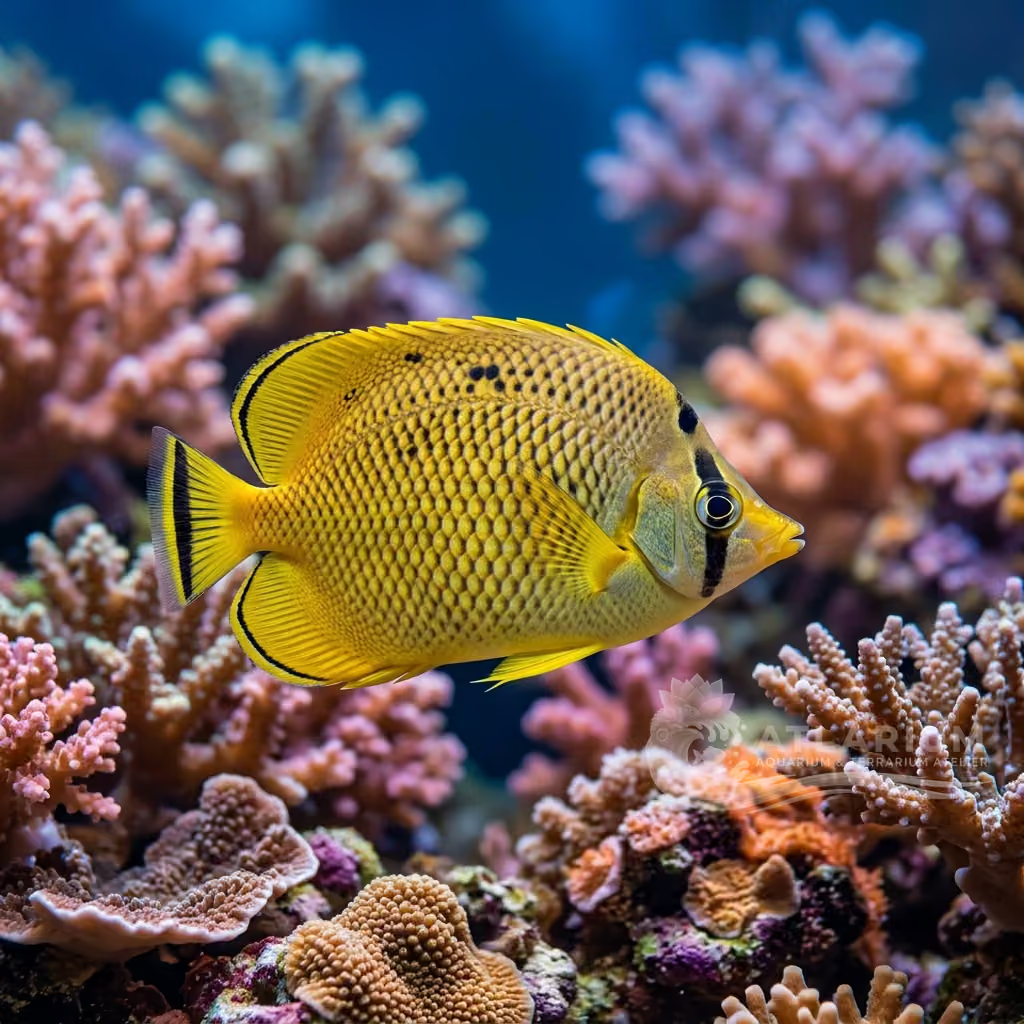
Stunning butterflyfish (18 cm) from the Indo-Pacific, featuring a bright yellow body with a prominent blue-ringed black spot on the flanks and blue stripes.
Wassertemperatur
22 - 27 °C
pH-Wert
8.1 - 8.4
Wassertyp
Meerwasser
Tankfüllstand
Unten und in der Mitte
Erwachsenengröße
18 cm
Mindesttankvolumen
>= 300 L
Mindestgruppe
>= 1

Artbeschreibung
Geographical Origin and Habitat: Tropical Indo-Pacific, widely distributed from East Africa to the Tuamotu Islands, north to southern Japan, and south to the Great Barrier Reef. Inhabits shallow lagoons and seaward reefs with rich coral growth.
Taxonomy and Morphology: Member of the family Chaetodontidae. Features a deep, laterally compressed, disc-like body shape with a pointed snout adapted for picking coral polyps from branches.
Social Behavior: Shy and delicate species. Usually observed singly or in stable monogamous pairs. Swimming is slow and methodical, requiring a quiet tank environment free of harassment.
Coloration and Sexual Dimorphism: Bright lemon-yellow overall coloration. Marked by a large, distinct black spot ringed in iridescent blue on the upper flank, and two curved blue lines running horizontally.

Pflege, Zucht und Mitbewohner
Aquarium Setup: Needs a mature reef-type aquarium of at least 300 liters with plenty of high-quality live rock and caves to provide shelter and grazing opportunities.
Diet and Feeding: Obligate corallivore. Extremely difficult to transition to aquarium foods. Requires live coral polyps, freshly opened clams, and fine frozen foods (mysis, copepods) to stimulate feeding.
Water Quality: Demands pristine marine water conditions: temperature 22-27 °C, pH 8.1-8.4, salinity 1.020-1.025 with zero nitrates/ammonia and excellent protein skimming.
Compatibility and Cohabitation: Highly peaceful. Not reef safe as it feeds on hard corals. Best housed in a peaceful fish-only system with non-aggressive tankmates. Avoid active, boisterous species.
Aquarium Breeding: Reproduction in home aquariums is undocumented. Spawns pelagic eggs, and larvae undergo a complex pelagic stage called acronurus before settling.
Risks and Diseases: Extremely challenging species. The primary risk is starvation due to its specialized diet. Highly susceptible to marine white spot (Cryptocaryon) and stress.

Geografische Herkunft und Verbreitung
Tropical Indo-Pacific, widely distributed from East Africa to the Tuamotu Islands, north to southern Japan, and south to the Great Barrier Reef. Inhabits shallow lagoons and seaward reefs with rich coral growth.
Ursprung
Tropische Ozeane und RiffeAfrika und MadagaskarOstasien

Fischprofil
- Temperament
- Aggressive
- This butterflyfish exhibits a generally peaceful temperament toward unrelated species, making it a quiet community member. However, it can show territorial behavior and aggression toward conspecifics or other butterflyfishes with similar color patterns. Because it is a delicate and easily intimidated species, it should not be housed with highly active or aggressive tankmates. Providing a calm environment is crucial to prevent stress and encourage natural feeding behaviors.
- Diät
- Corallivore
- Bennett's Butterflyfish is an obligate corallivore, meaning its natural diet consists almost exclusively of live coral polyps, particularly from Acropora and other stony corals. In captivity, this specialized diet makes them extremely difficult to feed, and they often refuse standard aquarium fare. To encourage feeding, keepers must offer live corals, fresh opened clams, or mussels on the half shell. Successfully weaning them onto prepared frozen foods like mysis or artemia is rare and requires patience.
- Lebenserwartung
- 5-10 years
- Erwachsenengröße
- 18 cm
- Geschlechterverhältnis
- 1:1 ratio
- In the wild, Bennett's Butterflyfish is typically observed in monogamous pairs or as solitary individuals. For aquarium stocking, it is best kept singly unless a compatible, pre-established male-female pair can be acquired. Attempting to house multiple specimens of this species in the same tank without a formed pair often leads to severe territorial aggression. Therefore, a sex ratio of 1:1 is the only recommended setup if keeping more than one individual.
- Fütterungsfrequenz
- Twice daily
- Due to its active foraging habits and specialized digestive system, this species needs to be fed multiple times throughout the day. A schedule of three to four small feedings daily is recommended to ensure they receive adequate nutrition and prevent starvation. In a reef setup, they would constantly graze on coral polyps, so replicating this with frequent food offerings is essential in captivity. Feeding blocks or gel-based foods attached to rocks can also help simulate their natural grazing behavior.
- Bioload
- Medium to High
- Bennett's Butterflyfish has a medium-to-high bioload due to its frequent feeding requirements and relatively large size. Because it needs to be fed multiple times a day with rich foods, it produces significant organic waste that can quickly degrade water quality. A robust filtration system, including a high-performance protein skimmer, is essential to handle this load. Regular, sizable water changes are also necessary to keep nitrate and phosphate levels low, which is crucial for this sensitive species.
- Fluss
- Strong
- Bennett's Butterflyfish prefers moderate to strong water flow, which mimics the energetic reef environments they inhabit in the wild. Good water movement helps keep the water well-oxygenated and prevents detritus from settling on rockwork, maintaining the high water quality they require. However, there should also be calmer areas within the tank where they can rest without fighting constant currents. Proper positioning of powerheads is key to achieving this balance.
- Sprungrisiko
- No
- Reproduktion
- Oviparous
- Bennett's Butterflyfish is an oviparous species that forms temporary or long-term monogamous pairs for spawning. During courtship, the pair performs synchronized swimming rituals before releasing their eggs and sperm into the open water column. The fertilized eggs are buoyant and drift with the currents as plankton until they hatch into larvae. Breeding this species in captivity is extremely difficult and has not been successfully achieved in home aquariums due to the complexity of raising their pelagic larvae.
- Kompatibilität & Tankkameraden
- Peaceful
- Bennett's Butterflyfish is compatible with other peaceful marine fish of similar size, such as anthias, chromis, and calm wrasses. However, it is absolutely not reef-safe, as it will feed on stony corals, soft corals, and potentially other invertebrates like clams or tubeworms. It should not be housed with aggressive fish like triggerfish, large angels, or territorial surgeonfish, which can stress it and prevent it from feeding. Keeping it with its own species is only recommended in established male-female pairs.
- Tankfüllstand
- Middle/Bottom
- This species primarily inhabits the bottom and middle zones of the aquarium, closely associated with the rockwork and reef structures. In their natural habitat, they spend their time foraging among coral branches at depths ranging from 1 to 30 meters. In captivity, they will actively swim and graze around the rocks, rarely venturing to the very top of the water column. Providing plenty of caves and crevices in these lower levels will help them feel secure and behave naturally.

Wissenschaftliche Modelle & Parameter
FishBase
Zugang zu den offiziellen wissenschaftlichen Daten der Art
FishBase v25.04Daten synchronisiert am: 15.06.2026
- Trophäenniveau
- 3,1 ± 0,46 se
- Belastbarkeit
- Hoch (weniger als 15 Monate)
- Phylogenetische Einzigartigkeit (PD50)
- 0.5
- Bayessche Längen-Gewichts-Beziehung
- a = 0.02239, b = 2.98
- AnfälligkeitGeringe Anfälligkeit (10 / 100)

Verwandte Arten
Empfehlungen gruppiert nach nahen Verwandten, Auswahl von Begleitern und ähnlicher Betreuung.