Green and Black Poison Dart Frog
Dendrobates auratus
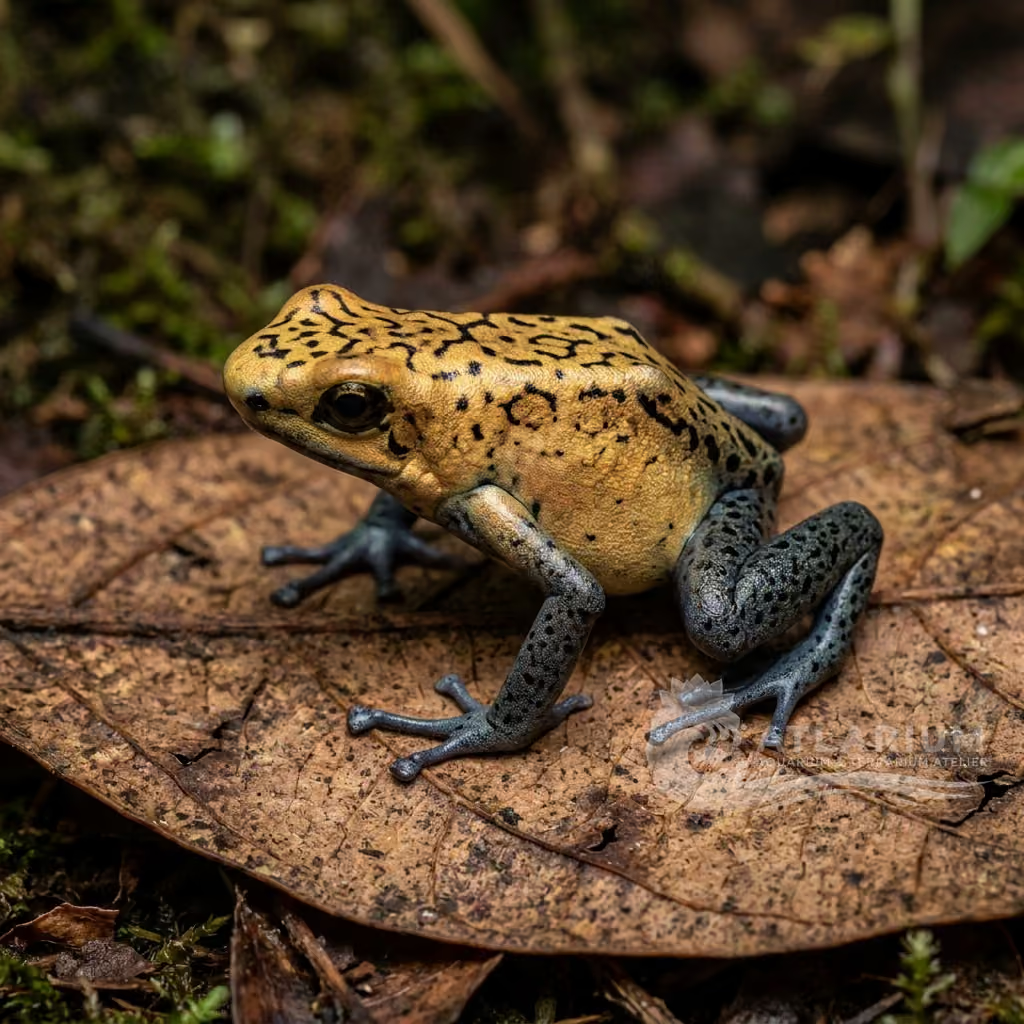
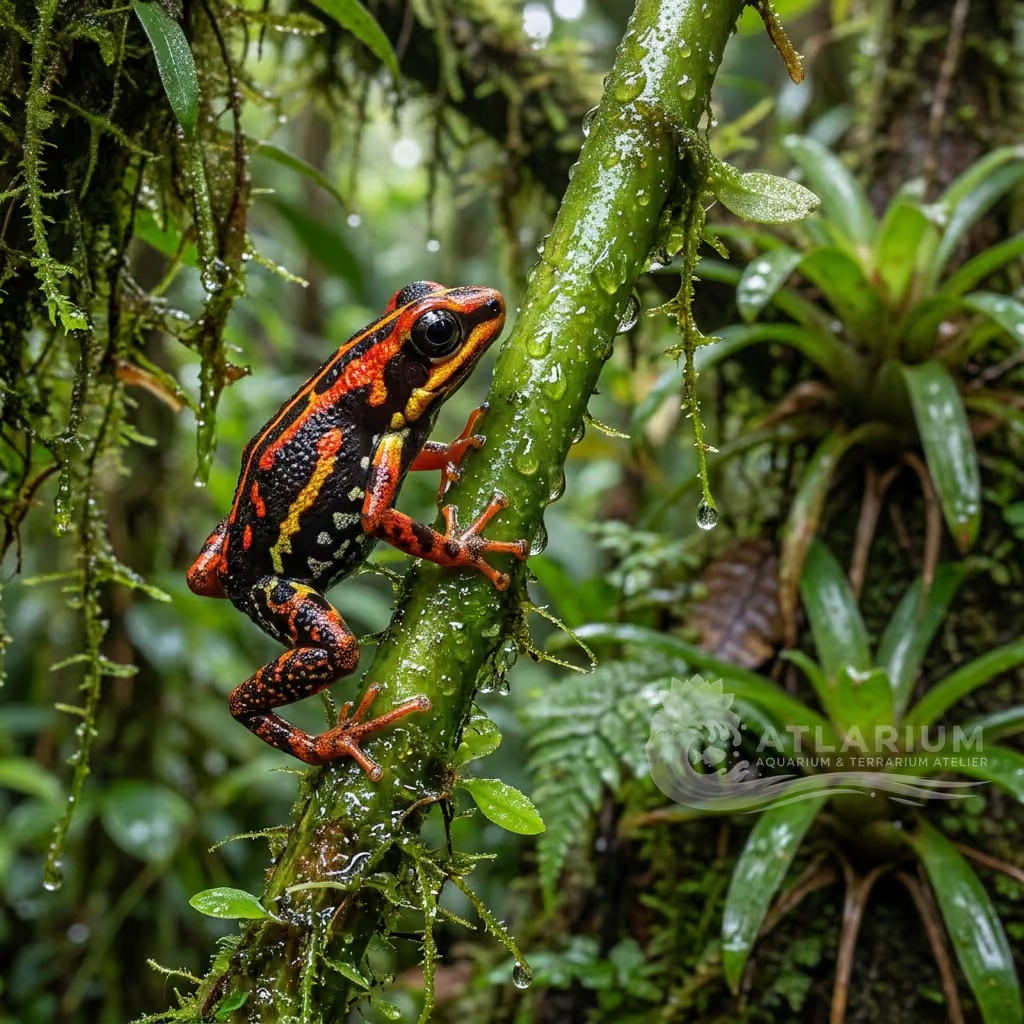
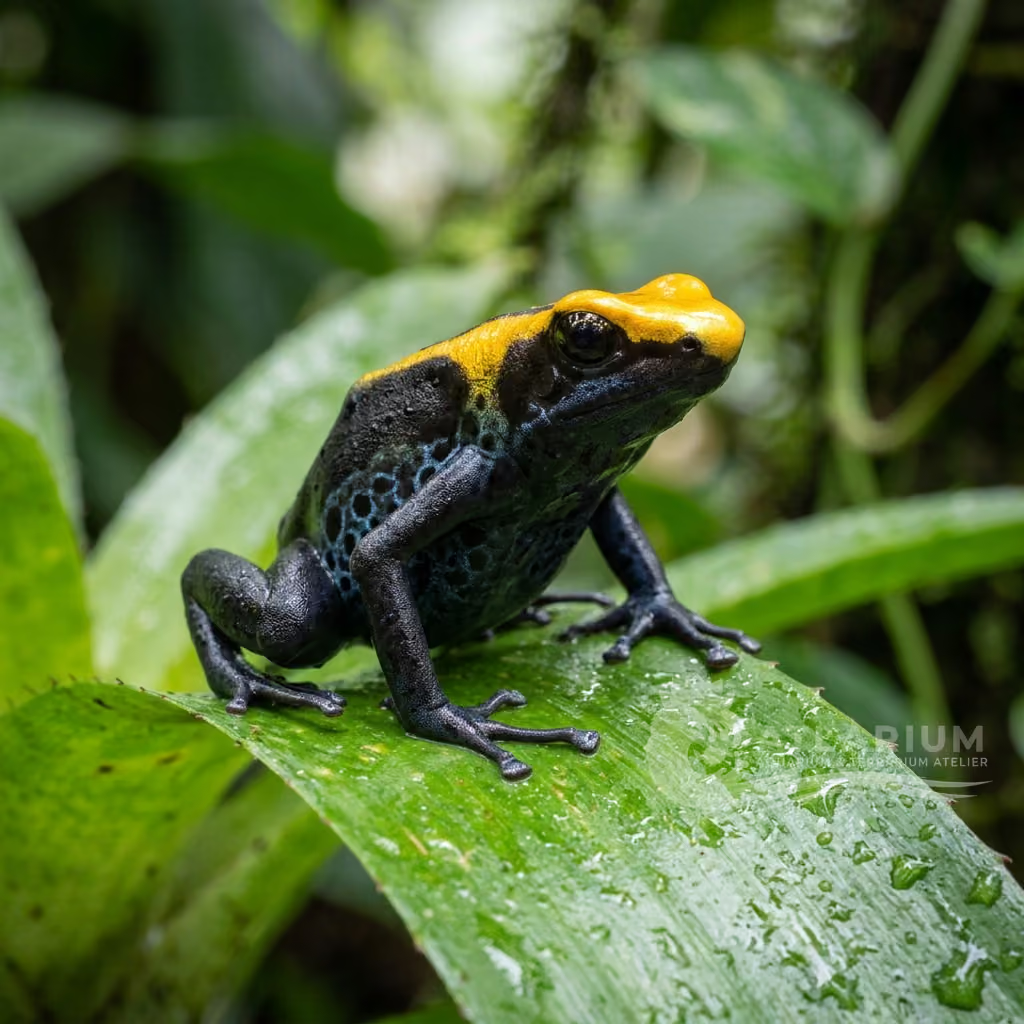
The Green and Black Poison Dart Frog (Dendrobates auratus) is a beautiful amphibian famous for its metallic emerald-green and black contrast. It is a hardy, terrestrial species ideal for densely planted rainforest terrariums.
Umgebung
Terrestrisch
Luftfeuchtigkeit
80 - 100 %
Tagestemperatur
22 - 26 °C
Nachttemperatur
20 - 22 °C
UVB
Ferguson 1-2
UVI
0 - 1 UVI

Artbeschreibung
Geographical Origin and Habitat: Distributed throughout Central America (Nicaragua, Costa Rica, Panama) and northern Colombia. They are commonly found in humid rainforests, cocoa plantations, and damp gardens, staying close to small streams and moist leaf litter.
Taxonomy and Genetics: A member of the Dendrobatidae family. Adults reach a length of 3.5 to 4.5 cm. Their smooth skin features a dark base color overlaid with bright metallic emerald-green, bronze, or blue bands, spots, or reticulations.
Behavior and Habits: Generally shy, nervous, and elusive compared to D. tinctorius. They spend much of their time hidden in dense foliage, emerging during early mornings or after rainfall to hunt. Males produce a soft buzzing mating call.
Morphology: Minimal sexual dimorphism. Mature females are slightly larger and rounder than males, while males may exhibit slightly broader toe pads on their front feet during breeding periods.

Pflege, Zucht und Mitbewohner
Terrarium Setup: Requires a horizontal terrarium with moderate height (minimum 45x45x60 cm for a small group). Provide a dense planting of Pothos, ferns, and bromeliads (Neoregelia), alongside a thick layer of oak leaf litter and hiding caves.
Lighting and Heating: Prefers moderate temperatures of 23 to 26°C during the day, with a night drop to around 20°C. Avoid temperatures above 28°C, which cause stress. Low-intensity 2-5% UVB lighting is highly beneficial.
Humidity and Hydration: Maintain high humidity levels (80-95%) through regular daily misting. Proper ventilation is essential to ensure fresh air exchange and prevent stagnant conditions that promote bacterial infections.
Feeding and Supplementation: Strictly insectivorous. Feed 4-5 times a week on wingless fruit flies (Drosophila melanogaster or hydei), springtails, and dwarf isopods. Preys must be dusted with high-quality calcium and vitamin D3 powder.
Compatibility: Relatively peaceful and social compared to D. tinctorius. They can be housed in groups or harems (one male, multiple females) in spacious setups with visual barriers. Occasional dominance wrestling may occur.
Health and Common Diseases: Highly sensitive to chytrid fungus and poor hygiene. Ensure skin remains glossy and free from retained shed. Lethargy and half-closed eyes are early signs of stress, nutritional deficiencies, or overheating.

Geografische Herkunft und Verbreitung
Distributed throughout Central America (Nicaragua, Costa Rica, Panama) and northern Colombia. They are commonly found in humid rainforests, cocoa plantations, and damp gardens, staying close to small streams and moist leaf litter.
Ursprung
Kosmopolitisch oder eingeführtExtra-Amazonas-SüdamerikaMittelamerika und KaribikNordamerikaOstasienTropische Ozeane und Riffe

Amphibienprofil
- Diät
- Insectivore
- Green and Black Poison Dart Frogs require a micro-diet of flightless fruit flies (D. melanogaster and D. hydei) and springtails. Due to their fast metabolisms, they must be fed daily or every other day to maintain their body weight. Consistent dusting with high-quality amphibian vitamin and calcium powders is strictly mandatory for captive health.
- Lebenserwartung
- 10-15 years
- Erwachsenengröße
- 3 cm
- Lebensstil/Mikrohabitat
- Terrestrial
- They require a bioactive, heavily planted vivarium that mimics the Central and South American rainforest floor. A deep layer of leaf litter is absolutely essential for foraging and hiding, along with high humidity (80-100%) and mild temperatures (70-78°F). While primarily terrestrial, they appreciate low climbing structures like cork bark tubes and bromeliads.
- Aktivitätszyklus
- Diurnal
- Activity is restricted entirely to daylight hours, aligning with their visual hunting strategy. They are most active in the morning and late afternoon, often taking shelter under large leaves during the peak midday temperatures. At night, they seek tight, secure crevices in wood or under leaves to sleep safely.
- Sozialität
- Gregarious
- They are highly active and diurnal, spending their days meticulously foraging through the leaf litter and exploring their environment. While generally peaceful, males can display mild territorial behavior, wrestling competitors during breeding season. They are relatively bold and will often remain visible in the terrarium, making them excellent display animals.
- Reproduktion
- Oviparous
- Males call from hidden spots in the leaf litter to attract females to a smooth egg-laying site, like a broad leaf or petri dish. The male vigilantly guards the clutch, keeping it hydrated until the tadpoles break free from their egg casings. He then carries the tadpoles on his back, often one by one, to suitable aquatic rearing sites.
- Toxizität
- Harmless
- In their native habitat, they ingest toxic ants and mites, sequestering the pumiliotoxins into their skin glands as a potent defense mechanism. Captive-bred individuals fed domestic insect diets completely lack these toxins and are perfectly harmless. Nonetheless, they retain their brilliant warning colors as a visual deterrent.
- Lebensphase
- Metamorphosis
- Tadpoles are completely aquatic and naturally deposited into small pools of water, such as bromeliad axils or tree holes, by the male. After a few months, they undergo metamorphosis and emerge as tiny, vulnerable froglets requiring immense humidity. Adults are robust, deeply colored, and can live upwards of 12 to 15 years with optimal care.
- Handhabungstoleranz
- Display only
- Handling should never occur under normal circumstances, as human skin oils, soaps, and salts can easily poison them through their permeable skin. They are also incredibly fast and prone to leaping unpredictably, making them easy to lose or injure. When transferring them, gently coax them into a clean plastic cup or container.
- Brumation
- Nicht erforderlich
- This species does not brumate and relies on stable, warm, and humid tropical conditions year-round. Exposing them to significant temperature drops or prolonged dry periods can be fatal. Brief, slight reductions in watering can be used to cycle them before simulating a rainy season to stimulate breeding.
- Häutung
- Periodic
- Shedding happens frequently but is rarely observed as it occurs quickly and usually in hiding. They vigorously contort their bodies and use their hind legs to push the dead skin forward over their head. Swallowing the shed skin helps them recover vital nutrients and ensures predators cannot track their scent.

Verwandte Arten
Empfehlungen gruppiert nach nahen Verwandten, Auswahl von Begleitern und ähnlicher Betreuung.