Lorenzo poison dart frog
Dendrobates tinctorius
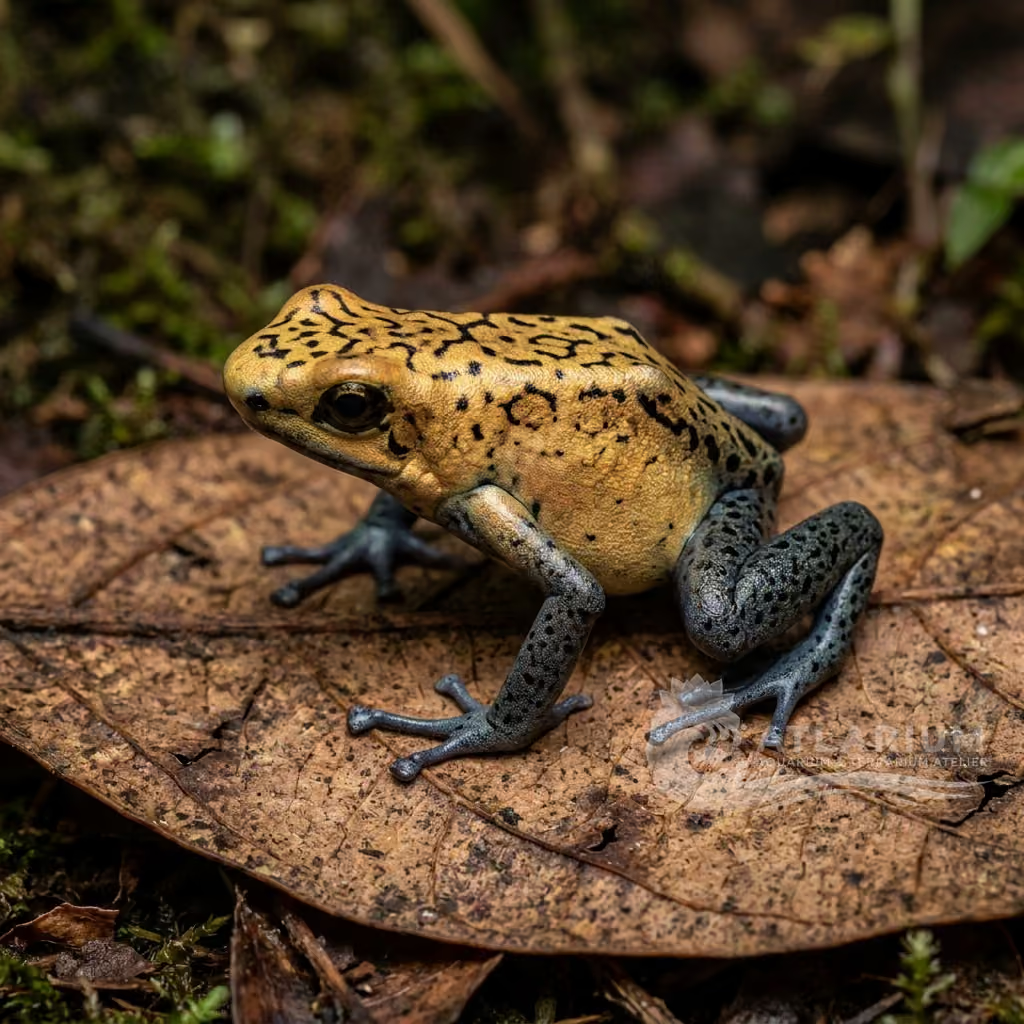
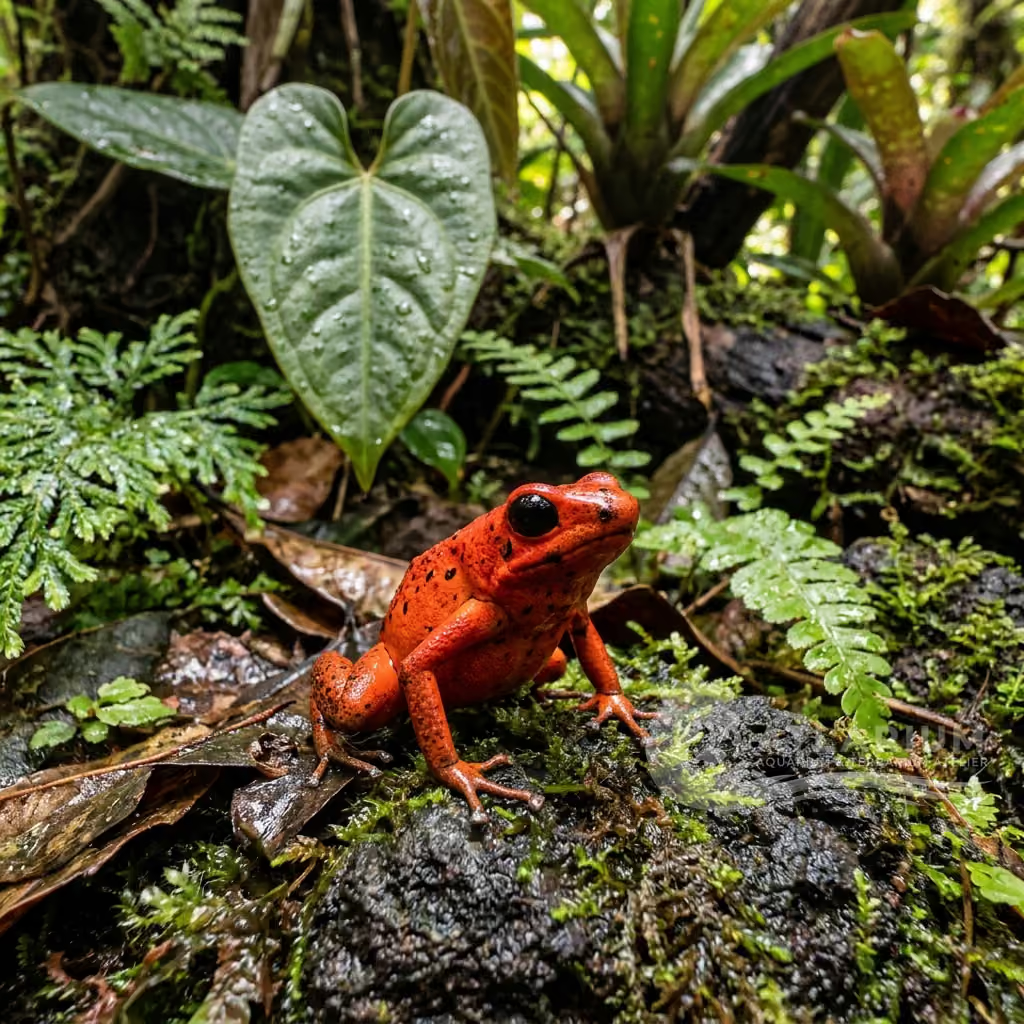
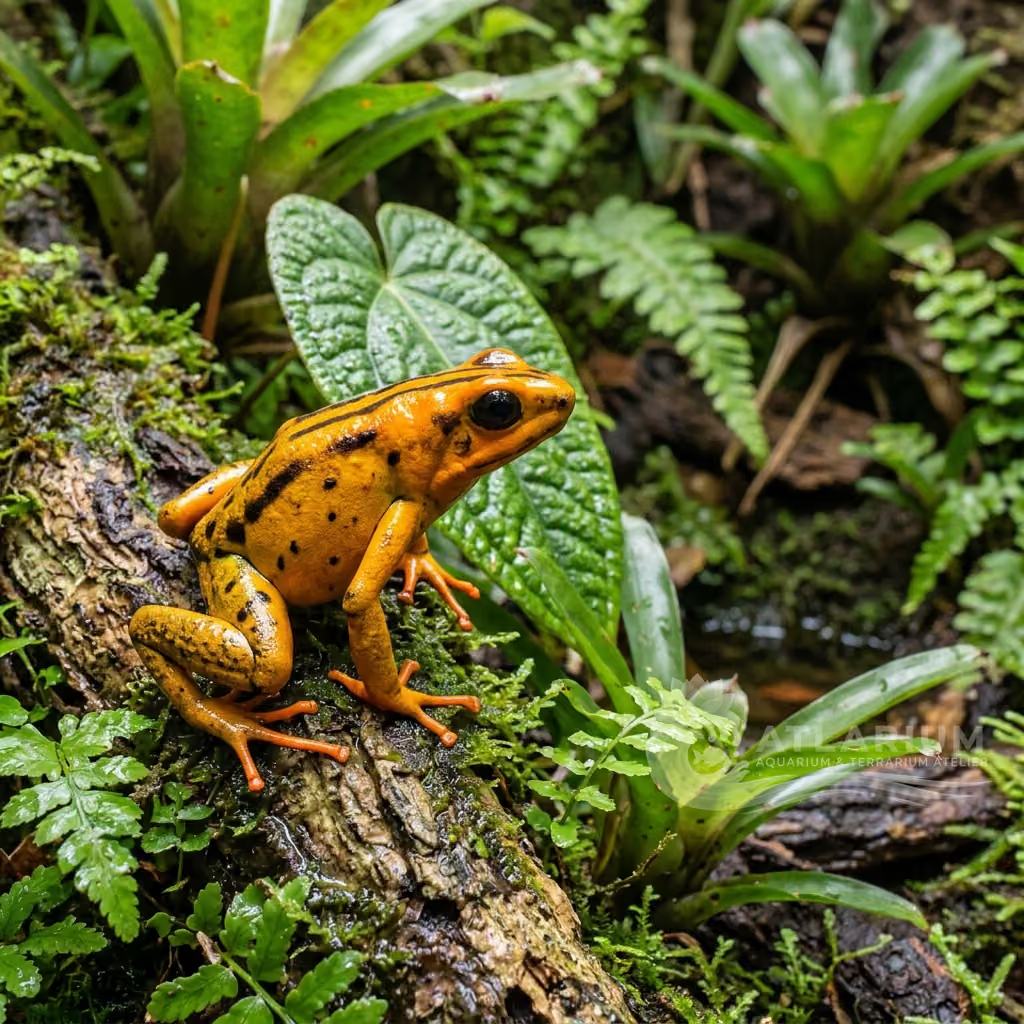
An attractive tinctorius morph displaying a dark base with contrasting yellow stripes and blue/grey limbs. Terrestrial and highly active, needing a bioactive setup with leaf litter.
Umgebung
Terrestrisch
Luftfeuchtigkeit
80 - 100 %
Tagestemperatur
22 - 26 °C
Nachttemperatur
19 - 21 °C
UVB
Ferguson 1-2
UVI
0 - 1 UVI

Artbeschreibung
Geographical Origin and Habitat: Dendrobates tinctorius morph 'Lorenzo' is an extremely localized and rare color form of poison dart frog, native to the Sipaliwini savanna in the far south of Suriname, near the border with Brazil. Unlike other forest-dwelling populations, it inhabits 'forest islands'—isolated patches of humid rainforest surrounded by dry, open savanna grasslands. It lives in the humid understory, among the leaf litter layer of wet leaves, exposed roots, moss-covered rocks, and microhabitats created by fallen logs.
Taxonomy and Genetics: It belongs to the class Amphibia, order Anura, family Dendrobatidae, genus Dendrobates, and species tinctorius. The 'Lorenzo' morph represents a geographically isolated population that has developed and stabilized a unique, heritable color pattern. In the wild, the skin of these frogs contains toxic alkaloids secreted for defense, derived from metabolizing formic acid and other substances in their wild diet (ants and mites); captive-bred specimens are completely non-toxic.
Behavior and Habits: It has diurnal habits and exhibits an active, curious, and unusually bold behavior compared to other amphibians. It spends the day patrolling the ground for food. Males are territorial and use very soft, buzz-like vocalizations to attract females or deter rivals. Adult females exhibit strong territorial behavior and intrasexual aggression, engaging in actual physical wrestling matches to gain exclusive access to males.
Morphology: It is a medium-to-large poison dart frog for the family, with adults measuring between 4.5 and 5.5 centimeters (1.8 to 2.2 inches) in snout-to-vent length. Females are typically larger, longer, and rounder than males. The coloration is unique and spectacular: the back and sides are a glossy jet-black, interrupted by a white horseshoe or inverted 'U' shaped band on the dorsum. The front and hind limbs feature an intense cobalt blue or electric purple coloration, free of black spots.

Pflege, Zucht und Mitbewohner
Terrarium Setup: Requires a specific terrarium (minimum 45x45x45 cm / 18x18x18 inches for a pair). It is essential to set up a bioactive terrarium with a drainage layer (expanded clay) at the bottom, covered by a mesh and a humid substrate (coco fiber, peat, and sphagnum) topped with a thick layer of dry oak or magnolia leaves. The decor should include cork bark, driftwood, and live plants, especially bromeliads, which collect water in their leaf axils where the frogs deposit tadpoles.
Lighting and Heating: Requires moderate LED lighting to support live plant growth and a low UVB output (2-5%) to promote the general well-being of the frogs. The ideal daytime temperature must be maintained between 22°C and 26°C (72°F - 79°F). It does not tolerate high temperatures: values above 27-28°C (81°F - 82°F) can cause lethal heat stress in a short time. At night, the temperature should experience a physiological drop to 18-20°C (64°F - 68°F). Avoid dry heat sources.
Humidity and Hydration: Air humidity must be kept constantly between 80% and 90%, misting the terrarium twice daily with reverse osmosis or distilled water. The substrate should be kept damp but never soaked or muddy. Deep water must not be present since these frogs cannot swim and risk drowning. It is useful to provide a very shallow dish with a thin film of water (1-2 millimeters) placed under a cork hide.
Feeding and Supplementation: Feeds exclusively on small live invertebrates. In captivity, the diet is based on fruit flies (Drosophila melanogaster and D. hydei), springtails, dwarf isopods, and micro-crickets. The food must be dusted at every feeding with a pure calcium and vitamin D3 supplement, and once a week with a multivitamin complex containing preformed vitamin A, which is essential to prevent developmental and reproductive pathologies.
Compatibility: It is highly recommended to keep this species in pairs (male and female). Due to the intense territoriality and aggression of adult females, housing multiple females in the same terrarium leads to constant fighting and high stress. It must never be housed with other frog species or other morphs of Dendrobates tinctorius, to prevent hybridization and the transmission of pathogens.
Health and Common Diseases: Sensitive to fungal skin infections, including chytridiomycosis (caused by the fungus Batrachochytrium dendrobatidis), and systemic bacterial infections favored by poor ventilation or dirty conditions. Vitamin A deficiency causes spindly leg syndrome in tadpoles and neurological problems in adults. Metabolic Bone Disease (MBD) occurs in the absence of proper calcium supplementation.

Geografische Herkunft und Verbreitung
Dendrobates tinctorius morph 'Lorenzo' is an extremely localized and rare color form of poison dart frog, native to the Sipaliwini savanna in the far south of Suriname, near the border with Brazil. Unlike other forest-dwelling populations, it inhabits 'forest islands'—isolated patches of humid rainforest surrounded by dry, open savanna grasslands. It lives in the humid understory, among the leaf litter layer of wet leaves, exposed roots, moss-covered rocks, and microhabitats created by fallen logs.
Ursprung
Selektive Züchtung und SortenAmazonas, Orinoco und Guayana

Amphibienprofil
- Diät
- Insectivore
- The Lorenzo poison dart frog is a dedicated insectivore, historically reliant on an array of micro-fauna found within the neotropical leaf litter. In the wild, their diet consists predominantly of ants, termites, mites, and springtails, which provide the essential alkaloid precursors necessary for the synthesis of their characteristic dermal toxins. In a terrarium environment, they rapidly adapt to a staple diet of cultured flightless fruit flies (Drosophila melanogaster and D. hydei), springtails, and dwarf isopods, which must be systematically dusted with a high-quality vitamin and calcium supplement to ensure optimal skeletal health and vibrant coloration.
- Lebenserwartung
- 10-15 years
- Erwachsenengröße
- 5 cm
- Lebensstil/Mikrohabitat
- Terrestrial
- Primarily terrestrial, these frogs inhabit the leaf litter of the forest floor. While they are mostly ground-dwelling and rely on dense terrestrial cover for security, they will occasionally climb low branches, rocks, or terrarium backgrounds.
- Aktivitätszyklus
- Diurnal
- This species is strictly diurnal, remaining highly active throughout the daylight hours. They spend most of their day foraging for tiny insects, exploring their environment, and engaging in social or territorial behaviors.
- Sozialität
- Gregarious
- Characterized by a surprisingly bold and inquisitive disposition, the Lorenzo poison dart frog is highly active and diurnal, frequently foraging openly across the terrarium floor. However, they are intensely territorial, particularly among females, who will aggressively wrestle and establish dominance hierarchies that can suppress the reproduction or compromise the health of subordinates. Consequently, expert keepers strongly advise housing them either as bonded pairs or in carefully monitored groups with a significant male-biased ratio to mitigate conspecific aggression and ensure a harmonious captive environment.
- Reproduktion
- Oviparous
- This species exhibits a complex, oviparous reproductive strategy that heavily involves biparental, but predominantly male, investment. Females deposit small clutches of 4 to 10 gelatinous eggs on smooth, sheltered surfaces, such as broad leaves or within phytotelmata, which the male then fastidiously guards, hydrates, and monitors. Upon hatching, the male performs the remarkable task of transporting the tadpoles on his back to small, isolated pools of water—often in bromeliad axils or seed pods—where they will complete their metamorphosis over the course of 60 to 80 days.
- Toxizität
- Toxic
- Non-toxic in captivity due to a diet lacking alkaloids.
- Lebensphase
- Neotenic
- Tadpoles are aquatic and often cannibalistic, requiring separate rearing.
- Handhabungstoleranz
- Display only
- These frogs should be considered a display-only species. Their highly permeable skin is incredibly sensitive to the natural oils, salts, and any chemicals present on human hands. Handling causes severe stress and can easily compromise their health.
- Brumation
- Nicht erforderlich
- This tropical species does not undergo true brumation. They require consistently warm and highly humid conditions year-round. While breeders may slightly reduce misting to simulate a dry season and trigger breeding, temperatures should remain stable.
- Häutung
- Periodic
- Shedding occurs regularly and is heavily dependent on maintaining high humidity levels (80-100%). The frog will perform stretching motions to loosen the old skin and will typically consume it entirely to recycle nutrients. Low humidity can lead to stuck shed and fatal dehydration.

Verwandte Arten
Empfehlungen gruppiert nach nahen Verwandten, Auswahl von Begleitern und ähnlicher Betreuung.