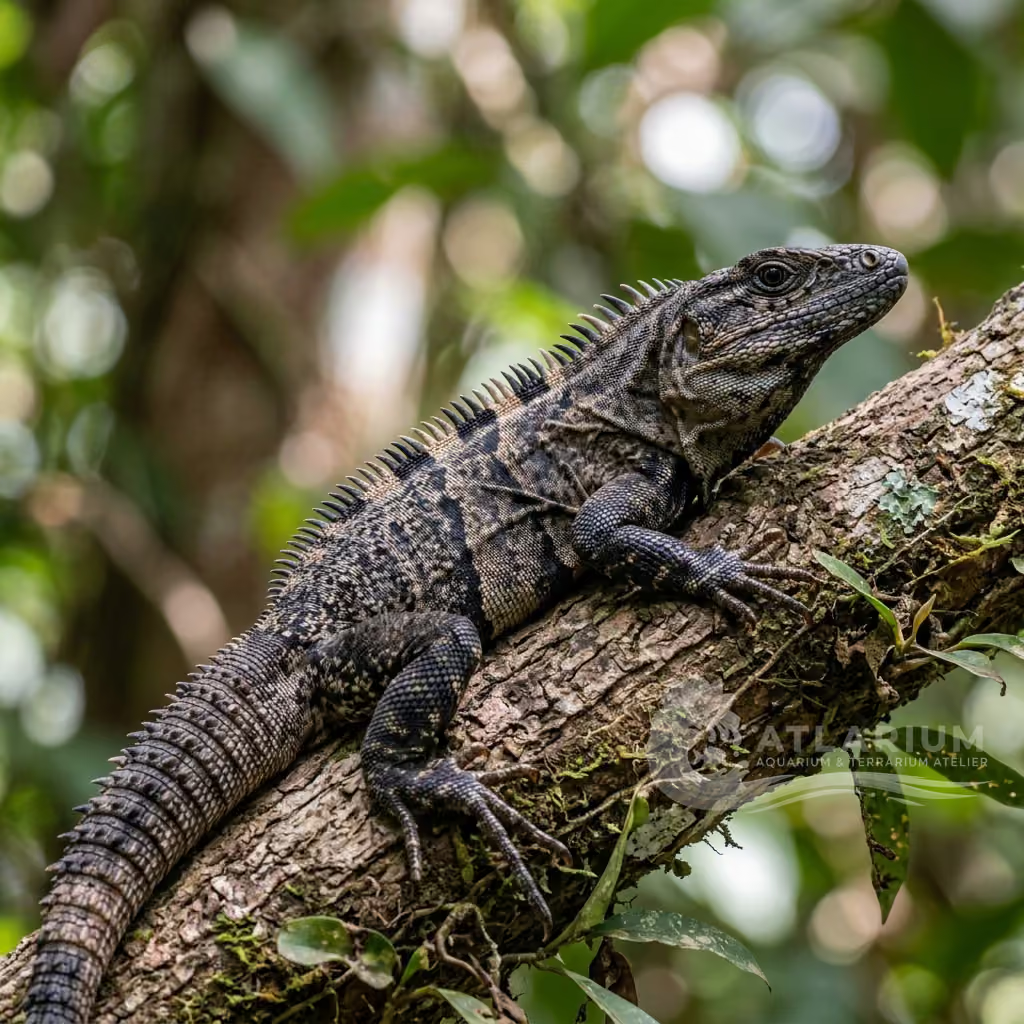
Common chuckwalla
Sauromalus ater
A large herbivorous desert lizard native to North America, known for its loose skin folds and defensive habit of inflating itself inside rock crevices.
Ambiente
Terrestre
Umidade
10 - 30 %
Temperatura diurna
28 - 32 °C
Temperatura ambiente
32 °C
Temperatura noturna
18 - 22 °C
Local para se aquecer
42 - 45 °C
Tamanho adulto
45 cm
Gabinete mínimo
>= 400 L
UVB
Ferguson 4
UVI
2,6 - 3,5 UVI

Descrição da espécie
Geographical Origin and Habitat: Sauromalus ater (formerly also classified as Sauromalus obesus) is native to the arid and desert regions of the southwestern United States (including California, Nevada, Utah, and Arizona) and northwestern Mexico (Sonora and Baja California). It inhabits rocky hills, canyons, rugged slopes, and scrub deserts, showing an absolute preference for rocky outcrops and volcanic boulder piles where it can find safe shelter and thermoregulate.
Taxonomy and Genetics: Belonging to the family Iguanidae, genus Sauromalus. This genus comprises herbivorous lizards highly adapted to extreme climates. Genetic studies have clarified the taxonomy of the species, indicating a strong evolutionary specialization for water conservation and high tolerance to ambient temperatures that frequently exceed 40°C during the summer months.
Behavior and Habits: It is a diurnal and heliophilic reptile that spends many hours basking in the sun on rocks to warm up. It possesses a unique defensive technique: when threatened, it crawls into a narrow crevice between rocks and inflates its lungs with air, wedging its loose skin folds against the rock walls so that it becomes impossible for predators to extract it.
Morphology: Features a wide, flattened body, with skin characterized by conspicuous loose folds on the neck and sides. The tail is robust and blunt. Adults reach a total length of between 35 and 45 centimeters. Coloration varies based on age and sex: juveniles are banded, females retain grayish tones, and adult males can display black heads and limbs with reddish bodies.

Cuidado, criação e companheiros de tanque
Terrarium Setup: Requires a very spacious and sturdy desert terrarium, with minimum dimensions of 120x60x60 cm for a single specimen. The setup must be based on stable piles of non-sharp rocks firmly secured (to prevent collapse) that create narrow horizontal crevices, mimicking their natural habitat. The ideal substrate is desert sand mixed with pebbles or compacted clay.
Lighting and Heating: Being a heliophilic desert reptile, it requires a powerful heat source and high UVB output. The use of metal halide lamps (HQI) or 10-12% UVB fluorescent tubes active for 12 hours a day is recommended. The temperature under the basking spot must reach 42-45°C (108-113°F), with an ambient thermal gradient of 28-32°C (82-90°F) in the cool zone.
Humidity and Hydration: Humidity must be kept extremely low, between 30% and 40%. Consistently high humidity levels cause skin and respiratory infections. Although it derives almost all its fluids from fresh food, it is recommended to provide a small bowl of fresh water, which should be removed if the humidity rises too high.
Feeding and Supplementation: It is a strictly herbivorous species. The diet must consist of 80% leafy greens (dandelion, chicory, endive, escarole), 15% edible flowers (hibiscus, nasturtium) and dry seeds (lentils, millet), and only occasionally grated vegetables. Dust with pure calcium carbonate 3 times a week and with calcium + vitamin D3 once a week.
Compatibility: Adult males are highly territorial and must never be housed together in the same terrarium, as violent fighting will occur. It is possible to house one male with one or two females in much larger terrariums, provided there are multiple basking spots and hides for each specimen to prevent stress.
Health and Common Diseases: The main risks are associated with metabolic bone disease (MBD) caused by insufficient UVB radiation or calcium deficiency, and respiratory infections due to high humidity or low temperatures. The loose skin accumulates dust, but it is important to avoid frequent water baths, which are not natural for this desert species.

Origem e distribuição geográfica
Sauromalus ater (formerly also classified as Sauromalus obesus) is native to the arid and desert regions of the southwestern United States (including California, Nevada, Utah, and Arizona) and northwestern Mexico (Sonora and Baja California). It inhabits rocky hills, canyons, rugged slopes, and scrub deserts, showing an absolute preference for rocky outcrops and volcanic boulder piles where it can find safe shelter and thermoregulate.
Origem
América Central e CaribeAmérica do Norte

Perfil de réptil
- Dieta
- Herbivore
- This species is primarily herbivorous and requires a diet rich in fresh greens and vegetables. Provide a daily salad consisting of dark leafy greens, squash, and occasional fruit treats. Dusting the meals with a calcium supplement is essential to prevent metabolic bone disease.
- Tamanho adulto
- 45 cm
- Estilo de vida/Microhabitat
- Terrestrial
- This rock-dwelling species thrives in environments with abundant rocky outcrops and crevices. They use tight spaces between stones to feel secure and to wedge themselves away from predators. The enclosure should feature securely stacked rocks that provide plenty of climbing and hiding opportunities.
- Ciclo de atividades
- Diurnal
- This species is strictly diurnal, meaning it is highly active during the daylight hours. It requires intense full-spectrum UVB lighting and a proper basking spot to regulate its metabolism. During the night, it will retreat to a secure hide to sleep in complete darkness.
- Socialidade
- Solitary
- This reptile is known for its relatively docile and calm demeanor when properly acclimated. While they may be slightly skittish initially, they tend to settle down with consistent, gentle interactions. They make excellent subjects for observation and occasional interaction.
- Reprodução
- Oviparous
- This species reproduces by laying eggs, which require specific conditions to hatch successfully. Females will seek out a suitable nesting site with moist substrate to deposit their clutch. Eggs must be carefully removed and incubated at the correct temperature and humidity levels.
- Tolerância de tratamento
- Tolerant
- This species is generally tolerant of handling once it has become accustomed to its keeper. Interactions should be kept brief and positive to avoid causing unnecessary stress. Always support their body fully and allow them to walk freely on your hands.
- Brumação
- In the wild, this species undergoes a period of brumation during the cooler winter months. In captivity, healthy adults can be safely cooled to simulate this natural resting phase. During this time, they will eat less and remain largely inactive until temperatures are raised.
- Muda
- Regular
- Like most lizards, this species sheds its skin in patches rather than in one continuous piece. Maintaining proper humidity levels and providing a humid hide are crucial to prevent stuck shed. Keepers should monitor the toes and tail tip closely to ensure all old skin is successfully removed.

Espécies relacionadas
Recomendações agrupadas por parentes próximos, escolhas de acompanhantes e cuidados semelhantes.