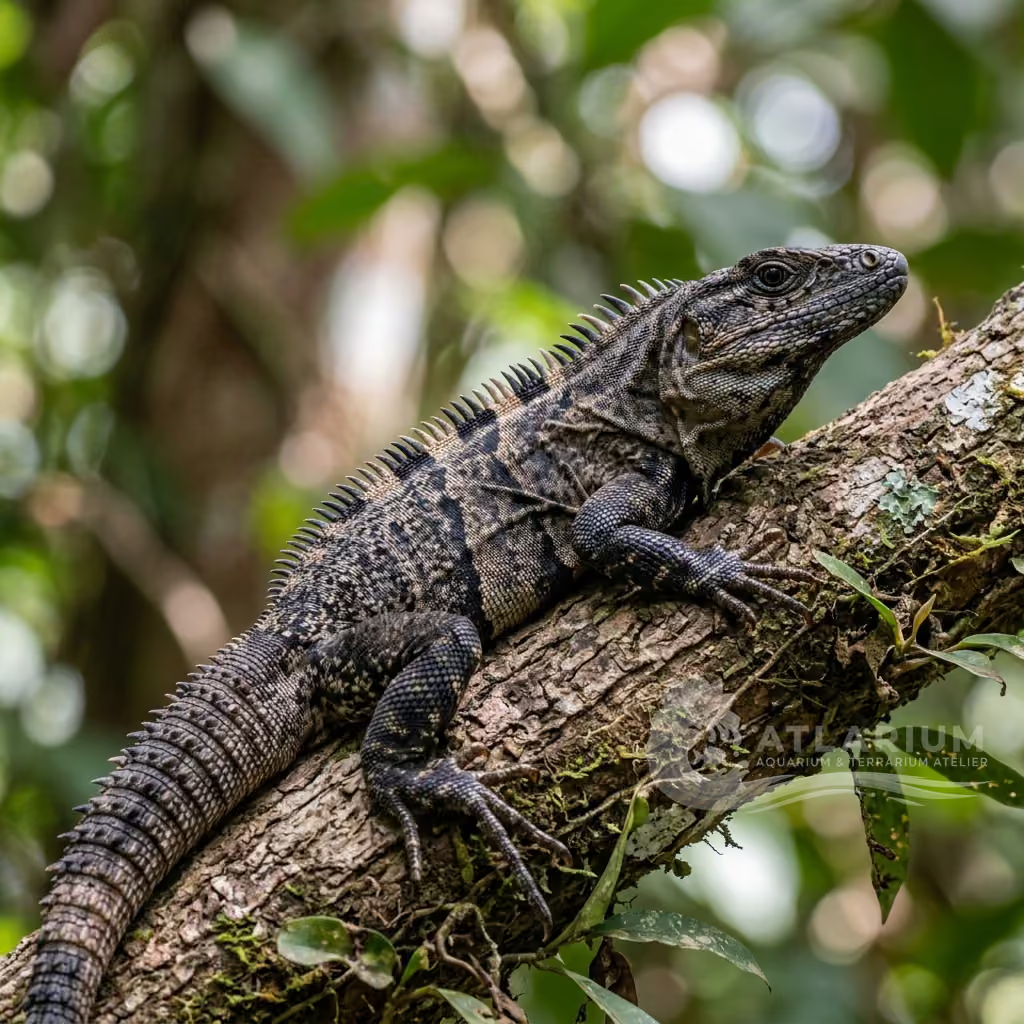
Green Iguana
Iguana iguana
The beginner's green dragon that grows into an unmanageable dinosaur. A terrarium icon, famous for its brilliant juvenile green color, which grows massively (over 6 feet). Strictly herbivorous and arboreal, it requires immense terrariums the size of a walk-in closet, high humidity, and professional-grade UVB lighting. Adult males in rut become formidably aggressive and highly territorial.
Ambiente
Terrestre
Umidade
60 - 80 %
Temperatura diurna
26 - 32 °C
Temperatura noturna
24 - 26 °C
Tamanho adulto
150 cm

Descrição da espécie
Geographical Origin and Habitat: Rainforests, dry forests, and mangroves from Mexico down to southern Brazil. It spends its life high up in the canopy, basking on branches overhanging large rivers or lakes. If threatened by a predator (like an eagle or wildcat), it leaps into the void, plunging into the water, being an exceptional swimmer.
Taxonomy and Genetics: Iguanidae family. It is the most recognized herbivorous reptile in the world. In the wild, the base color is emerald green to camouflage among leaves, but with age, it fades into brown, grey, and bright orange (especially in dominant males). Extreme captive-bred morphs have appeared on the market, such as the Red Iguana, the Blue (Axanthic), and even the Albino (yellow and pink), but their titanic space requirements remain completely unaltered.
Behavior and Habits: As hatchlings, they are nervous, flighty green lightning bolts. As adults, they become giants that spend 10 hours a day motionless under the scorching sun to ferment leaves in their massive gut. The iguana defends itself by using its extremely long tail as a whip capable of slicing human skin open, or by biting with microscopic but razor-sharp serrated teeth (pleurodonts) that act like surgical scissors.
Morphology: True giants. They easily exceed 5 to 6 feet (1.5 - 1.8 meters) in length (2/3 of which is the tail) and weigh 13-18 lbs (6-8 kg). They possess a breathtaking spiny dorsal crest, an enormous dewlap (throat pouch) under the chin to thermoregulate and intimidate rivals, and a 'parietal scale' on top of the head that functions as a third eye to detect shadows of predatory hawks. Males develop huge jaw muscles (swollen jowls) and towering nuchal spikes, plus very obvious waxy femoral pores on their thighs.

Cuidado, criação e companheiros de tanque
Terrarium Setup: THE BIGGEST MISTAKE KEEPERS MAKE. An iguana cannot live in a glass tank. As an adult, it REQUIRES a custom-built enclosure literally the size of a double wardrobe or an entire spare bedroom (minimum 8x4x6 feet tall). It must be furnished with branches as thick as a human thigh, mounted horizontally high up to support their massive weight. No loose ingestible substrate on the floor; linoleum, tile, or paper works best. Provide a huge tub of water (they often refuse to defecate anywhere except in deep water).
Lighting and Heating: Solar-powered machines. They are absolute heliotherms. The basking zone (near the ceiling on the highest branch) must be a true oven at 95-100°F (35-38°C), achieved with high-wattage mercury vapor or metal halide lamps. UVB emission (10%-12% or long T5 tubes) must cover the entire animal, not just a tiny spot. Without massive solar radiation, the iguana stops digesting, leading to gastric putrefaction or severe bone deformities.
Humidity and Hydration: Being tropical, the environment must remain between 70% and 80% humidity, a daunting task in giant wire cages, requiring automated misting systems or ultrasonic humidifiers. If kept dry (like in a centrally heated home), they will develop chronic kidney failure by age 4-5 and struggle to shed their old skin, leading to necrosis and amputation of their long toes and the tips of their dorsal crest spikes.
Feeding and Supplementation: STRICT HERBIVORES. One of the deadliest myths is feeding them insects or meat. Animal proteins destroy the iguana's kidneys, killing it slowly. The diet MUST be 80% dark leafy greens (collard greens, mustard greens, dandelion, escarole, turnip greens, alfalfa), 10% grated vegetables (squash, carrots), and maximum 10% fruit (papaya, figs, berries). Dust everything 3 times a week with pure Calcium (no phosphorus) and Vitamin D3. An adult iguana eats mixing-bowl-sized salads every single day.
Compatibility: Absolutely solitary. Two males in the same enclosure will fight to the death, tearing off each other's limbs and tails. A male and a female can only coexist in massive walk-in heated greenhouses; in confined spaces, the male will stress the female with continuous violent mating attempts (involving brutal bites to her neck and flanks). Males in 'rut' (breeding season) become extremely aggressive even toward their human owners and may charge and bite without warning.
Health and Common Diseases: Metabolic Bone Disease (MBD): The number one killer in captivity. Rubbery jaws, swollen twisted legs, and tremors, caused by a lack of UVB light or a calcium-deficient diet. Renal Failure (Gout): the second leading cause of death, due to an incorrect diet (feeding dog/cat kibble, animal protein) or chronic dehydration. Severe Thermal Burns: being ancient sun-seekers, if the heat lamp is not protected by a metal cage, they will hug it, carbonizing their dorsal crest to the bone without realizing it in time.

Origem e distribuição geográfica
Rainforests, dry forests, and mangroves from Mexico down to southern Brazil. It spends its life high up in the canopy, basking on branches overhanging large rivers or lakes. If threatened by a predator (like an eagle or wildcat), it leaps into the void, plunging into the water, being an exceptional swimmer.
Origem
Melhoramento seletivo e cultivaresExtra-Amazônica América do SulAmérica Central e CaribeAmérica do Norte

Perfil de réptil
- Dieta
- Herbivore
- The diet of Iguana iguana must be carefully managed to ensure optimal health and longevity. In its natural habitat, Iguana iguana typically consumes a variety of specific prey items or plant matter. Captive specimens require a similarly balanced intake, often supplemented with essential vitamins and calcium. It is important to offer food that is appropriately sized to avoid choking or digestive issues. Regular monitoring of their feeding response helps in identifying any potential health problems early.
- Tamanho adulto
- 150 cm
- Estilo de vida/Microhabitat
- Arboreal
- The lifestyle of Iguana iguana varies greatly depending on whether they are terrestrial, arboreal, aquatic, or semi-aquatic. Designing an enclosure that accommodates their specific mode of living is essential for their physical and mental health. This includes providing the right substrate, climbing branches, or water features as needed. A proper setup allows Iguana iguana to exercise, hide, and thermoregulate effectively. Understanding their lifestyle choices helps in creating a thriving captive environment.
- Ciclo de atividades
- Diurnal
- The activity pattern of Iguana iguana typically dictates when they feed, explore, and rest. Depending on their biology, they may be predominantly active during the day, night, or twilight hours. Replicating appropriate lighting and temperature cycles is crucial for maintaining their natural rhythm. Disruptions to this schedule can lead to stress and a decline in the health of Iguana iguana. Keepers should try to interact with them during their most active periods to minimize disturbance.
- Socialidade
- Tolerant
- The behavior of Iguana iguana is deeply influenced by its natural instincts and environment. These creatures exhibit unique social and territorial behaviors that must be respected in captivity. Providing a habitat that mimics their wild surroundings can greatly reduce stress and encourage natural activities. Iguana iguana may show specific defensive or communicative displays when interacting with its environment. Observing these behaviors is key to understanding their overall well-being and comfort.
- Reprodução
- Oviparous
- Reproduction in Iguana iguana requires specific environmental triggers such as temperature and humidity changes. Breeding these animals in captivity can be challenging and often demands a dedicated setup. Once successful mating occurs, careful attention must be given to the incubation of eggs or the care of live young. The offspring of Iguana iguana are usually fragile and require highly specific conditions to thrive. Keepers must thoroughly research their reproductive cycle to achieve positive breeding results.
- Tolerância de tratamento
- Expert only
- Handling Iguana iguana requires patience, care, and an understanding of their tolerance for human interaction. While some individuals may become accustomed to being held, others might find it highly stressful. It is important to support their body correctly and avoid making sudden movements that could startle them. Always wash your hands before and after interacting with Iguana iguana to prevent the spread of pathogens. Limit handling sessions to short periods to minimize any negative impact on their well-being.
- Brumação
- Não obrigatório
- Brumation in Iguana iguana is a natural period of dormancy that often corresponds with cooler seasonal temperatures. During this time, they may significantly reduce their food intake and become far less active. It is crucial to monitor their weight and overall health leading up to and during this phase. Keepers must adjust the temperature and lighting to safely guide Iguana iguana through brumation if required by their species. Proper management of this cycle is vital for their long-term health and reproductive success.
- Muda
- Periodic
- The molting or shedding process for Iguana iguana is a critical time for growth and renewal. Adequate humidity levels are absolutely necessary to ensure that the old skin or exoskeleton comes off cleanly. Problems during molting can lead to retained shed, which might cause serious health issues or constrict blood flow. Keepers should avoid handling Iguana iguana during this vulnerable period to prevent undue stress or injury. Providing appropriate rough surfaces in the enclosure can also assist them in removing the old shed.

Espécies relacionadas
Recomendações agrupadas por parentes próximos, escolhas de acompanhantes e cuidados semelhantes.