Nymphaea zenkeri
Nymphaea lotus var. lotus
A striking aquatic lily, Nymphaea zenkeri is ideally suited for midground placement in the aquarium. With a medium growth rate, it introduces a vibrant and structural focal point, thanks to its distinctive and often richly colored leaves.
Temperatura da água
20 - 28 °C
Valor de pH
6 - 7.5
Tipo de água
Água doce
Luz
Média - Alta
CO2
Média - Alta
KH
2 - 10 dKH

Descrição da espécie
Geographical Origin and Habitat: Nymphaea zenkeri is a highly prized variety of tropical water lily, commonly associated with Nymphaea species originating from West Africa, such as Nymphaea lotus. Its natural habitat includes calm or slow-moving freshwaters like ponds, lakes, and sluggish rivers, where it thrives anchored to muddy substrates. This plant is accustomed to warm, humid climates, a characteristic that makes it an ideal addition to well-maintained tropical aquariums.
Taxonomy & Genetics: This plant belongs to the Nymphaeaceae family, a group of dicotyledonous aquatic plants renowned for their beauty and the presence of floating flowers. Within the genus Nymphaea, Nymphaea zenkeri is often considered a specific form or cultivar, sometimes identified as a variety of Nymphaea lotus, from which it distinguishes itself by particular characteristics of its submerged leaves. Its taxonomy reflects the rich genetic diversity of tropical water lilies, which can exhibit a wide range of leaf
Color & Texture: ation and forms.
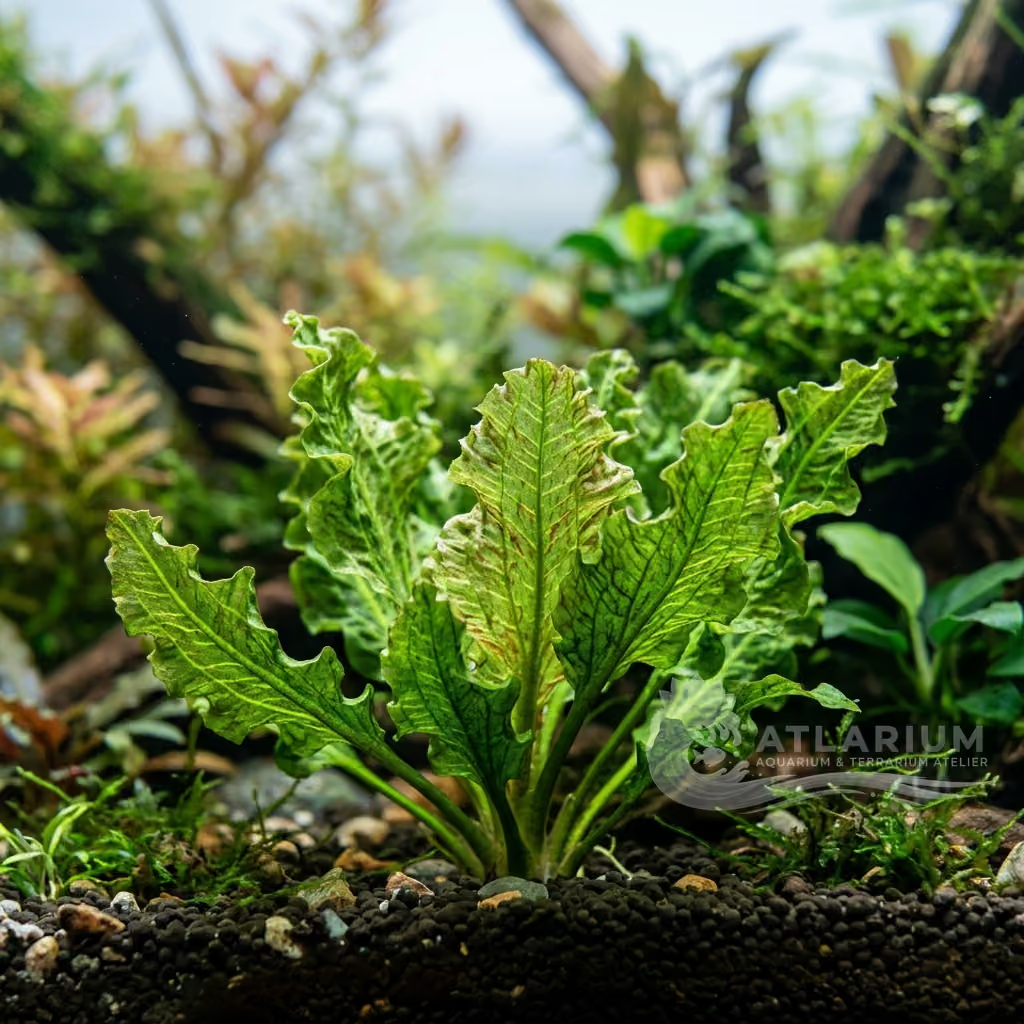
Physical Structure: Nymphaea zenkeri is characterized by a robust, tuberous rhizome from which its leaves and flower stalks emerge. The submerged leaves are its primary appeal in the aquarium, typically oval or heart-shaped with undulating margins, and can reach considerable sizes. If conditions permit, it can produce round floating leaves and, occasionally, beautiful flowers that emerge above the water surface, adding a touch of natural elegance to the aquatic display.
Color & Texture: The distinctive feature of Nymphaea zenkeri is its extraordinary coloration, which ranges from bright green to deep red or burgundy, often embellished with dark spots or speckles. This rich pigmentation is particularly prominent in new leaves and under adequate lighting, offering a captivating visual contrast. The texture of the leaves is typically smooth and waxy, lending a velvety appearance and notable resistance to surface algae adhesion.

Cuidado, criação e companheiros de tanque
Lighting & CO2: For optimal growth and to enhance its vibrant colorations, Nymphaea zenkeri requires medium intensity lighting. Adequate light not only promotes photosynthesis but also stimulates the production of red pigments, making the leaves more decorative. CO2 supplementation is highly recommended; this not only accelerates the plant's growth rate but also contributes to maintaining robust overall health and preventing algae formation.
Nutrition & Substrate: As a root-feeding plant with a significant rhizome, Nymphaea zenkeri greatly benefits from a nutrient-rich substrate. The application of specific root tab fertilizers, placed near the rhizome, is essential to support its vigorous growth and prevent deficiencies. Utilizing a nutritious substrate or regularly supplementing with liquid fertilizers containing macro and micronutrients will ensure a constant supply of vital elements for its health and coloration.
Water Chemistry: Nymphaea zenkeri thrives within a water temperature range of 20 to 28 °C, mimicking its natural tropical conditions. It maintains good health in a slightly acidic to neutral pH range, between 6.0 and 7.5, and tolerates carbonate hardness (KH) from 2 to 12. Maintaining these parameters stably is crucial to prevent stress and leaf melt, ensuring a comfortable aquatic environment for the plant.
Space Management & Placement: Ideally placed in the midground, Nymphaea zenkeri requires sufficient space to spread its distinctive leaves and root system. It is important to consider that its leaves can grow large and potentially shade plants below, so strategic placement is advisable. Careful space planning will prevent the plant from becoming overly dominant while still allowing other species to benefit from light and water circulation.
Pruning: Regular pruning is fundamental for managing the growth of Nymphaea zenkeri and maintaining its desired form within the aquarium. This includes the removal of older or damaged leaves, which tend to yellow or degrade, to encourage new vegetation. It is equally important to trim any floating leaves that emerge to the surface, unless this effect is specifically desired, to concentrate the plant's energy on producing submerged leaves and maintain lighting for underlying plants.
Risks & Diseases: Although a robust plant, Nymphaea zenkeri can be susceptible to nutritional deficiencies, manifesting as chlorosis or stunted growth, particularly if iron is lacking. Algae can proliferate on its leaves if the nutrient and light balance is not optimal. Another risk is "melting" of leaves, especially common after transplanting or under environmental stress, which requires patience and stability for recovery.

Origem e distribuição geográfica
Nymphaea zenkeri is a highly prized variety of tropical water lily, commonly associated with Nymphaea species originating from West Africa, such as Nymphaea lotus. Its natural habitat includes calm or slow-moving freshwaters like ponds, lakes, and sluggish rivers, where it thrives anchored to muddy substrates. This plant is accustomed to warm, humid climates, a characteristic that makes it an ideal addition to well-maintained tropical aquariums.
Origem
África e Madagascar

Perfil da planta
- Posicionamento
- Plano intermediário
- This iconic plant makes a stunning centerpiece for the midground or background of the aquarium. The bulb should be only partially buried to prevent rot, allowing the beautiful rosette of leaves to unfurl majestically. Trimming floating leaves trains the plant to stay compact and bushy, rather than stretching to the surface.
- Forma botânica
- Roseta
- The plant emerges from a central bulb, forming broad, arrow-shaped leaves with wavy, slightly ruffled edges. It is famous for its striking coloration, available in 'Red' and 'Green' morphs, both adorned with dark, tiger-like spots. It occasionally produces spectacular, fragrant white to slightly pinkish flowers that open at night.
- Crescimento
- Média
- Under high light, CO2 injection, and heavy fertilization, the Tiger Lotus exhibits an exceptionally fast growth rate. It will continuously push new leaves toward the surface and can quickly dominate an aquarium. Regular, aggressive pruning is required if you wish to keep it as a submerged foreground or midground feature.
- Substrato
- Alta
- A nutrient-rich and sufficiently deep substrate is vital to anchor its bulb and support its aggressive root system. High-quality aquasoils are the best choice for providing sustained nutrition for optimal leaf development. If planting in plain sand or gravel, the substrate must be heavily supplemented with iron-rich root tabs.
- Fertilização de coluna
- Recomendada
- Supplementing the water column with liquid fertilizers helps to ensure the massive leaves remain robust and perfectly colored. A comprehensive micronutrient mix keeps the dark spots distinct and prevents leaf edge degradation. Balancing column dosing with the plant's root uptake minimizes the risk of spot algae on its large leaves.
- Fertilização radicular
- Necessária
- Heavy root fertilization is the absolute key to cultivating a magnificent Nymphaea zenkeri. Inserting nutrient-dense, iron-rich tabs directly under the root mass yields dramatic improvements in leaf size and color intensity. Regular supplementation of the substrate is mandatory to prevent the bulb from depleting its local environment.
- Corte
- Ocasional
- Snip off floating leaves early to train the plant to stay compact and submerged. Remove damaged or decaying outer leaves at the base to encourage new central shoots. Avoid damaging the tuber during maintenance.
- Propagação
- Rhizome division
- Propagation is straightforward; the mother bulb will naturally produce side shoots and small daughter plants along its runners. Once these new plants develop a distinct root system and several leaves, they can be carefully pinched off and replanted. It can also be grown from seeds if the surface flowers are successfully pollinated.
- Sensibilidade
- Moderada
- It is highly sensitive to tuber rot; keep the top half of the tuber exposed above the substrate. It may melt if parameters shift too abruptly. Avoid burying the crown where leaves emerge.
- Função de layout
- Plano intermediário
- Serves as an excellent focal point. The spotted pattern offers a unique texture compared to standard aquatic foliage. It draws the eye and contrasts beautifully with fine-leaved background plants.

Espécies relacionadas
Recomendações agrupadas por parentes próximos, escolhas de acompanhantes e cuidados semelhantes.