Pilotrichaceae sp.
Pilotrichaceae sp.
Pilotrichaceae sp. is a beautiful slow-growing foreground aquatic moss, perfect for creating dense carpets or meticulously detailing hardscape elements. Its adaptable light requirements make it a versatile choice for a wide range of aquascaping styles.
Temperatura da água
18 - 26 °C
Valor de pH
6 - 7.5
Tipo de água
Água doce
Luz
Low to High
CO2
Baixa - Alta
KH
0 - 14 dKH

Descrição da espécie
Geographical Origin and Habitat: Pilotrichaceae sp. belongs to a family of pleurocarpous mosses predominantly found in tropical and subtropical regions across the globe, with significant diversity in Central and South America, as well as parts of Asia and Africa. It typically thrives in highly humid environments, often adjacent to water bodies, where it can be found in both emergent and submerged forms, adhering to rocks, tree trunks, or other hard surfaces. These mosses are well-adapted to conditions of high atmospheric humidity and stable substrates, forming dense colonies that effectively retain moisture.
Taxonomy & Genetics: As a member of the Pilotrichaceae family, this specific "sp." designation indicates an unidentified or general species within this distinct lineage of pleurocarpous mosses. This family is recognized for its extensive lateral branching and creeping or pendant growth habit, differentiating it from acrocarpous mosses which grow vertically. Genetically, Pilotrichaceae members exhibit unique adaptations for aquatic or semi-aquatic life, including notable resilience to moderate environmental parameter fluctuations. Precise classification of an "sp." requires detailed morphological and molecular analysis to identify its distinct characteristics.
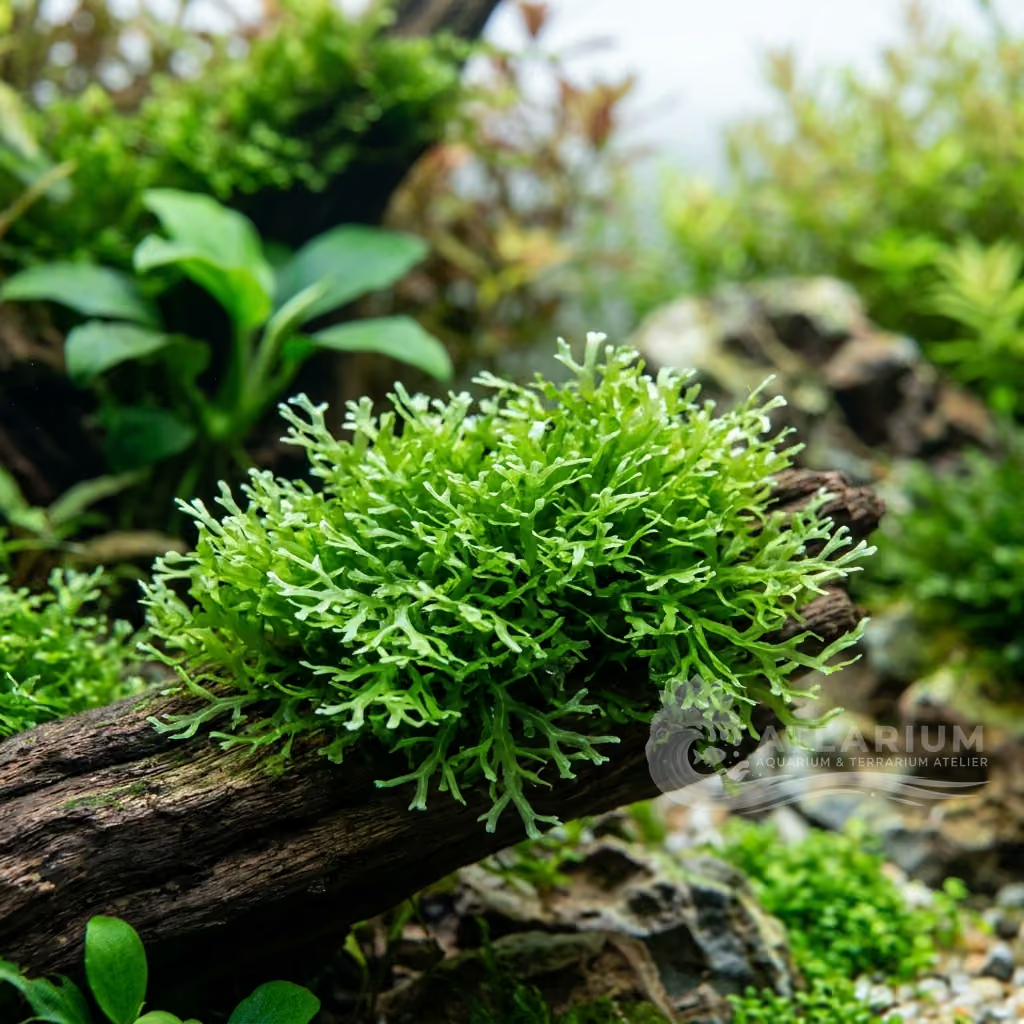
Physical Structure: The physical structure of Pilotrichaceae sp. is characteristic of pleurocarpous mosses, featuring slender, flexible stems that branch profusely laterally, forming a dense tangle or an expansive mat. Its leaves are small, typically lanceolate or ovate, arranged tightly along the stems, giving the plant a delicate and feathery appearance. This moss does not develop true roots but rather fine rhizoids that solely serve for anchoring to rocks, wood, or substrate, without performing a significant nutrient absorption function. Its growth primarily occurs through lateral expansion rather than vertical height, maintaining a low and compact profile.
Color & Texture: Pilotrichaceae sp. showcases a vibrant green coloration, which can range from a light, lively green to deeper emerald hues, depending on light intensity and nutrient availability, particularly iron. Its texture is remarkably delicate and soft to the touch, almost velvety or feathery, due to its densely clustered small leaves. When grown in compact formations, it creates a very appealing visual effect, resembling a soft carpet or a green cascade that adds depth and naturalness to the aquascape. This combination of color and texture significantly contributes to the overall aesthetic of the aquarium.

Cuidado, criação e companheiros de tanque
Lighting & CO2: The light demand for Pilotrichaceae sp. is highly versatile, tolerating levels from low to high, although medium to intense light is generally preferred to promote denser growth and more vibrant coloration. In low light conditions, the moss will grow more slowly and may appear less compact. CO2 injection is not strictly mandatory, especially under low light, but is highly recommended to stimulate accelerated growth and optimal plant health, particularly in setups with stronger illumination. CO2 also helps to prevent algal growth by enhancing the plant's competitive advantage.
Nutrition & Substrate: Pilotrichaceae sp., like most aquatic mosses, primarily absorbs its nutrients directly from the
Water Chemistry: Stable water parameters are crucial for the well-being of Pilotrichaceae sp. It thrives at an ideal temperature between 18.0 and 26.0°C, with a pH ranging from 6.0 to 7.5 and a carbonate hardness (KH) between 0.0 and 14.0. Although it can adapt to a wide range, stable conditions prevent stress and promote consistent growth. Good water circulation is beneficial for distributing nutrients and preventing detritus accumulation on the moss, which could suffocate it or promote algae. Avoid sudden fluctuations in temperature or pH, as these can cause stress to the plant.
Space Management & Placement: Pilotrichaceae sp. is ideally suited for foreground placement or hardscape detailing due to its slow growth rate and tendency to form compact mats. It can be easily attached to volcanic rocks, driftwood, or specific moss nets using nylon thread or gel superglue. This moss is excellent for creating a sense of depth, delineating paths, or softening transitions in the layout. Its slow growth means it requires less frequent maintenance in terms of trimming, allowing the desired layout form to be maintained for longer periods.
Pruning: Trimming Pilotrichaceae sp. is a relatively simple yet essential operation to maintain its desired shape, promote denser growth, and prevent detritus accumulation. Use sharp moss scissors to gently cut back any excessively long stems or those branching outside the designated area. Trimming encourages lateral branching, making the moss carpet or formation thicker and more compact. It is advisable to remove any cut fragments from the aquarium to prevent them from floating around and attaching to other plants or clogging the filter.
Risks & Diseases: While Pilotrichaceae sp. is generally robust, it is susceptible to common problems if aquarium conditions are not optimal. Algae infestation is the most common risk, often caused by nutrient imbalances (excess nitrates/phosphates or deficiency of others) or excessive and inconsistent light. Poor water circulation can lead to detritus accumulation, suffocating the moss and creating a favorable environment for algae. Specific diseases are rare for mosses, but prolonged environmental stress can weaken them, making them more vulnerable to deterioration or "melting," especially in the presence of aggressive chemicals.

Origem e distribuição geográfica
Pilotrichaceae sp. belongs to a family of pleurocarpous mosses predominantly found in tropical and subtropical regions across the globe, with significant diversity in Central and South America, as well as parts of Asia and Africa. It typically thrives in highly humid environments, often adjacent to water bodies, where it can be found in both emergent and submerged forms, adhering to rocks, tree trunks, or other hard surfaces. These mosses are well-adapted to conditions of high atmospheric humidity and stable substrates, forming dense colonies that effectively retain moisture.
Origem
América Central e CaribeAmazônia, Orinoco e GuianasExtra-Amazônica América do SulÁfrica e MadagascarSul e Sudeste AsiáticoLeste Asiático

Perfil da planta
- Posicionamento
- Primeiro plano
- This plant is highly versatile and is best placed in the foreground or midground areas. Attaching it to wood or stone creates a very natural, mature aesthetic in the aquascape. Careful placement in areas with gentle to moderate flow prevents debris accumulation. It can also be used to soften harsh transitions between hardscape elements.
- Forma botânica
- moss / liverwort or fern prothallium
- Botanically, Pilotrichaceae sp. is characterized by creeping, branching fronds. It develops a complex network of branching shoots that form a visually appealing cushion. Its fine texture provides an excellent contrast to broader-leaved species. This dense structure also offers ideal hiding spaces for shrimp and fry.
- Crescimento
- Lenta
- The growth rate is generally slow to moderate, depending heavily on light intensity and CO2 availability. With supplemental CO2 and strong lighting, it will form dense, thick clumps much faster. In lower tech setups, it grows steadily but requires far less maintenance. Periodic thinning is beneficial to ensure light reaches the underlying layers.
- Substrato
- Nenhuma
- As an epiphyte, Pilotrichaceae sp. does not depend on a nutrient-rich substrate for survival. It prefers to be attached directly to hardscape materials such as porous rocks or driftwood. If placed on the substrate, ensure it is resting on the surface rather than buried, as burying will cause severe rot. A coarse surface allows its rhizoids to anchor securely.
- Fertilização de coluna
- Recomendada
- Column fertilization is the primary method of delivering essential nutrients to Pilotrichaceae sp.. Since it lacks a true root system, it absorbs all required elements through its leaf surfaces. A comprehensive liquid fertilizer containing potassium, trace elements, and moderate nitrates is ideal. Consistent dosing yields the most stable and attractive growth.
- Fertilização radicular
- Nenhuma
- Root tabs and nutrient-rich substrates provide absolutely no benefit to this specific plant. It is entirely incapable of extracting nutrients buried within the soil. Do not attempt to bury it with fertilizer tabs. All nutritional focus should remain strictly on the water column.
- Corte
- Ocasional
- Trimming Pilotrichaceae sp. requires a careful approach to encourage bushy and attractive regrowth. Use sharp aquascaping scissors to make clean cuts just above a healthy set of leaves or nodes. Regular pruning prevents the lower portions from becoming shaded and bare. The cuttings can often be replanted to propagate the species further.
- Propagação
- Estacas
- Propagation is incredibly straightforward and relies on simple mechanical division. By carefully tearing or cutting a clump into smaller sections, you create multiple new plants. These new pieces can be tied or glued to new hardscape locations. Under favorable conditions, the separated clumps will rapidly attach and resume their outward growth.
- Sensibilidade
- Moderada
- Pilotrichaceae sp. can be somewhat sensitive to sudden fluctuations in water parameters, particularly large pH or temperature swings. Algaecides and certain chemical treatments should be used with extreme caution. It requires a stable environment with consistent CO2 levels to prevent melting. Maintaining excellent water quality through regular changes is essential for its well-being.
- Função de layout
- Epífita, Primeiro plano
- In terms of aquascaping, Pilotrichaceae sp. plays a vital role as a structural or accent element. Its moss nature and deep green appearance make it perfect for creating focal points or softening hardscape lines. By grouping several stems or patches together, you can achieve a dense and visually striking effect. It seamlessly bridges the gap between different zones in the aquarium.

Espécies relacionadas
Recomendações agrupadas por parentes próximos, escolhas de acompanhantes e cuidados semelhantes.