Atlantic Marsh Fiddler Crab
Minuca pugnax
The Atlantic Marsh Fiddler Crab is a semi-terrestrial species that builds deep burrows. It requires a specialized paludarium with a sandy beach and brackish water, exhibiting fascinating social behavior.
Temperatura da água
15 - 25 °C
Valor de pH
7.5 - 8.2
Tipo de água
Água salobra / Marinho
Tipo invertebrado
Marine crab
Tamanho adulto
3 cm
Grupo mínimo
>= 3
KH
6 - 10 dKH
Papel ecológico
Scavenger
Sensibilidade ao cobre
High

Descrição da espécie
Geographical Origin and Habitat: Uca pugnax is native to the eastern coast of North America, ranging from Massachusetts to Florida. It inhabits salt marshes, tidal creeks, mudflats, and sandy shores, where it constructs deep burrows near the high tide mark.
Taxonomy: Belongs to the class Malacostraca, order Decapoda, family Ocypodidae, and genus Uca (often referenced under the subgenus Minuca). The common name 'fiddler crab' derives from the male's feeding motion, which resembles playing a violin.
Social Behavior: Highly social animals that live in dense colonies. Males defend their burrows vigorously using their oversized claw to threaten rivals and wave to attract females. They spend significant time on land foraging and maintaining their tunnels.
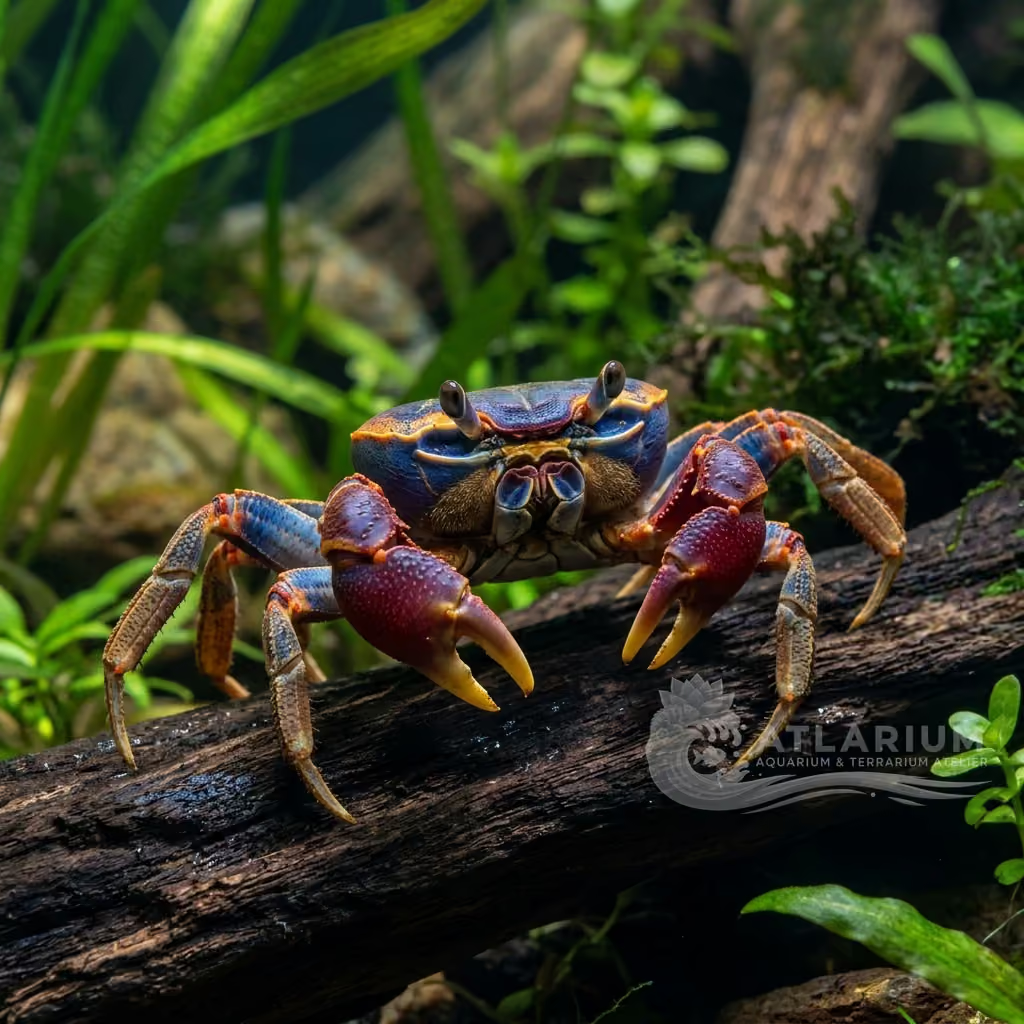
Coloration and Sexual Dimorphism: Carapace is typically dark brown, olive, or greyish, sometimes showing a blue tint. Sexual dimorphism is extreme: males possess one major cheliped that grows to a massive size and one minor claw, while females have two identical small claws.

Cuidado, criação e companheiros de tanque
Tank Setup: A specialized paludarium or aquaterrarium is mandatory. They cannot survive in a standard aquarium without dry land. Provide a sloped sandy beach area (at least 8-10 cm deep to allow burrowing) and a shallow brackish water zone.
Diet and Feeding: Detritivore and omnivore. They sift through wet sand and mud for algae, detritus, and organic micro-matter. Supplement their diet with sinking crustacean pellets, algae wafers, blanched vegetables, and occasional frozen foods.
Water Quality: Requires brackish water with a specific gravity of 1.005 to 1.015. Maintain temperatures between 15°C and 25°C, and pH between 7.5 and 8.2. Ensure the water section is well-aerated with a small sponge filter to keep water moving.
Compatibility and Tankmates: Best kept in a species-specific setup. Keep them in groups consisting of one male and multiple females to minimize male-on-male combat. Do not house with large fish or aggressive crabs that could eat them, especially when soft-shelled.
Aquarium Breeding: Breeding in home setups is highly unlikely. Although mating occurs and females carry eggs, the larvae are released into water as marine zoea, requiring specific open-ocean planktonic conditions and micro-foods to metamorphose.
Risks and Diseases: They are notorious escape artists; the enclosure must be completely sealed. Copper-based medications are highly toxic. Molting failure is a common cause of death, prevented by providing adequate calcium and iodine in the diet.

Origem e distribuição geográfica
Uca pugnax is native to the eastern coast of North America, ranging from Massachusetts to Florida. It inhabits salt marshes, tidal creeks, mudflats, and sandy shores, where it constructs deep burrows near the high tide mark.
Origem
Cosmopolita ou apresentadoAmérica do NorteLeste AsiáticoOceanos tropicais e recifes

Perfil de invertebrados
- Dieta
- Detritivore
- As a robust omnivore, Minuca pugnax actively searches for both plant matter and meaty food items. They consume detritus, algae, and any small leftover scraps of food provided to the tank. Sinking wafers and chopped seafood can supplement their daily scavenging.
- Papel ecológico
- Scavenger
- Minuca pugnax serves as a highly effective scavenger, breaking down larger pieces of organic waste. They aerate the substrate with their movement and control nuisance algae growth. Their constant activity maintains the health and cleanliness of the benthic zone.
- Tamanho adulto
- 3 cm
- Risco de salto
- Yes
- Although they do not jump, Minuca pugnax possesses exceptional climbing abilities and a strong desire to explore. Many crabs can effortlessly climb up airlines, heater cords, or silicon edges. A secure top cover is absolutely essential to prevent escapes.
- Sensibilidade ao choque
- Medium
- Minuca pugnax should be acclimated carefully to avoid the shock of rapidly changing water parameters. Wide fluctuations in salinity or temperature can compromise their immune systems or trigger premature molting. Consistency in water quality is paramount for their long-term health.
- Cálcio e minerais
- Medium
- Sufficient calcium availability is an absolute requirement for Minuca pugnax to maintain its hard carapace. Poor calcium levels can cause incomplete molting and eventual death. Feeding calcium-enriched diets and keeping minerals in balance is vital for their exoskeleton strength.
- Muda
- Yes
- During molting, Minuca pugnax sheds its old shell to allow for growth and regeneration of lost limbs. It is entirely soft and defenseless during this process, requiring secure caves or crevices for hiding. The old molt should remain in the tank so the crab can recycle the calcium.
- Reprodução
- Oviparous
- Rearing Minuca pugnax in an aquarium is generally quite difficult due to their complicated larval phases. Females carry dense clusters of eggs on their abdomen before releasing them as planktonic zoea. These microscopic larvae usually require separate rearing vessels and very specific live foods.
- Compatibilidade e companheiros de tanque
- Community
- Minuca pugnax is generally safe with fish that are too large to be eaten but too small to view the crab as prey. Certain predatory species of fish should be entirely avoided. Be cautious when keeping them with slower bottom-dwelling species which might be pinched.

Espécies relacionadas
Recomendações agrupadas por parentes próximos, escolhas de acompanhantes e cuidados semelhantes.