Pearse's Mudskipper
Periophthalmus novemradiatus
This extraordinary amphibious mudskipper spends most of its time out of water. Highly territorial, it requires a specialized brackish aquaterrarium with ample land area and a live carnivorous diet.
Temperatura da água
23 - 28 °C
Valor de pH
7.5 - 8.5
Tipo de água
Água salobra
Nível do tanque
Parte inferior
Tamanho adulto
10 cm
Volume mínimo do tanque
>= 100 L
Grupo mínimo
>= 1

Descrição da espécie
Geographical Origin and Habitat: This species is native to the coastal regions of the Indo-West Pacific, including India, Bangladesh, Myanmar, Thailand, Malaysia, and Indonesia. It inhabits tidal mudflats, estuaries, and brackish mangrove swamps, adapting to air exposure.
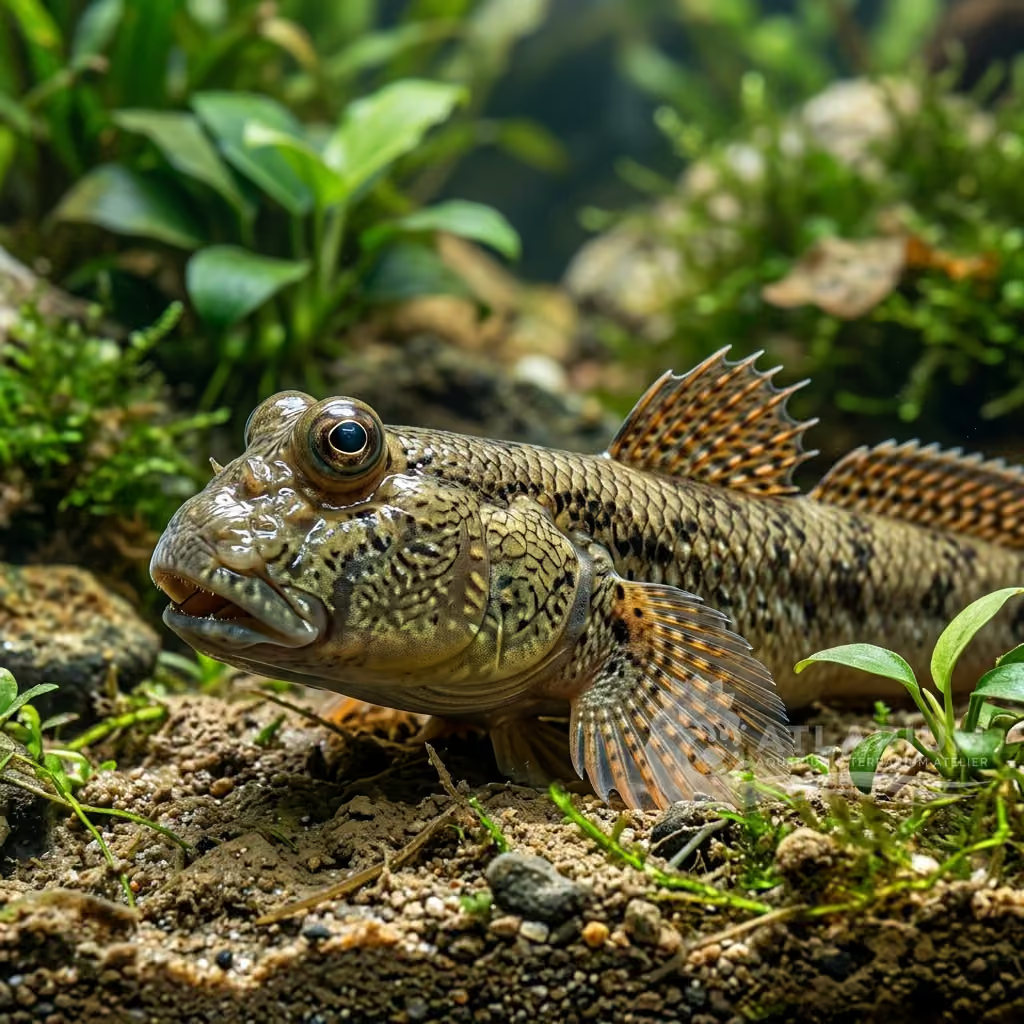
Taxonomy and Morphology: Classified under the family Gobiidae and subfamily Oxudercinae. Features muscular pectoral fins used for walking on land, elevated eyes on top of the head for aerial vision, and specialized gill chambers to breathe moist air.
Social Behavior: Highly territorial and aggressive toward conspecifics. Individuals establish territories on mudbanks and dig deep burrows in the mud. Spawning males engage in jumping displays to attract females.
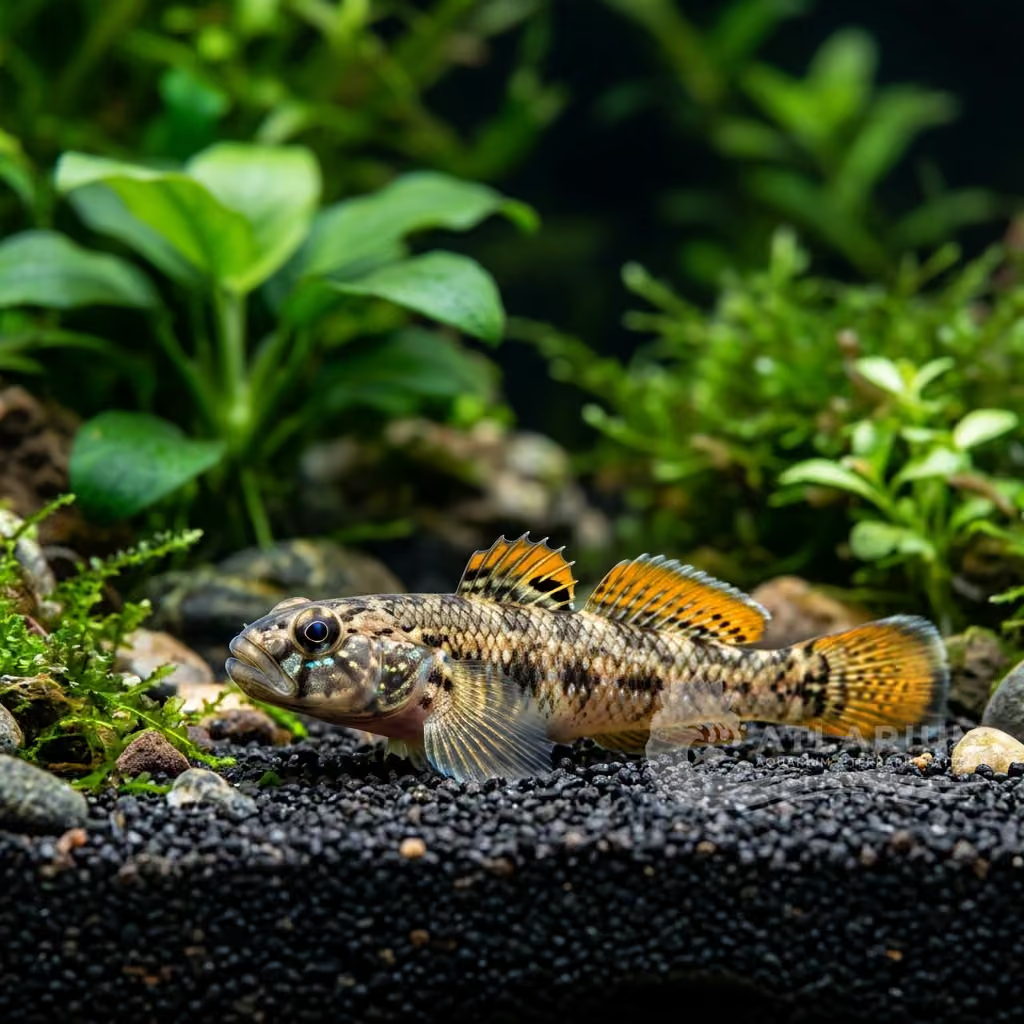
Coloration and Sexual Dimorphism: The body displays a cryptic greyish-brown coloration with darker spots and bands. The first dorsal fin is dark with a light margin. Males are larger and exhibit more intense dorsal fin displays.

Cuidado, criação e companheiros de tanque
Aquarium Setup: Must be kept in a specialized paludarium with a brackish aquatic zone and a large land area made of sand, mud, or flat rocks. Provide driftwood and mangrove roots above the water level for climbing.
Diet and Feeding: Strictly carnivorous. Prefers to hunt on land. Feed live food such as small crickets, fruit flies (Drosophila), small earthworms, brine shrimp, and bloodworms. They rarely accept dry commercial foods.
Water Quality: Requires brackish water with a specific gravity of 1.005 to 1.015. Maintain water and air temperatures between 24.0 and 28.0 °C, with a pH of 7.5 to 8.2. High air humidity is absolutely vital to prevent skin desiccation.
Compatibility and Cohabitation: Best kept in a species-only setup. Keeping multiple individuals requires a very large tank with visual barriers to reduce territorial battles. Do not house with small fishes or crabs.
Aquarium Breeding: Spawning in home aquariums is exceptionally rare. In nature, they spawn inside complex mud burrows where the male guards the eggs and provides air to the nest chamber.
Risks and Diseases: Primary risks include escape (they can climb glass easily) and skin drying due to low humidity. Open wounds from fighting are prone to bacterial infections. A secure, sealed cover is mandatory.

Origem e distribuição geográfica
This species is native to the coastal regions of the Indo-West Pacific, including India, Bangladesh, Myanmar, Thailand, Malaysia, and Indonesia. It inhabits tidal mudflats, estuaries, and brackish mangrove swamps, adapting to air exposure.
Origem
Oceanos tropicais e recifesSul e Sudeste Asiático

Perfil de peixe
- Temperamento
- Semi-aggressive
- Males are very aggressive towards each other. They will flare their dorsal fins and fight over territory. They are fascinating to watch but demand specific setups.
- Dieta
- Carnivore
- They are carnivorous and love small insects. Crickets, fruit flies, and bloodworms are excellent choices. They will also learn to take small pellets.
- Expectativa de vida
- 5-7 years
- Tamanho adulto
- 10 cm
- Proporção sexual
- Solitary
- Males are highly territorial and aggressive. Keep one male with multiple females if the tank is large enough. In smaller setups, keep only a single specimen.
- Frequência de alimentação
- Twice daily
- Feed them once a day directly on the land area. They enjoy hunting live prey. Remove any dead, uneaten insects to prevent mold.
- Carga biológica
- Low to Medium
- They have a relatively low bioload. They spend much of their time out of the water. Small local filtration in the water section is usually enough.
- Fluxo
- Strong
- The water section should have very low flow. They are not strong swimmers in deep water. A small sponge filter is perfect for maintaining water quality.
- Risco de salto
- Yes
- They are excellent jumpers and climbers. They can even climb the glass walls of the tank. A completely sealed lid is absolutely necessary.
- Reprodução
- Oviparous
- Breeding in a home setup is extremely difficult. The males dig deep burrows in the mud for the eggs. Captive conditions rarely replicate these complex requirements.
- Compatibilidade e companheiros de tanque
- Species only
- They should be kept in a species-only paludarium. Other fish cannot survive their terrestrial environment. Crabs may be attacked or eaten.
- Nível do tanque
- Bottom
- They spend the majority of their time on land. They require a paludarium with exposed mud or sand banks. The water section should be shallow.

Modelos e parâmetros científicos
FishBase
Acesso aos dados científicos oficiais da espécie
FishBase v25.04Dados sincronizados em: 15/06/2026
- Nível trófico
- 3,2 ± 0,4 se
- Resiliência
- Alta (menos de 15 meses)
- Unicidade filogenética (PD50)
- 0.5
- Relação bayesiana comprimento-peso
- a = 0.01072, b = 2.92
- VulnerabilidadeVulnerabilidade baixa (10 / 100)

Espécies relacionadas
Recomendações agrupadas por parentes próximos, escolhas de acompanhantes e cuidados semelhantes.