Singapore Mono
Monodactylus kottelati
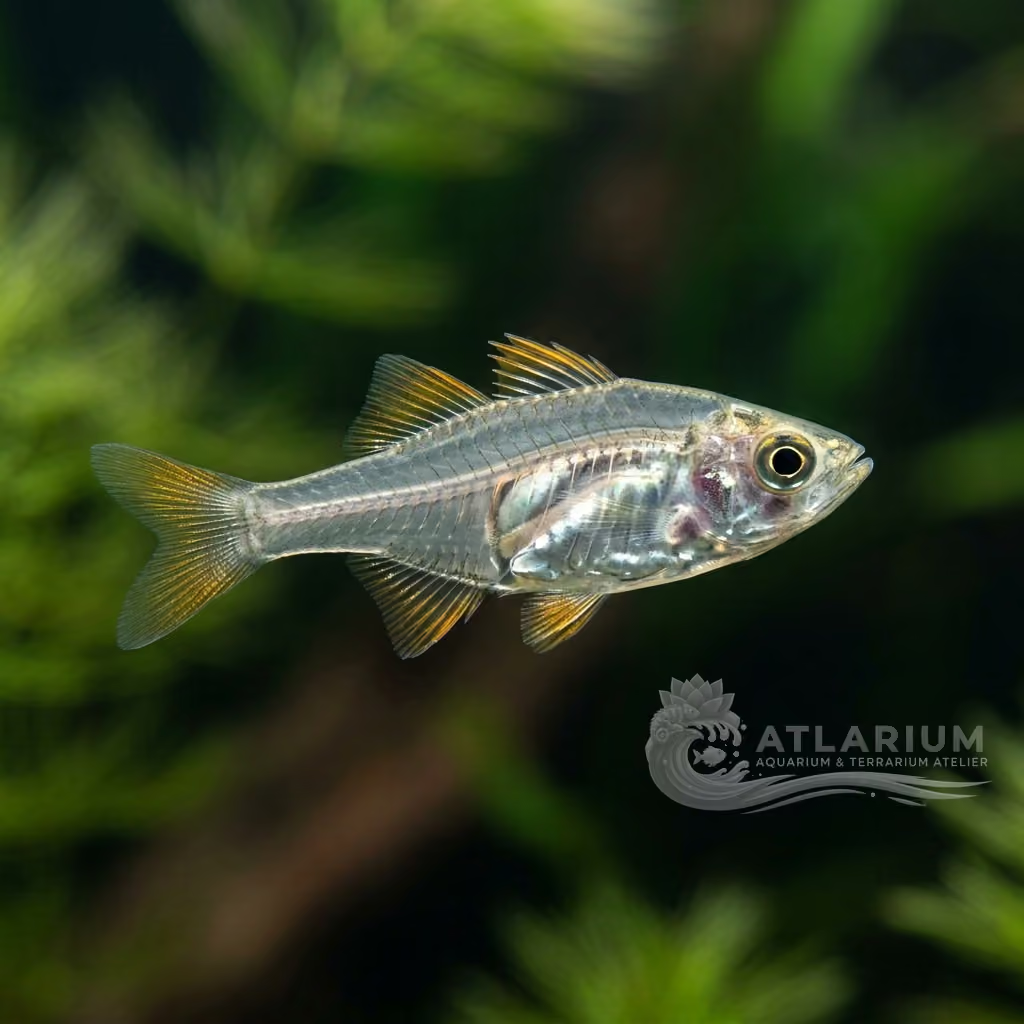
An elegant, diamond-shaped silver fish that forms tight schools in coastal waters. Juveniles adapt to freshwater, but adults thrive in spacious 250L brackish aquariums with a robust omnivorous diet.
Temperatura da água
24 - 28 °C
Valor de pH
7.5 - 8.5
Tipo de água
Água salobra / Marinho
Nível do tanque
Meio
Tamanho adulto
12 cm
Volume mínimo do tanque
>= 250 L
Grupo mínimo
>= 6

Descrição da espécie
Geographical Origin and Habitat:
This species is native to the eastern Indian Ocean, including the coasts of India, Sri Lanka, and Singapore. It inhabits shallow coastal waters, estuaries, bays, and mangrove swamps, moving between freshwater, brackish, and marine environments.
Taxonomy and Morphology:
Member of the Monodactylidae family. It features a highly laterally compressed, diamond-shaped body. In aquariums, it grows to a maximum height and length of about 12 cm. The dorsal and anal fins are tall and scale-covered, forming a triangle.
Social Behavior:
An active, peaceful, and tightly schooling fish. It must be kept in groups of at least 5 to 6 individuals to prevent shyness. They establish a mild social hierarchy and swim dynamically in the mid-to-upper water levels.
Coloration and Sexual Dimorphism:
Body is bright silver with a metallic sheen. It has two dark vertical bands on the head: one running through the eye and another across the operculum. The tips of the dorsal and anal fins are yellowish-green with black margins. No visible dimorphism.

Cuidado, criação e companheiros de tanque
Aquarium Setup:
Requires a spacious tank of at least 250 liters for a school. Provide plenty of open swimming area and decorate with driftwood to mimic mangrove roots. Aquatic plants are difficult to keep, as the fish will nibble on them and they cannot tolerate high salinity.
Diet and Feeding:
Voracious omnivore. Accepts high-quality flakes, floating pellets, and frozen foods like brine shrimp, mysis, and bloodworms. It is essential to provide vegetable matter such as spirulina flakes, nori sheets, or blanched spinach to ensure good health.
Water Quality:
While juveniles tolerate freshwater, adults must be transitioned to brackish or marine water to survive long-term. Maintain temperature at 24-28°C, pH at 7.5-8.5, and salinity between SG 1.005 and 1.015 using marine salt. High-flow filtration is recommended.
Compatibility and Cohabitation:
Peaceful and suitable for community tanks with brackish species of similar size, such as archerfish, scats, and other monos. Avoid keeping them with very small or slow-moving fish, which may be stressed during the school's high-speed feeding frenzies.
Aquarium Breeding:
No successful breeding cases have been documented in home aquariums. In nature, they are protandrous hermaphrodites that migrate to seawater reefs to release pelagic eggs, a complex life cycle that has not been replicated in captivity.
Risks and Diseases:
Highly sensitive to poor water conditions. Keeping them in freshwater indefinitely will lead to fin rot, fungal infections, and faded colors. Maintain high oxygen levels and perform regular water changes to prevent stress and disease.

Origem e distribuição geográfica
This species is native to the eastern Indian Ocean, including the coasts of India, Sri Lanka, and Singapore. It inhabits shallow coastal waters, estuaries, bays, and mangrove swamps, moving between freshwater, brackish, and marine environments.
Origem
Oceanos tropicais e recifesSul e Sudeste Asiático

Perfil de peixe
- Temperamento
- Aggressive
- They are peaceful but their fast movements can be intimidating. They do not typically show aggression to other species. However, they can be boisterous during feeding time.
- Dieta
- Omnivore
- They are omnivorous and not picky eaters. High-quality pellets and frozen foods should be the staple. Spirulina or blanched vegetables should be offered regularly.
- Expectativa de vida
- 7-10 years
- Tamanho adulto
- 12 cm
- Proporção sexual
- School
- They must be kept in schools of six or more. The ratio of males to females is not important. Being in a large group makes them feel secure.
- Frequência de alimentação
- 2-3 times daily
- Multiple small feedings per day are ideal. They digest food quickly due to their high activity level. Two to three meals daily will keep them healthy.
- Carga biológica
- Medium
- The bioload for this active fish is quite significant. They consume large amounts of food constantly. A robust biological and mechanical filtration setup is necessary.
- Fluxo
- Strong
- They enjoy a strong current to swim against. This simulates the tidal estuaries they originate from. Good circulation also helps keep the water highly oxygenated.
- Risco de salto
- No
- Reprodução
- Protandrous hermaphrodite
- Captive reproduction has not been reliably achieved. They most likely require marine conditions to spawn successfully. Fry development is completely undocumented in home aquariums.
- Compatibilidade e companheiros de tanque
- Verify
- They are perfect for a brackish community tank. Keep them with similar-sized, active species. Avoid keeping them with very timid or slow-moving fish.
- Nível do tanque
- Middle
- They occupy the mid-level areas of the tank primarily. They constantly swim back and forth across the open water. Tall decorations can provide them with a sense of security.

Modelos e parâmetros científicos
FishBase
Acesso aos dados científicos oficiais da espécie
FishBase v25.04Dados sincronizados em: 15/06/2026
- Nível trófico
- 3,3 ± 0,4 se
- Unicidade filogenética (PD50)
- 0.625
- Relação bayesiana comprimento-peso
- a = 0.02399, b = 3.01
- VulnerabilidadeVulnerabilidade baixa (10 / 100)

Espécies relacionadas
Recomendações agrupadas por parentes próximos, escolhas de acompanhantes e cuidados semelhantes.