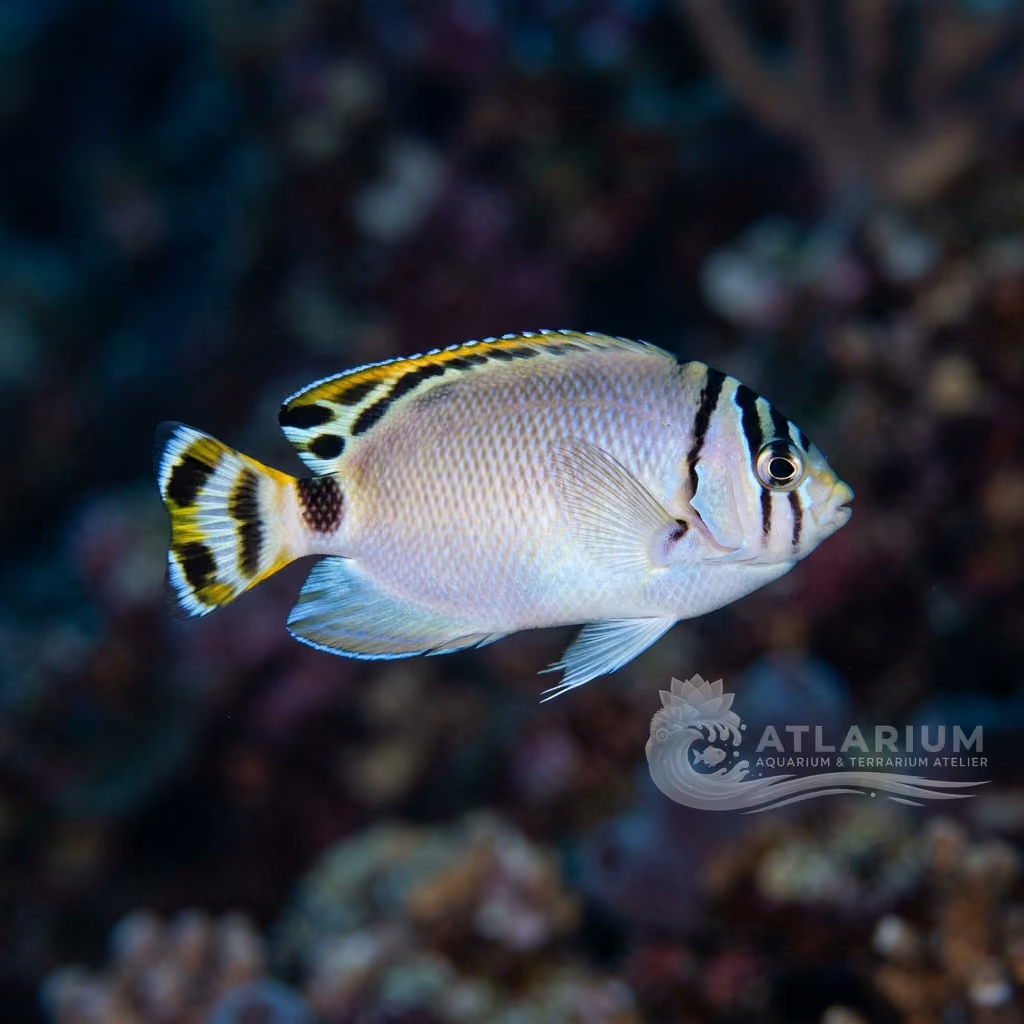
Eastern Talma
Chelmonops truncatus
The Truncate Coralfish is a subtropical Australian species featuring dark vertical bands. It is a shy, slow-moving fish that requires cooler marine temperatures.
Temperatura da água
18 - 23 °C
Valor de pH
8 - 8.4
Tipo de água
Marinho
Nível do tanque
Todos os níveis
Tamanho adulto
22 cm
Volume mínimo do tanque
>= 300 L
Grupo mínimo
>= 1
KH
8 - 12 dKH

Descrição da espécie
Geographical Origin and Habitat: Endemic to the temperate and subtropical waters of southeastern Australia, from southern Queensland to southern New South Wales. Inhabits sheltered coastal bays, estuaries, and deep rocky reefs down to 30 meters.
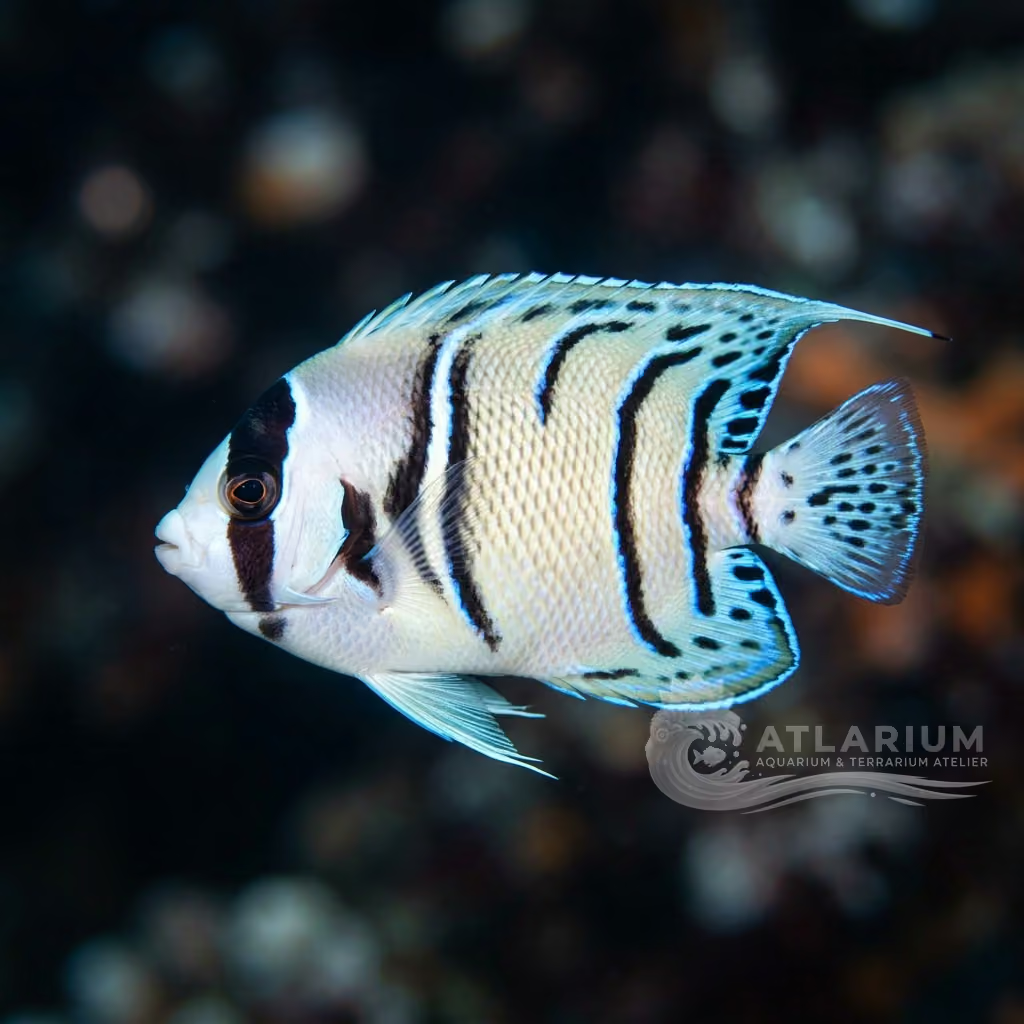
Taxonomy and Morphology: Member of the family Chaetodontidae. Features a long, tubular snout and five dark vertical bands. Adults are distinguished by the truncated (square) shape of the soft portions of the dorsal and anal fins. Grows to 22 cm.
Social Behavior: Peaceful, slow-moving, and notably shy. Commonly observed singly or in stable mated pairs foraging along rocky walls. Non-aggressive toward other species.
Coloration and Sexual Dimorphism: Silver-white body decorated with five broad, dark brown-to-black vertical bands. Caudal fin is translucent. Juveniles possess a dark ocellus (eyespots) on the dorsal fin which fades with maturity. No sexual dimorphism is noted.

Cuidado, criação e companheiros de tanque
Aquarium Setup: Demands a spacious tank of at least 300 liters with ample rockwork for shelter and hiding spots. Requires cool water temperatures (18–23°C / 64–73°F); it does not tolerate long-term tropical heat.
Diet and Feeding: Demanding carnivore. Must be fed a variety of high-quality frozen foods like mysis, brine shrimp, and chopped clam. May require live foods like blackworms to initiate feeding upon introduction.
Water Quality: Highly sensitive to poor water conditions. Prefers temperature 18–23°C, pH 8.0–8.4, salinity SG 1.020–1.025, GH 15–25, and KH 8–12. Efficient filtration with moderate current is recommended.
Compatibility and Cohabitation: Best kept in cool-water marine setups or with extremely docile tankmates. Avoid active, boisterous species that will easily outcompete it for food. Reef safe with caution, as it may eat tubeworms and nip corals.
Aquarium Breeding: Undocumented in home aquariums. Broadcast spawners that form monogamous pairs in their natural habitat.
Risks and Diseases: High risk of heat stress if kept in standard tropical reef tanks. Starvation is common if housed with aggressive feeders. Prone to skin infections if water quality declines.

Origem e distribuição geográfica
Endemic to the temperate and subtropical waters of southeastern Australia, from southern Queensland to southern New South Wales. Inhabits sheltered coastal bays, estuaries, and deep rocky reefs down to 30 meters.
Origem
Austrália, Nova Guiné e Oceania

Perfil de peixe
- Temperamento
- Peaceful
- They possess a curious, methodical, and entirely peaceful demeanor. They observe the rockwork with intense, focused, absolute precision. Aggressive rapid-swimmers will easily outcompete them for offered food.
- Dieta
- Carnivore
- They extract small invertebrates from deep rocky crevices naturally. High-quality frozen mysis and chopped clam are eagerly accepted. A varied diet maintains their beautiful, vibrant vertical stripes.
- Expectativa de vida
- 5-10 years
- Tamanho adulto
- 22 cm
- Proporção sexual
- Flexible
- They are intensely territorial towards their own specific kind. Keep strictly a single specimen per standard home aquarium. Only verified, heavily bonded pairs should ever share a tank.
- Frequência de alimentação
- 2-3 times daily
- They are active foragers requiring three small daily meals. Consistent feeding prevents dangerous weight loss and immune drops. Vitamin-soaked foods guarantee long-term health and vibrant vitality.
- Carga biológica
- Medium
- Truncate coralfish produce a moderate marine bioload. Excellent water quality is demanded for their long-term health. Ammonia and nitrite must remain completely undetectable at all times.
- Fluxo
- Strong
- They appreciate moderate to strong, well-oxygenated subtropical currents. They navigate complex water flows with effortless, incredible grace. Excellent circulation accurately replicates their dynamic Australian natural environment.
- Risco de salto
- Yes
- The Truncate coralfish possesses a relatively low risk of jumping, largely due to its deliberate, hovering swimming style and reliance on complex physical structures for safety. Rather than utilizing explosive speed to break the water's surface when threatened, they prefer to retreat deep into rocky caves or reef overhangs. Nonetheless, uncharacteristic panicked behavior induced by highly aggressive tank mates or sudden lighting changes can occasionally prompt a desperate leap. Providing a securely fitted aquarium cover is a basic, sensible measure to ensure they do not accidentally end up on the floor.
- Reprodução
- Oviparous
- They are pelagic broadcast spawners utilizing ocean currents perfectly. Captive breeding of this species is completely and totally undocumented. Complex larval dietary requirements make captive rearing seemingly impossible.
- Compatibilidade e companheiros de tanque
- With caution
- They do exceedingly well with gentle community species. Do not trust them with delicate ornamental marine tubeworms. Their absolute reef-safe status is considered highly questionable.
- Nível do tanque
- All levels
- Truncate coralfish predominantly occupy the middle and lower zones of the aquarium, intricately bound to the rocky reef layout. They are incessant grazers that spend their time swimming vertically and horizontally along the face of the hardscape, meticulously picking out microscopic benthic invertebrates. The open upper regions of the tank are generally avoided, as they offer no food and leave the fish exposed to perceived aerial predators. A tank setup heavily focused on a dynamic, porous live rock foundation is critical for their behavioral needs.

Modelos e parâmetros científicos
FishBase
Acesso aos dados científicos oficiais da espécie
FishBase v25.04Dados sincronizados em: 15/06/2026
- Nível trófico
- 2,8 ± 0,26 se
- Resiliência
- Alta (menos de 15 meses)
- Unicidade filogenética (PD50)
- 0.75
- Relação bayesiana comprimento-peso
- a = 0.02239, b = 3.01
- VulnerabilidadeVulnerabilidade baixa (12 / 100)

Espécies relacionadas
Recomendações agrupadas por parentes próximos, escolhas de acompanhantes e cuidados semelhantes.