Reticulated butterflyfish
Chaetodon reticulatus
A marine butterflyfish characterized by a dark net-like pattern and feeding habits closely tied to live corals, making it difficult to maintain in captivity.
Temperatura da água
22 - 27 °C
Valor de pH
8.1 - 8.4
Tipo de água
Marinho
Nível do tanque
Parte inferior e intermediária
Tamanho adulto
16 cm
Volume mínimo do tanque
>= 300 L
Grupo mínimo
>= 1

Descrição da espécie
Geographical Origin and Habitat: Chaetodon reticulatus is native to the central and western Pacific Ocean. Its distribution extends from Taiwan and the Ryukyu Islands down to French Polynesia, including the Great Barrier Reef, Micronesia, and Melanesia. It inhabits wave-exposed outer reef slopes and clear lagoons rich in Acropora corals, at depths ranging from 1 to 30 meters.
Taxonomy and Morphology: Belonging to the family Chaetodontidae, genus Chaetodon. It has a deep, rounded, and laterally compressed body. Adults reach a maximum length of about 16 centimeters. The mouth features short, specialized jaws designed to clip coral polyps with precision. The scales are shaped and positioned to emphasize the reticulated pattern.
Social Behavior: This is a monogamous species that typically lives in stable pairs. It exhibits diurnal habits and swims constantly close to coral colonies, defending its feeding territory against intruders of the same species. It is peaceful toward fish belonging to other families.
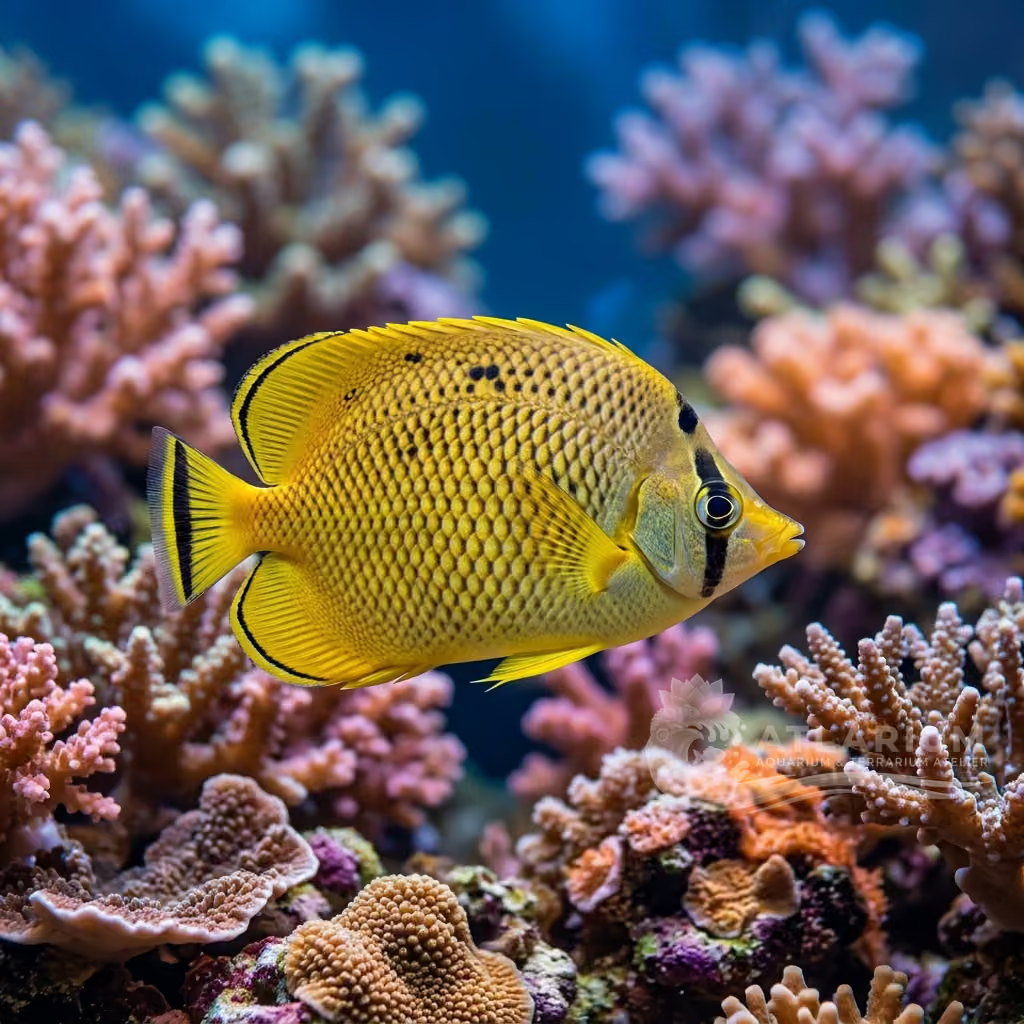
Coloration and Sexual Dimorphism: The coloration is distinctive: the body is dark, almost black, but each scale has a light yellow-cream center, creating a dense reticulated or net-like pattern. A vertical black band runs through the eye, followed by a lighter gray-blue band. The dorsal and anal fins have yellow and black margins. There is no visible sexual dimorphism.

Cuidado, criação e companheiros de tanque
Aquarium Setup: Requires a spacious and highly stable aquarium of at least 350-400 liters (approx. 90-100 gallons) for a pair. The layout must recreate a reef environment with mature live rock arranged to form caves and barriers, ensuring high water oxygenation and strong movement to simulate exposed reef zones.
Diet and Feeding: It is an obligate corallivore, feeding almost exclusively on Acropora polyps. In the aquarium, dietary acclimation is extremely difficult, and most specimens refuse commercial feeds. It requires a supply of live coral or the preparation of fresh food pasted onto coral skeletons to stimulate its feeding instinct.
Water Quality: Water parameters must be excellent: temperature 24-26°C (75-79°F), pH 8.1-8.4, specific gravity 1.021-1.025, and extremely low nitrates and phosphates. A powerful protein skimmer, regular 15% water changes every two weeks, and efficient biological filtration are indispensable requirements.
Compatibility and Cohabitation: Coexists peacefully with quiet reef fish such as wrasses and gobies. It is absolutely not reef-safe as it will destroy stony corals in the tank. Avoid cohabitation with aggressive species or very fast-swimming fish that could scare it and prevent it from feeding.
Aquarium Breeding: Breeding in the aquarium has never been achieved in a home environment. They are pelagic spawners that release eggs in pairs into the water column. The larvae undergo a complex planktonic stage and require specific microscopic live food, manageable only in specialized research facilities.
Risks and Diseases: The main risk is death from starvation due to food refusal in captivity. It is also highly vulnerable to external parasitic infections like marine ich. This species is recommended only for expert aquarists who have adequate resources to provide live corals.

Origem e distribuição geográfica
Chaetodon reticulatus is native to the central and western Pacific Ocean. Its distribution extends from Taiwan and the Ryukyu Islands down to French Polynesia, including the Great Barrier Reef, Micronesia, and Melanesia. It inhabits wave-exposed outer reef slopes and clear lagoons rich in Acropora corals, at depths ranging from 1 to 30 meters.
Origem
Oceanos tropicais e recifesLeste Asiático

Perfil de peixe
- Temperamento
- Territorial
- This butterflyfish exhibits a generally peaceful temperament toward unrelated species, making it a good community candidate for peaceful marine tanks. However, it can show moderate to high territorial behavior toward conspecifics and other butterflyfishes of similar shape and color. It is a shy species that requires quiet surroundings to feel secure.
- Dieta
- Corallivore
- Chaetodon reticulatus is an obligate corallivore, feeding exclusively on the polyps of stony corals in nature. In captivity, this specialized diet makes it extremely difficult to maintain, as it rarely accepts prepared foods. Success requires offering live corals or specially prepared gel foods containing coral tissue to prevent starvation.
- Expectativa de vida
- 5-10 years
- Tamanho adulto
- 16 cm
- Proporção sexual
- 1:1 ratio
- In the wild, Chaetodon reticulatus is typically observed in monogamous male-female pairs. In an aquarium, it is best kept singly or as a bonded pair that is introduced simultaneously to a large tank. Keeping multiple individuals of the same sex or adding them at different times often leads to severe territorial aggression.
- Frequência de alimentação
- Twice daily
- Due to its specialized feeding habits and high metabolism, this fish requires multiple small feedings throughout the day. If it has acclimated to alternative foods, it should be fed at least three to four times daily. Continuous access to live corals for grazing is the ideal way to satisfy its natural feeding instincts.
- Carga biológica
- Medium to High
- The Reticulated Butterflyfish generates a medium biological load due to its size and active swimming behavior. However, the effective bioload on the filtration system is high because maintaining this species requires frequent feeding or the addition of live corals, which can decay. A high-capacity protein skimmer, efficient biological filtration, and regular water changes are essential to keep nutrient levels low.
- Fluxo
- Strong
- This species prefers moderate water flow, which mimics the exposed seaward reefs and clear lagoons it inhabits. Strong currents help maintain high oxygen levels and keep water pristine, which is critical for its health. However, there should also be calmer areas within the rockwork where the fish can rest.
- Risco de salto
- Yes
- Although not classified as an active jumper like some wrasses, the Reticulated Butterflyfish can leap out of the tank if startled or stressed. Fast-moving tankmates or sudden light changes can trigger this escape reflex. A tight-fitting lid or a secure mesh cover is highly recommended to prevent accidental jumping.
- Reprodução
- Oviparous
- Breeding the Reticulated Butterflyfish in captivity is currently considered impossible. In nature, they are pelagic spawners that form monogamous pairs and release eggs into the water column at dusk. The complex larval stages and the specialized corallivore diet of the adults present insurmountable barriers for home aquarists.
- Compatibilidade e companheiros de tanque
- Peaceful
- Because of its obligate corallivorous diet, this species is completely incompatible with reef aquariums containing live stony corals. It is best suited for a fish-only-with-live-rock (FOWLR) tank alongside peaceful, non-aggressive tankmates. Avoid housing it with boisterous or aggressive fish that might outcompete it for food or cause stress.
- Nível do tanque
- Middle/Bottom
- This species is benthopelagic, spending most of its time swimming in the bottom and middle levels of the aquarium. It stays close to the reef structure, weaving through rocks and corals in search of food. An open swimming area in the midwater combined with plenty of bottom structures will mimic its natural seaward reef habitat.

Modelos e parâmetros científicos
FishBase
Acesso aos dados científicos oficiais da espécie
FishBase v25.04Dados sincronizados em: 15/06/2026
- Nível trófico
- 2,6 ± 0,4 se
- Resiliência
- Alta (menos de 15 meses)
- Unicidade filogenética (PD50)
- 0.5
- Relação bayesiana comprimento-peso
- a = 0.02291, b = 3
- VulnerabilidadeVulnerabilidade baixa (10 / 100)

Espécies relacionadas
Recomendações agrupadas por parentes próximos, escolhas de acompanhantes e cuidados semelhantes.