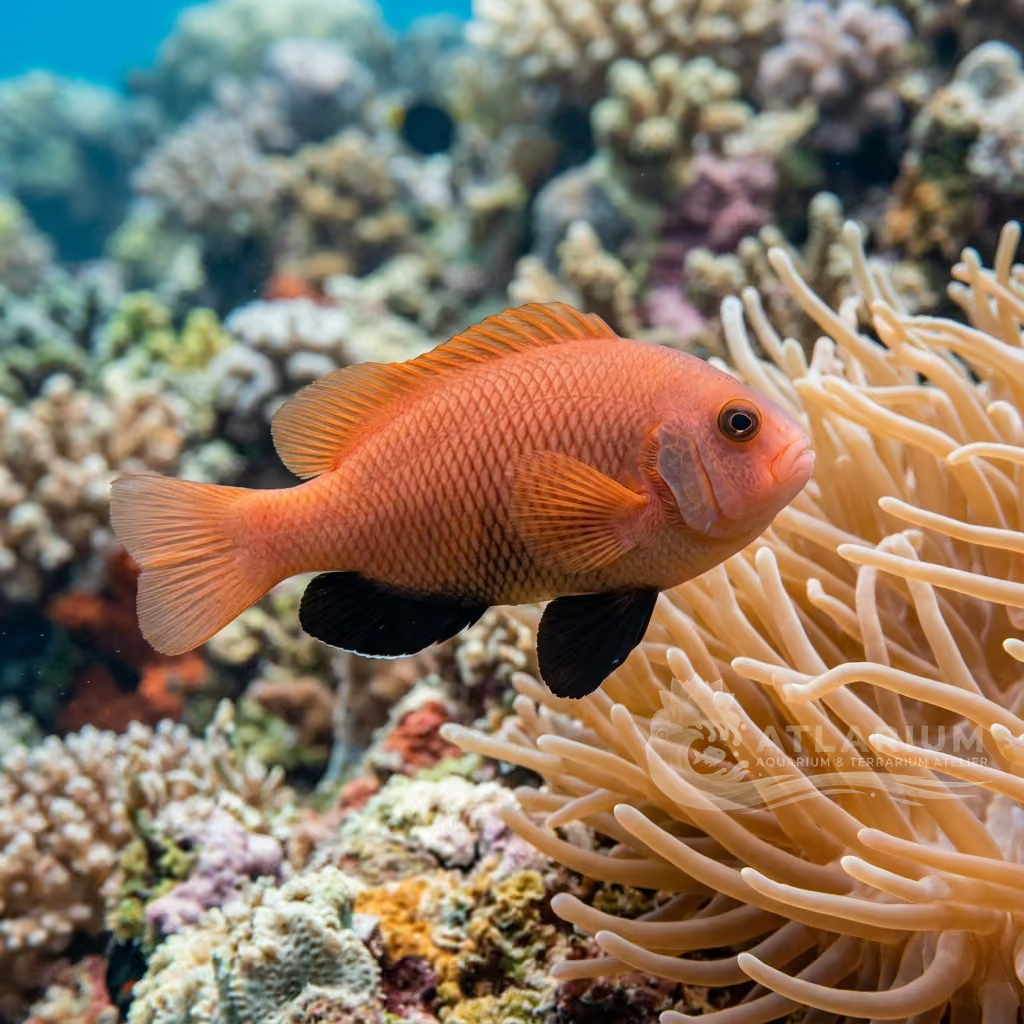
Indo-Pacific Sergeant
Abudefduf vaigiensis
This active, schooling sergeant major damselfish grows large. It needs a 300L aquarium with robust rockwork and open swimming areas to handle its territorial behavior.
Temperatura da água
22 - 28 °C
Valor de pH
8.1 - 8.4
Tipo de água
Marinho
Nível do tanque
Meio
Tamanho adulto
20 cm
Volume mínimo do tanque
>= 300 L
Grupo mínimo
>= 5

Descrição da espécie
Geographical Origin and Habitat: Tropical and subtropical Indo-Pacific, distributed from the Red Sea and East Africa to the Line Islands, north to southern Japan, and south to Australia. Inhabits shallow seaward reefs, piers, and rocky structures.
Taxonomy and Morphology: Member of the family Pomacentridae, subfamily Pomacentrinae. Features a deep, oval, and laterally compressed body shape with a deeply forked tail adapted for strong swimming.
Social Behavior: Forms large schools as juveniles to feed on plankton in the water column. Adults become solitary or live in small groups, exhibiting highly territorial and aggressive behavior.
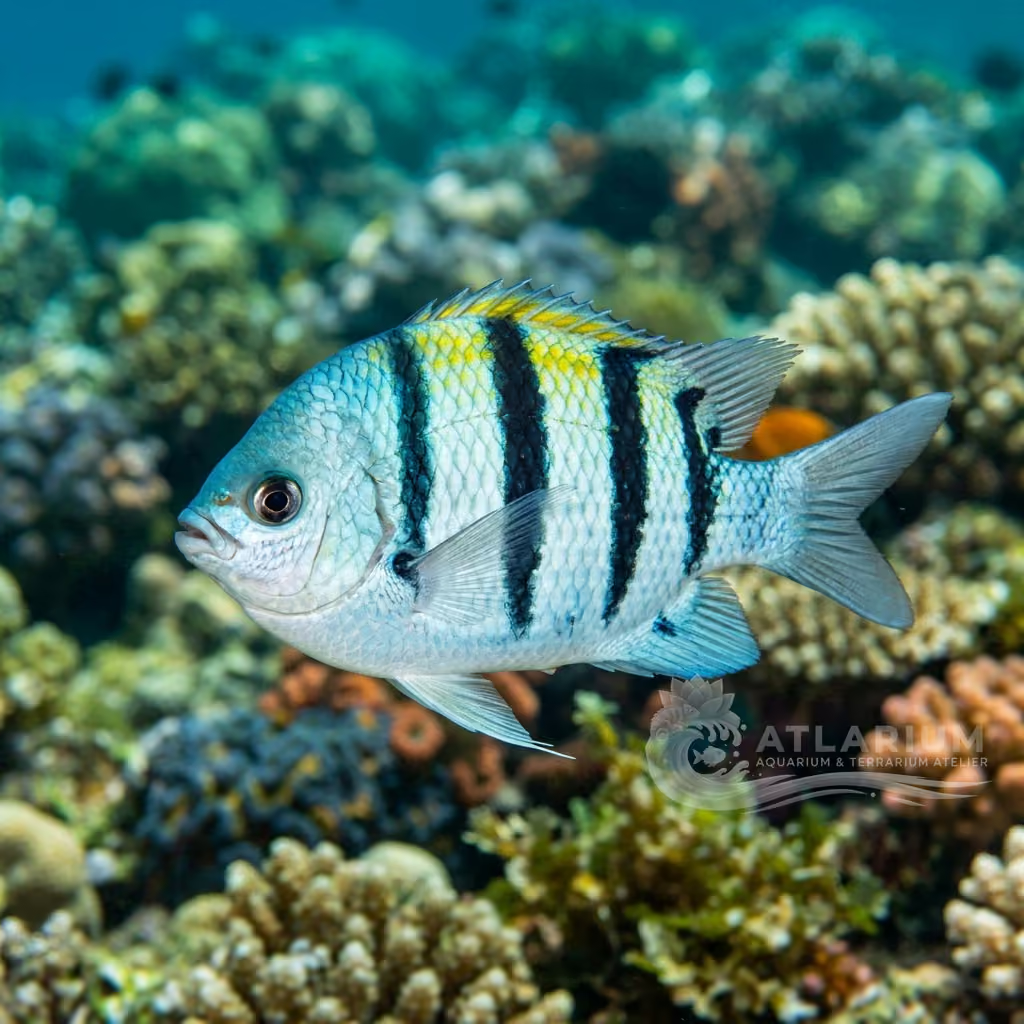
Coloration and Sexual Dimorphism: Silvery-grey body with bright yellow coloration on the back. Marked by five bold vertical black bars on the sides. Spawning males turn bluish.

Cuidado, criação e companheiros de tanque
Aquarium Setup: Requires a large aquarium of at least 300 liters to accommodate its active swimming habits and territorial nature. Provide stable, robust rockwork with open water areas.
Diet and Feeding: Omnivorous. In the wild, it feeds on zooplankton, small benthic invertebrates, and algae. In captivity, it readily accepts dry pellets, flakes, frozen foods, and algae sheets.
Water Quality: Maintain standard marine parameters: temperature 22-28 °C, pH 8.1-8.4, and salinity 1.020-1.025 with strong filtration, skimmer, and high oxygenation.
Compatibility and Cohabitation: Highly aggressive as an adult. Avoid keeping with small, passive, or shy species. Best housed with large, robust tankmates like surgeonfish, triggerfish, and large wrasses.
Aquarium Breeding: Oviparous. The male turns bright blue, selects a flat rock surface nest, courts the female to spawn, and guards the adhesive eggs aggressively, fanning them.
Risks and Diseases: Extremely resilient and rarely contracts common marine diseases. Very easy to keep but requires careful selection of tankmates due to its bellicose nature.

Origem e distribuição geográfica
Tropical and subtropical Indo-Pacific, distributed from the Red Sea and East Africa to the Line Islands, north to southern Japan, and south to Australia. Inhabits shallow seaward reefs, piers, and rocky structures.
Origem
Oceanos tropicais e recifesÁfrica e MadagascarLeste AsiáticoAustrália, Nova Guiné e Oceania

Perfil de peixe
- Temperamento
- Territorial
- They are notoriously aggressive and territorial, particularly as they mature. They will aggressively bully smaller or more docile fish. They must be added to the aquarium last to prevent them from claiming the entire tank.
- Dieta
- Omnivore
- This species is a voracious omnivore that accepts nearly all aquarium foods. Their diet should be a mix of high-quality marine flakes, pellets, and frozen meaty foods. Including algae sheets or spirulina will keep their immune system strong.
- Expectativa de vida
- 10-15 years
- Tamanho adulto
- 20 cm
- Proporção sexual
- Solitary
- They can be kept in small schools when young, but adults become increasingly intolerant of each other. In a home aquarium, keeping a single specimen or a confirmed pair is best. Only massive tanks can support a mature group without constant infighting.
- Frequência de alimentação
- Twice daily
- Feed them two to three times daily to keep up with their fast metabolism. Regular feeding helps curb their aggressive tendencies toward tank mates. Ensure portions are large enough to satisfy them but consumed within minutes.
- Carga biológica
- High
- The Indo-Pacific Sergeant generates a moderate bioload due to its active nature and hearty appetite. Efficient protein skimming and regular water changes are necessary for maintaining water quality. They are messy eaters, so strong filtration is highly recommended.
- Fluxo
- Strong
- They prefer strong, turbulent water flow mimicking the surge zones of tropical reefs. High circulation encourages their natural schooling and feeding behaviors. Strategic placement of wavemakers will provide the dynamic environment they require.
- Risco de salto
- No
- Reprodução
- Oviparous
- They are egg layers that attach their adhesive clutches to hard substrates. The male aggressively defends the nest site from all perceived threats. While spawning is common, rearing the tiny larvae requires specialized plankton cultures.
- Compatibilidade e companheiros de tanque
- Aggressive
- They are highly territorial and robust, suitable only for aggressive or semi-aggressive setups. Do not house them with delicate or slow-moving species. They can hold their own against tangs, triggerfish, and large angelfish.
- Nível do tanque
- Middle
- They actively patrol the upper and middle levels of the water column. They are bold swimmers that spend most of their time in open water. They still require rocky structures for shelter and territorial boundaries.

Modelos e parâmetros científicos
FishBase
Acesso aos dados científicos oficiais da espécie
FishBase v25.04Dados sincronizados em: 15/06/2026
- Nível trófico
- 2,6 ± 0,4 se
- Resiliência
- Alta (menos de 15 meses)
- Tempo de geração
- 1,3 anos
- Unicidade filogenética (PD50)
- 0.5
- Relação bayesiana comprimento-peso
- a = 0.02512, b = 3.02
- VulnerabilidadeVulnerabilidade baixa (16 / 100)

Espécies relacionadas
Recomendações agrupadas por parentes próximos, escolhas de acompanhantes e cuidados semelhantes.