Green damselfish
Abudefduf abdominalis
Endemic to Hawaii, this large and highly aggressive damselfish forms loose schools. It requires a minimum 350L tank with heavy, securely placed rock structures.
Temperatura da água
22 - 27 °C
Valor de pH
8.1 - 8.4
Tipo de água
Marinho
Nível do tanque
Meio
Tamanho adulto
22 cm
Volume mínimo do tanque
>= 300 L
Grupo mínimo
>= 5

Descrição da espécie
Geographical Origin and Habitat: Abudefduf abdominalis is endemic to the Hawaiian Islands and Johnston Atoll in the Central Pacific. It inhabits shallow coral reefs, current-swept rocky shorelines, and calm coastal lagoons at depths ranging from 1 to 15 meters. Juveniles often gather in large aggregations around tide pools and coral heads for safety, while adults form loose schools in the water column above the reef.
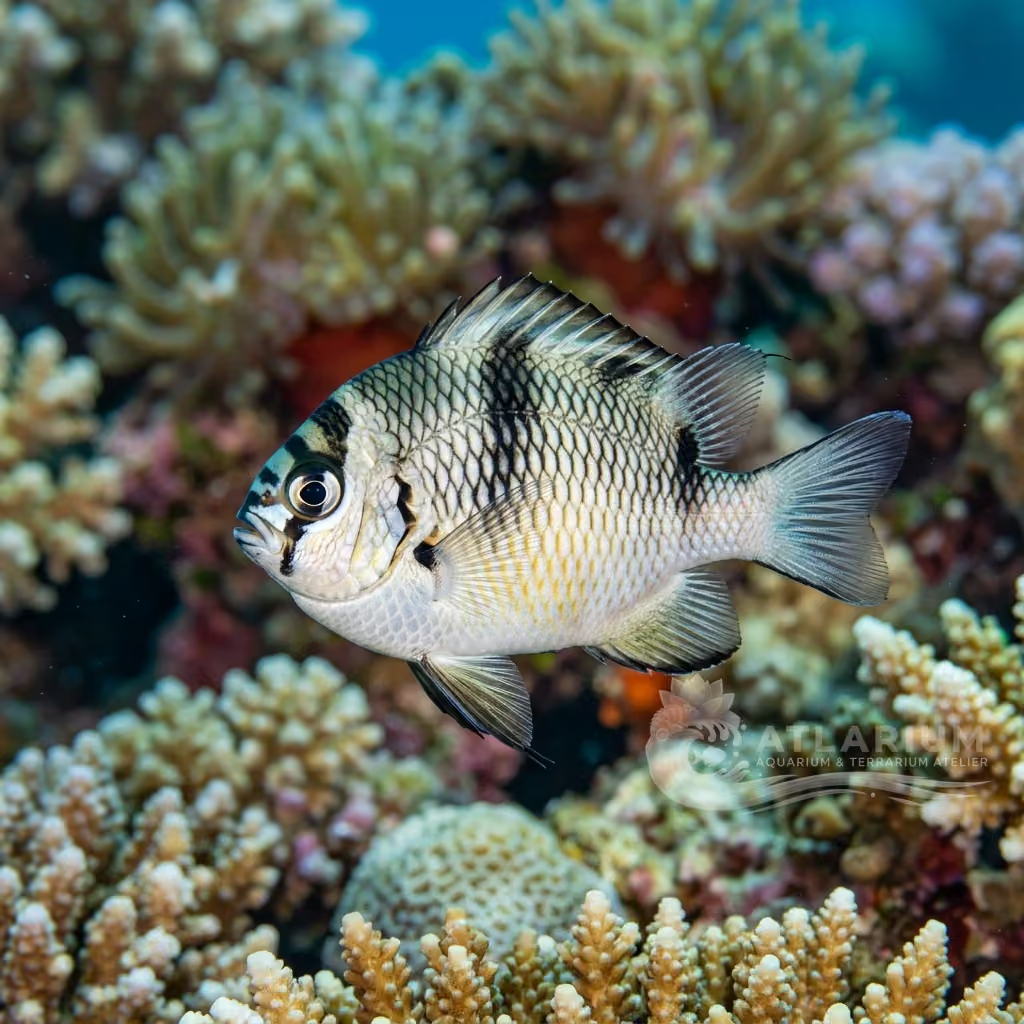
Taxonomy and Morphology: Belonging to the family Pomacentridae and the genus Abudefduf. It possesses an oval-shaped, robust, and laterally compressed body with large, prominent scales. It features a continuous dorsal fin and a deeply forked caudal fin that enables agile swimming in high-energy surf zones. Adults reach an impressive size for damselfish, growing up to 20-22 centimeters.
Social Behavior: It is highly active and schooling when young, but becomes aggressively territorial and dominant upon reaching maturity, especially toward conspecifics and similarly shaped fish. During the nesting season, males clear a nest site on bare rock and fiercely defend it against any intruder, including divers and fish several times their size, displaying fearless behavior.
Coloration and Sexual Dimorphism: The base coloration is silver-grey to pale greenish-yellow, featuring five to six distinct dark vertical bars on the sides. The dorsal region and pelvic fins often show yellowish highlights. There is no visible sexual dimorphism, except during spawning, when nesting males temporarily assume a darker, bluish-black nuptial coloration while guarding the eggs.

Cuidado, criação e companheiros de tanque
Aquarium Setup: Due to its large adult size and aggressive nature, a minimum tank volume of 350-400 liters is required. The aquascape should feature sturdy rock structures arranged to create visual barriers and plenty of open water for swimming. Rocks should be securely placed, as this fish may dig and shift substrate when preparing territories or nesting sites.
Diet and Feeding: An opportunistic and voracious omnivore. In the wild, it feeds on zooplankton, benthic algae, and small invertebrates. In captivity, it accepts all types of food, including pellets, flakes, frozen foods (mysis, artemia, krill, chopped shrimp), and spirulina-based preparations. Feeding twice daily is recommended to satisfy its high energy demands.
Water Quality: An exceptionally hardy species that tolerates fluctuations in water parameters that would be fatal to delicate reef fish. For optimal health, maintain a temperature range of 24°C to 27°C, pH between 8.1 and 8.4, specific gravity between 1.021 and 1.025, and nitrates below 30 ppm. Regular water changes and standard filtration are sufficient.
Compatibility and Cohabitation: Keeping this fish in small community tanks is highly problematic. It should only be housed with large, robust tankmates capable of defending themselves, such as large tangs, triggerfish, groupers, or medium-to-large angelfish. Avoid small, peaceful, or timid species (like gobies, pipefish, and anthias), which will be constantly harassed.
Aquarium Breeding: Spawning occurs readily in large aquariums. The male cleans a flat vertical rock surface and courts the female with rapid movements. The female deposits thousands of adhesive red eggs, which the male fertilizes and guards until they hatch (typically 4-7 days). The male becomes extremely aggressive toward all tankmates during this period.
Risks and Diseases: It has excellent resistance to common marine pathogens like ich, thanks to its thick skin and strong immune system. The main risk in an aquarium is physical trauma from territorial fights if the tank is crowded. It acclimates very quickly to aquarium conditions and presents no special care challenges beyond its aggressive temper.

Origem e distribuição geográfica
Abudefduf abdominalis is endemic to the Hawaiian Islands and Johnston Atoll in the Central Pacific. It inhabits shallow coral reefs, current-swept rocky shorelines, and calm coastal lagoons at depths ranging from 1 to 15 meters. Juveniles often gather in large aggregations around tide pools and coral heads for safety, while adults form loose schools in the water column above the reef.
Origem
Oceanos tropicais e recifes

Perfil de peixe
- Temperamento
- Aggressive
- They exhibit a highly aggressive and dominant temperament. They will boldly challenge fish much larger than themselves for territory. They should be one of the last additions to an aggressive community aquarium.
- Dieta
- Omnivore
- They are aggressive omnivores that will readily accept nearly anything offered. Feed a varied diet of meaty frozen foods, high-quality pellets, and algae-based preparations. Dietary variety is essential to keep their immune system robust and coloration vivid.
- Expectativa de vida
- 10-15 years
- Tamanho adulto
- 22 cm
- Proporção sexual
- Solitary
- It is best to keep them as a single specimen in home aquariums. Keeping multiple adults requires a massive tank to prevent fatal territorial disputes. A confirmed mated pair can be kept together but may terrorize other tank mates.
- Frequência de alimentação
- Twice daily
- They require feeding two to three times per day. Frequent feedings help satisfy their fast metabolism and mitigate aggressive behavior. Always ensure that the food is completely consumed within a few minutes.
- Carga biológica
- High
- The Green Sergeant produces a moderately high bioload due to its large adult size and hearty appetite. Strong filtration and an oversized protein skimmer are recommended to handle their waste. Regular water changes are critical to maintain optimal water parameters.
- Fluxo
- Strong
- They favor high, turbulent water flow that simulates the energetic surge zones they naturally inhabit. Strong water movement helps keep them physically fit and active. Wavemakers are highly beneficial for recreating this dynamic environment.
- Risco de salto
- No
- Reprodução
- Oviparous
- Males prepare a nesting site on a hard surface and fiercely guard the adhesive eggs. They become incredibly aggressive toward any tank mate that approaches the nest. Raising the planktonic fry requires specialized setups completely separate from the main display.
- Compatibilidade e companheiros de tanque
- Aggressive
- They are boisterous and aggressive, making them suitable only for tanks with similar rugged species. Do not house them with timid, peaceful, or delicate fish. They coexist well with larger wrasses, tangs, and predatory species.
- Nível do tanque
- Middle
- They are open-water swimmers that predominantly occupy the middle and upper levels. They are highly visible and constantly active throughout the day. They require ample swimming space combined with rocky retreats for sleeping.

Modelos e parâmetros científicos
FishBase
Acesso aos dados científicos oficiais da espécie
FishBase v25.04Dados sincronizados em: 15/06/2026
- Nível trófico
- 3 ± 0,33 se
- Resiliência
- Média (1,4 - 4,4 anos)
- Unicidade filogenética (PD50)
- 0.5
- Relação bayesiana comprimento-peso
- a = 0.02692, b = 3.1
- VulnerabilidadeVulnerabilidade baixa (20 / 100)

Espécies relacionadas
Recomendações agrupadas por parentes próximos, escolhas de acompanhantes e cuidados semelhantes.