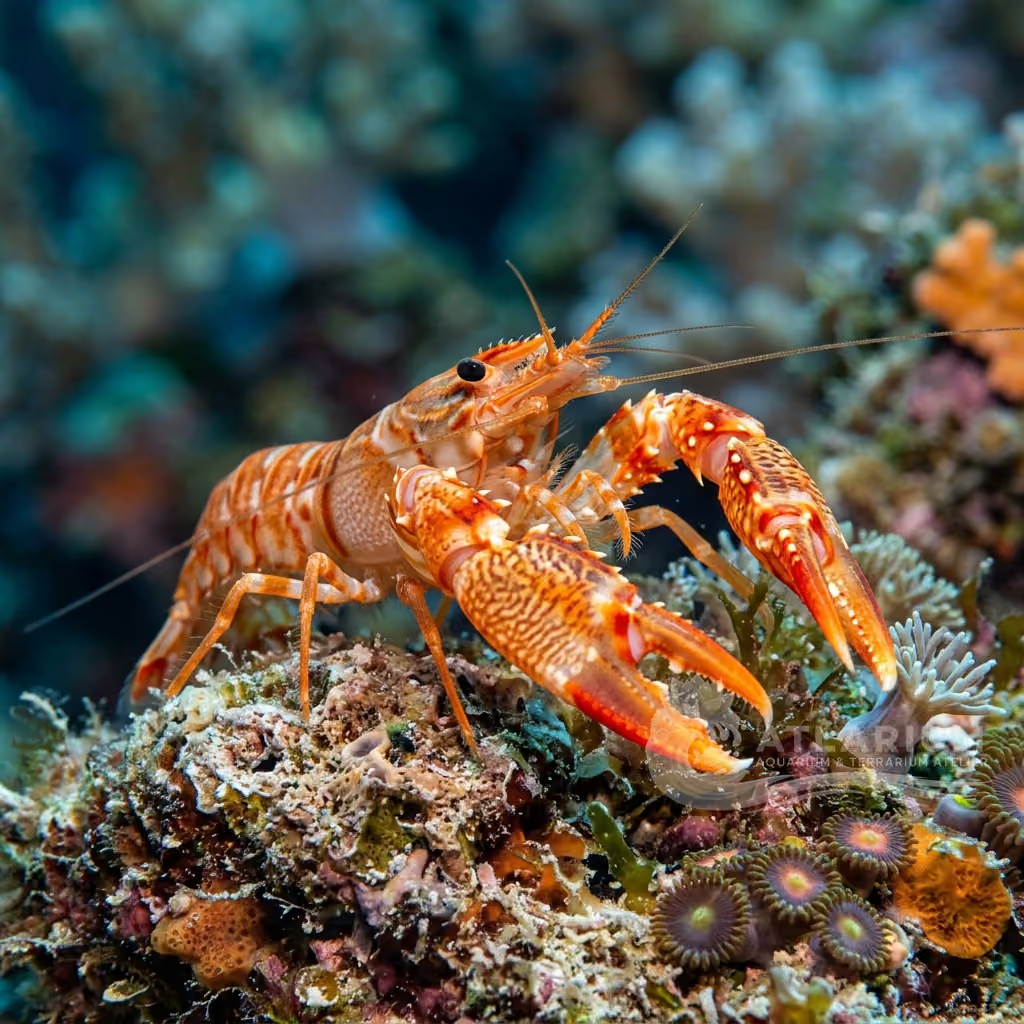
Pubescent Crab
Neoliomera pubescens
This fascinating Indo-Pacific crab dwells within branching coral colonies. Preferring mature setups with shaded crevices, it peacefully scavenges while providing an intriguing aesthetic element.
Température de l’eau
22 - 28 °C
Valeur du pH
8.1 - 8.4
Type d'eau
Marin
Type d'invertébré
Marine crab
Taille adulte
2,5 cm
Groupe minimal
>= 1
KH
8 - 12 dKH
Rôle écologique
Scavenger
Sensibilité au cuivre
High

Description de l'espèce
Geographical Origin and Habitat: Neoliomera pubescens is native to the tropical waters of the Indo-Pacific Ocean, with a wide distribution extending from the East African coast to the islands of French Polynesia, north to Japan, and south to northern Australia. It primarily inhabits shallow coral reefs, living in close association with branching corals of the genera Acropora and Pocillopora, where it wedges itself deep between branches during the day.
Taxonomy: Belonging to the family Xanthidae and the genus Neoliomera, it is a small decapod crustacean characterized by a sturdy carapace covered in a dense layer of fine hair, which is the basis for its scientific name 'pubescens'. Paper-like hairs give it a fuzzy look. Adults reach a very modest size, with the carapace width typically measuring only 2 to 3 centimeters.
Social Behavior: It is a strictly nocturnal, cryptic, and solitary crab. During the day, it remains completely motionless and hidden deep within coral branches or crevices in live rock, emerging only in darkness to feed. It exhibits a very shy and peaceful temperament, posing no threat to fish, corals, or other tankmates.
Coloration and Sexual Dimorphism: The body coloration varies from pale pink to a deep brick red or dark orange, uniform across the carapace and walking legs. The dense, grayish or light brown fuzz gives the crab a velvet-like appearance. The tips of the claws are marked by distinct black or dark brown coloring. Sexual dimorphism is visible on the abdomen, which is much wider in females to carry eggs.

Soins, reproduction et cohabitation
Tank Setup: Requires a mature marine aquarium of at least 100 liters, featuring a substantial amount of live rock and branching stony coral colonies to replicate its natural shelter. The aquascape should provide narrow crevices and shaded spots. While it does not require specialized lighting, it prefers shaded zones of the tank.
Diet and Feeding: An opportunistic detritivore and herbivore. It feeds on microalgae, organic film, uneaten fish food, and decaying organic matter. In an established reef tank, they do not require targeted feeding as they find enough food on live rocks, but they will accept small pieces of frozen foods like mysis shrimp offered near their hiding place at night.
Water Quality: Demands clean, stable marine water parameters: temperature between 24°C and 28°C, pH between 8.1 and 8.4, and specific gravity (salinity) between 1.021 and 1.025. Ammonia and nitrite must be zero, and nitrates should be kept low. Never introduce copper treatments, as heavy metals are highly lethal to all crustaceans.
Compatibility and Tankmates: A reef-safe species that is peaceful toward fish, corals, and other invertebrates. Avoid housing them with natural crustacean predators such as triggerfish, puffers, large wrasses, or hawkfish, as well as large, aggressive territorial shrimp that could harm them during molting.
Aquarium Breeding: Breeding in captivity is extremely difficult and has not been successfully documented in home aquariums. Females carry fertilized eggs beneath their abdomens until hatching, releasing planktonic larvae that require specific currents and microscopic foods that cannot be sustained in standard closed systems.
Risks and Diseases: The primary risk is related to the molting process. The crab sheds its hard shell and remains soft and vulnerable, requiring secure hiding places to avoid predation. Deficiencies in calcium or iodine can prevent the new carapace from forming correctly. Monitoring these elements is highly recommended.

Origine et répartition géographiques
Neoliomera pubescens is native to the tropical waters of the Indo-Pacific Ocean, with a wide distribution extending from the East African coast to the islands of French Polynesia, north to Japan, and south to northern Australia. It primarily inhabits shallow coral reefs, living in close association with branching corals of the genera Acropora and Pocillopora, where it wedges itself deep between branches during the day.
Origine
Océans tropicaux et récifsAfrique et MadagascarAsie de l'EstAustralie, Nouvelle-Guinée et Océanie

Profil d'invertébré
- Régime alimentaire
- Omnivore
- Omnivorous scavenger. Feeds on algae, detritus, and meaty bits.
- Rôle écologique
- Scavenger
- Helps break down waste in the aquarium. Active mostly at night.
- Taille adulte
- 2.5 cm
- Risque de saut
- Yes
- Does not jump. Mostly stays hidden in rocks.
- Sensibilité aux chocs
- Medium
- Requires a stable environment. Avoid sudden changes in pH.
- Calcium et minéraux
- Medium
- Needs proper mineral levels, including calcium, for molting.
- Mue
- Yes
- Like most crustaceans, this crab must molt its exoskeleton to grow. During this highly vulnerable period, it will often retreat deep into rock crevices or caves for several days to avoid predation. It also requires stable calcium and alkalinity levels in the water column to successfully harden its new shell.
- Reproduction
- Oviparous
- Captive breeding is extremely difficult and rarely achieved. While females carrying fertile eggs under their abdomen are occasionally observed, the resulting microscopic planktonic zoea larvae require highly specialized live foods to survive, and they are almost universally removed by standard home aquarium filtration systems.
- Compatibilité et compagnons
- Peaceful
- Overall, this small crab is considered reef-safe and typically coexists peacefully with most fish and invertebrates. However, it is an opportunistic feeder and, if not provided with sufficient dietary supplements, it might occasionally attempt to prey upon very tiny snails, delicate polyps, or small ornamental shrimp.

Espèces associées
Recommandations regroupées par proches parents, compagnons et soins similaires.