Long-spined sea urchin
Diadema setosum
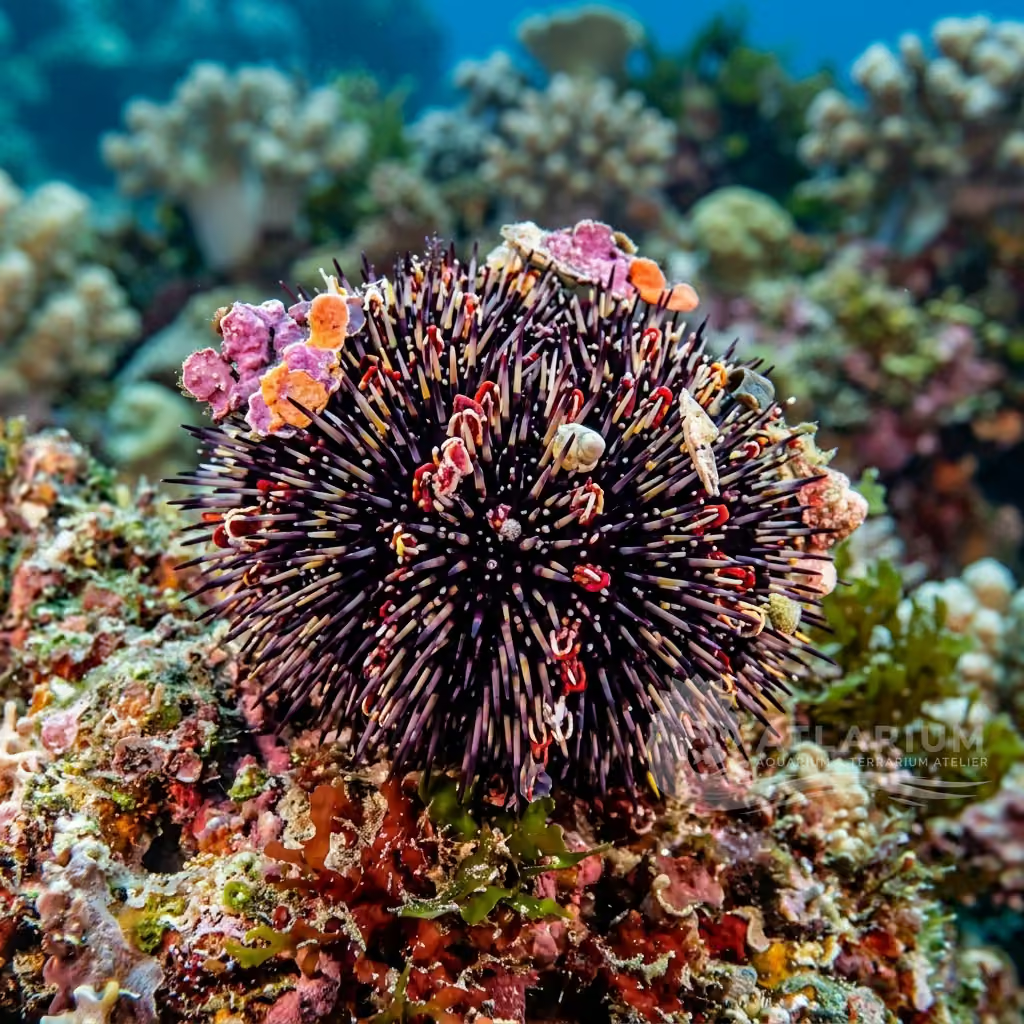
A striking tropical Indo-Pacific sea urchin recognized by its exceptionally long, venomous black spines and a brilliant, glowing orange anal ring.
Température de l’eau
23 - 27 °C
Valeur du pH
8.1 - 8.4
Type d'eau
Marin
Type d'invertébré
Sea urchin
Taille adulte
15 cm
Groupe minimal
>= 1
KH
8 - 12 dKH
Rôle écologique
Herbivore
Sensibilité au cuivre
High

Description de l'espèce
Geographical Origin and Habitat: Diadema setosum is widely distributed throughout the tropical waters of the Indo-Pacific, from the Red Sea and East Africa to Australia, Japan, and Hawaii. It inhabits shallow coral reefs, sandy lagoons, and seagrass beds, often aggregating in large groups.
Taxonomy: It belongs to the class Echinoidea, order Diadematoida, family Diadematidae. It is one of the most evolutionarily stable and ancient sea urchin species, recognized worldwide by its unique morphology and distinct color patterns.
Social Behavior: Primarily a nocturnal invertebrate. During the day, it shelters beneath rocky overhangs or corals, emerging at night to graze on the substrate. It displays defensive behaviors by actively tilting its long spines toward nearby shadows or movement.
Coloration and Sexual Dimorphism: Features a deep black body and extremely long black spines, marked by five blue-white spots arranged in a star pattern on its test. A bright orange anal ring at the center of the body is its diagnostic feature. There is no visible external sexual dimorphism.

Soins, reproduction et cohabitation
Tank Setup: Requires a large aquarium, preferably over 250-300 liters, to accommodate its extremely long spines without damaging corals or restricting its movement. Rockwork must be securely stacked, as the urchin's raw strength can easily dislodge or topple loose structures.
Diet and Feeding: An excellent herbivore that consumes massive amounts of film, hair, and coralline algae. If natural algae levels are low, its diet must be supplemented regularly with dried nori sheets, seaweed, or sinking spirulina pellets to prevent starvation.
Water Quality: Demands stable parameters: temperature of 24-27°C, pH of 8.1-8.4, specific gravity of 1.022 to 1.025. It requires proper calcium and magnesium levels to grow and maintain its calcareous test and spines. Absolutely zero tolerance for copper treatments.
Compatibility and Tankmates: Safe with most corals and fish, though it may scrape off decorative coralline algae from live rocks. Avoid housing them with natural predators of sea urchins, such as large triggerfish, pufferfish, wrasses, or large hawkfish.
Aquarium Breeding: Breeding in captivity is exceptionally rare and complex. They spawn by releasing gametes into the water column. The resulting planktonic larvae are very delicate and are almost always removed by mechanical filtration systems.
Risks and Diseases: The long spines are sharp, brittle, and mildly venomous; a sting causes sharp pain and irritation in humans, requiring careful handling. Spine loss is a primary indicator of severe stress, poor water quality, or starvation.

Origine et répartition géographiques
Diadema setosum is widely distributed throughout the tropical waters of the Indo-Pacific, from the Red Sea and East Africa to Australia, Japan, and Hawaii. It inhabits shallow coral reefs, sandy lagoons, and seagrass beds, often aggregating in large groups.
Origine
Océans tropicaux et récifsAfrique et MadagascarAsie de l'EstAustralie, Nouvelle-Guinée et Océanie

Profil d'invertébré
- Régime alimentaire
- Herbivore
- The diet of Diadema setosum typically consists of organic detritus, microalgae, or specific planktonic particles. In a home aquarium, they constantly forage along the substrate or rockwork looking for nourishment. Supplemental feeding with specialized invertebrate pellets or liquid foods may be necessary. Ensuring a varied and nutritious diet will promote vibrant colors and long-term health. Overfeeding should be avoided to maintain optimal water quality.
- Rôle écologique
- Herbivore
- In the wild, Diadema setosum plays a crucial role in maintaining the balance of its native ecosystem. They often act as natural cleaners, breaking down waste materials and unconsumed food. Their constant movement helps aerate the sand bed and prevent the buildup of toxic gases. By managing algae growth, they create space for slow-growing corals and sponges to thrive. A balanced aquarium ecosystem relies heavily on their diligent cleaning efforts.
- Taille adulte
- 15 cm
- Risque de saut
- No
- Sensibilité aux chocs
- High
- This invertebrate is highly sensitive to rapid fluctuations in water parameters. Sudden changes in temperature, salinity, or pH can cause severe osmotic shock and death. A slow and careful acclimation process, preferably drip acclimation, is absolutely necessary. Maintain stable aquarium conditions through regular monitoring and automated top-offs. Avoid performing excessively large water changes at once.
- Calcium et minéraux
- High
- Proper calcium levels are absolutely vital for the structural integrity and growth of this species. They continuously extract calcium carbonate from the water to build their shells, skeletons, or protective tubes. Maintaining calcium levels between 400 and 450 ppm ensures they remain healthy. It is also important to balance alkalinity and magnesium alongside calcium supplementation. Regular testing is required in heavily stocked reef aquariums.
- Mue
- Shell growth
- If applicable to its morphology, this invertebrate undergoes periodic molting to facilitate growth. During the molting process, the organism becomes extremely vulnerable to predation and stress. It is crucial to provide ample hiding spaces, such as caves or crevices, where they can retreat safely. Do not remove the discarded exoskeleton, as they often consume it to quickly replenish essential minerals. Disturbing them during this delicate phase can lead to fatal complications.
- Reproduction
- Variable
- Reproduction in the home aquarium is often challenging and rare for many invertebrate species. Most require highly specific environmental triggers, such as temperature shifts or lunar cycles. The resulting larvae usually have a prolonged planktonic stage, making them difficult to rear. Specialized food sources like phytoplankton are needed to sustain the offspring. Consequently, most specimens available in the hobby are wild-caught or professionally aquacultured.
- Compatibilité et compagnons
- With caution
- Compatibility varies largely based on the specific species and tank mates. They are generally peaceful but can fall prey to aggressive or predatory fish. Ensure they are housed with calm tank mates that will not nip or harass them. Research individual species requirements to avoid territorial disputes. Always monitor new additions carefully to ensure harmonious interactions.

Espèces associées
Recommandations regroupées par proches parents, compagnons et soins similaires.