Miguelito Cory
Brochis virginiae
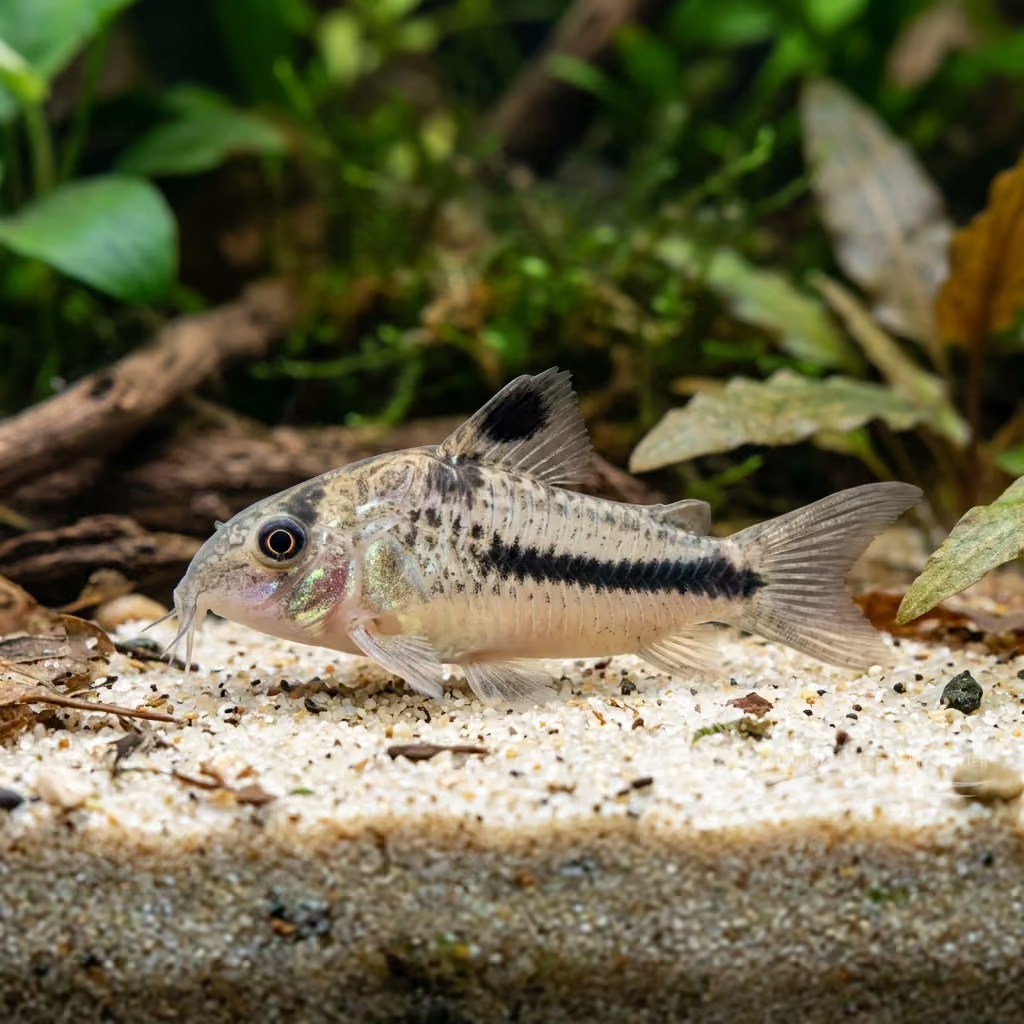
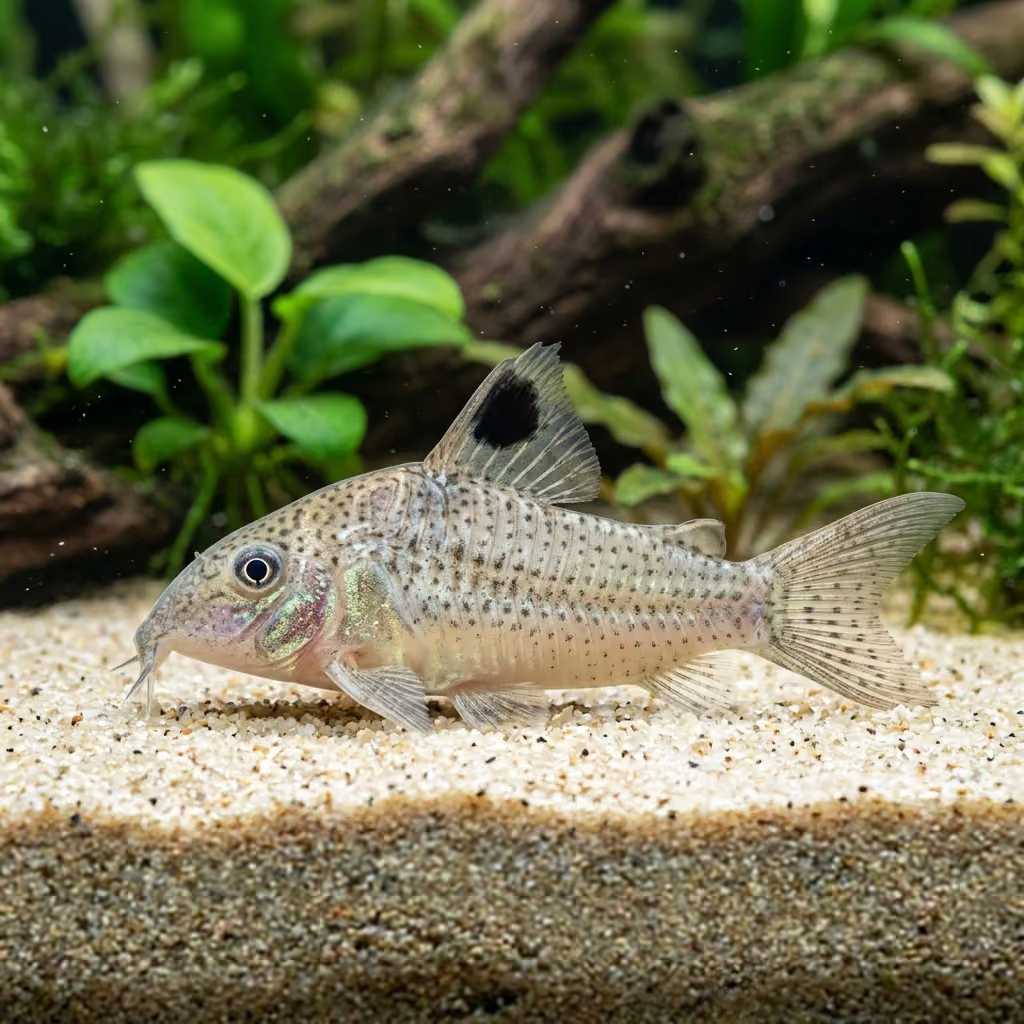
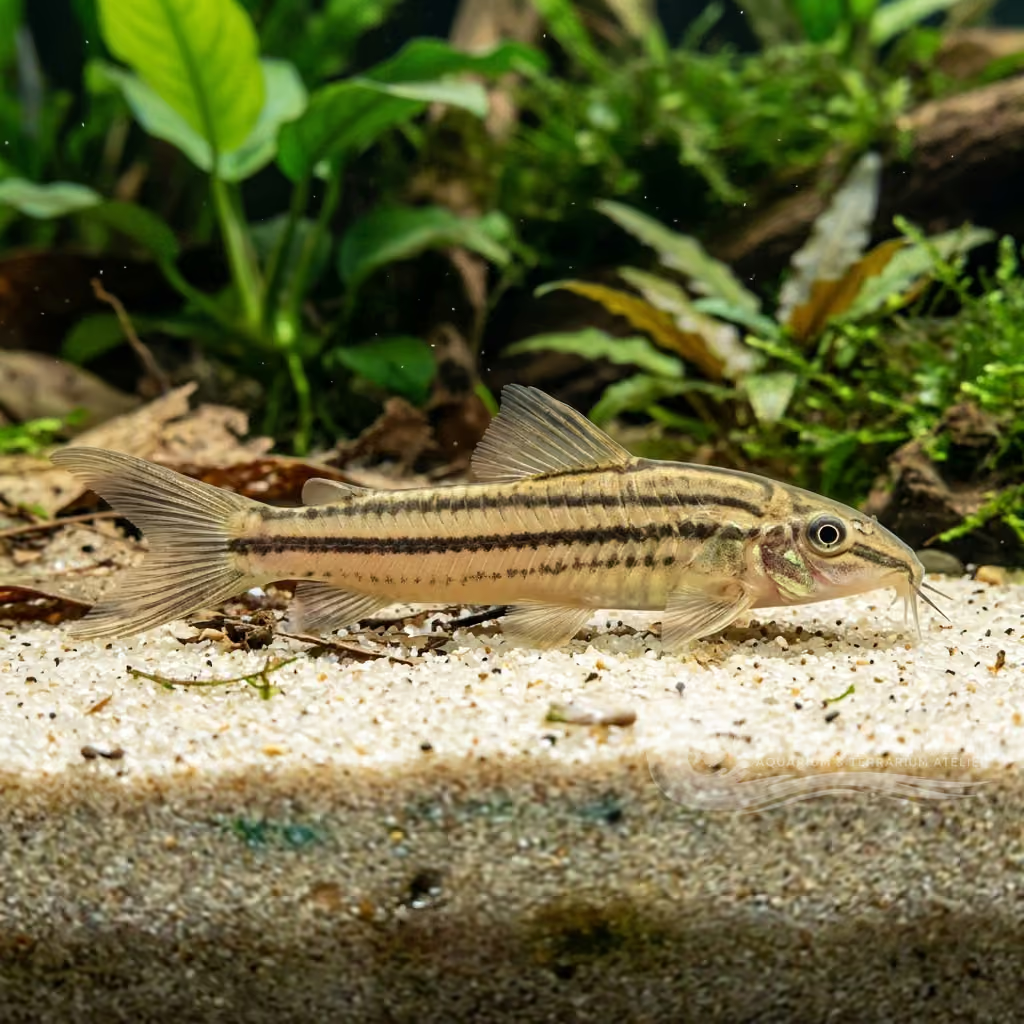
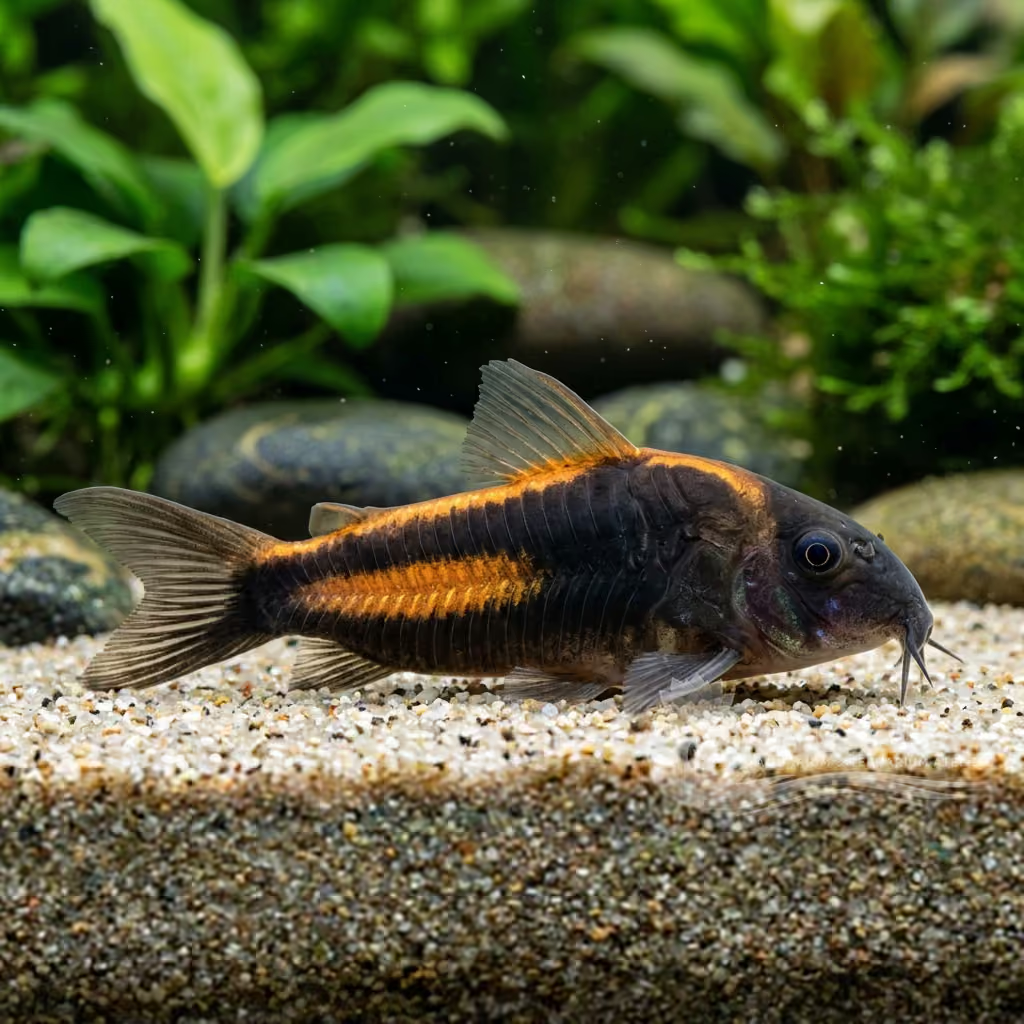
The beautiful 'Miguelito', unmistakable for its vivid tawny-golden coloration on which a massive dark arch-like bar stands out from the back to the dorsal fin.
Température de l’eau
22 - 26 °C
Valeur du pH
6 - 7.2
Type d'eau
Eau douce
Niveau dans le bac
Fond
Taille adulte
5,5 cm
Volume minimal du bac
>= 80 L
Groupe minimal
>= 6
GH
2 - 12 dGH
KH
2 - 10 dKH
TDS
50 - 280 ppm
Conductivité
78 - 438 uS/cm

Description de l'espèce
Geographical Origin and Habitat: Species discovered in Peru in the Ucayali river basin. Happily resides in darkened slow-current forest meanders, dominated by intricate substrates formed of sludges, impalpable sand, and putrefying dry leaves that dye the waters.
Taxonomy and Morphology: Callichthyidae identified commercially also as Corydoras "Miguelito". It is a short-snouted corydoras, very compact but with a proud build (about 5.5 cm / 2.2 inches). Has large bony shields on its flanks that masterfully armor it.
Social Behavior: The gregarious nature of the bottom explorer is brutally annihilated in case of loneliness. Prescribes very substantial swarms (at least 6-8 members) necessary to evade ancestral fears for predators. Mainly active in the evening and at dusk.
Coloration and Sexual Dimorphism: Pinkish-beige background dominated by two huge black "saddles" or "slashes" (wide bands): a showy band completely covers the head and eye (mask) and the other, massive and irregular, decorates the back to the caudal. Females significantly dilated on the abdomen.

Soins, reproduction et cohabitation
Aquarium Setup: The abrasion of sharp silica bottoms and quartz is absolutely banned under penalty of amputation of the barbels. Build complex forts of trunks (Manila/Jati) and lay generous portions of catappa on the bottom to guarantee a suitable and protected habitat.
Diet and Feeding: Eminently carnivorous detritivorous hunter. Should be fed when lights are struggling to favor finding. Protein-based tablets must be combined with periodic rations (3 a week) of live food: giant tubifex and large mosquito larvae (bloodworms).
Water Quality: Requires standard climatic ranges (22-26°C / 72-79°F). On chemistry it demands low levels of hardness (GH 2-12) and weakly acidic-neutral water (pH 6.0-7.2). Well oversized filters and very light siphonings remove the insidious danger of the ammonia peak that asphyxiates it.
Compatibility and Cohabitation: Extremely tolerant with anyone: lives in perfect crosses with schools of South American Rasboras, Nannostomus, and quiet algae-eating Loricariids. Exclude the concomitant presence of large burrowing cichlids and very voracious large oriental loaches.
Aquarium Breeding: Occasional trial induced by very strong thermal drops (cold RO rains). Deposition takes place in T-position generating very rare, large and robust eggs. Isolate all organic material on which they lay in an incubation tank given the marked autophagy.
Risks and Diseases: Whiskers reduced to the bone lead to progressive fungal malnutrition if hosted on incorrect bottoms. Manifests enormous intolerance and lethality in case of shock cures with Copper or Salt derivatives: halve and operate with moderation.

Origine et répartition géographiques
Species discovered in Peru in the Ucayali river basin. Happily resides in darkened slow-current forest meanders, dominated by intricate substrates formed of sludges, impalpable sand, and putrefying dry leaves that dye the waters.
Origine
Amérique du Sud hors Amazonie

Profil de poisson
- Tempérament
- Semi-aggressive
- This is an incredibly peaceful and timid species that thrives in the company of its own kind. Brochis virginiae should be kept in groups of at least six individuals to feel secure and display their natural, endearing behaviors. When kept alone or in too small a group, they can become highly stressed, lethargic, and prone to illness.
- Régime alimentaire
- Omnivore
- As omnivorous bottom feeders, Brochis virginiae requires a varied diet that sinks to the substrate. High-quality sinking pellets or wafers should form the staple of their diet. Supplementing with live or frozen foods like bloodworms, brine shrimp, and daphnia will ensure optimal health and encourage natural foraging behaviors.
- Espérance de vie
- 5-10 years
- Taille adulte
- 5.5 cm
- Ratio des sexes
- Specific M:F ratio
- A ratio of two or three males for every female is highly recommended, especially if breeding Brochis virginiae is the goal. Males are generally smaller and more slender than the plumper, rounder females. Maintaining a proper sex ratio ensures higher fertilization rates during the spawning process.
- Fréquence d'alimentation
- Twice daily
- Brochis virginiae should be fed small amounts once or twice a day, providing only what they can consume within a few minutes. Because they are nocturnal foragers by nature, dropping some food in just before the aquarium lights go out can be highly beneficial. Avoid overfeeding to maintain excellent water quality.
- Charge biologique
- Low to Medium
- This species produces a relatively small bioload, typical of most Brochis virginiae species. Their efficient scavenging behavior can actually help keep the substrate clean, reducing the overall accumulation of detritus. Regular water changes and a properly sized filter will easily manage the waste they produce.
- Courant
- Stagnant
- These catfish prefer moderate water flow that provides adequate oxygenation without creating overpowering currents. A setup that mimics a slow-moving South American stream is ideal for Brochis virginiae. Ensure there are calmer resting areas where they can settle on the substrate without expending too much energy.
- Risque de saut
- No
- Reproduction
- Oviparous
- Breeding Brochis virginiae in captivity can be achieved by simulating the onset of the rainy season with cooler water changes. The female will carry a few eggs in a pouch formed by her pelvic fins and deposit them on broad leaves or the aquarium glass. The parents exhibit no parental care and will eagerly consume the eggs if not separated.
- Compatibilité et compagnons
- Peaceful
- Brochis virginiae is a peaceful and highly sociable schooling fish that makes an excellent addition to community aquariums. They do best when kept with other small, non-aggressive species such as tetras, rasboras, and dwarf cichlids. It is crucial to avoid housing them with large or aggressive bottom-dwellers that might outcompete them for food or stress them out.
- Niveau dans le bac
- Bottom
- Like other Corydoras, Brochis virginiae are quintessential bottom dwellers, spending almost all of their time sifting through the substrate in search of food. They require a soft, sandy bottom to prevent damage to their sensitive barbels. Occasionally, they will make quick dashes to the surface to take in atmospheric air, a completely normal behavior.

Modèles et paramètres scientifiques
FishBase
Fenêtre sur les données scientifiques officielles de l’espèce
FishBase v25.04Données synchronisées le : 15/06/2026
- Niveau trophique
- 2,9 ± 0,3 se
- Résilience
- Élevée (moins de 15 mois)
- Singularité phylogénétique (PD50)
- 0.5
- Relation bayésienne longueur-poids
- a = 0.02455, b = 3
- VulnérabilitéVulnérabilité faible (10 / 100)

Espèces associées
Recommandations regroupées par proches parents, compagnons et soins similaires.