Diablito Poison Frog
Oophaga sylvatica
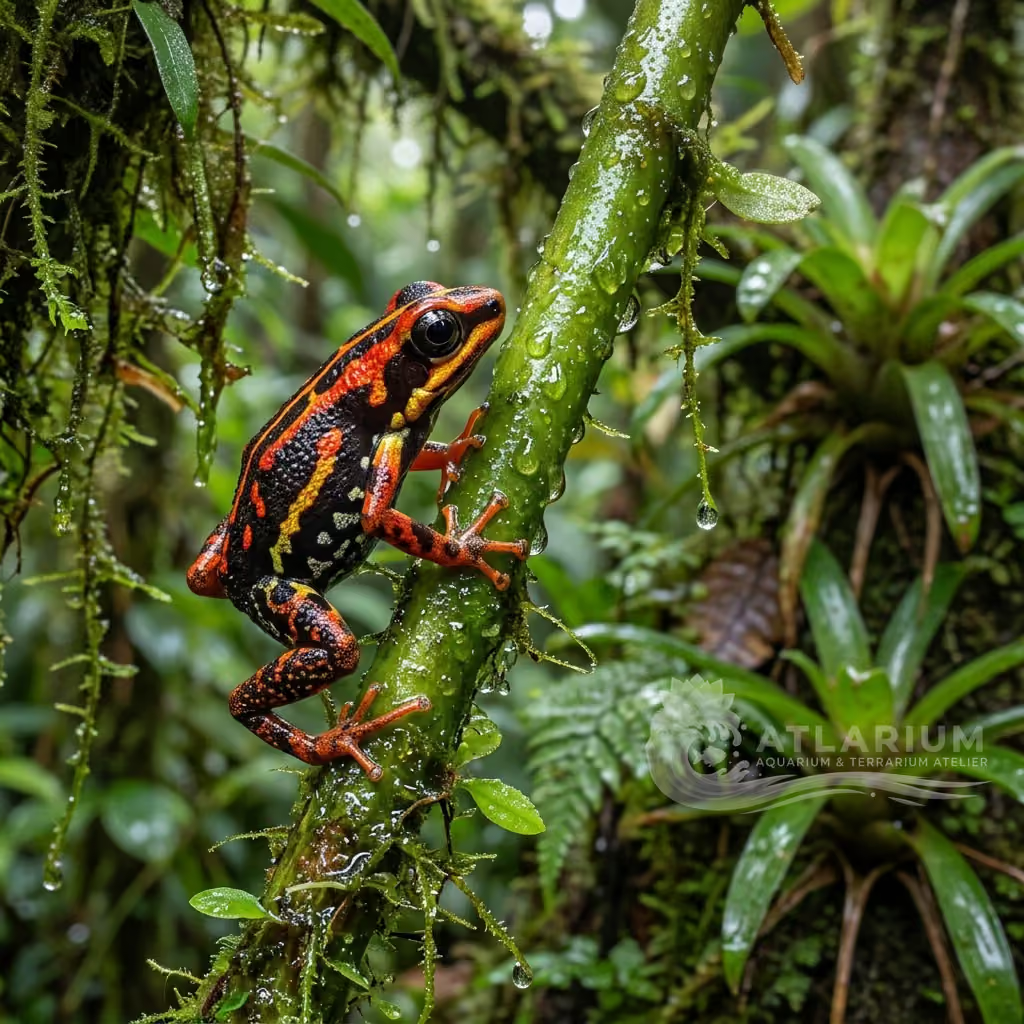
A moderately sized South American poison frog native to the Chocó region. Known for its striking red-and-black aposematic pattern and complex parental care.
Environnement
Terrestre
Humidité
80 - 95 %
Température diurne
23 - 26 °C
Température nocturne
18 - 21 °C
Température ambiante
23 - 26 °C
Enclos minimal
>= 50 L

Description de l'espèce
Geographical Origin and Habitat: Native to the wet lowland tropical rainforests of southwestern Colombia and northwestern Ecuador (Chocó bioregion). They inhabit the damp forest floor among deep leaf litter and buttress roots of large trees.
Taxonomy and Genetics: Belonging to the family Dendrobatidae. Commonly known as the Little Devil Poison Frog, it is highly prized for its vibrant aposematic color pattern and complex obligate egg-feeding reproductive strategy.
Behavior and Habits: Diurnal and primarily terrestrial, though they will climb low branches. Males call from fallen logs or roots. Females show dedicated parental care, transporting tadpoles to tiny water bodies (phytotelmata) and feeding them with unfertilized trophic eggs.
Morphology: Reaches 2.5–3.8 cm in length, making it larger than Oophaga pumilio. Females are generally slightly larger and wider than males. Males display calling behavior and possess a vocal sac under the throat.

Soins, reproduction et cohabitation
Terrarium Setup: A spacious terrestrial/semi-arboreal rainforest terrarium (minimum 60x45x45 cm) is recommended. Use a bioactive substrate topped with a thick layer of leaf litter and damp moss. Provide large cork bark hides and robust plants, including large bromeliads.
Lighting and Heating: Keep temperatures at 23–26°C during the day, dropping to 20–22°C at night. Avoid temperatures above 27°C. A low-output (2–5%) UVB source is highly recommended.
Humidity and Hydration: Maintain high humidity of 80–95%. Spray the enclosure daily with clean, dechlorinated water. Good ventilation is required to prevent stagnant, moldy conditions.
Feeding and Supplementation: Feed a variety of small insects: fruit flies (both Drosophila melanogaster and the larger D. hydei), springtails, dwarf isopods, and pinhead crickets. Dust food with calcium and vitamins containing D3 three times a week.
Compatibility: High intraspecific territoriality. Best kept in compatible pairs (1.1). Do not house multiple males together in standard-sized terrariums. Never mix with other poison frog species.
Health and Common Diseases: Highly susceptible to heat exhaustion. Dirty conditions can lead to bacterial skin infections (red leg syndrome). Handle only when necessary with wet, powder-free gloves.

Origine et répartition géographiques
Native to the wet lowland tropical rainforests of southwestern Colombia and northwestern Ecuador (Chocó bioregion). They inhabit the damp forest floor among deep leaf litter and buttress roots of large trees.
Origine
Sélection et cultivarsAmérique du Sud hors AmazonieEurope, Méditerranée et Asie occidentale

Profil d'amphibien
- Régime alimentaire
- Insectivore
- The Diablito Poison Frog is primarily an insectivore, heavily favoring ants and mites found on the forest floor. In captivity, their diet consists of appropriately sized feeder insects such as flightless fruit flies and springtails. These tiny prey items provide the necessary nutrients and are supplemented with calcium and vitamins to ensure optimal health.
- Espérance de vie
- 8-15 years
- Taille adulte
- 3.2 cm
- Mode de vie/microhabitat
- Terrestrial
- The Diablito Poison Frog is firmly terrestrial, preferring to dwell on the forest floor, hiding among leaf litter and ground-level structures to forage and seek shelter.
- Cycle d'activité
- Diurnal
- The Diablito Poison Frog is primarily active during the day, typical of diurnal species that rely on light to navigate, forage, and interact.
- Sociabilité
- Solitary
- These frogs are highly active during the day and can often be seen foraging among the leaf litter of their native rainforest habitat. They exhibit territorial behaviors, particularly males, who will call out to assert dominance and attract mates. Their bright coloration serves as a warning to potential predators about their toxicity.
- Reproduction
- Oviparous
- Reproduction involves a fascinating parental care strategy where females deposit eggs in leaf litter. Once the tadpoles hatch, the female carries them on her back to small pools of water, often in bromeliads. She then continuously returns to these pools to feed the tadpoles with unfertilized eggs until they metamorphose.
- Toxicité
- Harmless
- In the wild, the Diablito Poison Frog secretes toxic alkaloids through its skin, which it sequesters from its natural diet of specific ants and mites. This powerful chemical defense deters most predators from attempting to consume them. However, captive-bred individuals lose their toxicity entirely since they are not fed their natural alkaloid-rich diet.
- Stade de vie
- Metamorphosis
- Their life cycle begins as eggs laid in moist environments, which hatch into aquatic tadpoles. These tadpoles are completely dependent on their mother for nourishment in the form of trophic eggs. After several weeks of development, they undergo metamorphosis to emerge as miniature, fully terrestrial adult frogs.
- Tolérance aux manipulations
- Display only
- As a highly sensitive or fragile species, the Diablito Poison Frog should be considered a display-only animal. Handling causes immense stress and should only occur during emergencies.
- Brumation
- The Diablito Poison Frog originates from stable tropical environments and does not require or tolerate a winter brumation period; temperatures must remain consistently warm year-round.
- Mue
- Periodic
- Shedding for the Diablito Poison Frog heavily relies on high ambient humidity. A humid hide or frequent misting is crucial to prevent stuck shed and ensure a smooth, complete molt.

Espèces associées
Recommandations regroupées par proches parents, compagnons et soins similaires.