Fantastic Poison Frog
Ranitomeya fantastica
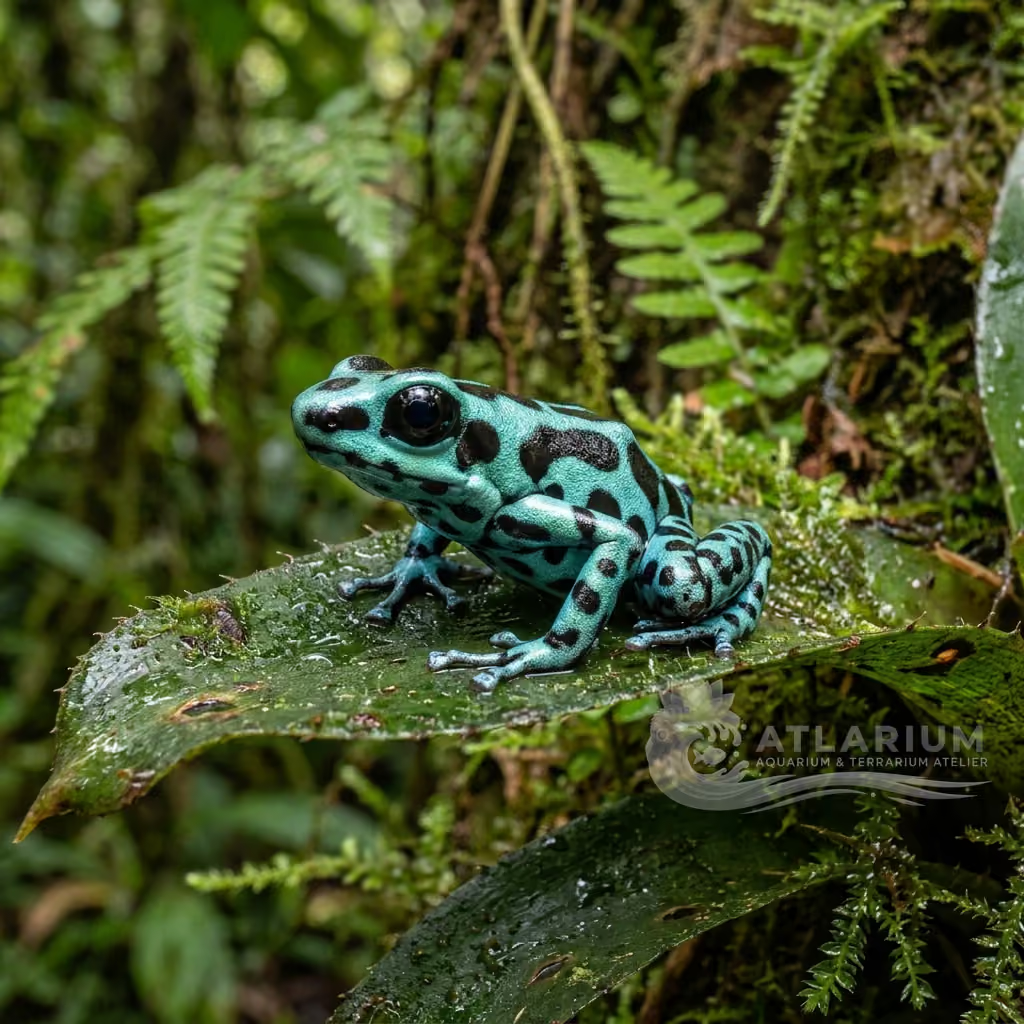
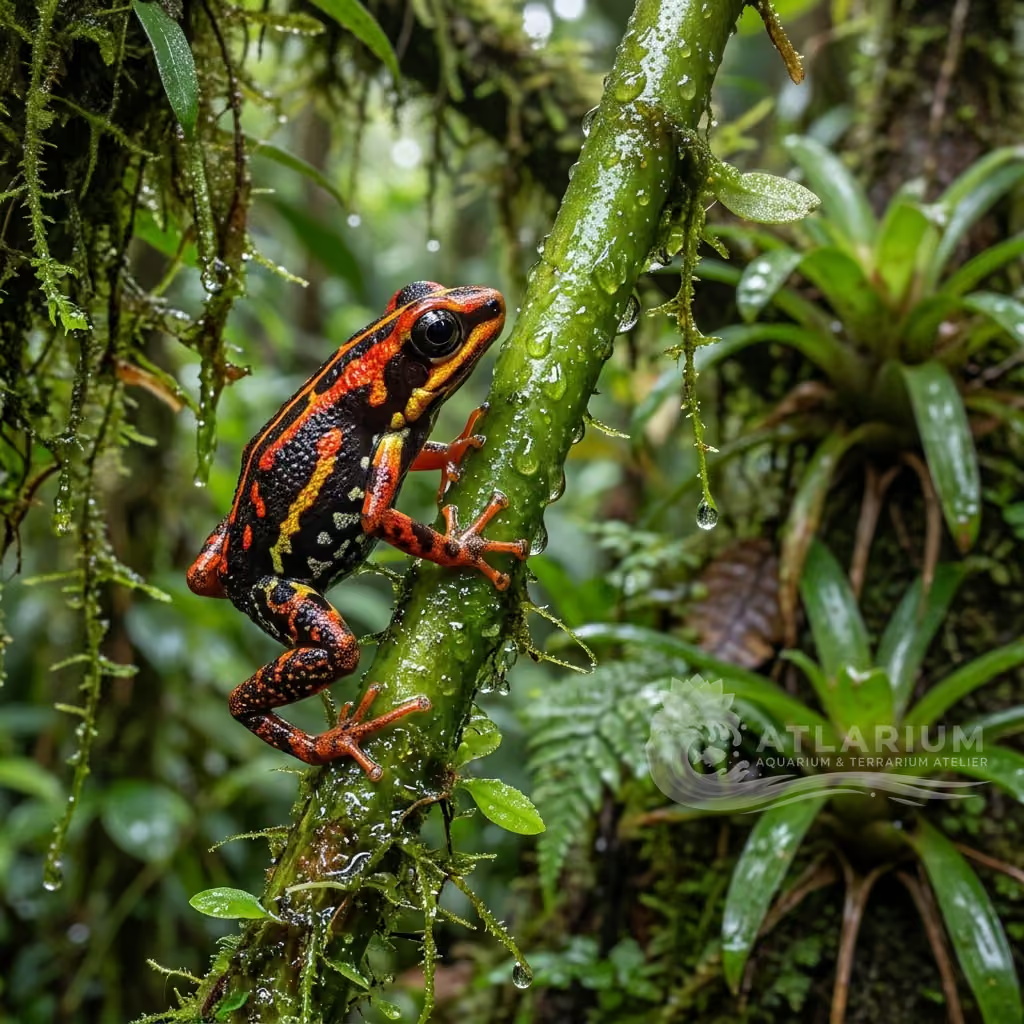
The Fantastic Poison Frog (Ranitomeya fantastica) is a small, striking dendrobatid native to Peru. Featuring a bright orange or red head contrasting with a black reticulated body, it is a shy species suited for experienced keepers.
Environnement
Terrestre
Humidité
80 - 90 %
Température diurne
22 - 26 °C
Température nocturne
18 - 20 °C
Température ambiante
22 - 26 °C
Enclos minimal
>= 30 L

Description de l'espèce
Geographical Origin and Habitat: Endemic to the dense and highly humid tropical rainforests of northern Peru, specifically in the regions of San Martín and Loreto. It resides in the intermediate layers of the forest, inhabiting epiphytic bromeliads and leaf litter where it finds shelter and humidity.
Taxonomy and Genetics: A tiny frog, with adults reaching a length of 1.5–1.8 cm. It features a spectacular color pattern, usually with a bright orange, red, or yellow head and neck that contrasts sharply with a black body covered in fine bluish or white reticulations.
Behavior and Habits: Extremely active, quick, and shy. They spend their time foraging among leaf litter and climbing tree trunks. During the breeding season, males produce buzzing calls to attract females. Eggs are laid in humid cavities, and the male carries the tadpoles on his back to water-filled bromeliad leaf axils.
Morphology: Sexual dimorphism is subtle. Females are slightly larger and rounder when carrying eggs, while males are more slender and possess a dark vocal sac on their throat used for calling.

Soins, reproduction et cohabitation
Terrarium Setup: Requires a well-planted, vertically oriented terrarium (minimum 30x30x40 cm). Enclosures should contain abundant live plants, particularly epiphytic bromeliads (*Neoregelia*), climbing vines, and cork bark hides. The floor should have a layer of leaf litter over a drainage layer to prevent stagnant water.
Lighting and Heating: Temperatures must be maintained between 24°C and 26°C during the day, with a night drop to 20–22°C. High temperatures above 28°C are extremely dangerous and can be fatal. Install low-output UVB (2–5%) to support calcium metabolism and promote live plant growth.
Humidity and Hydration: Humidity must be kept high, between 80% and 90%, through regular misting with reverse osmosis or declorinated water. Ensure good ventilation to prevent stagnant air and water buildup on the substrate, which can lead to bacterial infections.
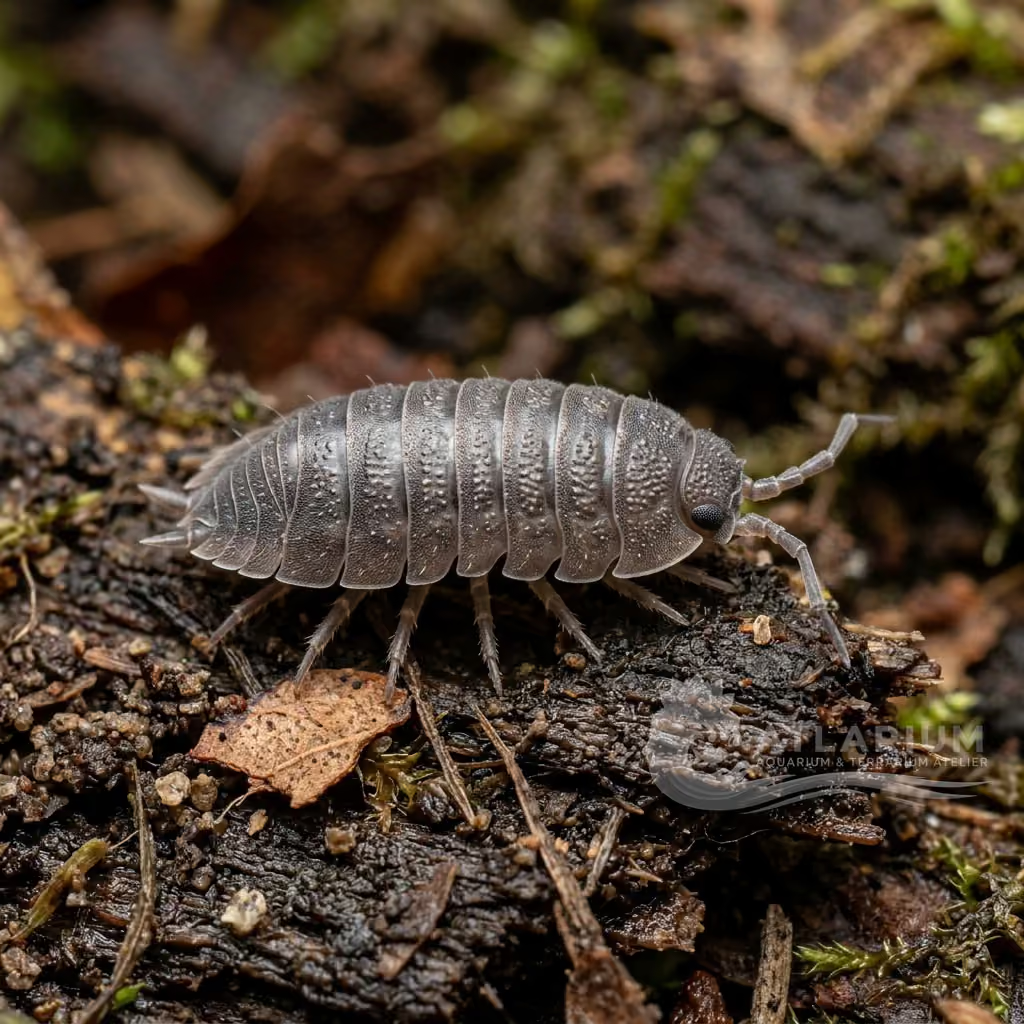
Feeding and Supplementation: Feeds on tiny insects due to their small size. Offer flightless fruit flies (*Drosophila melanogaster*), springtails, and dwarf isopods. Supplement all food items with high-quality calcium and vitamin D3 powder, along with vitamin A, to prevent metabolic bone disease.
Compatibility: Best kept in pairs (one male, one female) or singly. They can be territorial, and females may compete aggressively, resulting in egg destruction or severe stress. Do not house with other species of poison frogs.
Health and Common Diseases: Extremely sensitive to dehydration and chemical exposure. Never handle with bare hands, as oils, soap residues, and human body heat can be fatal. Stress can lead to snout rubbing against glass, creating abrasions that require attention. Keep the water sources and misting systems clean to prevent bacterial red-leg syndrome.

Origine et répartition géographiques
Endemic to the dense and highly humid tropical rainforests of northern Peru, specifically in the regions of San Martín and Loreto. It resides in the intermediate layers of the forest, inhabiting epiphytic bromeliads and leaf litter where it finds shelter and humidity.
Origine
Amérique du Sud hors AmazonieAmérique du NordAsie de l'Est

Profil d'amphibien
- Régime alimentaire
- Insectivore
- The Fantastic Poison Frog thrives on a specialized diet of tiny micro-invertebrates in its natural habitat. Captive frogs are typically fed a staple diet of wingless fruit flies, specifically Drosophila melanogaster, dusted with essential vitamin and mineral supplements. They will also eagerly consume springtails and dwarf white isopods present in a bioactive terrarium.
- Espérance de vie
- 8-12 years
- Taille adulte
- 2.25 cm
- Mode de vie/microhabitat
- Arboreal
- Highly adapted to an arboreal lifestyle, the Fantastic Poison Frog spends the vast majority of its time in the upper canopy, climbing branches and leaves with specialized adaptations.
- Cycle d'activité
- Diurnal
- The Fantastic Poison Frog is primarily active during the day, typical of diurnal species that rely on light to navigate, forage, and interact.
- Sociabilité
- Solitary
- This striking frog is predominantly diurnal and semi-arboreal, spending much of its time navigating the understory vegetation and bromeliads. They are quick, agile jumpers and can be quite shy, often retreating into dense foliage when disturbed. Males are fiercely territorial and will actively wrestle rival males that encroach on their preferred calling sites.
- Reproduction
- Oviparous
- Mating occurs after a complex courtship involving vocalizations and tactile stimulation by the male. Females deposit small clutches of eggs on broad leaves or in phytotelmata, which are small water pools in plants. The male diligently tends to the eggs and eventually transports the hatched tadpoles on his back to individual, water-filled bromeliad axils.
- Toxicité
- Harmless
- In the wild, they possess toxic skin secretions derived from the alkaloid-rich arthropods they consume. These toxins serve as a potent defense mechanism against predation, advertised by their highly variable, contrasting coloration. Like other dart frogs, captive-born specimens are non-toxic due to the lack of these specific precursor compounds in their diet.
- Stade de vie
- Metamorphosis
- Eggs take approximately 10 to 14 days to hatch into tadpoles under optimal conditions. The tadpole stage lasts for several months, during which they feed on algae, detritus, and sometimes unfertilized eggs provided by the parents. Metamorphosis yields a fully formed froglet that will take around 8 to 12 months to reach sexual maturity.
- Tolérance aux manipulations
- Display only
- As a highly sensitive or fragile species, the Fantastic Poison Frog should be considered a display-only animal. Handling causes immense stress and should only occur during emergencies.
- Brumation
- The Fantastic Poison Frog originates from stable tropical environments and does not require or tolerate a winter brumation period; temperatures must remain consistently warm year-round.
- Mue
- Periodic
- Shedding for the Fantastic Poison Frog heavily relies on high ambient humidity. A humid hide or frequent misting is crucial to prevent stuck shed and ensure a smooth, complete molt.

Espèces associées
Recommandations regroupées par proches parents, compagnons et soins similaires.