Brazil-nut Poison Frog
Adelphobates castaneoticus
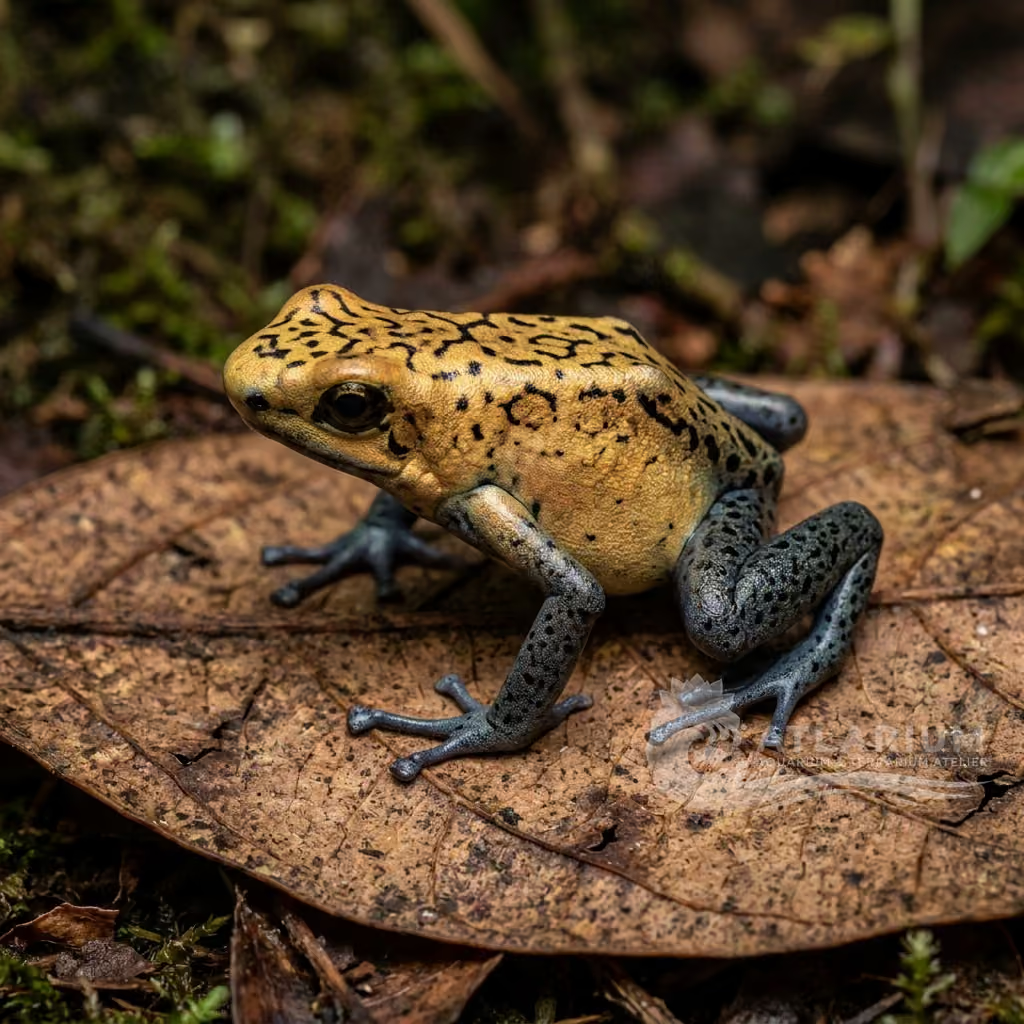
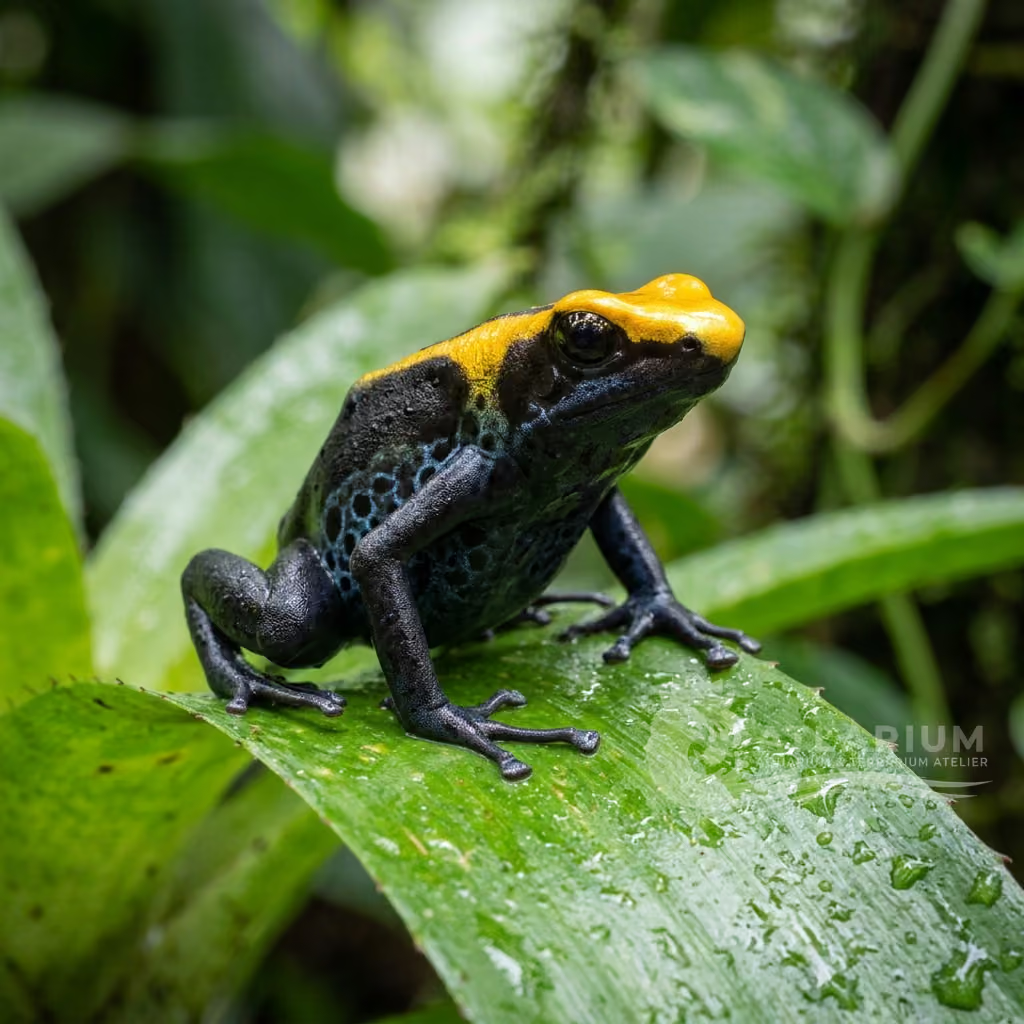
The 'Brazil-nut Poison Frog'. Famous in the wild for depositing its tadpoles in empty, flooded Brazil nut shells fallen to the ground. Dark-colored with intricate orange-yellow spots.
Environnement
Terrestre
Humidité
80 - 100 %
Température diurne
24 - 28 °C
Température nocturne
22 - 24 °C

Description de l'espèce
Geographical Origin and Habitat: A rare and endemic species from the humid, hot primary lowland rainforests of Pará state, Brazil (deep Amazon Basin). It is a terrestrial inhabitant of the dark forest floor, sheltering among roots, leaf litter, and empty fallen shells of the Brazil nut (*Bertholletia excelsa*), which it uses for egg deposition and as natural micro-pools for its tadpoles.
Taxonomy and Genetics: A small, stocky, and rounded species, measuring 2–2.5 cm in adult size. The body is a glossy pitch-black with irregular, bright markings of bone-white or warning yellow-orange. Females are larger and have noticeably rounded abdomens when carrying eggs, while males are slightly smaller and more slender.
Behavior and Habits: Peaceful but extremely shy and reclusive. Unlike their larger relatives, they avoid open areas and quickly retreat under leaves or coconut shells when disturbed. The males have a very soft, faint call resembling a weak insect buzz, used during courtship.
Morphology: Sexual dimorphism is subtle, mostly visible in body size and shape: adult females are larger, rounder, and heavier, whereas males are smaller, more slender, and produce vocalizations during the breeding season.

Soins, reproduction et cohabitation
Terrarium Setup: Primarily terrestrial. A terrarium with a footprint of 45x45 cm is ideal for a pair or a small group. Provide a 5–10 cm drainage layer (clay pebbles) topped by a moist substrate, covered with leaf litter (oak or catappa) and empty Brazil nut shells for shelters.
Lighting and Heating: Require temperatures of 25–27°C during the day, avoiding spikes above 29°C which can be fatal. A nighttime drop to 21°C is beneficial. Low-level UVB (2–5%) lighting is highly recommended to prevent metabolic bone disease.
Humidity and Hydration: Maintain relative humidity at 80–90% with regular misting. Good ventilation is crucial to prevent stagnant conditions and respiratory or skin bacterial infections (such as Red Leg syndrome). Use dechlorinated water or reverse osmosis water.
Feeding and Supplementation: Strictly insectivorous, consuming small live prey like fruit flies (Drosophila hydei/melanogaster) and micro-crickets. Dust prey with high-quality calcium and vitamin D3 supplements three times a week to prevent nutritional deficiencies.
Compatibility: Peaceful and social, they can be kept in small groups (e.g. one male and two females). They do not display the intense territorial aggression seen in some other dart frogs, though minor sparring may occur.
Health and Common Diseases: Highly sensitive to skin toxins, chemicals, and handling. Avoid touching them; residues on human hands can cause fatal chemical poisoning or severe shock. Watch for signs of lethargy, skin lesions, or neurological issues caused by substandard water quality.

Origine et répartition géographiques
A rare and endemic species from the humid, hot primary lowland rainforests of Pará state, Brazil (deep Amazon Basin). It is a terrestrial inhabitant of the dark forest floor, sheltering among roots, leaf litter, and empty fallen shells of the Brazil nut (*Bertholletia excelsa*), which it uses for egg deposition and as natural micro-pools for its tadpoles.
Origine
Amazonie, Orénoque et GuyanesAmérique du NordEurope, Méditerranée et Asie occidentale

Profil d'amphibien
- Régime alimentaire
- Insectivore
- Eat bugs. Feed daily. Add vitamins.
- Espérance de vie
- 7-11 years
- Taille adulte
- 2 cm
- Mode de vie/microhabitat
- Terrestrial
- Need high humidity. Forage constantly. Stable temps.
- Cycle d'activité
- Diurnal
- Strictly diurnal. Morning peaks. 12h cycle.
- Sociabilité
- Gregarious
- Very active. Males defend. Add barriers.
- Reproduction
- Oviparous
- Breed in rain. Males call. Tads swim.
- Toxicité
- Harmless
- In its native habitat, Adelphobates castaneoticus secretes potent lipophilic alkaloids from its skin as a defense mechanism against predators. These toxins are acquired entirely through their specialized diet of toxic wild arthropods. However, captive-bred individuals, or wild-caught specimens kept in captivity for extended periods, completely lose their toxicity due to the lack of these specific dietary precursors. Despite being harmless in captivity, it is always recommended to wear disposable gloves when handling them. This precaution is primarily to protect the frog's sensitive, permeable skin from the natural oils, salts, and potential chemicals present on human hands.
- Stade de vie
- Metamorphosis
- For Adelphobates castaneoticus, the life cycle begins with a small clutch of eggs laid in a dark, humid terrestrial or phytotelm (plant water) location. Once the eggs develop and hatch, the resulting tadpoles are meticulously transported on the back of a parent to a suitable rearing pool. The tadpoles develop in these small bodies of water over the course of two to three months. Following metamorphosis, tiny, fully-formed froglets emerge onto land, requiring consistently high humidity to survive. These froglets are extremely small and must be fed large quantities of microscopic prey, such as springtails, until they grow larger.
- Tolérance aux manipulations
- Display only
- Handling of Adelphobates castaneoticus should be strictly avoided unless absolutely necessary for health inspections or transferring enclosures. Like all amphibians, they possess highly permeable, sensitive skin that quickly absorbs toxins, salts, and oils from human hands, which can be fatal. If a transfer is required, the safest and least stressful method is to gently coax the frog into a clean plastic catch cup rather than using your hands. If physical contact is entirely unavoidable, you must wear powder-free nitrile gloves thoroughly moistened with dechlorinated water. Even then, the interaction should be kept as brief as possible to minimize the severe physiological stress handling causes.
- Brumation
- Non requise
- Originating from consistent tropical or subtropical environments, the Adelphobates castaneoticus does not undergo a true brumation period. In their natural habitat, they experience relatively stable temperatures year-round, with environmental shifts primarily driven by wet and dry seasons rather than extreme cold. In captivity, it is critical to maintain steady, optimal temperatures and high humidity levels throughout the entire year. Exposing these amphibians to significant temperature drops can severely compromise their immune system and lead to respiratory or digestive failures. While a slight reduction in humidity and a few degrees of temperature drop can simulate a dry season to cycle breeders, severe cooling must be completely avoided.
- Mue
- Periodic
- Like all amphibians, the Adelphobates castaneoticus undergoes a regular molting process to shed its outer layer of skin as it grows and to maintain skin health. This shedding process occurs frequently but is usually very rapid and highly secretive, meaning keepers rarely witness it occurring. The frog will typically contort its body, repeatedly open and close its mouth, and use its limbs to push the loosened skin forward over its head. Once the shed is removed, the frog will almost always consume the old skin to recycle valuable nutrients and proteins. Maintaining ideal humidity levels in the terrarium is paramount, as dry conditions can cause the skin to adhere, leading to deadly infections or restricted blood flow.

Espèces associées
Recommandations regroupées par proches parents, compagnons et soins similaires.