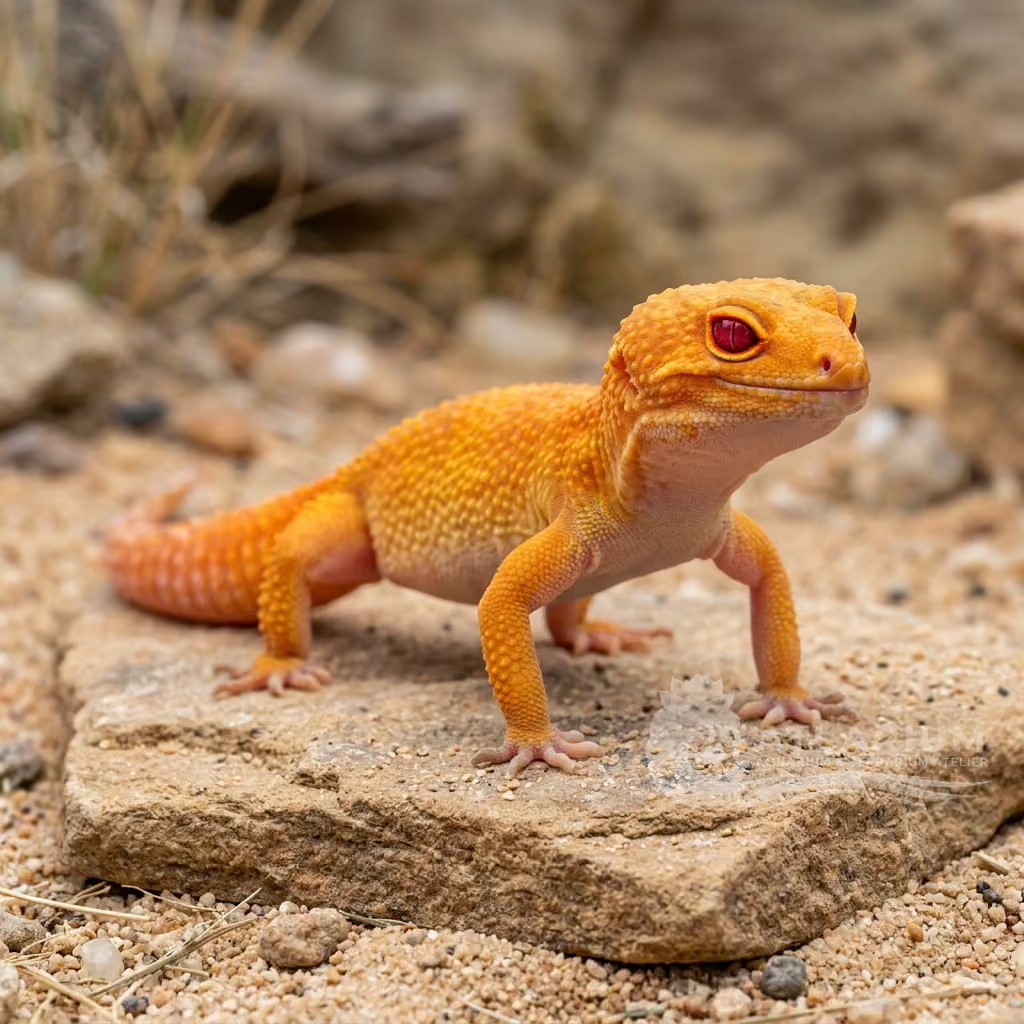
African Fat-Tailed Gecko — Striped
Hemitheconyx caudicinctus
A T-positive albinism strain. Unlike the fluorescent orange of standard albinos, the Caramel morph retains subtle dark pigments, showing warm toasted cream and caramel tones.
Environnement
Terrestre
Humidité
50 - 70 %
Température diurne
24 - 28 °C
Température ambiante
26 °C
Température nocturne
22 - 24 °C
Point de repos chauffant
30 - 32 °C
Taille adulte
22 cm
Enclos minimal
>= 60 L

Description de l'espèce
Geographical Origin and Habitat: Endemic to the dry savannas, grasslands, and semi-arid scrublands of West Africa, including Nigeria, Senegal, and Togo. Unlike the rock-dwelling leopard gecko, the fat-tailed gecko prefers slightly more humid microclimates, spending the dry, hot days sheltering inside deep burrows, moist rocky crevices, or abandoned termite mounds.
Taxonomy and Genetics: A robust, terrestrial gecko characterized by a stocky build and a large, rounded head. Its most notable feature is the short, bulbous tail that stores fat and water. The Striped morph is a natural pattern variation featuring a clean, bold white stripe running along the dorsal spine from the head to the tail, contrasting with the dark brown and tan bands. They have moveable eyelids and lack adhesive toe pads.
Behavior and Habits: Nocturnal and extremely docile. Fat-tailed geckos are notably slower, calmer, and more deliberate in their movements than leopard geckos, making them highly popular for handling. They have a strong fossorial instinct and spend much of their active hours excavating burrows or hunting insects along the ground at night.
Morphology: Sexual dimorphism is distinct. Adult males grow larger and have a broader head than females, and they display a prominent row of preanal pores and visible hemipenal bulges at the base of the tail, which are absent or minimal in females.

Soins, reproduction et cohabitation
Terrarium Setup: A horizontal enclosure of at least 90x45x45 cm is recommended for an adult. Provide a deep, moisture-retaining substrate such as a mixture of topsoil, play sand, and coconut coir to allow natural burrowing. Include multiple low, tight hides, including a dedicated humid hide filled with damp sphagnum moss, which is essential for shedding.
Lighting and Heating: Provide a thermal gradient with a basking spot at 30-32°C using a halogen heat lamp or deep heat projector, and a cool side at 24°C. At night, lower the temperature to 22-24°C. A low-intensity UVB light (5-7%) is highly recommended to support vitamin D3 synthesis and overall health.
Humidity and Hydration: They require moderate humidity (50-65%), which is higher than for leopard geckos. Mist the terrarium every other day to keep the lower layers of the substrate slightly damp (never waterlogged). Keep a shallow bowl of fresh, clean water available at all times.
Feeding and Supplementation: Strictly insectivorous. Offer live, active insects such as crickets, roaches, and occasionally silkworms or mealworms. Dust all prey insects with pure calcium at every feeding, and a calcium-D3 and weekly multivitamin supplement.
Compatibility: Strictly solitary. Males are highly territorial and will fight aggressively, often resulting in death. While females can sometimes be housed together in very large enclosures, keeping them individually is the safest practice to prevent stress and injury.
Health and Common Diseases: Vulnerable to metabolic bone disease (MBD) if calcium and D3 supplementation is neglected. Low humidity levels can lead to dysecdysis (incomplete shedding), particularly around the toes and eyes, which can cause necrosis or blindness. Handle gently, as they may drop their tail (autotomy) if grasped or startled.

Origine et répartition géographiques
Endemic to the dry savannas, grasslands, and semi-arid scrublands of West Africa, including Nigeria, Senegal, and Togo. Unlike the rock-dwelling leopard gecko, the fat-tailed gecko prefers slightly more humid microclimates, spending the dry, hot days sheltering inside deep burrows, moist rocky crevices, or abandoned termite mounds.
Origine
Sélection et cultivarsAfrique et Madagascar

Profil de reptile
- Régime alimentaire
- Insectivore
- Caramel Albino African fat-tailed geckos thrive on a purely insectivorous diet of live, appropriately sized prey. Gut-loaded crickets, dubia roaches, and mealworms should make up the bulk of their meals to ensure proper nutrition. Dusting their food with calcium and a multivitamin supplement is critical, particularly because albinos can sometimes be sensitive to deficiencies. Fresh water should be available at all times, along with a humid hide to aid in hydration.
- Taille adulte
- 22 cm
- Mode de vie/microhabitat
- Terrestrial
- These geckos are fully terrestrial and prefer moving slowly along the forest floor or savanna ground. They are not strong climbers and lack sticky toe pads. Their enclosures should focus on horizontal floor space with plenty of low hiding spots and a substrate that allows for shallow digging.
- Cycle d'activité
- Nocturnal
- African fat-tailed geckos are strictly nocturnal, venturing out only after dark to hunt for insects and explore their environment. They spend their days retreating into burrows or underneath rocks and bark to stay protected and conserve moisture.
- Sociabilité
- Solitary
- The Caramel Albino morph is prized for its stunning brownish-yellow coloration and striking red or silver eyes. Due to their albinism, their eyes can be slightly more sensitive to bright light, so providing ample dark hiding spots is important. They are gentle, nocturnal creatures that explore their environment with slow, measured movements during the night. They are very amenable to handling and will use their thick tails to store excess fat for periods of scarce food.
- Reproduction
- Oviparous
- To breed Caramel Albino geckos, a subtle winter cooling period is often utilized to stimulate their reproductive instincts. Gravid females require a designated lay box filled with damp substrate to deposit their clutches of two eggs. The incubation temperature must be carefully monitored, as it determines the sex of the offspring and ensures a successful hatch. The beautifully colored hatchlings emerge fully independent and ready to start feeding on small insects.
- Tolérance aux manipulations
- Tolerant
- They are generally even more docile and slower-moving than leopard geckos, making them highly tolerant of handling. They rarely bite and usually just try to slowly walk away if stressed. Care must be taken not to squeeze them or pull their fragile tails.
- Brumation
- A brumation period is not required for pet African fat-tailed geckos. Breeders may induce a mild cooling down to 70°F (21°C) for several weeks to stimulate the breeding season. For regular pet care, maintaining standard warm temperatures year-round is completely acceptable and safer.
- Mue
- Periodic
- African fat-tailed geckos require significantly higher humidity than leopard geckos to molt properly. A permanent humid hide is mandatory. During a shed, they will become pale and cloudy. Proper humidity (around 60-70% generally, higher in the hide) prevents stuck shed, which can cause severe issues on their toes and tail tip.

Espèces associées
Recommandations regroupées par proches parents, compagnons et soins similaires.