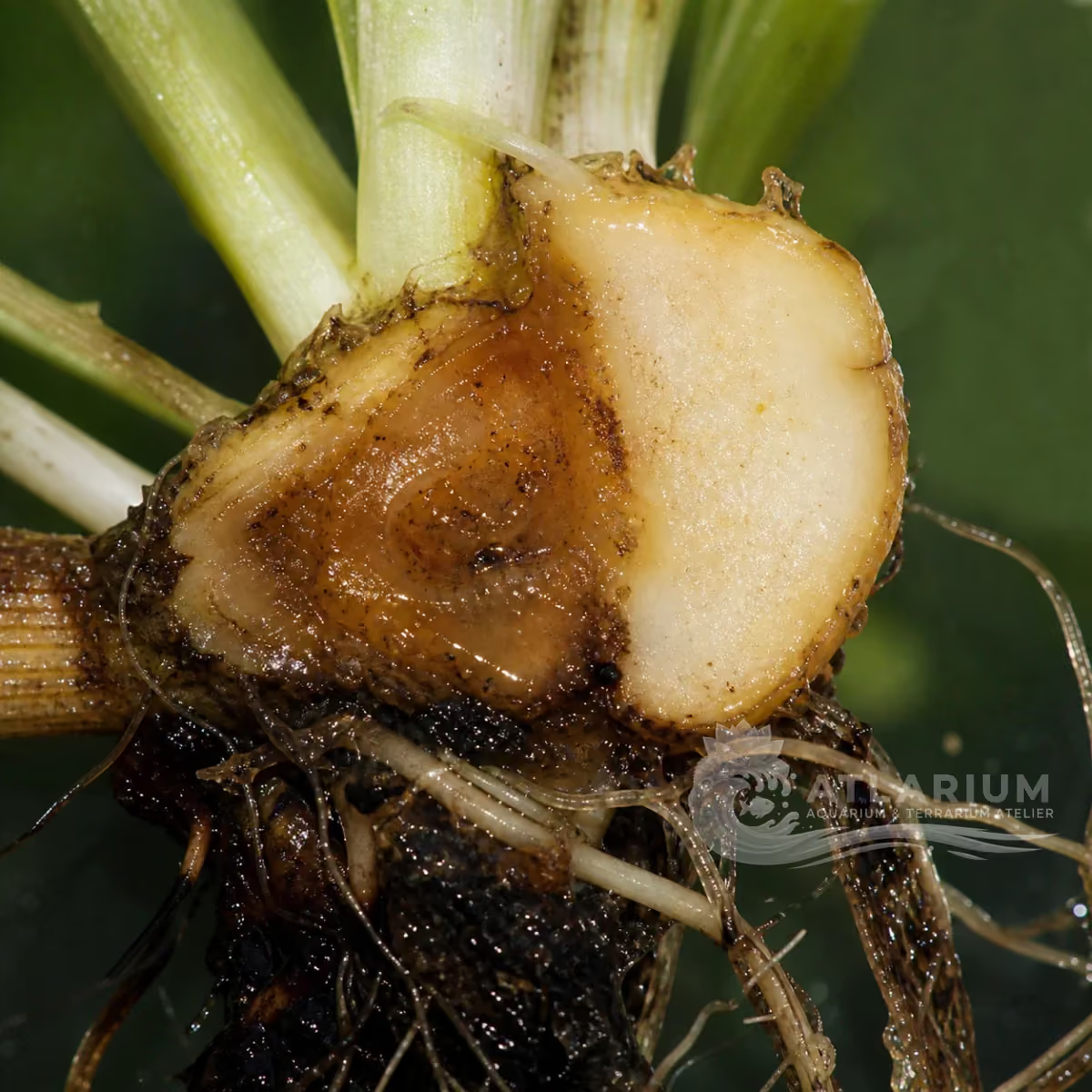
Rhizome Rot (Anubias Disease)
Epiphytes like Anubias, Bucephalandra, and Java Ferns possess a thick, crawling stem called a rhizome. This rhizome is their lifeline. Rhizome rot is a catastrophic, bacterial tissue-eating disease (often driven by Erwinia or Pseudomonas species). It rapidly destroys the vascular tissue in a matter of days and is highly contagious to other epiphytes in the water column.
Plant profile
Resolution Difficulty
Observe and distinguish
Identification and context
Signs and distribution
The Floating Perfect Leaf
The most jarring and heartbreaking symptom: you look at the tank and notice perfectly green, healthy, unblemished leaves detached and floating freely at the surface. They have fallen off the stem cleanly, as if cut by a laser.
Mushy Putrid Stem
When you inspect the main rhizome stalk, it is no longer hard, green, and fleshy. It has turned into a black or dark-brown, soft, mushy paste. Pressing it with your fingernail causes it to squish instantly, and it gives off a powerful, foul smell of rot.
Affected tissue and growth
The Floating Perfect Leaf
The most jarring and heartbreaking symptom: you look at the tank and notice perfectly green, healthy, unblemished leaves detached and floating freely at the surface. They have fallen off the stem cleanly, as if cut by a laser.
Mushy Putrid Stem
When you inspect the main rhizome stalk, it is no longer hard, green, and fleshy. It has turned into a black or dark-brown, soft, mushy paste. Pressing it with your fingernail causes it to squish instantly, and it gives off a powerful, foul smell of rot.
Physiology or exposure
Epiphytes like Anubias, Bucephalandra, and Java Ferns possess a thick, crawling stem called a rhizome. This rhizome is their lifeline. Rhizome rot is a catastrophic, bacterial tissue-eating disease (often driven by Erwinia or Pseudomonas species). It rapidly destroys the vascular tissue in a matter of days and is highly contagious to other epiphytes in the water column.
Verify before intervening
Confirmation and decisions
Differential diagnosis
Compare sign distribution, leaf age, mechanical damage, emersed-to-submersed adaptation, algae, pests and multiple concurrent deficiencies.
How to verify
Confirm with a photographic timeline, repeated measurements and one controlled change at a time; an isolated leaf sign does not automatically identify the cause.
Proportionate actions
Management and monitoring
What to do now
Stabilize light, CO₂, temperature and water quality; remove only decaying tissue. Avoid concentrated corrections or several simultaneous changes.
Controlled correction
1. Radical Surgery
You cannot fertilize your way out of this. Remove the plant immediately. Using a sterilized, razor-sharp surgical scalpel or fresh razor blade, slice away the rotting section. Keep cutting further down the stem until you hit 100% hard, firm, perfectly white tissue with zero brown streaks. If you leave even 1mm of rot, the disease will continue. Throw away all rotted material.
2. Disinfectant Dip
Dip the surviving healthy white rhizome piece into a mild 3% Hydrogen Peroxide bath for 30 seconds to kill any residual surface bacteria, rinse it, and then attach it back to hardscape in high flow.
New-growth response
NEVER bury the rhizome of any epiphyte. Always attach them to driftwood or rocks using superglue (cyanoacrylate gel) or cotton thread so they remain high up in the water column's flow. Always propagate using ultra-sharp stainless steel aquascaping scissors to create clean, surgical cuts.
Prevention
NEVER bury the rhizome of any epiphyte. Always attach them to driftwood or rocks using superglue (cyanoacrylate gel) or cotton thread so they remain high up in the water column's flow. Always propagate using ultra-sharp stainless steel aquascaping scissors to create clean, surgical cuts.
When to escalate
Escalate if deterioration is rapid, involves the rhizome or stem, produces foul odor, or coincides with animal distress or detectable ammonia/nitrite.
Biological identity
Linked organisms in the Micro World
Learn how to recognize them and what role they may play in the aquarium.