
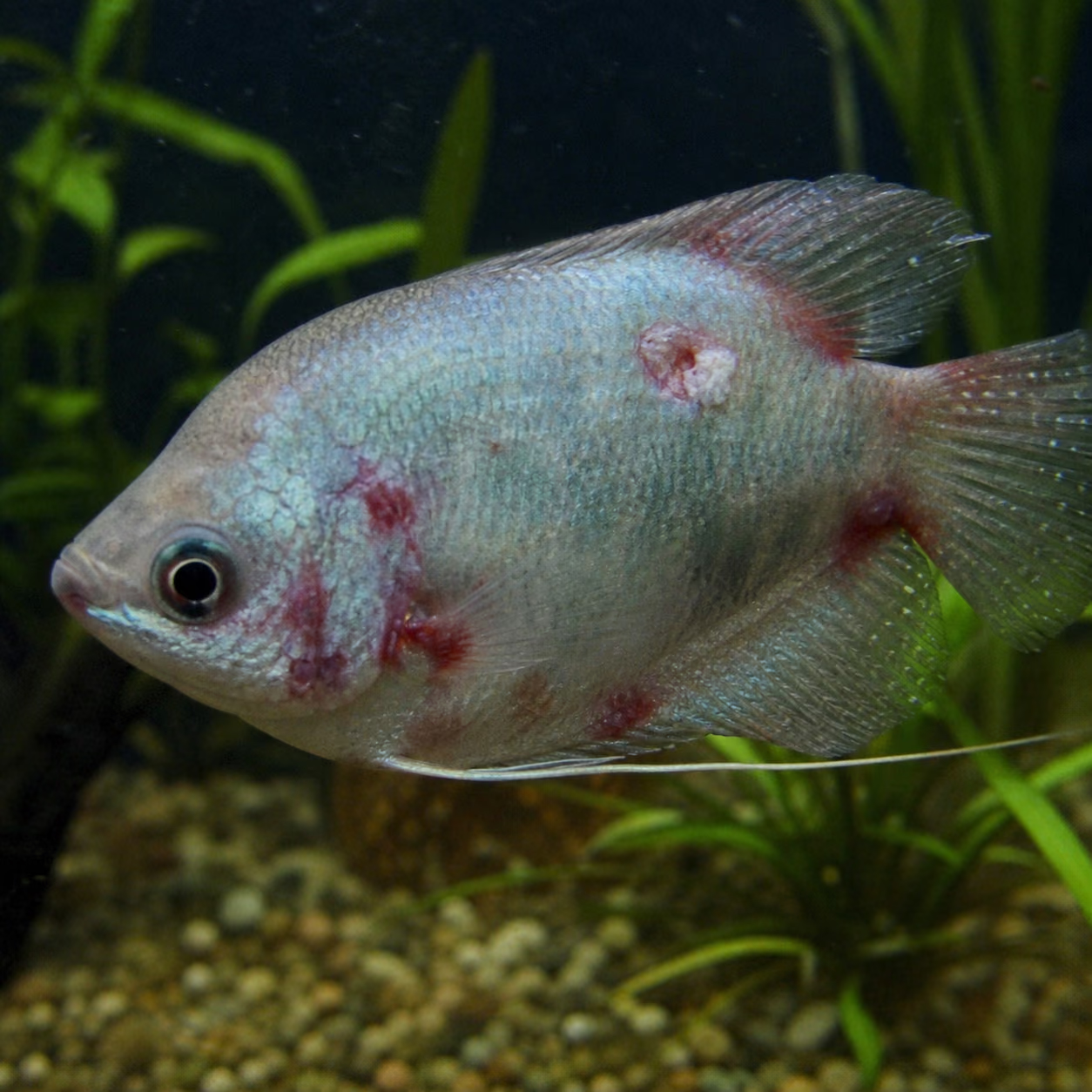
Motile aeromonad septicemia
Motile aeromonad septicaemia is a systemic bacterial syndrome of fish associated mainly with the motile Aeromonas complex. These bacteria are common in aquatic environments and become pathogenic in susceptible hosts; recovery from a superficial lesion alone does not prove septicaemia. Diagnosis requires compatible signs and properly collected internal samples.
Diagnostic profile
Contagious
Observe and distinguish
Identification and context
Immediate triage
Isolate cases when this does not add harmful stress, increase oxygenation and gradually correct ammonia, nitrite and temperature. Remove deaths promptly, use separate tools and document lesions and mortality. Do not start random antibiotics: they may fail, harm the biofilter and compromise culture and susceptibility testing.
Hosts and context
Motile aeromonad septicaemia is a systemic bacterial syndrome of fish associated mainly with the motile Aeromonas complex. These bacteria are common in aquatic environments and become pathogenic in susceptible hosts; recovery from a superficial lesion alone does not prove septicaemia. Diagnosis requires compatible signs and properly collected internal samples.
Signs and progression
Possible signs include focal or diffuse haemorrhage, ulcers, reddened fin bases, abdominal distension, exophthalmos, lethargy and rapid death. Ascites and raised scales describe dropsy, a possible but nonspecific endpoint. Group distribution, speed and internal-organ involvement matter more than one red mark.
Verify before intervening
Confirmation and decisions
Differential diagnosis
Other bacterial septicaemias, trauma, toxicosis, coagulation disorders and ammonia injury can produce redness and haemorrhage. Local ulcers may follow parasites or mechanical injury; dropsy can reflect renal, hepatic or reproductive failure. External appearance does not identify Aeromonas.
Agent, mechanism and cycle
Trauma, crowding, transport, hypoxia, adverse temperature, ammonia and other infections can reduce defences and favour invasion. Disease is multifactorial: Aeromonas may be the causative agent while environmental stress is a contributor, not a synonym. Host species and bacterial strain also affect severity and response.
Transmission and contagion
Trauma, crowding, transport, hypoxia, adverse temperature, ammonia and other infections can reduce defences and favour invasion. Disease is multifactorial: Aeromonas may be the causative agent while environmental stress is a contributor, not a synonym. Host species and bacterial strain also affect severity and response.
Sampling and confirmation
Sample a representative newly affected fish before antimicrobials; systemic cases require aseptic kidney, spleen or other internal samples collected by trained personnel. Cytology, culture and antimicrobial susceptibility separate contamination from infection and guide selection. Interpret results with necropsy, histology and environmental data.
Proportionate actions
Management and monitoring
Host support
Isolate cases when this does not add harmful stress, increase oxygenation and gradually correct ammonia, nitrite and temperature. Remove deaths promptly, use separate tools and document lesions and mortality. Do not start random antibiotics: they may fail, harm the biofilter and compromise culture and susceptibility testing.
Documented treatment options
Environmental support and stress reduction are immediate; antimicrobial therapy, when indicated, must be veterinary-led and based on site, susceptibility, regulation and realistic administration. Superficial lesions and systemic infection do not follow the same pathway. No universal dosage suits different species, volumes and formulations.
Contextual prognosis
Seek urgent veterinary help with rising mortality, diffuse haemorrhage, deep ulcers, loss of balance or several fish with ascites. A group event may require necropsy and sampling before only chronic or treated fish remain. Protect handlers too: some Aeromonas can infect human wounds.
Biosecurity
Quarantine, appropriate stocking, gentle handling, nonabrasive surfaces and stable water quality reduce predisposition. Disinfect tools between systems without exposing the biofilter and avoid prophylactic antibiotics. Recording small mortality changes permits sampling of early, more diagnostic cases.
When to seek veterinary help
Seek urgent veterinary help with rising mortality, diffuse haemorrhage, deep ulcers, loss of balance or several fish with ascites. A group event may require necropsy and sampling before only chronic or treated fish remain. Protect handlers too: some Aeromonas can infect human wounds.
Biological identity
Linked organisms in the Micro World
Learn how to recognize them and what role they may play in the aquarium.

Academic and scientific references
- Merck Veterinary Manual — Bacterial diseases of fishmerckvetmanual.comProfessional manualEvidence: MediumSupports: overview, differential diagnosis, management contextLimits: General guidance must be interpreted for the host, aquarium system and local regulation.Accessed: August 20, 2026
- SRAC fish disease fact sheetssrac.msstate.eduInstitutional guidanceEvidence: MediumSupports: overview, differential diagnosis, management contextLimits: General guidance must be interpreted for the host, aquarium system and local regulation.Accessed: August 20, 2026