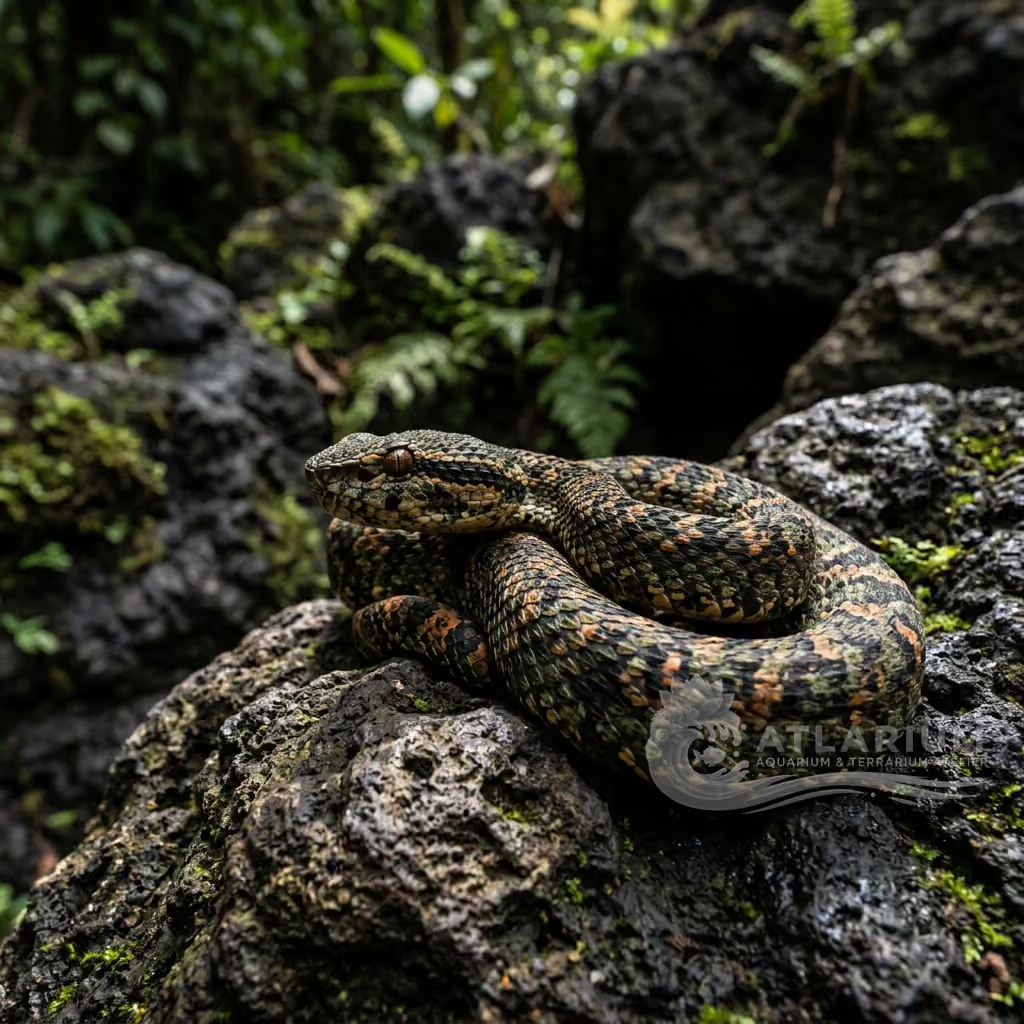
Mexican Smallhead Rattlesnake
Crotalus intermedius
Crotalus intermedius (commonly known as Mexican Smallhead Rattlesnake) is native to highlands of central and southern Mexico, where it inhabits montane pine-oak forests, rock slides, and highland woodlands.
Umgebung
Terrestrisch
Luftfeuchtigkeit
40 - 60 %
Tagestemperatur
25 - 30 °C
Nachttemperatur
15 - 20 °C
Erwachsenengröße
50 cm

Artbeschreibung
Geographical Origin and Habitat: Crotalus intermedius (commonly known as Mexican Smallhead Rattlesnake) is native to highlands of central and southern Mexico, where it inhabits montane pine-oak forests, rock slides, and highland woodlands. This reptile inhabits high-altitude montane pine-oak forests, adapting well to the temperate and cool microclimates typical of Mexican mountain ranges.
Taxonomy and Genetics: Belongs to the family Viperidae, genus Crotalus. It is studied for its unique venom genetics and specialized physiological adaptations. The systematics of this viper highlight specific genetic adaptations for high-altitude survival, including a respiratory system optimized for low oxygen levels.
Behavior and Habits: Predominantly terrestrial, solitary, and nocturnal. It spends most of the day camouflaged in leaf litter or under shelters waiting for prey. It exhibits a calm yet highly alert temperament, spending long periods in an ambush posture camouflaged among pine needles and leaf litter.
Morphology: Adults reach an average size of 50.0 cm. Males typically exhibit longer tails than adult females. Its small body size and proportionally narrow head facilitate excellent camouflage and allow it to wedge into tight crevices among volcanic rocks.

Pflege, Zucht und Mitbewohner
Terrarium Setup: Requires an escape-proof terrarium of at least 100 liters with natural loose substrate and secure hiding spots. The enclosure requires a spacious and well-ventilated terrarium, equipped with sturdy branches and multiple dry hiding spots in both warm and cool zones.
Lighting and Heating: Carnivorous diet consisting of properly sized rodents fed via long feeding tongs. Supplement with vitamins. Thermoregulation must include a heating element to create a precise thermal gradient, accompanied by a specific UVB light source for montane reptiles.
Humidity and Hydration: Keep ambient temperatures at 12.0-24.0°C with a basking spot of 26.0°C. Provide low UVB. Moderate humidity levels prevent respiratory issues and facilitate successful shedding, especially when a humid hide with damp moss is provided.
Feeding and Supplementation: Solitary species, must be housed individually. Keeping multiple snakes together leads to severe stress. The diet consists of appropriately sized rodents, preferably thawed and offered using long feeding tongs to maintain safety protocols.
Compatibility: Breeding is difficult in captivity, requiring a cooling period and careful introduction under supervision. As a venomous and highly territorial species, it must only be kept by experienced herpetologists and housed individually at all times.
Health and Common Diseases: Prone to respiratory tract infections if ventilation is poor, and blister disease if the substrate is excessively wet. Keepers must closely monitor for cutaneous fungal infections caused by wet substrate and prevent respiratory issues by ensuring excellent air circulation.

Geografische Herkunft und Verbreitung
Crotalus intermedius (commonly known as Mexican Smallhead Rattlesnake) is native to highlands of central and southern Mexico, where it inhabits montane pine-oak forests, rock slides, and highland woodlands. This reptile inhabits high-altitude montane pine-oak forests, adapting well to the temperate and cool microclimates typical of Mexican mountain ranges.
Ursprung
Mittelamerika und Karibik

Reptilienprofil
- Diät
- Carnivore
- The feeding ecology of Mexican Smallhead Rattlesnake is characterized by its highly specialized predatory behavior. As a strict carnivorous, this species primarily targets lizards, small rodents, and occasionally amphibians. Its sensory adaptations, including advanced olfactory mechanisms and, in some cases, heat-sensing pits, allow it to detect the minute physiological signatures of its prey with remarkable precision. This predatory efficiency plays a crucial role in maintaining the trophic balance within its natural habitat.\n\nIn terms of foraging strategy, Mexican Smallhead Rattlesnake demonstrates an energy-conserving ambush technique. By remaining motionless for extended periods, the snake capitalizes on its cryptic coloration to blend seamlessly into its surroundings. Once an unsuspecting prey item approaches within strike range, the snake delivers a rapid, venomous bite. The venom initiates both immobilization and preliminary digestion, which is vital for consuming lizards, small rodents, and occasionally amphibians efficiently.\n\nDigestive physiology in this species is highly adapted to process sporadic but substantial meals. After a successful hunt, Mexican Smallhead Rattlesnake typically retreats to a secure microhabitat where the extended metabolic process of digestion can occur safely. This adaptation is particularly important given the variable availability of lizards, small rodents, and occasionally amphibians in its environment, allowing the snake to survive prolonged periods between feeding events.
- Erwachsenengröße
- 50 cm
- Lebensstil/Mikrohabitat
- Terrestrial
- A terrestrial pitviper specialized for pine-oak forests and montane rocky outcroppings, it frequently uses crevices to seek shelter from both cold weather and predators.
- Aktivitätszyklus
- Diurnal
- As a species living at cool, high altitudes, it is highly diurnal, capitalizing on the daytime sun to maintain its body temperature and actively hunt small prey among the rocks.
- Sozialität
- Solitary
- Behaviorally, Mexican Smallhead Rattlesnake exhibits a distinctly solitary lifestyle. Interactions with conspecifics are generally rare and primarily confined to the breeding season or incidental encounters in areas of high resource overlap. This solitary nature minimizes intraspecific competition for food and optimal thermoregulatory sites, which is essential for survival in its specific ecological niche.\n\nThe daily activity pattern and spatial distribution of Mexican Smallhead Rattlesnake are deeply influenced by its solitary, terrestrial nature, remaining hidden in rock crevices. Whether utilizing leaf litter, rocky crevices, or arboreal perches, the snake's primary defensive strategy is avoidance and camouflage. However, if cornered or directly threatened, it will not hesitate to display defensive behaviors, which may include physical posturing, hissing, and ultimately striking.\n\nThermoregulation is a critical aspect of its solitary existence. Mexican Smallhead Rattlesnake carefully selects microhabitats that offer the ideal gradient of temperature and humidity, balancing the need to warm its body for digestion with the imperative to remain hidden from natural predators. This continuous spatial adjustment underscores the complex, self-reliant nature of its solitary, terrestrial nature, remaining hidden in rock crevices lifestyle.
- Reproduktion
- Viviparous
- The reproductive strategy of Mexican Smallhead Rattlesnake is defined by its ovoviviparous nature. This specific reproductive modality—ovoviviparity, a common adaptation in high-elevation rattlesnakes—is a critical evolutionary adaptation that maximizes the survival rate of the offspring in its native environment. The physiological investment required for this reproductive cycle dictates much of the female's seasonal behavior and energy allocation.\n\nEnvironmental cues such as temperature fluctuations and seasonal precipitation often trigger the onset of the mating season. During this period, males may engage in complex chemosensory trailing to locate receptive females. Following successful copulation, the gestation or incubation period begins, heavily dependent on optimal microclimatic conditions. The specifics of ovoviviparity, a common adaptation in high-elevation rattlesnakes ensure that the developing embryos are protected during their most vulnerable stages.\n\nUpon emergence, the neonates of Mexican Smallhead Rattlesnake are fully formed and equipped with the necessary venom and instinctual behaviors to survive independently. There is typically no extended parental care post-birth or post-hatching, meaning the juveniles must immediately navigate the challenges of predation and foraging. This life-history strategy highlights the evolutionary trade-offs between offspring quantity and the intensive physiological costs of reproduction.
- Handhabungstoleranz
- Expert only
- Though relatively small, it is still a venomous animal. Physical handling is off-limits; a well-designed snake hook and a clear safety tube are the only acceptable ways to interact.
- Brumation
- Erforderlich
- Winter brumation is essential. Living in mountainous regions, they retreat into deep, frost-free crevices to ride out the cold months before breeding in the spring.
- Häutung
- Regular
- Standard moderate humidity ensures a smooth molting process. Providing a slightly damp moss-filled hidebox when the snake's eyes turn cloudy is typically sufficient.

Verwandte Arten
Empfehlungen gruppiert nach nahen Verwandten, Auswahl von Begleitern und ähnlicher Betreuung.