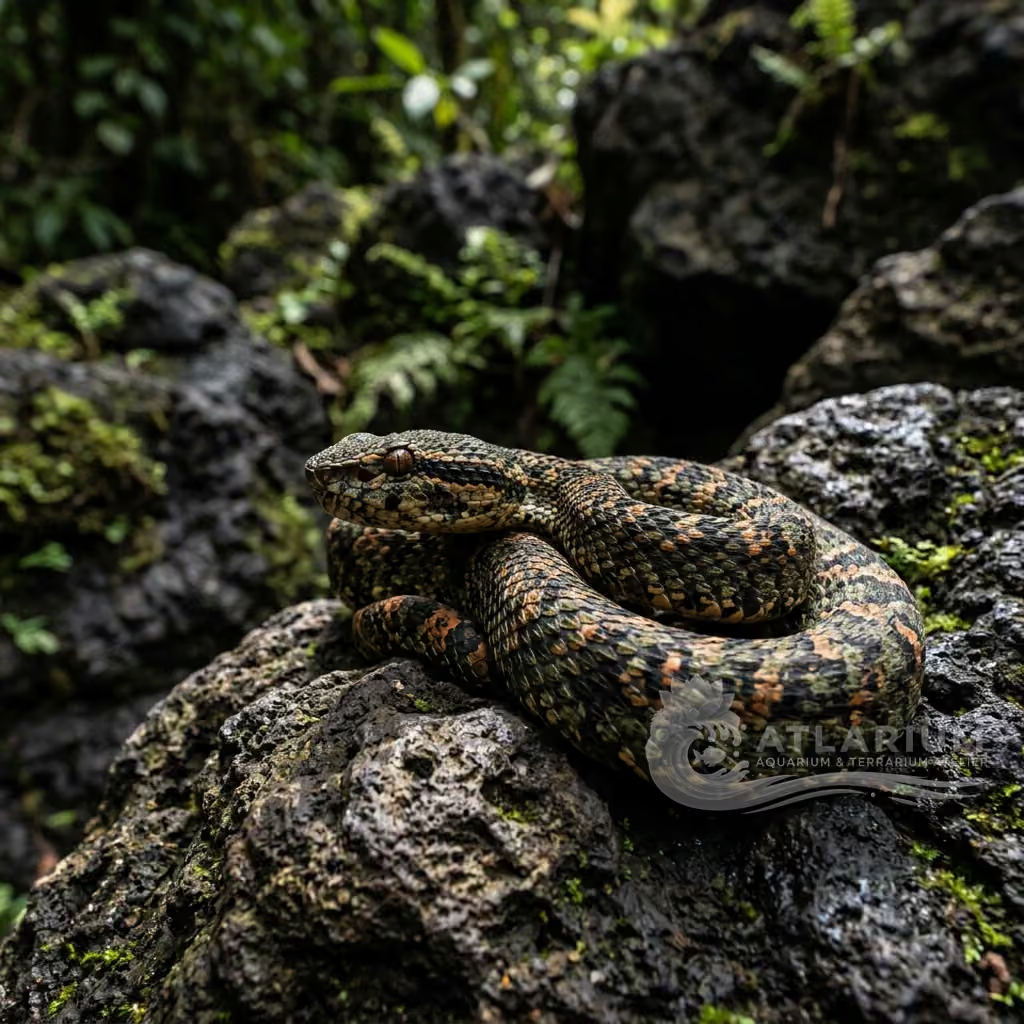
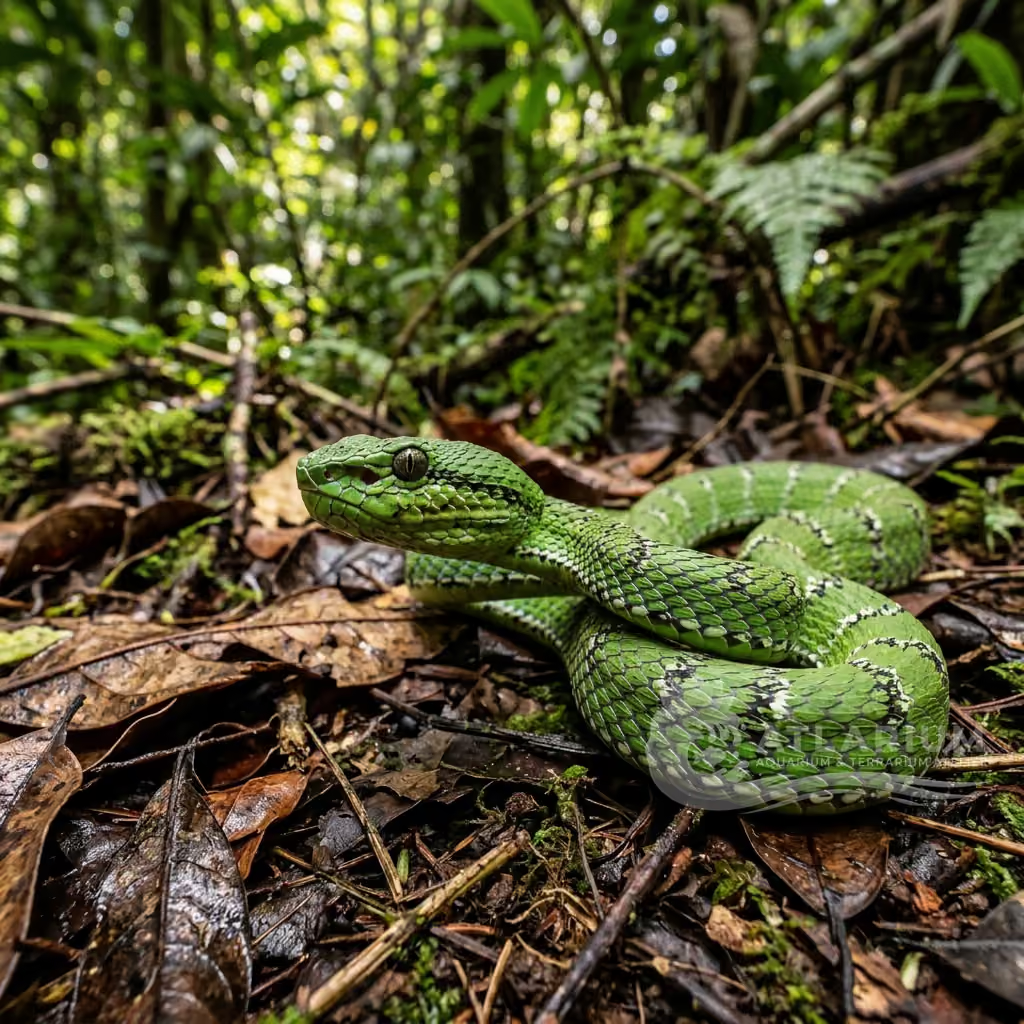
Scale-bellied horned lizard
Acanthosaura lepidogaster
A small, captivating arboreal agamid lizard from Southeast Asia, notable for its unique nuchal spines. It requires consistently high humidity levels and a cooler, heavily planted environment.
Umgebung
Terrestrisch
Luftfeuchtigkeit
70 - 90 %
Tagestemperatur
21 - 24 °C
Umgebungstemperatur
21 - 24 °C
Nachttemperatur
15 - 18 °C
Sonnenplatz
28 - 29 °C
Erwachsenengröße
25 cm
Mindestgehäuse
>= 250 L
UVB
Ferguson 1
UVI
0 - 0,7 UVI

Artbeschreibung
Geographical Origin and Habitat: This species is native to the mountainous and hilly regions of Southeast Asia, particularly northern Vietnam, eastern Laos, northern Thailand, and southern China. It primarily inhabits tropical evergreen rainforests at moderate altitudes, spending most of its time on low-lying vegetation, moss-covered tree trunks, and near cool, shaded forest streams.
Taxonomy and Genetics: Acanthosaura lepidogaster belongs to the Agamidae family, within the genus Acanthosaura, commonly known as horned dragons or mountain horned dragons. Although there are currently no officially recognized subspecies, there is significant genetic variation among different geographically isolated populations in Indochina, suggesting the possibility of cryptic species complexes.
Behavior and Habits: It is a diurnal, arboreal lizard with a highly sedentary lifestyle. It spends long hours motionless waiting for prey, relying on its excellent camouflage to avoid predators. It has a shy temperament and is easily stressed by frequent human handling, preferring to remain hidden within the dense vegetation of its habitat.
Morphology: It features a slender, laterally compressed body with rough, keeled scales on its belly, which gives it its species name. The head is robust with well-developed nuchal and post-orbital spines, though they are shorter than in other species of the genus. Its coloration ranges from grayish brown to olive green, with dark spots and transverse bands for camouflage. The total length varies from 20 to 28 cm, including the long tail.

Pflege, Zucht und Mitbewohner
Terrarium Setup: It requires a vertically oriented terrarium (minimum 60x45x90 cm for a single specimen or a pair). It is essential to recreate a rainforest environment with plenty of branches for climbing, live broad-leaved plants (such as Pothos or Ficus), and a soft substrate of peat, coconut fiber, and sphagnum moss to retain moisture. A three-dimensional background made of cork or coconut fiber will increase the usable climbing surface.
Lighting and Heating: A low to moderate output UVB lamp (5% or 5.0) is required for 12 hours a day to facilitate vitamin D3 synthesis. Temperature management is crucial, as this species suffers from excessive heat: daytime temperatures should range between 24°C and 26°C, with a localized basking spot not exceeding 28-29°C, and a nighttime drop between 18°C and 21°C.
Humidity and Hydration: Humidity must be kept consistently high, between 70% and 85%, simulating Asian rainforests. This can be achieved through daily misting (manual or automatic), preferably in the morning and evening. Because they rarely drink from standing water bowls, it is essential to ensure water droplets are present on leaves for them to lick.
Feeding and Supplementation: Their diet is strictly insectivorous and should be based on a variety of live prey, including crickets, roaches, silkworms, mealworms, and occasionally waxworms. It is important to dust the insects with pure calcium powder 2-3 times a week, and with calcium plus vitamin D3 and multivitamins once a week to prevent nutritional deficiencies.
Compatibility: They can be kept individually or in compatible male-female pairs. Males are highly territorial and must never be housed together, as this leads to violent fighting or lethal chronic stress. Cohabitation with other reptile or amphibian species is highly discouraged due to the risk of pathogen transmission and predation.
Health and Common Diseases: Common health issues include Metabolic Bone Disease (MBD) due to insufficient calcium or UVB, respiratory infections caused by low temperatures combined with poor air circulation, and intestinal parasites related to stress or poor hygiene. Regularly monitoring feces and ensuring a well-ventilated terrarium is essential to avoid stagnant, hot, humid air.

Geografische Herkunft und Verbreitung
This species is native to the mountainous and hilly regions of Southeast Asia, particularly northern Vietnam, eastern Laos, northern Thailand, and southern China. It primarily inhabits tropical evergreen rainforests at moderate altitudes, spending most of its time on low-lying vegetation, moss-covered tree trunks, and near cool, shaded forest streams.
Ursprung
Süd- und SüdostasienOstasien

Reptilienprofil
- Diät
- Carnivore
- The Scale-bellied horned lizard is a strict insectivore that depends on the rich arthropod diversity of the Southeast Asian understory. Its diet consists of whatever appropriately sized insects it can ambush, focusing primarily on beetles, crickets, roaches, and occasionally small spiders. In captivity, a varied diet of gut-loaded insects dusted with calcium is vital to prevent nutritional deficiencies in this active species.
- Erwachsenengröße
- 25 cm
- Lebensstil/Mikrohabitat
- Arboreal
- A trunk-dwelling arboreal species, they require tall enclosures featuring thick, upright cork tubes or logs to mimic their natural habitat.
- Aktivitätszyklus
- Diurnal
- Primarily diurnal, they rely on excellent eyesight to spot movement from potential insect prey from their vertical perches.
- Sozialität
- Solitary
- These lizards are primarily diurnal and semi-arboreal, often found clinging vertically to the trunks of trees or resting on low-hanging vines. They rely heavily on their cryptic coloration and motionless resting posture to blend seamlessly into the bark and lichen, completely avoiding the attention of predators. When confronted, they may open their mouths defensively and display the darker colors of their throat, but they generally prefer to flee if possible.
- Reproduktion
- Oviparous
- Reproduction involves the deposition of eggs in a carefully selected, moist area of the forest floor, a common strategy for lizards of this genus. The female uses her forelimbs to dig a suitable chamber, lays her clutch, and carefully covers the eggs to hide them from opportunistic egg-eaters. After a warm, humid incubation period, the tiny hatchlings dig their way to the surface and are immediately independent.
- Handhabungstoleranz
- Display only
- As a display animal, they do not tolerate handling well. Interference causes immense stress and can cause them to refuse food.
- Brumation
- Nicht erforderlich
- They do not brumate. The terrarium should be kept warm and consistently humid throughout all seasons.
- Häutung
- Periodic
- Proper molting is heavily dependent on maintaining high humidity. Misting heavily leading up to a shed will help prevent issues with the crests and toes.

Verwandte Arten
Empfehlungen gruppiert nach nahen Verwandten, Auswahl von Begleitern und ähnlicher Betreuung.