Microsorum pteropus 'Undulata'
Microsorum pteropus 'Undulata'
Microsorum pteropus 'Undulata' is a unique aquatic fern, perfect for enriching the underwater landscape with its distinctive elegance. This variant of the "Java Fern" is prized for its wavy-edged leaves, which give it a unique appearance and interesting texture, making it a focal point for the foreground or midground of the aquarium.
Wassertemperatur
4 - 30 °C
pH-Wert
5 - 8
Wassertyp
Süßwasser
Licht
Low to High
CO2
Hoch
KH
0 - 14 dKH

Artbeschreibung
Geographical Origin and Habitat: The 'Undulata' variety originates from the Microsorum pteropus species, native to Southeast Asia, where it thrives in rivers and lakes, anchoring itself to submerged wood and rocks. This semi-aquatic fern is commonly found along riverbanks and in seasonally flooded areas, adapting to both submerged and emergent conditions. Its natural habitat is characterized by flowing waters, often rich in plant debris which contributes to a poor yet stable substrate where the rhizome can securely attach. Its robustness allows it to tolerate a wide range of environmental parameters, making it highly adaptable to various aquatic biotopes.
Taxonomy & Genetics: Microsorum pteropus 'Undulata' belongs to the Polypodiaceae family, a large group of ferns that includes many species suitable for aquascaping. This cultivar is the result of either artificial selection or a spontaneous mutation of the wild type, aimed at enhancing the characteristic wavy margin of its leaves. Despite its specific form, it retains the genetic traits of hardiness and adaptability typical of the Microsorum genus, making it a robust choice for aquarists of all levels. Its classification highlights the importance of the creeping rhizome as its primary growth structure, differentiating it from stem or rosette plants.
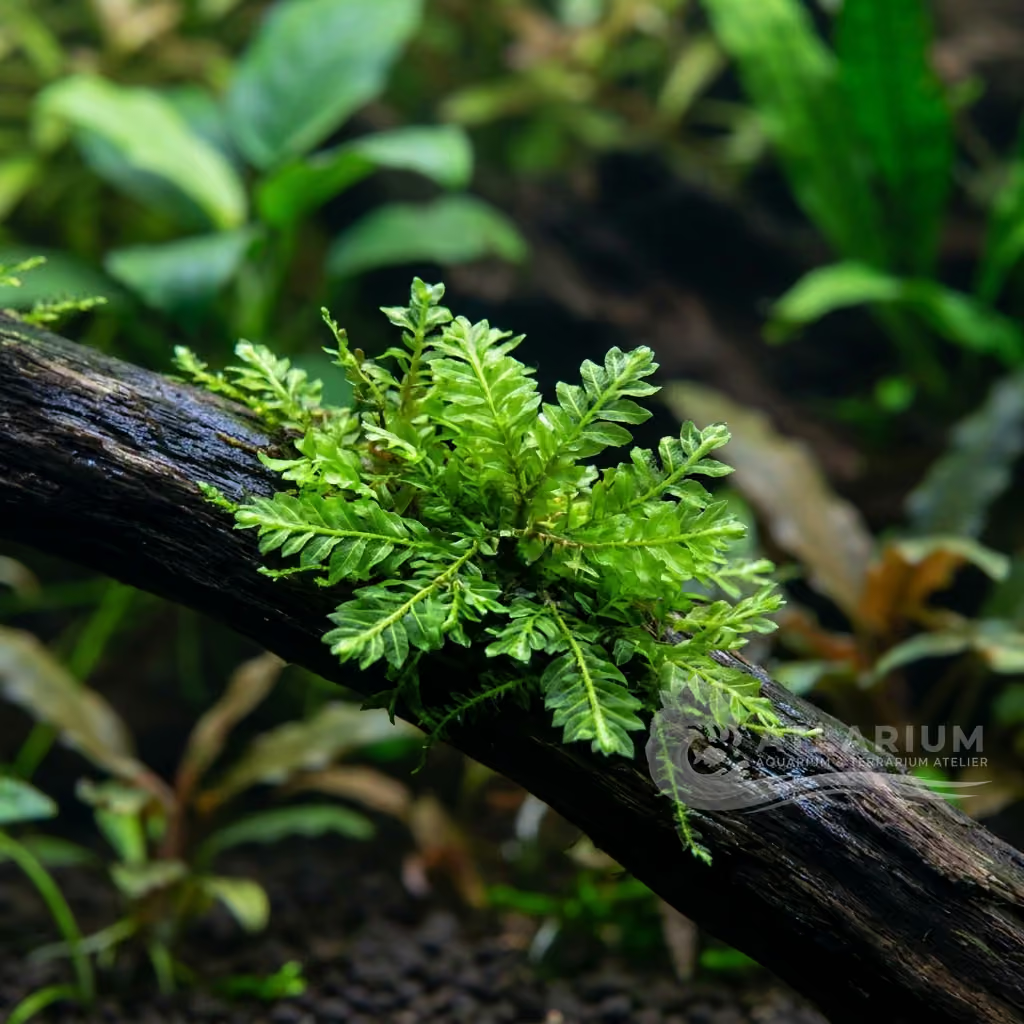
Physical Structure: The physical structure of Microsorum pteropus 'Undulata' is dominated by a creeping, often branching rhizome, from which the fronds (leaves) emerge. The rhizome is the vital part of the plant and must remain exposed to the water to prevent rot, acting as a natural anchor on wood or rocks without the need for substrate. Leaves develop individually from the rhizome, reaching variable sizes depending on environmental conditions and light, with the tip of the leaf sometimes giving rise to new adventitious plantlets. This ability for vegetative propagation directly from the leaves is a distinctive and fascinating characteristic of the species.
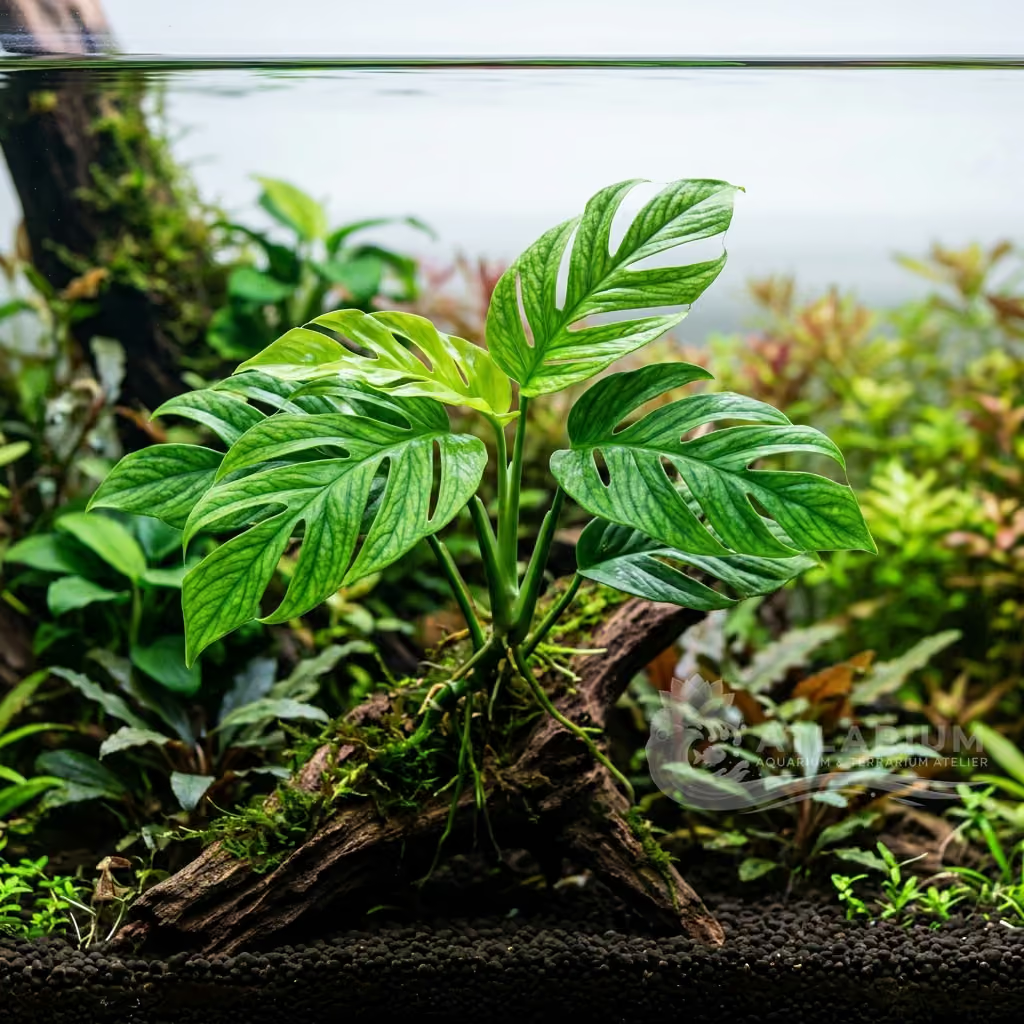
Color & Texture: The distinguishing feature of 'Undulata' lies in its bright green or dark green fronds, which exhibit a strongly wavy and ruffled margin. This characteristic gives the plant a dynamic appearance and a rich texture, creating a notable visual contrast with other smooth-leaved plants. The surface of the leaf blade is smooth and slightly leathery, providing some resistance to algal attacks or predation. The intensity of the green color can vary depending on lighting and nutrient availability, tending to darken in more intense light conditions or with good iron supplementation.

Pflege, Zucht und Mitbewohner
Lighting & CO2: Microsorum pteropus 'Undulata' is exceptionally tolerant in terms of lighting, thriving under both low and high light, although moderate light is often ideal for showcasing its best form and color without promoting excessive algae growth. Under higher light conditions, growth might slightly accelerate, but it is crucial to ensure good nutrient availability to prevent deficiencies. CO2 supplementation is not strictly necessary for the survival or growth of this slow-growing fern, but it can stimulate more robust growth and the emission of larger, healthier leaves. However, excessive CO2 without adequate nutrients and light can lead to problems.
Nutrition & Substrate: This fern obtains most of its nutrients directly from the
Water Chemistry: Microsorum pteropus 'Undulata' is an extremely adaptable plant regarding water parameters, tolerating a wide range of temperatures from 4.0 to 30.0 °C, although optimal growth generally occurs between 20 and 28 °C. Similarly, it accepts a pH from 5.0 to 8.0 and a KH hardness from 0.0 to 14.0, making it compatible with most freshwater aquariums. Water stability and cleanliness are more important than precise values; regular water changes are recommended to maintain good quality and prevent the accumulation of pollutants. Avoid sudden fluctuations in these parameters to prevent stress to the plant.
Space Management & Placement: Given its potentially considerable size and distinctive appearance, Microsorum pteropus 'Undulata' is ideal for the midground or, in larger aquariums, even for the foreground as a focal point. Despite its slow growth, its fronds can reach significant length and width, creating a lush effect and providing shelter for fish. Its placement on wood or rocks allows for the creation of a more natural and structured layout, elevating the plant from the substrate and highlighting its wavy texture. It is important to ensure the rhizome is not covered, allowing it to adhere freely to the decor surface.
Pruning: Pruning of Microsorum pteropus 'Undulata' is generally minimal and primarily aims at removing old, damaged, or yellowed leaves. These can be cut at the base of the petiole, close to the rhizome, using sharp, clean scissors to avoid injuring the plant. Pruning also serves to contain the plant's size in smaller aquariums or to shape its form, encouraging the growth of new, more vigorous fronds. It is important not to remove too many leaves at once to avoid over-stressing the plant, and to prevent damage to the rhizome during operations.
Risks & Diseases: Although Microsorum pteropus 'Undulata' is a robust plant, it can be susceptible to "diseases" if conditions are not optimal. The most common is "java fern melt," a rapid deterioration of leaves, often caused by environmental stress such as sudden parameter shifts, excessive light, nutritional deficiencies (especially potassium), or burying the rhizome. Algae can also be a problem, especially black beard algae, which tend to attach to the leathery leaves; good water circulation and nutrient balance help mitigate their appearance. Regular checks and a stable environment are the best prevention against these risks.

Geografische Herkunft und Verbreitung
The 'Undulata' variety originates from the Microsorum pteropus species, native to Southeast Asia, where it thrives in rivers and lakes, anchoring itself to submerged wood and rocks. This semi-aquatic fern is commonly found along riverbanks and in seasonally flooded areas, adapting to both submerged and emergent conditions. Its natural habitat is characterized by flowing waters, often rich in plant debris which contributes to a poor yet stable substrate where the rhizome can securely attach. Its robustness allows it to tolerate a wide range of environmental parameters, making it highly adaptable to various aquatic biotopes.
Ursprung
Süd- und SüdostasienSelektive Züchtung und Sorten

Pflanzenprofil
- Platzierung
- Mittelgrund
- Best attached to pieces of wood or rock in the aquarium using string or glue. It fits nicely in the midground where its unique leaf texture can be easily appreciated. It is crucial to leave the rhizome completely unburied to avoid rot.
- Botanische Form
- Rhizom
- Distinguished by its broad, bright green leaves that feature strongly undulating, wavy margins. The leaves are slightly thinner and more delicate in appearance compared to the standard Java fern. It grows from a creeping rhizome and forms a dense, textured canopy.
- Wachstum
- Langsam
- Grows at a slow pace, characteristic of most Java fern varieties. This makes it a very low-maintenance plant that rarely needs trimming. It slowly but surely expands into a dense, attractive bush over several months.
- Substrat
- Keiner
- Like all forms of Java Fern, Microsorum pteropus 'Undulata' demands an epiphytic placement rather than traditional planting. The creeping rhizome will suffocate and die if smothered by aqua soil or inert gravel. Providing a solid textured surface, such as Seiryu stone or spider wood, allows the roots to safely anchor the plant while it feeds exclusively through its leaves and exposed tissues.
- Säulendüngung
- Empfohlen
- Relies entirely on the water column to absorb nutrients through its leaves and root system. Regular dosing of a complete liquid fertilizer is highly beneficial for maintaining vibrant coloration. Adequate water flow helps distribute these nutrients evenly across the plant's surface.
- Wurzeldüngung
- Keine
- Substrate fertilizers are completely useless for this epiphytic plant. The roots are designed exclusively for attaching to hard surfaces, not for drawing nutrients from the soil. Burying the roots and rhizome will cause the plant to suffocate and die.
- Trimmen
- Gelegentlich
- Requires minimal pruning; simply snip off older or damaged leaves at the base near the rhizome. This keeps the plant looking tidy and encourages new, wavy leaves to emerge. Avoid cutting the leaves mid-way, as the remaining portion will slowly decay.
- Ausbreitung
- Stecklinge
- Easily propagated by snipping the rhizome into sections, ensuring each piece has healthy leaves and roots. It also naturally propagates by producing small adventitious plantlets on the tips and edges of mature leaves. These plantlets can be carefully removed and reattached elsewhere.
- Empfindlichkeit
- Mäßig
- Very robust and tolerant of a wide range of water parameters and lighting conditions. It is particularly sensitive to having its rhizome buried, which is the most common reason for its failure. It can occasionally suffer from fern melt if subjected to sudden, massive changes in water chemistry.
- Layoutrolle
- Aufsitzerpflanze, Mittelgrund, Hintergrund
- Adds wonderful texture and movement to the midground of an aquascape due to its wavy leaf margins. It contrasts beautifully with finely textured mosses or straight-leaved stem plants. It is ideal for creating natural, bushy focal points among hardscape materials.

Verwandte Arten
Empfehlungen gruppiert nach nahen Verwandten, Auswahl von Begleitern und ähnlicher Betreuung.