Microsorum pteropus 'Narrow'
Microsorum pteropus 'Narrow'
Microsorum pteropus 'Narrow' is a popular, hardy midground plant distinguished by its elongated, slender leaves, making it a versatile choice for a natural aquascape. Its slow growth rate and adaptability to a wide range of conditions make it an excellent option for both beginners and experienced aquarists.
Wassertemperatur
4 - 30 °C
pH-Wert
5 - 8
Wassertyp
Süßwasser
Licht
Low to High
CO2
Hoch
KH
0 - 14 dKH

Artbeschreibung
Geographical Origin and Habitat: Microsorum pteropus, commonly known as Java Fern, originates from Southeast Asia, including countries like Thailand, Malaysia, and Indonesia, where it thrives in humid, shaded environments. It is typically found growing as an epiphyte, anchoring itself to rocks, driftwood, and tree roots along riverbanks and streams. The 'Narrow' cultivar shares this ancestral heritage, adapting its distinctive leaf morphology to specific cultivation conditions while retaining the hardiness characteristic of the species in its natural, submerged or emersed aquatic habitats.
Taxonomy & Genetics: Microsorum pteropus belongs to the family Polypodiaceae, which encompasses a diverse group of true ferns. This particular variant, 'Narrow', is a selected cultivar, meaning it has been specifically bred or chosen for its distinct, elongated leaf shape, rather than being a naturally occurring subspecies. Its genetic makeup is closely related to the standard Java Fern, but specific gene expressions or mutations lead to the characteristic narrow blade morphology that differentiates it in the horticultural trade. This genetic consistency ensures it shares the same robust qualities as its parent species.
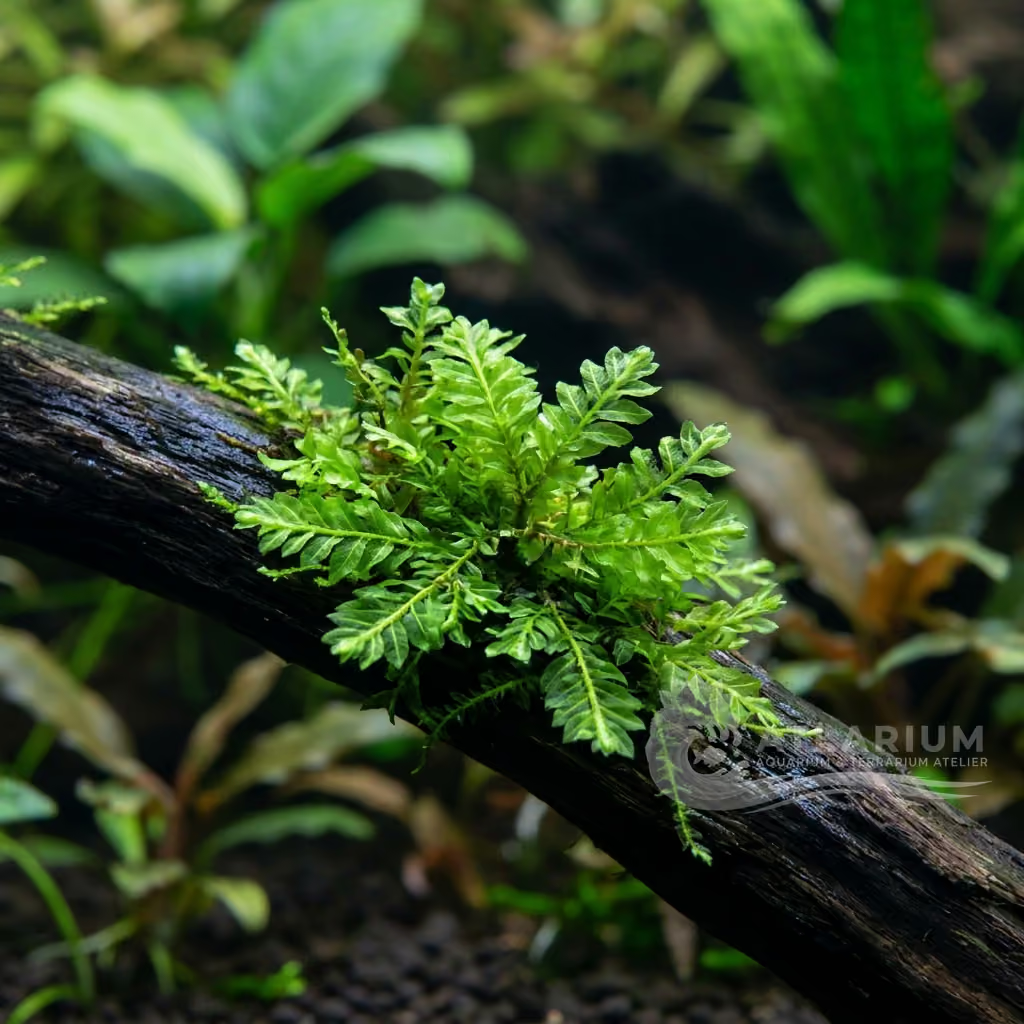
Physical Structure: The 'Narrow' Java Fern features a creeping rhizome from which its characteristic leaves emerge. This robust rhizome is the plant's anchor, capable of attaching firmly to hardscape elements like rocks and driftwood using fine rootlets. The leaves themselves are long, slender, and strap-like, tapering gracefully to a point, which gives the cultivar its "narrow" designation. Unlike many aquatic plants, Java Ferns absorb nutrients primarily through their rhizomes and leaves, not extensively through roots embedded in substrate, which is why planting the rhizome itself in the substrate can lead to rot.
Color & Texture: The foliage of Microsorum pteropus 'Narrow' typically displays a vibrant medium to dark green coloration, which can deepen under optimal lighting and nutrient conditions. The leaves possess a smooth, somewhat leathery texture, providing a subtle contrast to other, softer-leaved aquatic plants. Over time, mature leaves may develop small, brown or black sori (spore cases) on their undersides, which are a natural part of the fern's reproductive cycle and should not be mistaken for disease. The overall appearance contributes to a natural, wild aesthetic in the aquascape.

Pflege, Zucht und Mitbewohner
Lighting & CO2: Microsorum pteropus 'Narrow' is exceptionally adaptable regarding lighting, thriving in conditions ranging from low to high light environments. While it can survive in low light, moderate lighting will encourage healthier, more vigorous growth and a richer green coloration, preventing the leaves from appearing too dark or stunted. Supplemental CO2 injection is not strictly necessary for this slow-growing fern but can significantly enhance its growth rate and overall vitality, leading to larger, lusher leaves and potentially faster propagation.
Nutrition & Substrate: As an epiphyte, Microsorum pteropus 'Narrow' does not derive significant nutrition from the substrate and should never have its rhizome buried, as this will invariably lead to rot and plant death. Instead, it absorbs nutrients directly from the
Water Chemistry: This fern exhibits remarkable tolerance to a broad spectrum of water parameters, making it one of the most forgiving aquatic plants. It thrives across a wide temperature range from 4.0 to 30.0 °C, although optimal growth generally occurs in the mid-20s. Similarly, it tolerates a KH range of 0.0 to 14.0 and a pH of 5.0 to 8.0, demonstrating its adaptability to both soft, acidic and harder, more alkaline water conditions. Stable parameters within these ranges are always preferred to drastic fluctuations, which can stress any aquatic flora.
Space Management & Placement: Given its slow to moderate growth rate and midground placement suitability, Microsorum pteropus 'Narrow' is an excellent choice for adding texture and visual interest to the central areas of the aquarium. It should be securely attached to hardscape elements such as driftwood branches, roots, or decorative rocks, allowing its leaves to sway naturally in the current. Its elongated, upright growth habit complements both vertical and horizontal aquascape layouts, providing an ideal backdrop or a focal point depending on the overall design.
Pruning: Pruning Microsorum pteropus 'Narrow' is straightforward and primarily involves removing older, damaged, or algae-covered leaves to maintain the plant's aesthetic appeal and health. Rather than trimming individual leaves, it is generally recommended to cut them off at the base where they emerge from the rhizome, using sharp aquascaping scissors. This practice encourages new, healthier growth and helps prevent the plant from becoming overly dense, which can shade out other plants or collect detritus.
Risks & Diseases: Microsorum pteropus 'Narrow' is generally very robust, but it can be susceptible to "Java Fern melt," particularly after significant environmental changes, replanting stress, or nutrient deficiencies. This manifests as leaves turning black and dissolving. Algae can also be an issue, especially in high light conditions without adequate CO2 or nutrient balance; green spot algae or black beard algae can colonize the leaves. Ensuring stable parameters, proper nutrition, and good water flow helps mitigate these risks, maintaining a healthy, thriving plant.

Geografische Herkunft und Verbreitung
Microsorum pteropus, commonly known as Java Fern, originates from Southeast Asia, including countries like Thailand, Malaysia, and Indonesia, where it thrives in humid, shaded environments. It is typically found growing as an epiphyte, anchoring itself to rocks, driftwood, and tree roots along riverbanks and streams. The 'Narrow' cultivar shares this ancestral heritage, adapting its distinctive leaf morphology to specific cultivation conditions while retaining the hardiness characteristic of the species in its natural, submerged or emersed aquatic habitats.
Ursprung
Süd- und SüdostasienSelektive Züchtung und Sorten

Pflanzenprofil
- Platzierung
- Mittelgrund
- It is ideally placed in the midground or background, attached to rocks, driftwood, or decorations. Its distinct leaf shape provides an excellent focal point or contrasting texture. Over time, it will form dense clusters that offer great hiding spots for aquatic life.
- Botanische Form
- rhizome or creeping stem
- It is an epiphytic fern characterized by a thick horizontal rhizome and distinct elongated, very narrow leaves. The root system consists of dark, hair-like roots designed primarily for anchoring. Its narrow foliage provides a finer texture compared to the standard species.
- Wachstum
- Langsam
- Like most epiphytic ferns, it has a slow growth rate. Leaves develop gradually from the creeping rhizome over weeks and months. This slow pace makes it a low-maintenance choice that requires very infrequent pruning.
- Substrat
- Keiner
- This plant should never be planted directly into the substrate. The rhizome must remain exposed to the water column, otherwise it will rot and the plant will die. It is best attached to hardscape materials where its roots can anchor onto rough surfaces.
- Säulendüngung
- Empfohlen
- Water column fertilization is the primary method of feeding this plant. A light, regular dose of a complete liquid fertilizer is usually sufficient for optimal health. Being a slow grower, it does not rapidly deplete nutrients from the water.
- Wurzeldüngung
- Keine
- Root fertilization is completely unnecessary and ineffective for this species. Because it is an epiphyte and not planted in the soil, it cannot access nutrients in the substrate. All feeding should be done via liquid fertilizers.
- Trimmen
- Gelegentlich
- Pruning should be limited to cutting away old or algae-infested leaves close to the rhizome. Do not trim the tips of the leaves, as they will simply turn brown and die. Allowing the plant to grow undisturbed results in a beautiful, natural bush.
- Ausbreitung
- Stecklinge
- Propagation is very easy and occurs naturally through two methods. The rhizome can be cut into smaller pieces, each with at least a few leaves, and reattached elsewhere. Alternatively, small plantlets will naturally develop on the tips or undersides of older leaves and can be detached when roots form.
- Empfindlichkeit
- Mäßig
- It is highly resilient and tolerates a wide spectrum of water parameters. Intense lighting can cause algae issues due to the plant's slow growth. It prefers moderate to low light and good water movement.
- Layoutrolle
- Aufsitzerpflanze, Mittelgrund, Hintergrund
- It is widely used to create flowing, naturalistic transitions over hardscape. The narrow leaves add a strong sense of movement when placed in a moderate current. It provides excellent contrast and scale in both large and small aquariums.

Verwandte Arten
Empfehlungen gruppiert nach nahen Verwandten, Auswahl von Begleitern und ähnlicher Betreuung.