Cryptocoryne crispatula var. tonkinensis
Cryptocoryne crispatula var. tonkinensis
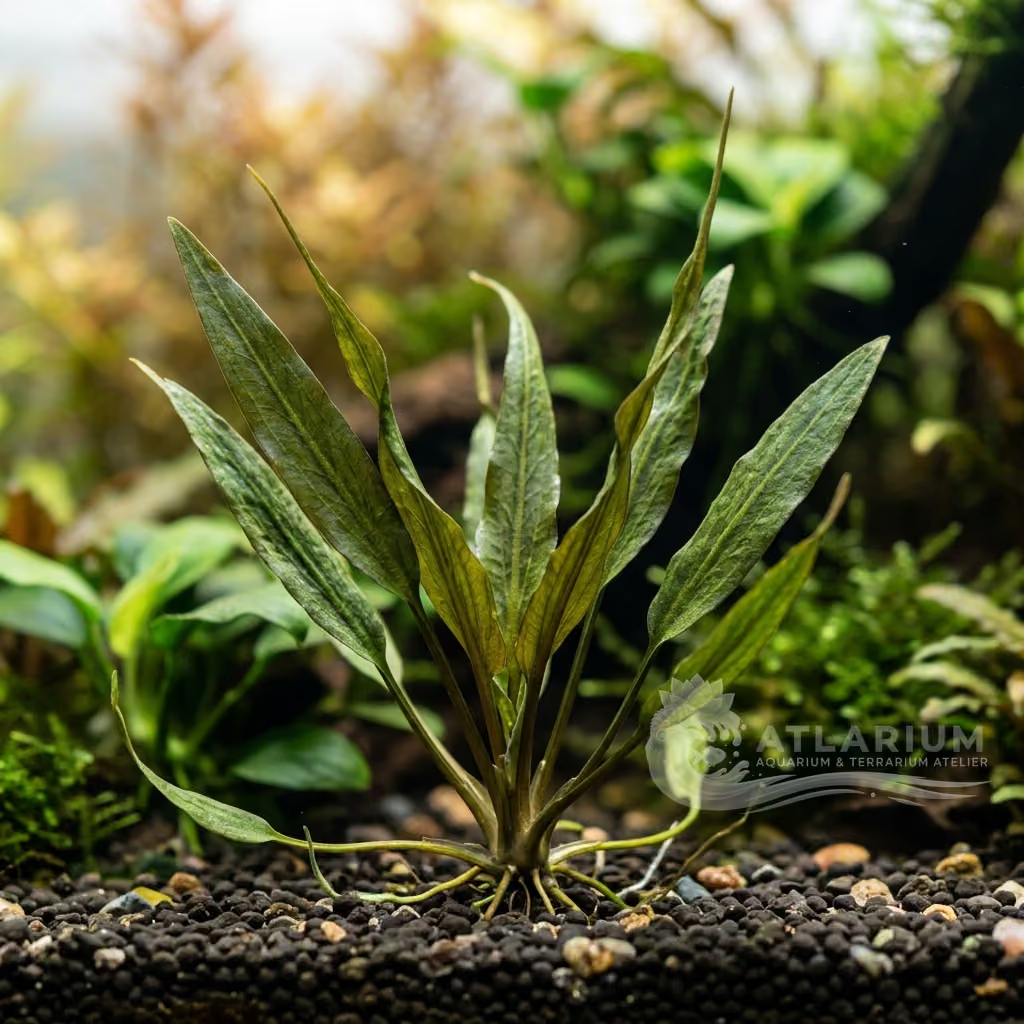
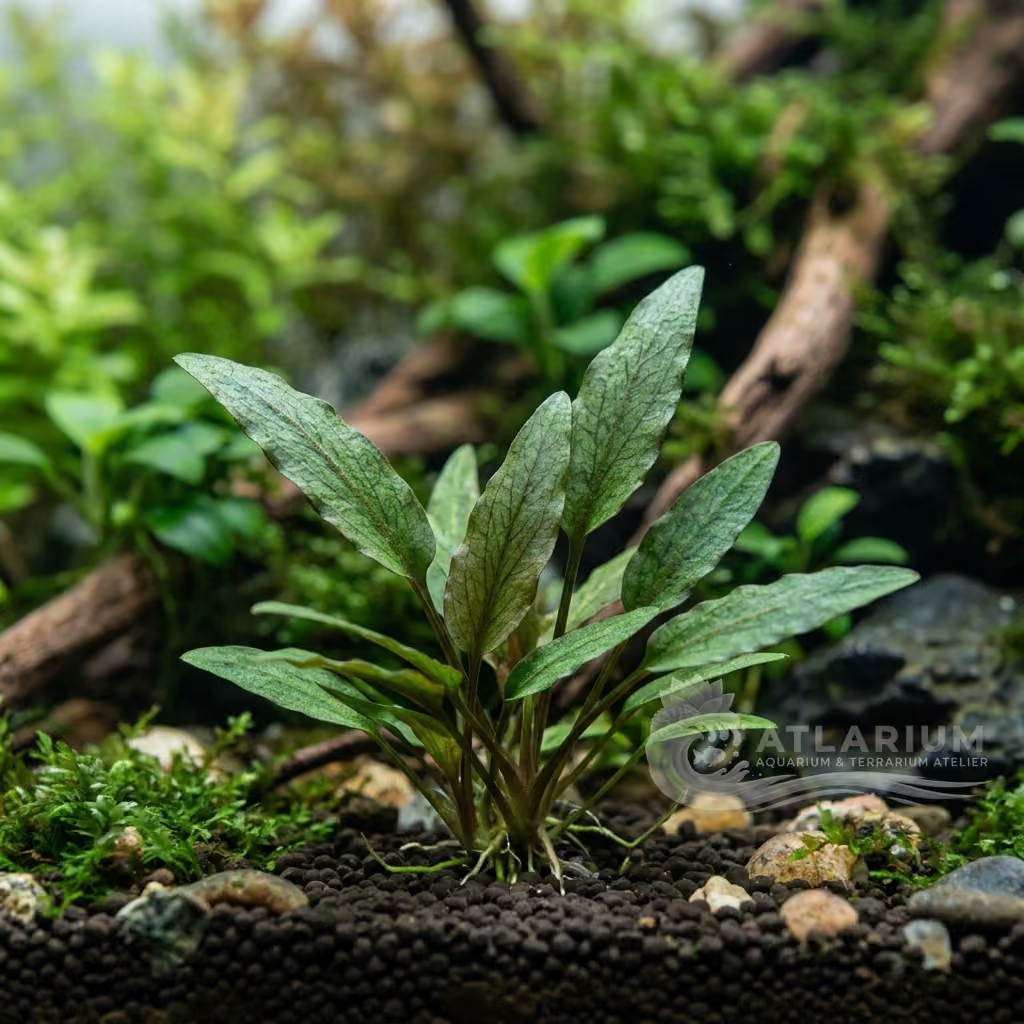
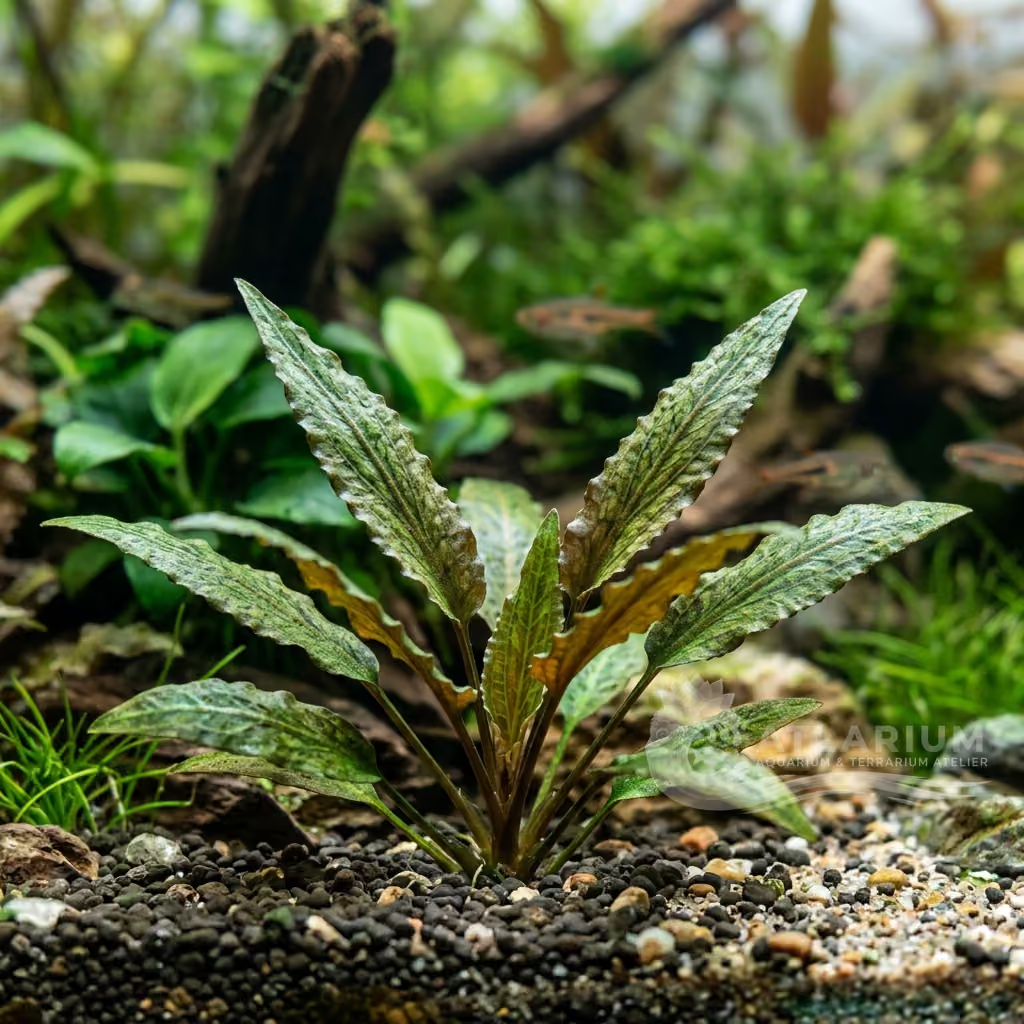
Cryptocoryne crispatula var. tonkinensis is a rare and delicate plant with thin, extremely narrow leaves. Slow growth, ideal for creating texture contrast.
Wassertemperatur
8 - 30 °C
pH-Wert
6 - 9
Wassertyp
Süßwasser
Licht
Low to High
CO2
Niedrig - Hoch
Erwartete Höhe
30 cm
Erwartete Breite
10 cm
KH
5 - 21 dKH

Artbeschreibung
Geographical Origin and Habitat: This rarity originates from the limestone regions of northern Vietnam (Tonkin) and southern China. It grows predominantly along the sandy and muddy banks of rivers and streams flowing over limestone substrates. During the monsoon season, it is completely submerged by strong currents, while in the dry season, it lives in emersed muddy and wet soils under the shade of riparian vegetation.
Taxonomy & Genetics: It belongs to the Araceae family, genus Cryptocoryne. It is one of the thinnest and most distinct varieties within the Cryptocoryne crispatula complex. Genetically, it is closely related to var. balansae and var. flaccidifolia, but has evolved in isolation, developing exceptionally narrow leaves and a more graceful build adapted to strong water currents.
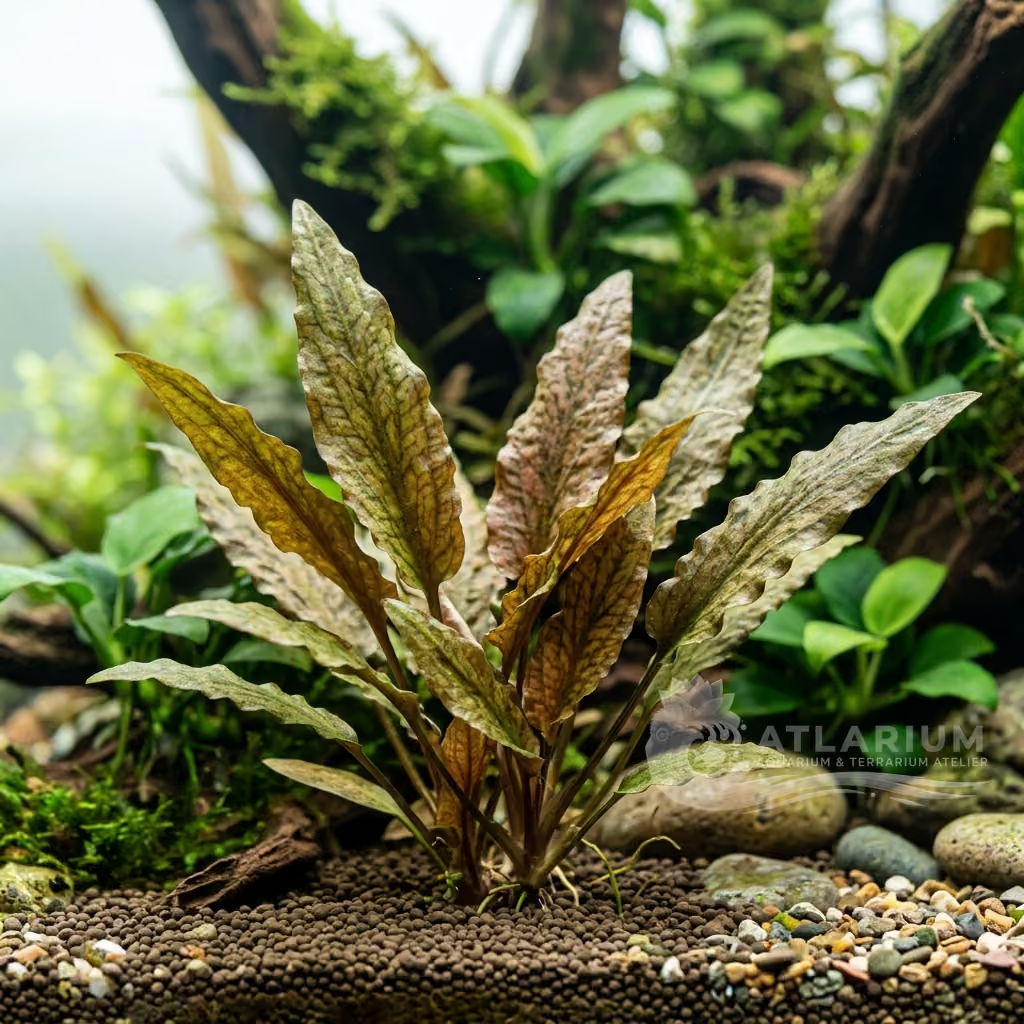
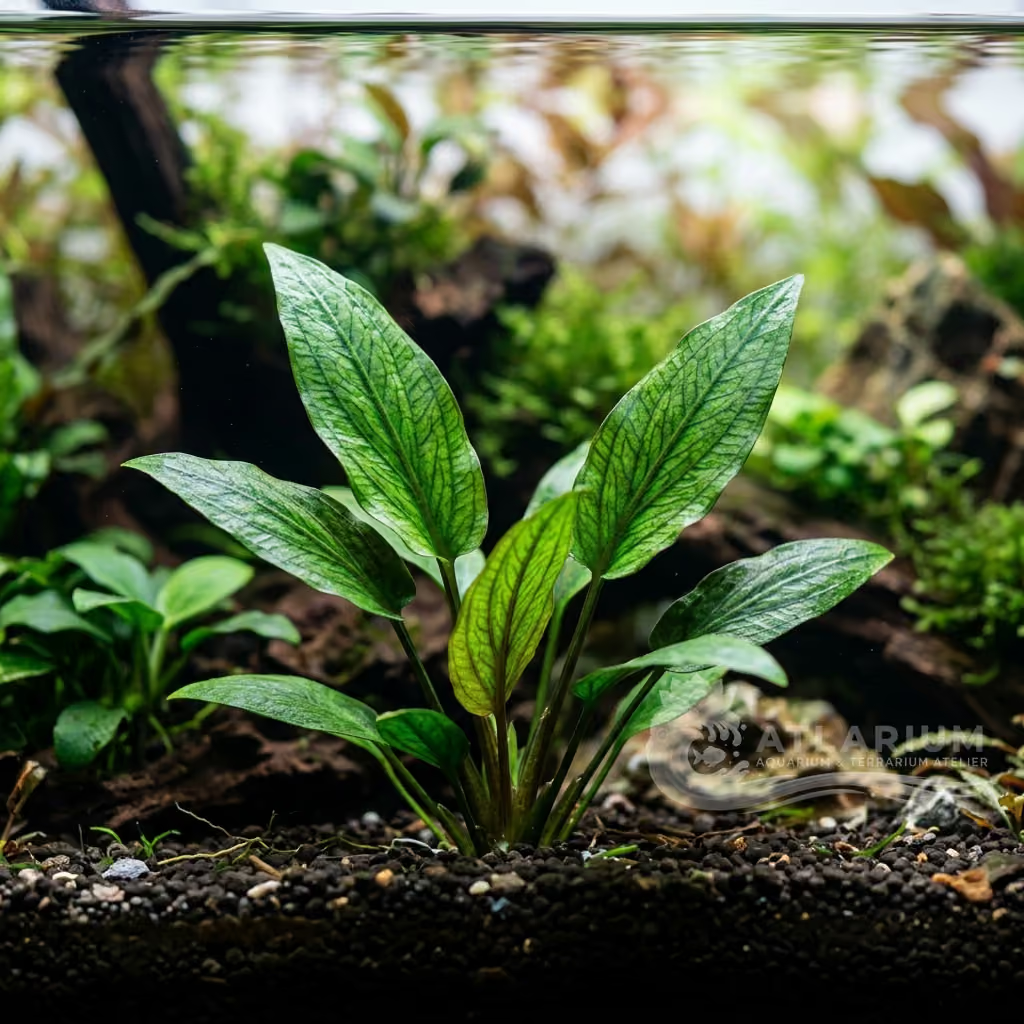
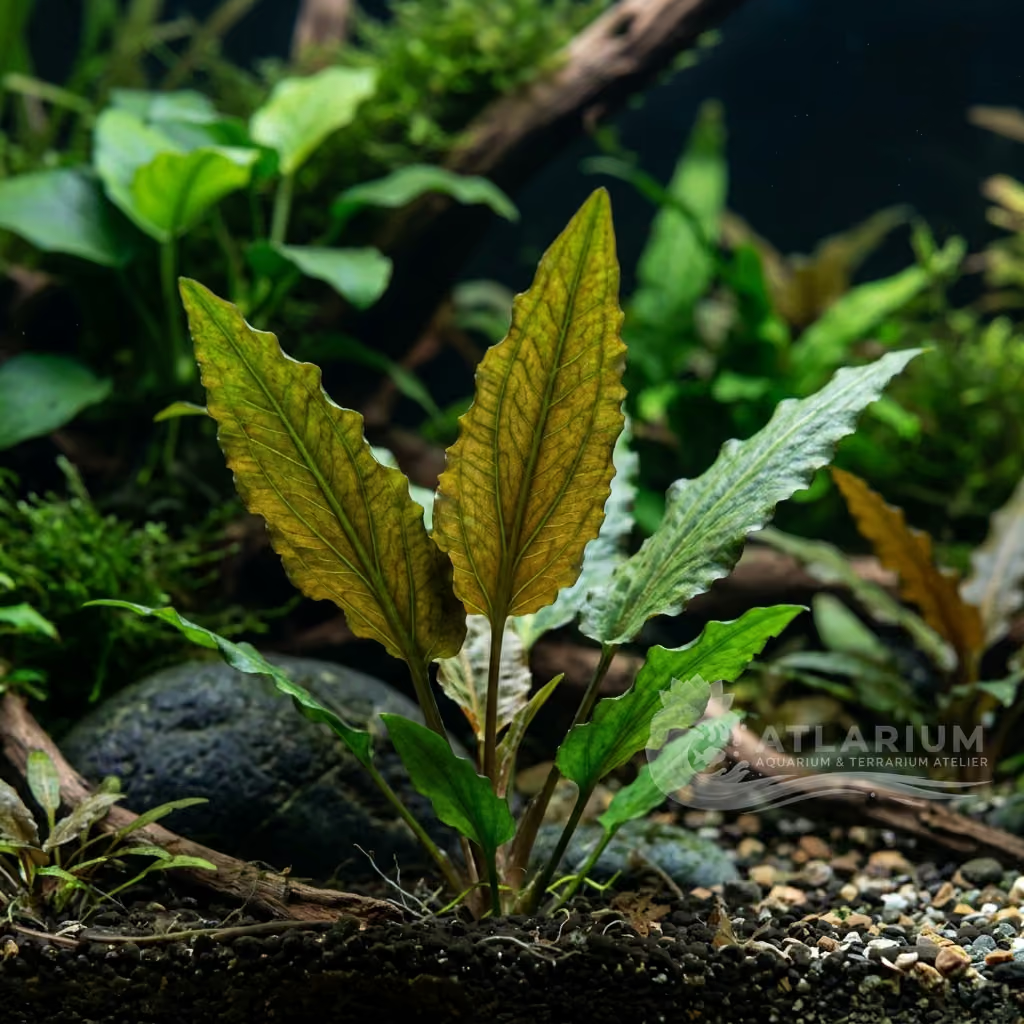
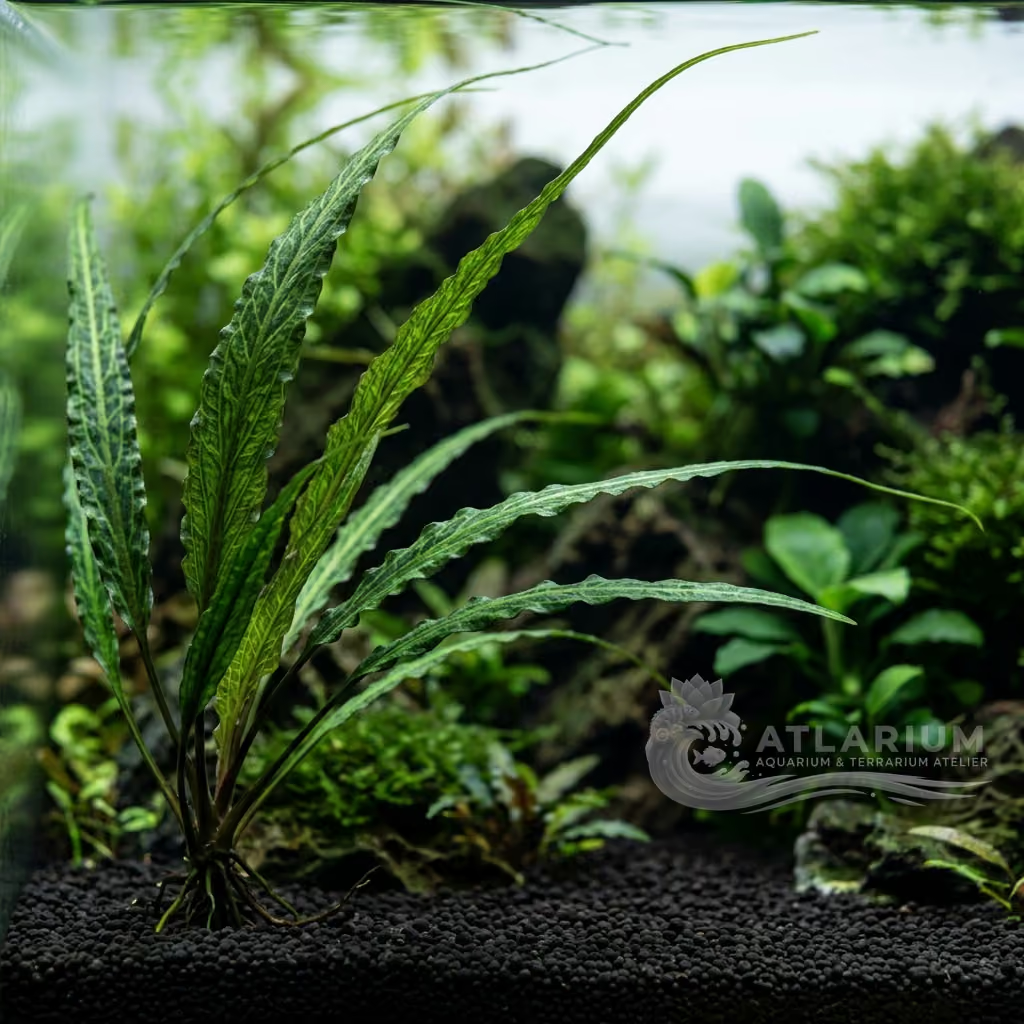
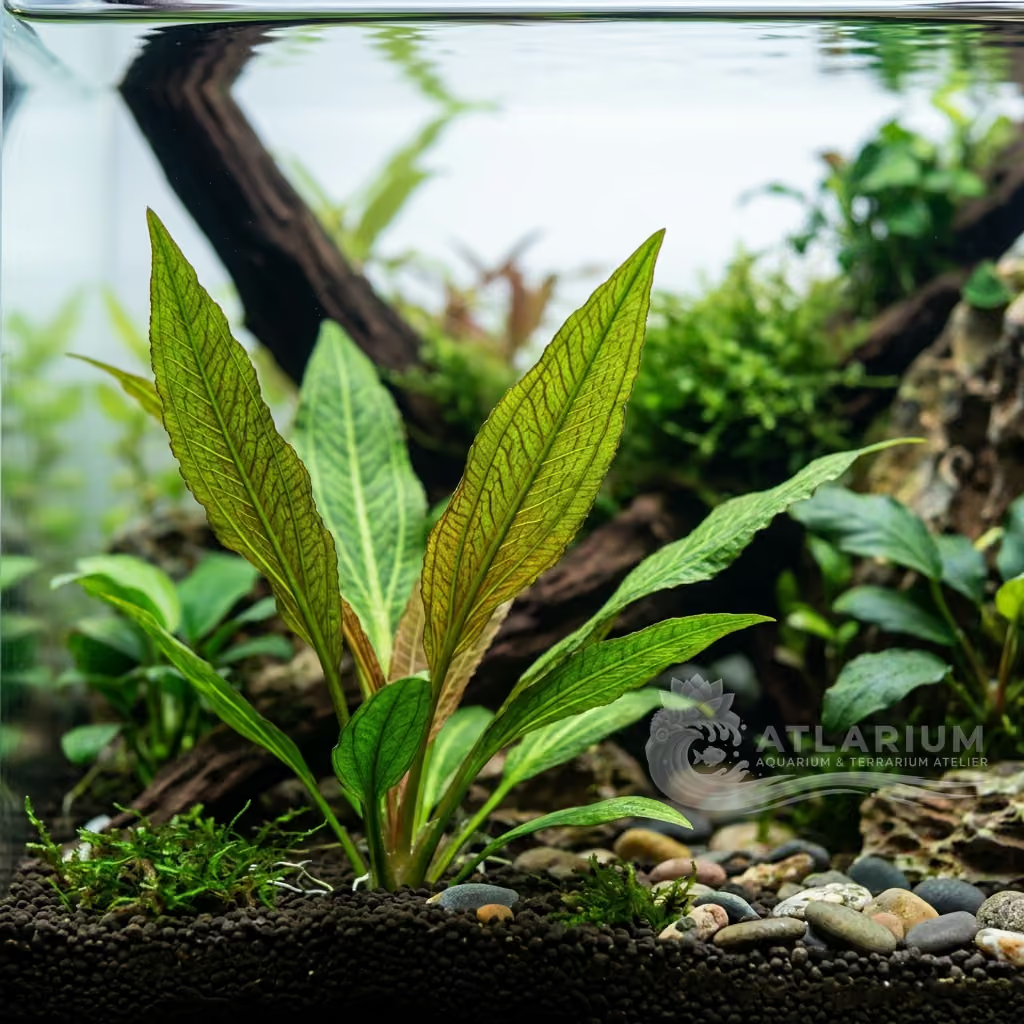
Physical Structure: It forms dense and compact rosettes from which very narrow filiform leaves develop, measuring 20 to 40 cm in length and only 2-5 millimeters in width. The stem is reduced to a short, woody rhizome that produces a well-developed fibrous root system to firmly anchor the plant in sandy alluvial substrates.
Color & Texture: The leaves have slightly wavy linear margins and a coloration ranging from olive green to bronze brown, depending on light intensity and nutrient supply. The texture is smooth or finely wrinkled along the prominent central vein. This thin, grass-like leaf structure gives the plant an elegant, grassy appearance unique among Cryptocorynes.

Pflege, Zucht und Mitbewohner
Lighting & CO2: Prefers moderate to high lighting; under weak light, the internodes tend to weaken and the leaves lose their bronze coloration. Carbon dioxide injection is recommended to support the plant's slow metabolism, ensuring more consistent development and bushier leaves.
Nutrition & Substrate: A nutrient-rich substrate is vital. It requires steady dosing of iron and other trace elements in the substrate (via root tabs). It also responds positively to balanced liquid column fertilization to absorb remaining elements.
Water Chemistry: Since it lives in limestone beds in nature, it tolerates or prefers water of medium hardness, with a KH of 3 to 12 dKH and a neutral to slightly alkaline pH (6.8-7.8). The ideal cultivation temperature ranges from 20°C to 28°C.
Space Management & Placement: Great for the midground or background in nano or medium-sized aquariums. Its grass-like appearance allows it to be planted in dense groups, creating a tall grass-like layout or a grassy focal point that contrasts beautifully with broad-leaved plants.
Pruning: Only requires the periodic removal of damaged older leaves, which should be gently detached at the base of the crown. Avoid topping them in half as the cut ends would rot.
Risks & Diseases: It is highly sensitive to "Cryptocoryne melt." Any temperature spikes, massive light changes, or chemical parameter shifts can trigger leaf decay. Stability is recommended, and it should not be moved after rooting.

Geografische Herkunft und Verbreitung
This rarity originates from the limestone regions of northern Vietnam (Tonkin) and southern China. It grows predominantly along the sandy and muddy banks of rivers and streams flowing over limestone substrates. During the monsoon season, it is completely submerged by strong currents, while in the dry season, it lives in emersed muddy and wet soils under the shade of riparian vegetation.
Ursprung
Süd- und SüdostasienOstasien

Pflanzenprofil
- Platzierung
- Mittelgrund
- This plant is best suited for the midground or background of smaller aquariums, where its thread-like leaves can add a subtle vertical element. It looks especially beautiful when placed in gentle to moderate water currents, allowing its fine foliage to sway dynamically. Grouping several rosettes together creates a dense, grass-like thicket that contrasts well with chunkier hardscape.
- Botanische Form
- Rosette
- Var. tonkinensis is characterized by leaves that are even narrower than var. kubotae, often resembling thick blades of grass or pine needles. The foliage is typically brownish-green to dark olive, with entirely smooth margins. It forms a dense, low-to-medium height rosette that slowly creeps outward as it matures.
- Wachstum
- Langsam
- It is notorious for being one of the slower-growing varieties of the crispatula complex. After planting, it often undergoes a lengthy acclimation period before producing new leaves or runners. Providing CO2 injection and medium lighting can help accelerate its growth, but it generally remains a patient grower.
- Substrat
- Hoch
- The delicate, grass-like appearance of Cryptocoryne crispatula var. tonkinensis contrasts with its demanding, deeply penetrating root system. It thrives in a fine-grained, nutrient-rich aqua soil that facilitates easy root propagation and continuous access to essential nutrients. The substrate should be maintained at a depth of at least 2 inches (5 cm) to provide adequate anchoring for its narrow leaves. In inert setups, burying long-lasting root tabs directly beneath the plant's crown is necessary to support sustained, healthy growth.
- Säulendüngung
- Empfohlen
- Liquid fertilization should focus on providing essential trace elements rather than heavy macronutrients. Overdosing liquid NPK can quickly lead to hair algae infestations, which are incredibly difficult to remove from its fine, delicate leaves without causing damage. A lean water column strategy works best.
- Wurzeldüngung
- Empfohlen
- A quality active substrate or frequent use of root tabs is non-negotiable for keeping var. tonkinensis healthy. Its extensive root system absorbs the vast majority of its required nutrients directly from the soil. Consistent substrate fertility prevents the plant from shedding older leaves or melting unexpectedly.
- Trimmen
- Gelegentlich
- Trimming is rarely needed due to its slow growth and fine structure. If older leaves begin to decay or attract algae, they should be carefully snipped at the very base of the crown. Never pull the leaves, as the delicate root system can easily be disturbed or uprooted.
- Ausbreitung
- Ausläufer
- Propagation occurs via subterranean runners that slowly spread from the main plant base. These daughter plants will eventually emerge through the substrate, forming their own miniature rosettes. They should only be separated from the mother plant once they have developed a solid root structure of their own.
- Empfindlichkeit
- Mäßig
- This is a sensitive variety that often experiences severe Crypt melt when first introduced to a new tank or when parameters fluctuate. It requires highly stable water conditions and resents being moved once established. If it melts, patience is key, as the rhizome will eventually sprout new growth if conditions remain favorable.
- Layoutrolle
- Mittelgrund, Hintergrund, texture contrast
- Its dark, needle-like foliage offers an incredible textural contrast when planted next to broad-leaved species like Bucephalandra or Anubias. It serves as an excellent midground transition plant, adding a touch of wild, grass-like aesthetics. Its dark olive tones can also add visual depth to the aquascape.

Bildergalerie
Lizenzierte Bilder, die mit der Art oder, wenn markiert, mit dem nächstgelegenen repräsentativen Taxon verknüpft sind.

Verwandte Arten
Empfehlungen gruppiert nach nahen Verwandten, Auswahl von Begleitern und ähnlicher Betreuung.