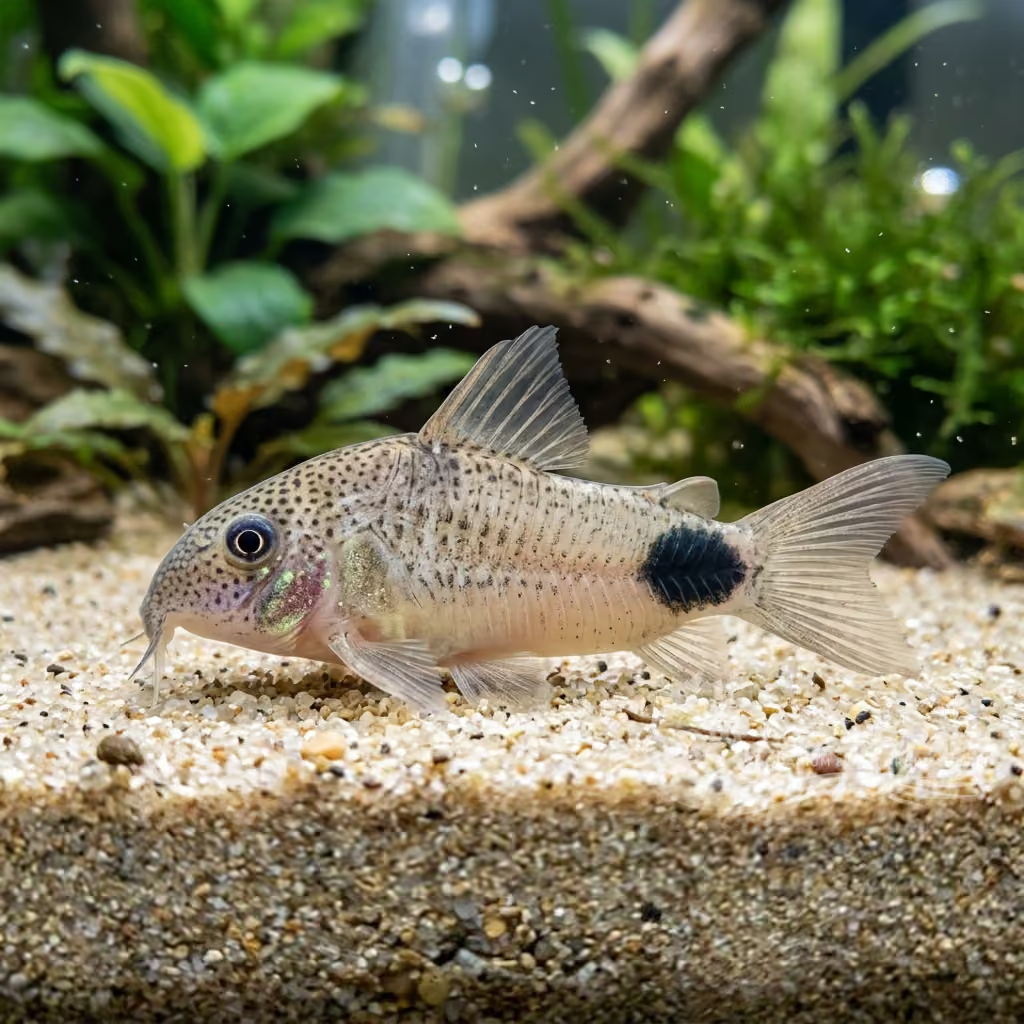
Sarare Corydoras
Corydoras sarareensis
A robust, earthy-looking long-snouted Corydoras featuring fine blackish lines over a dark golden armor. Native to pristine creeks, it needs clean water, fine sand, and smooth river stones.
Wassertemperatur
22 - 26 °C
pH-Wert
6 - 7.2
Wassertyp
Süßwasser
Tankfüllstand
Unten
Erwachsenengröße
5,5 cm
Mindesttankvolumen
>= 100 L
Mindestgruppe
>= 6
GH
2 - 12 dGH
KH
2 - 10 dKH
TDS
50 - 280 ppm
Leitfähigkeit
78 - 438 uS/cm

Artbeschreibung
Geographical Origin and Habitat: Exclusive member of the Rio Sararé basin (central Brazil). Its colonies populate pristine gallery forest streams ("creeks"), where crystalline, weakly flowing, and oxygen-loaded waters flow over a soft sandy bed studded with roots and rounded stones.
Taxonomy and Morphology: Moderate size, settling around 5.5 cm (2.2 inches). Classified in the "long-snouted" morphotype, it boasts a long snout, cephalically flattened, and a more sinuous and slender profile that helps it sink in search of tubificids in the compact substrate.
Social Behavior: Very resourceful species provided it enjoys adequate company. Requires the constant presence of thick schools (minimum 6-8 fish). A large school neutralizes the fish's shyness, allowing bold choral inspections in broad daylight.
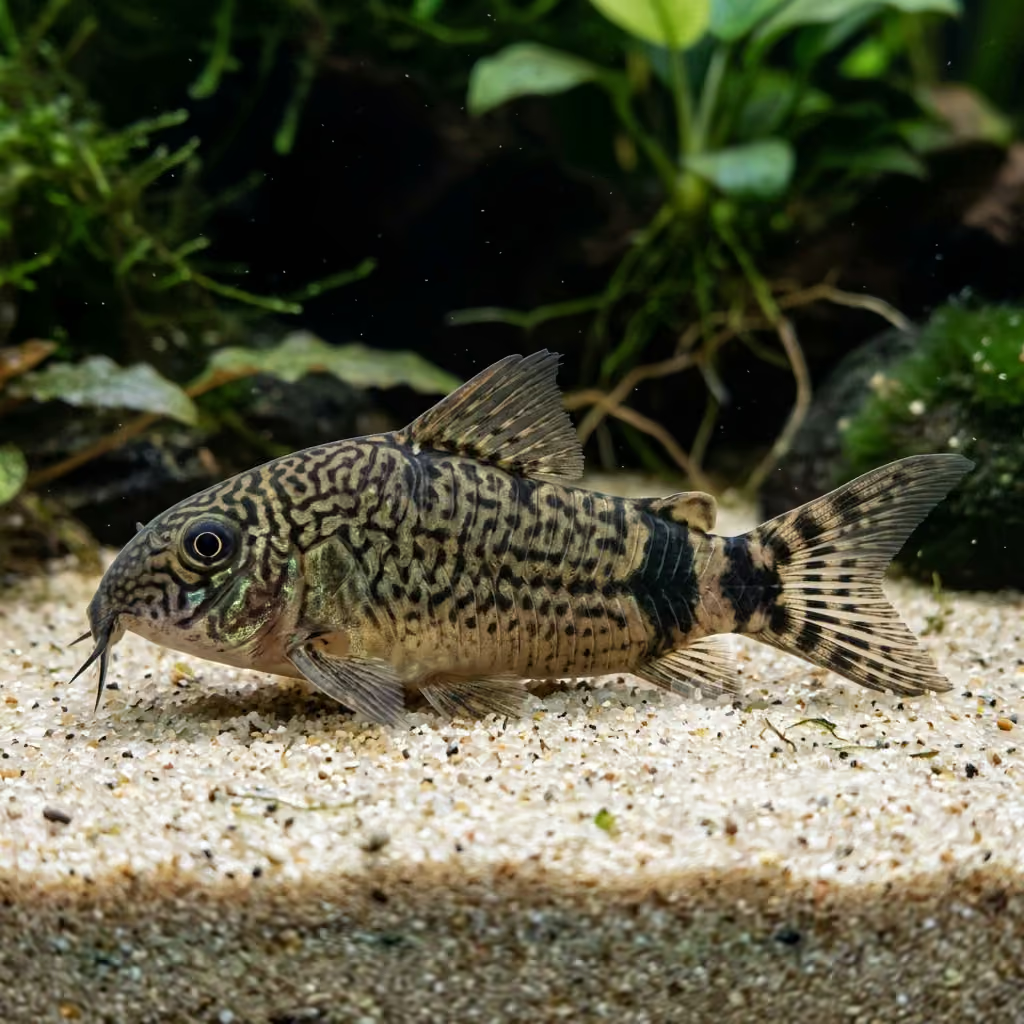
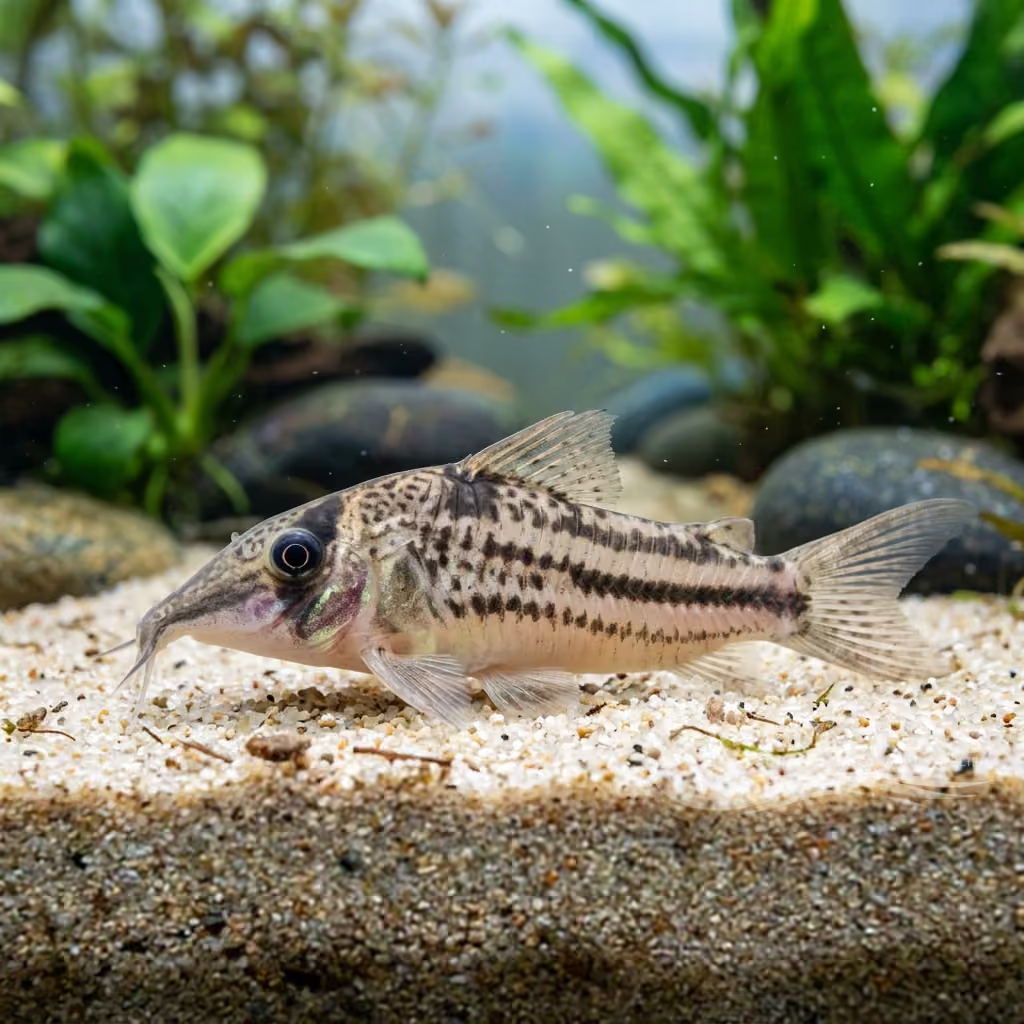
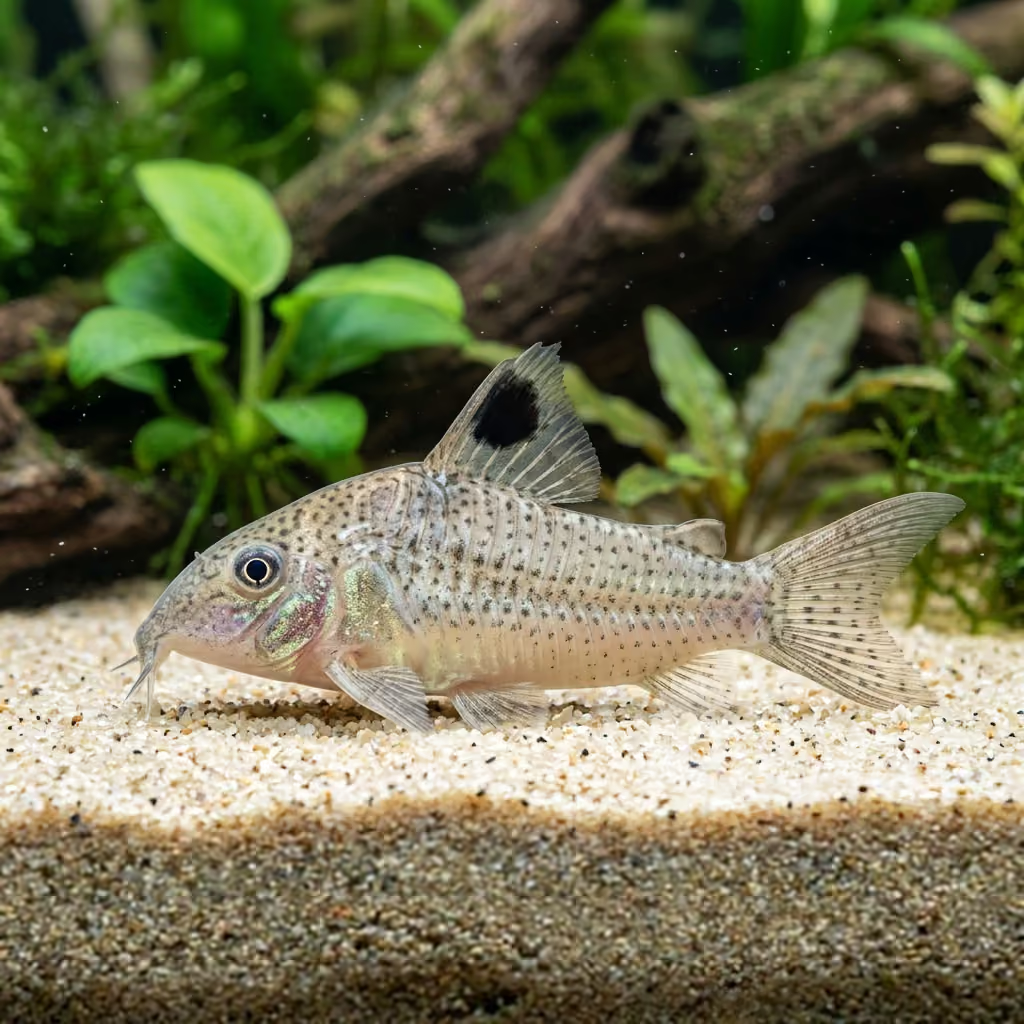
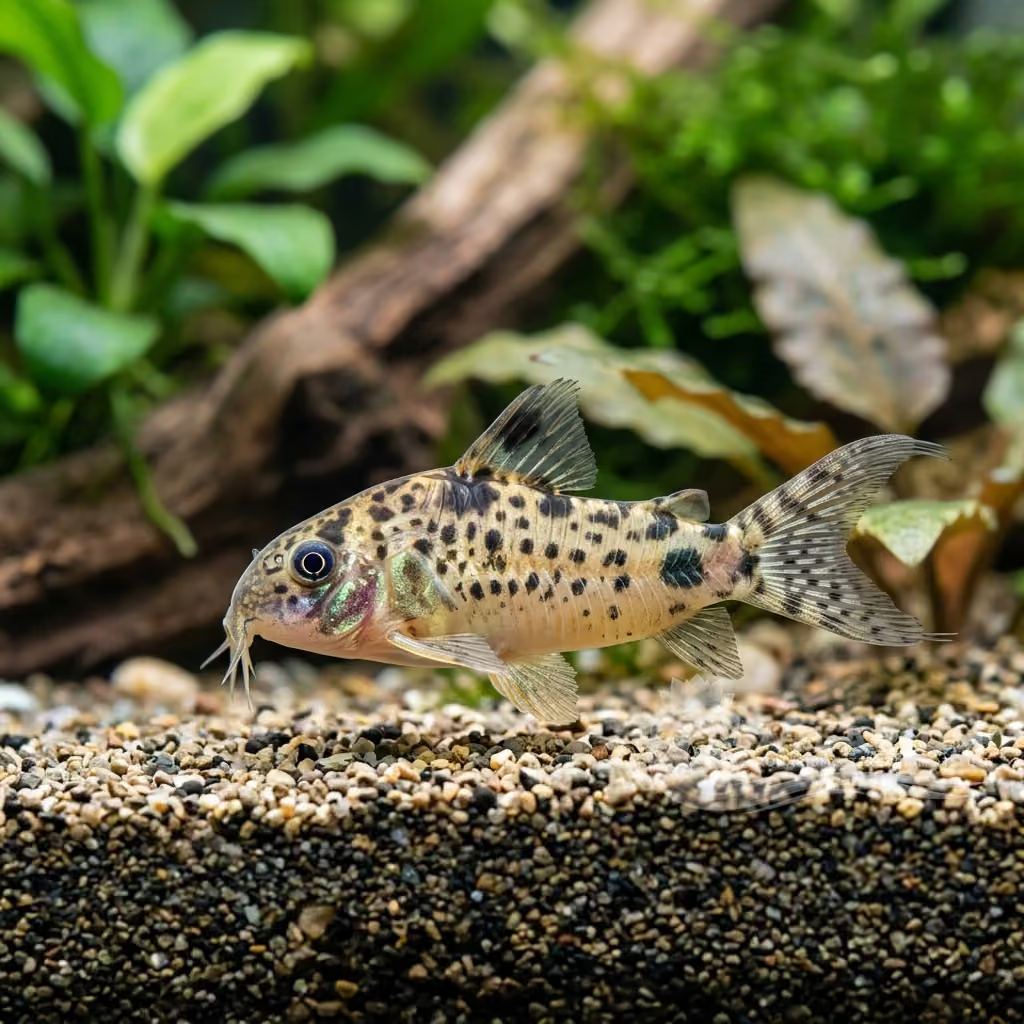
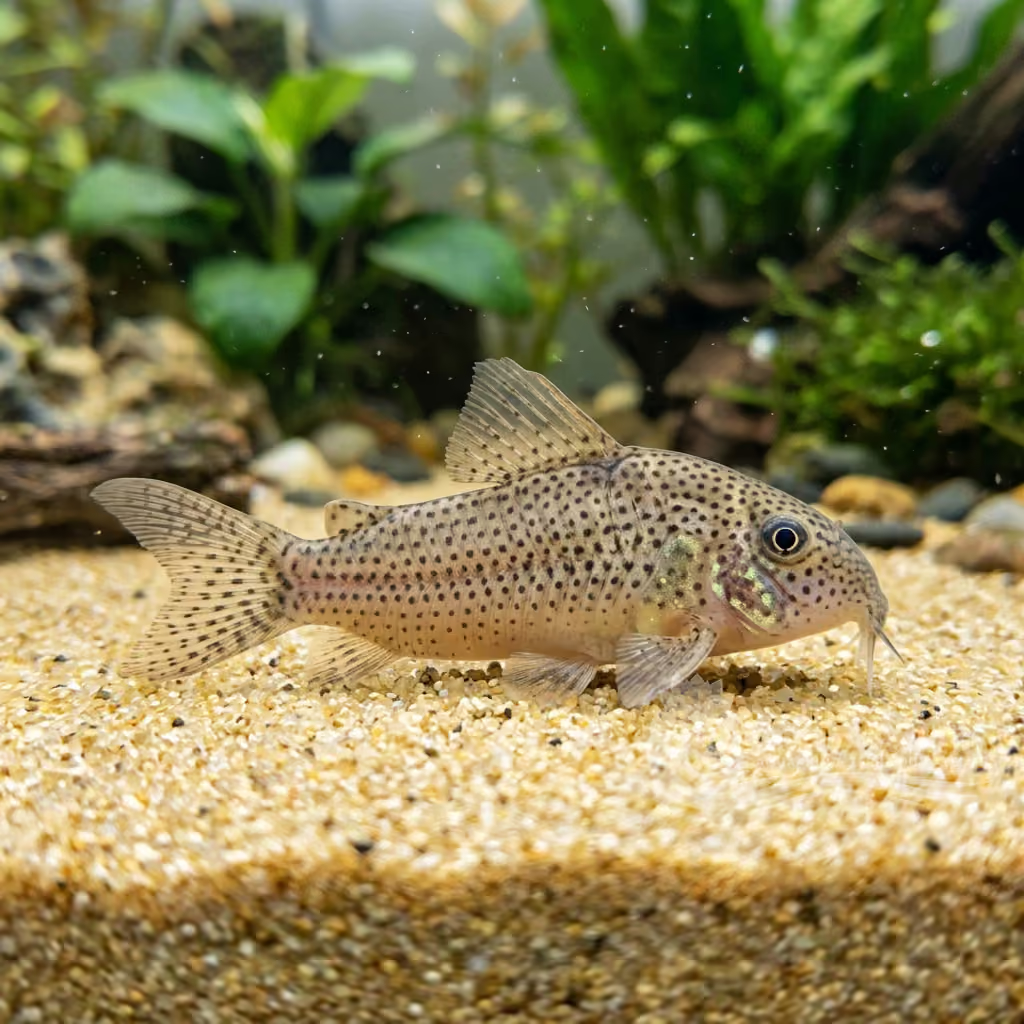
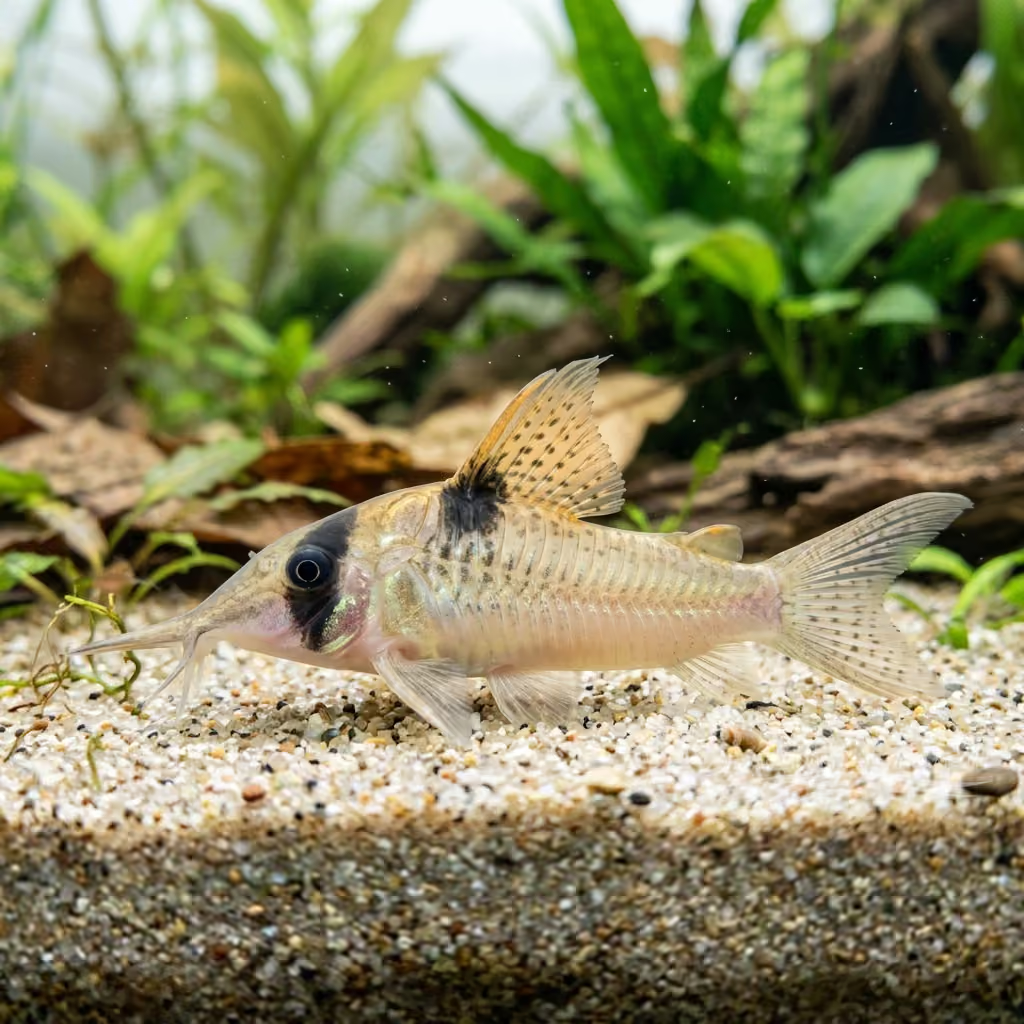
Coloration and Sexual Dimorphism: Light dotted livery of great value. A silvery-cream base is covered by minute black spots scattered everywhere (including snout), while a strong and marked black spot stands out on the dorsal fin ("dorsal blotch"). Mature females have a prominent abdominal diameter.

Pflege, Zucht und Mitbewohner
Aquarium Setup: Fine silica sand is not an option for the survival of the long snout. Obligatory rounded furnishings (river stones), intricate woody branches like Red moor, and generous shading to avoid excess glare lethal for tranquility.
Diet and Feeding: Tireless foraging hero. Demands a protein and varied menu. Feed with excellent bottom feeder tablets, interspersed with abundant bi-weekly rations of live baits (large bloodworms, white worms, or brine shrimp) dropped in the dark to defeat food predators.
Water Quality: Being an Amazonian animal imposes exceptional care: zero tolerance to pollutants (Nitrites, Ammonia). Weak GH (2-12). The optimal pH must be slightly acidic-neutral (6.0 - 7.2) together with fixed temperatures of 22-26°C (72-79°F). Nocturnal oxygen drop causes asphyxia and death.
Compatibility and Cohabitation: Inhabitant of high-class Amazonian communities. In total harmony with Nannostomus, schools of Bleeding Heart Tetras, Hyphessobrycon, and docile Apistogramma. Turbulent, voracious cichlids or large diggers are incompatible, as they would induce terror and starvation in the Corydoras.
Aquarium Breeding: Occurs according to the T-mating ritual induced by means of intense artificial "monsoons" (large cool RO changes). They lay conspicuous and wide adhesive eggs affixed randomly in the tank. Lightning-fast isolation of the eggs to overcome the massive parental cannibalistic instinct.
Risks and Diseases: Sharp substrates will unfailingly cause deadly bacterial or mycotic necrosis to the extremely fragile sensory barbels of the snout. Never use for prophylaxis shock medications containing high concentrates of Copper or Malachite green.

Geografische Herkunft und Verbreitung
Exclusive member of the Rio Sararé basin (central Brazil). Its colonies populate pristine gallery forest streams ("creeks"), where crystalline, weakly flowing, and oxygen-loaded waters flow over a soft sandy bed studded with roots and rounded stones.
Ursprung
Extra-Amazonas-Südamerika

Fischprofil
- Temperament
- Semi-aggressive
- The temperament of Corydoras sarareensis is exceptionally peaceful and highly social in nature. They must be kept in groups of at least six individuals to thrive. In proper schools, they are confident and constantly active across the bottom.
- Diät
- Omnivore
- The diet of Corydoras sarareensis primarily features benthic organisms and small detritus. In captivity, they eagerly eat sinking pellets and high-quality bottom-feeder wafers. Live foods like bloodworms and daphnia should be offered for optimal health.
- Lebenserwartung
- 5-8 years
- Erwachsenengröße
- 5.5 cm
- Geschlechterverhältnis
- Specific M:F ratio
- A specific sex ratio is unnecessary for the general community keeping of Corydoras sarareensis. For dedicated breeding, a ratio of two males per female is optimal. Females are visibly rounder and broader, while males are slender.
- Fütterungsfrequenz
- Twice daily
- It is recommended to feed Corydoras sarareensis one or two times daily in moderate portions. Ensure the food reaches the substrate before mid-water fish consume it all. Feeding just before lights out helps them forage peacefully without stress.
- Bioload
- Low
- The bioload of Corydoras sarareensis is relatively low compared to larger tank mates. Since they are schooling fish, their combined waste can accumulate over time. Consistent filtration and weekly water changes are necessary for maintaining clean water.
- Fluss
- Stagnant
- Corydoras sarareensis prefers a moderate water flow that replicates gentle Amazonian streams. This circulation thoroughly oxygenates the water and prevents detritus accumulation. Calm resting zones should also be provided for relaxation.
- Sprungrisiko
- Yes
- The jump risk for Corydoras sarareensis is very low compared to surface-dwelling fish. However, their unique respiratory system causes occasional rapid surface darting. A secure aquarium lid is highly recommended to prevent accidental escapes.
- Reproduktion
- Oviparous
- Breeding Corydoras sarareensis in an aquarium is highly achievable with proper conditioning. Spawning is typically triggered by a large, slightly cooler water change. The female then deposits adhesive eggs on aquarium glass or broad plant leaves.
- Kompatibilität & Tankkameraden
- Semi-aggressive
- In terms of compatibility, Corydoras sarareensis is extremely peaceful and ideal for community setups. They coexist perfectly with small tetras, rasboras, and dwarf cichlids. Large, aggressive bottom-dwellers must be avoided to prevent undue competition.
- Tankfüllstand
- Bottom
- As obligate bottom-dwellers, Corydoras sarareensis spends the vast majority of its time on the substrate. They constantly search for food by sifting fine sand with their sensitive barbels. They occasionally dart to the surface to gulp atmospheric air.

Wissenschaftliche Modelle & Parameter
FishBase
Zugang zu den offiziellen wissenschaftlichen Daten der Art
FishBase v25.04Daten synchronisiert am: 15.06.2026
- Trophäenniveau
- 3 ± 0,3 se
- Belastbarkeit
- Hoch (weniger als 15 Monate)
- Phylogenetische Einzigartigkeit (PD50)
- 0.5
- Bayessche Längen-Gewichts-Beziehung
- a = 0.00741, b = 3.14
- AnfälligkeitGeringe Anfälligkeit (10 / 100)

Verwandte Arten
Empfehlungen gruppiert nach nahen Verwandten, Auswahl von Begleitern und ähnlicher Betreuung.