Simulated Cory
Corydoras simulatus
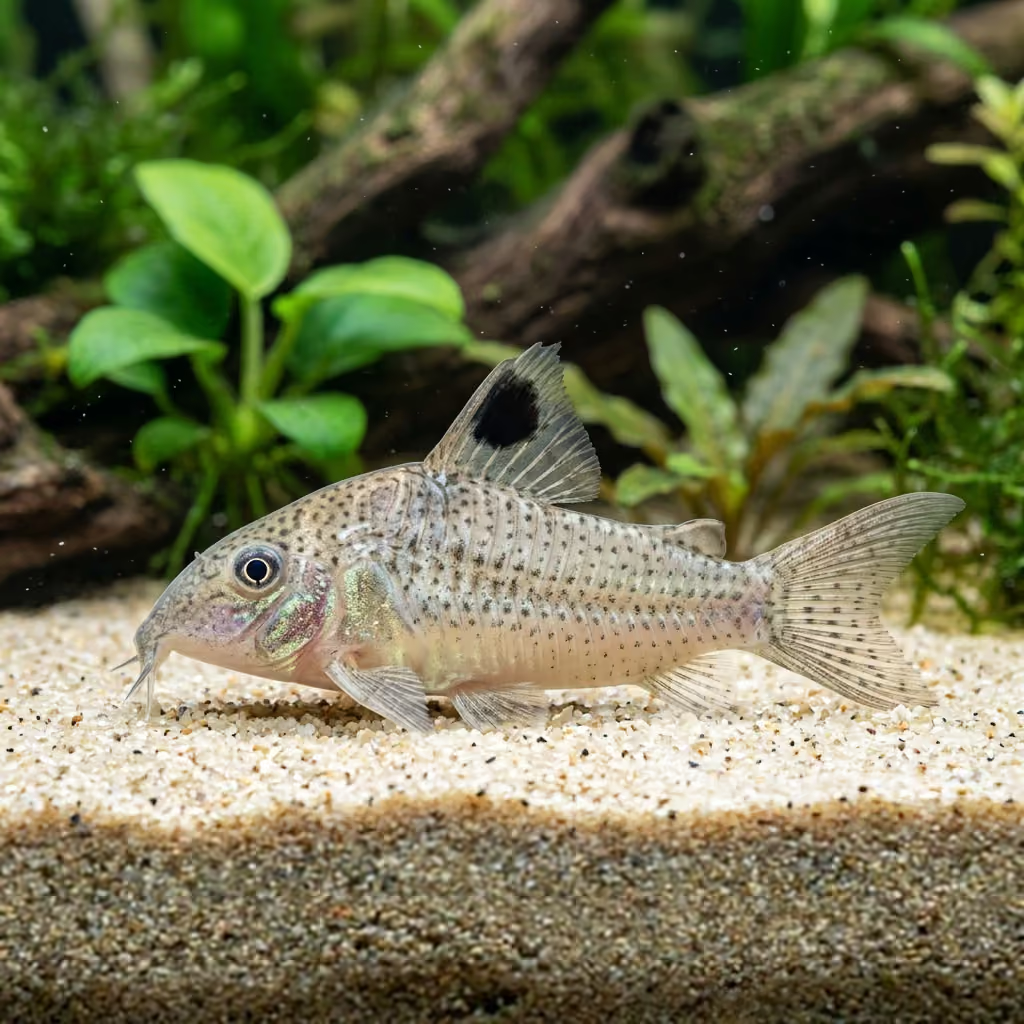
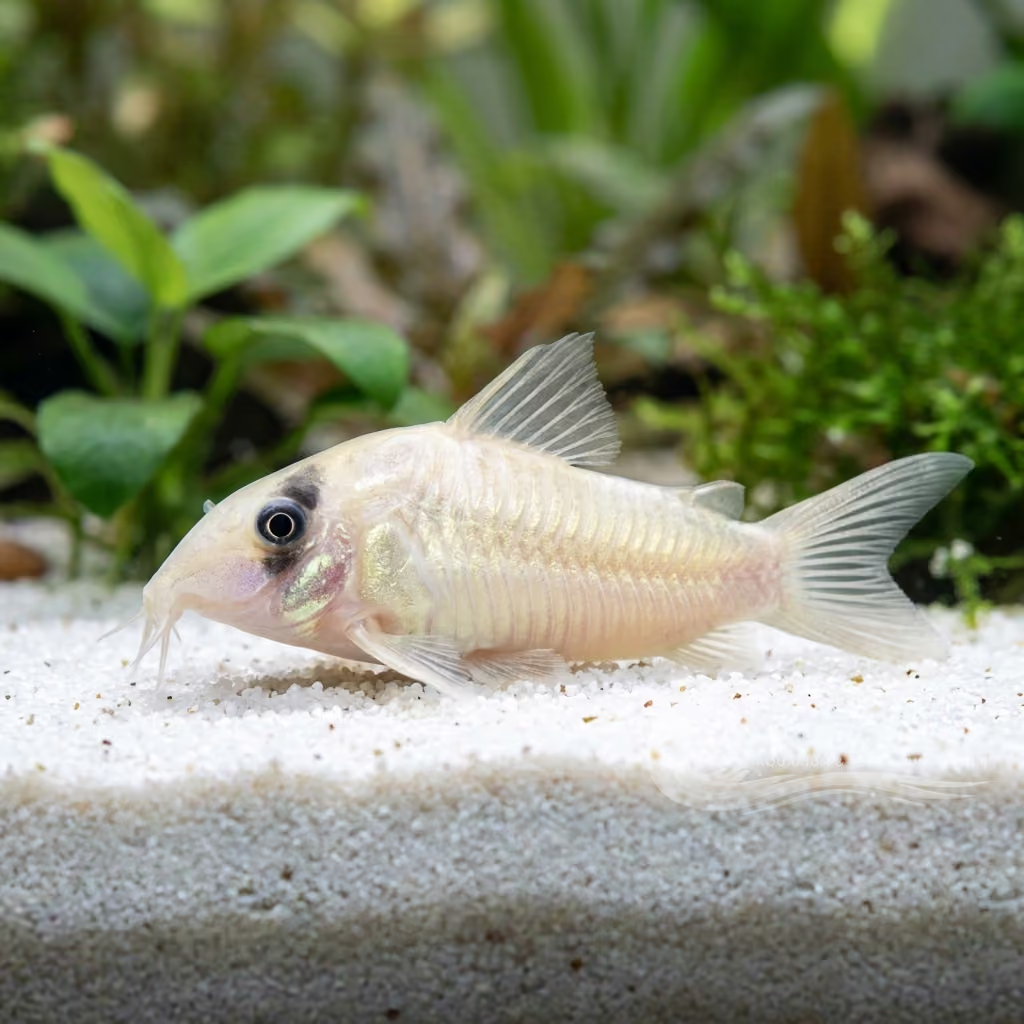
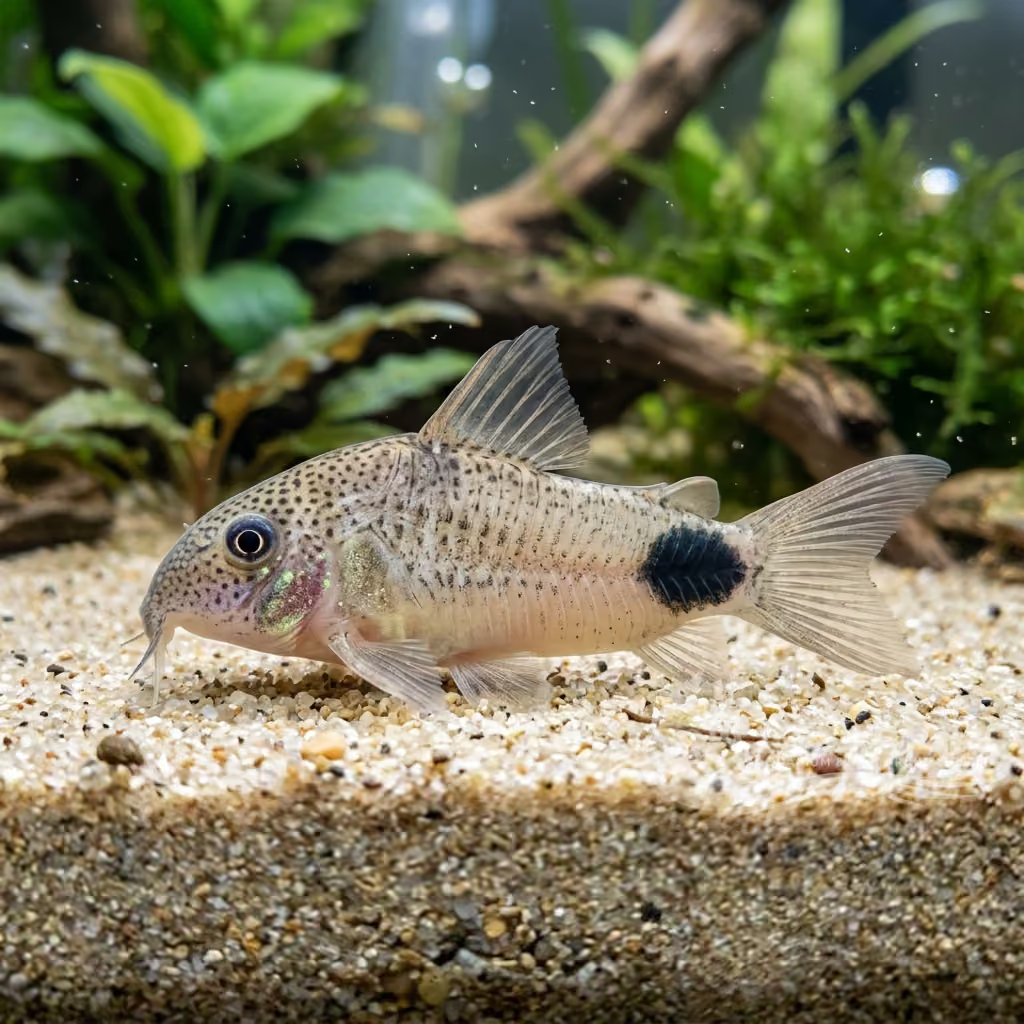
Mimetic long-snouted look-alike of the famous C. metae. Shows off a light livery with the characteristic dark bandage on the eye and a black stripe on the back.
Wassertemperatur
22 - 26 °C
pH-Wert
6 - 7.2
Wassertyp
Süßwasser
Tankfüllstand
Unten
Erwachsenengröße
5 cm
Mindesttankvolumen
>= 100 L
Mindestgruppe
>= 6
GH
2 - 12 dGH
KH
2 - 10 dKH
TDS
50 - 280 ppm
Leitfähigkeit
78 - 438 uS/cm

Artbeschreibung
Geographical Origin and Habitat: Endemic to the Meta river basin in Colombia. Finds a home in small clear streams (creeks), silent inlets, and flooded oxbows, whose gentle currents travel in dense gallery forests offering substrates dense with botanical residues and silt.
Taxonomy and Morphology: Belonging to the Callichthyidae family. 5 cm (2 inches) Corydoras (medium structure), its epithet "simulatus" alludes to the incredible mimicry with Corydoras metae (its short-snouted counterpart). C. simulatus instead boasts the hydrodynamic long-snouted structure.
Social Behavior: Constantly in exploratory motion. Shy only if forced into isolation; acquires extreme boldness grouped in flocks of minimum 8-10 individuals, patrolling in broad daylight every area and sinking their long snouts into the sand in unison.
Coloration and Sexual Dimorphism: Almost perfect mimic of C. metae: light ochre base coat (tan) framed by a clear black bar over the eye ("bandit mask") and by a powerful dark line, a real block of color, extending from the back to the caudal. Very round females, elusive males.

Pflege, Zucht und Mitbewohner
Aquarium Setup: Bottom in strictly fine sand to support drilling ability. "Clearwater" setup but very shady: they need large root tangles (spider, bog) and tufts of low epiphytic plants (Anubias/Microsorum) to retreat from danger.
Diet and Feeding: Voracious benthic carnivore. To be foraged in the evening by offering massive compressed high-protein rations mixed with swarms of Daphnia, white worms, small frozen bloodworms, and occasional tubifex, hunted as a group in the sand.
Water Quality: Requires tropical Amazonian ranges: 22-26°C (72-79°F). The water must be slightly hard (GH 2-12) and the pH stably attested between 6.0 and 7.2 (acidic/neutral). Mandatory filter efficiency, loathes ammoniacal putrefaction and drastic nocturnal oxygen drops.
Compatibility and Cohabitation: Ideal and robust companion. Place alongside peaceful Amazonian dither fish (Paracheirodon, Rummy nose tetras, Hatchetfish). Encounters with large cichlids or territorial burrowing fish (e.g. large Eartheaters or impetuous Loaches) which inhibit feeding are banned.
Aquarium Breeding: Made difficult, requires prolonged stimulation via cold RO "downpours". In T-position, the female individually fixes large and adhesive eggs to the glass. Ravenous predator of itself: suddenly extract the breeders saving the clutches.
Risks and Diseases: In addition to the inexorable devastation of the long snout on gravel or crushed quartz bottoms, it is very fragile to Ichthyophthirius attacks. Attention to Copper or Malachite green baths, often pure poison if not dosed meticulously.

Geografische Herkunft und Verbreitung
Endemic to the Meta river basin in Colombia. Finds a home in small clear streams (creeks), silent inlets, and flooded oxbows, whose gentle currents travel in dense gallery forests offering substrates dense with botanical residues and silt.
Ursprung
Extra-Amazonas-Südamerika

Fischprofil
- Temperament
- Semi-aggressive
- The temperament of Corydoras simulatus is exceptionally peaceful and highly social in nature. They must be kept in groups of at least six individuals to thrive. In proper schools, they are confident and constantly active across the bottom.
- Diät
- Omnivore
- The diet of Corydoras simulatus primarily features benthic organisms and small detritus. In captivity, they eagerly eat sinking pellets and high-quality bottom-feeder wafers. Live foods like bloodworms and daphnia should be offered for optimal health.
- Lebenserwartung
- 3-5 years
- Erwachsenengröße
- 5 cm
- Geschlechterverhältnis
- Specific M:F ratio
- A specific sex ratio is unnecessary for the general community keeping of Corydoras simulatus. For dedicated breeding, a ratio of two males per female is optimal. Females are visibly rounder and broader, while males are slender.
- Fütterungsfrequenz
- Twice daily
- It is recommended to feed Corydoras simulatus one or two times daily in moderate portions. Ensure the food reaches the substrate before mid-water fish consume it all. Feeding just before lights out helps them forage peacefully without stress.
- Bioload
- Low
- The bioload of Corydoras simulatus is relatively low compared to larger tank mates. Since they are schooling fish, their combined waste can accumulate over time. Consistent filtration and weekly water changes are necessary for maintaining clean water.
- Fluss
- Stagnant
- Corydoras simulatus prefers a moderate water flow that replicates gentle Amazonian streams. This circulation thoroughly oxygenates the water and prevents detritus accumulation. Calm resting zones should also be provided for relaxation.
- Sprungrisiko
- Yes
- The jump risk for Corydoras simulatus is very low compared to surface-dwelling fish. However, their unique respiratory system causes occasional rapid surface darting. A secure aquarium lid is highly recommended to prevent accidental escapes.
- Reproduktion
- Oviparous
- Breeding Corydoras simulatus in an aquarium is highly achievable with proper conditioning. Spawning is typically triggered by a large, slightly cooler water change. The female then deposits adhesive eggs on aquarium glass or broad plant leaves.
- Kompatibilität & Tankkameraden
- Peaceful
- In terms of compatibility, Corydoras simulatus is extremely peaceful and ideal for community setups. They coexist perfectly with small tetras, rasboras, and dwarf cichlids. Large, aggressive bottom-dwellers must be avoided to prevent undue competition.
- Tankfüllstand
- Bottom
- As obligate bottom-dwellers, Corydoras simulatus spends the vast majority of its time on the substrate. They constantly search for food by sifting fine sand with their sensitive barbels. They occasionally dart to the surface to gulp atmospheric air.

Wissenschaftliche Modelle & Parameter
FishBase
Zugang zu den offiziellen wissenschaftlichen Daten der Art
FishBase v25.04Daten synchronisiert am: 15.06.2026
- Trophäenniveau
- 3 ± 0,3 se
- Belastbarkeit
- Niedrig (4,5 - 14 Jahre)
- Phylogenetische Einzigartigkeit (PD50)
- 0.5
- Bayessche Längen-Gewichts-Beziehung
- a = 0.00741, b = 3.14
- AnfälligkeitGeringe Anfälligkeit (10 / 100)

Verwandte Arten
Empfehlungen gruppiert nach nahen Verwandten, Auswahl von Begleitern und ähnlicher Betreuung.