Xingu Cory
Hoplisoma xinguenss
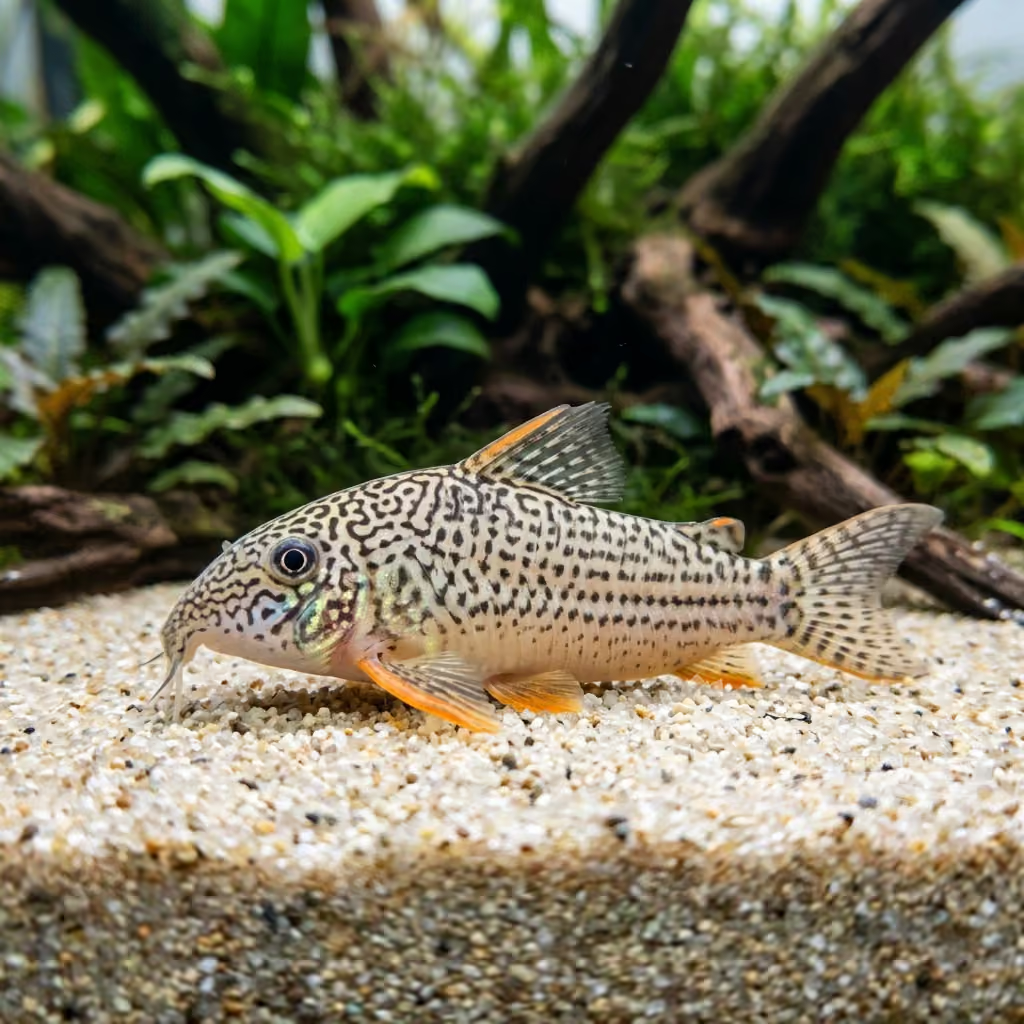
A tiny spotted gem from the warm Rio Xingu covered tightly in uniform dark polka dots over a sand-colored base. It is an active rooter demanding open fine-sand spaces and broad leaf cover.
Wassertemperatur
22 - 26 °C
pH-Wert
6 - 7.2
Wassertyp
Süßwasser
Tankfüllstand
Unten
Erwachsenengröße
4,5 cm
Mindesttankvolumen
>= 100 L
Mindestgruppe
>= 6
GH
2 - 12 dGH
KH
2 - 10 dKH
TDS
50 - 280 ppm
Leitfähigkeit
78 - 438 uS/cm

Artbeschreibung
Geographical Origin and Habitat: Endemic to the endless Rio Xingu basin, in Brazil. Its schools populate shady shoals of streams, oxbows, or forest torrents with mild current, stationed on thick mounds of soft and very fine mud mixed with decaying plant remains.
Taxonomy and Morphology: Small and seductive Corydoras (maximum 4.5 cm / 1.8 inches) of the Callichthyidae family. Possesses the classic proportions of a "short-snouted" cory, very stocky, round, and with a compact profile, designed to stubbornly inspect the sediments.
Social Behavior: Intimately gregarious and serene. If deprived of the indispensable support school (6-8 specimens) it will live in reluctance and lose its appetite. In its flock, it fearlessly patrols the low prairies patrolling the sand in unison in search of food.
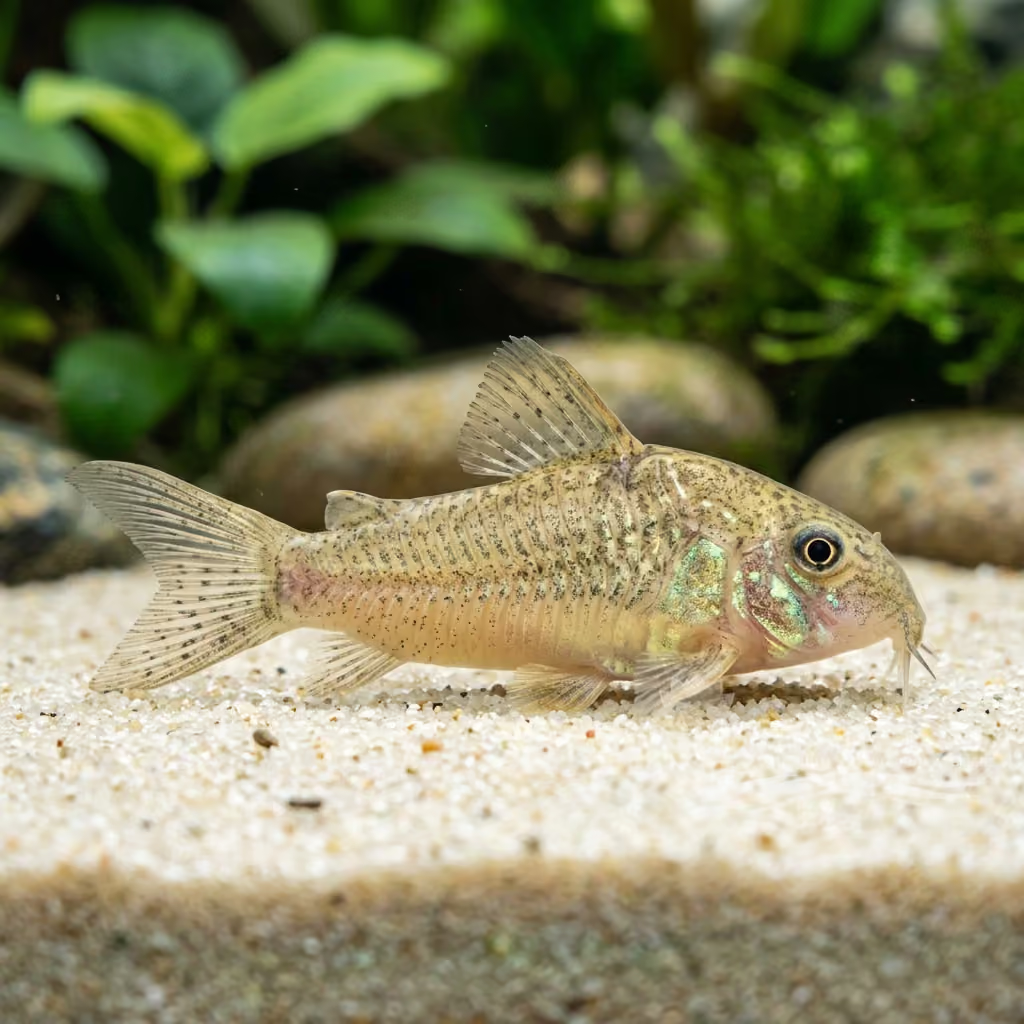
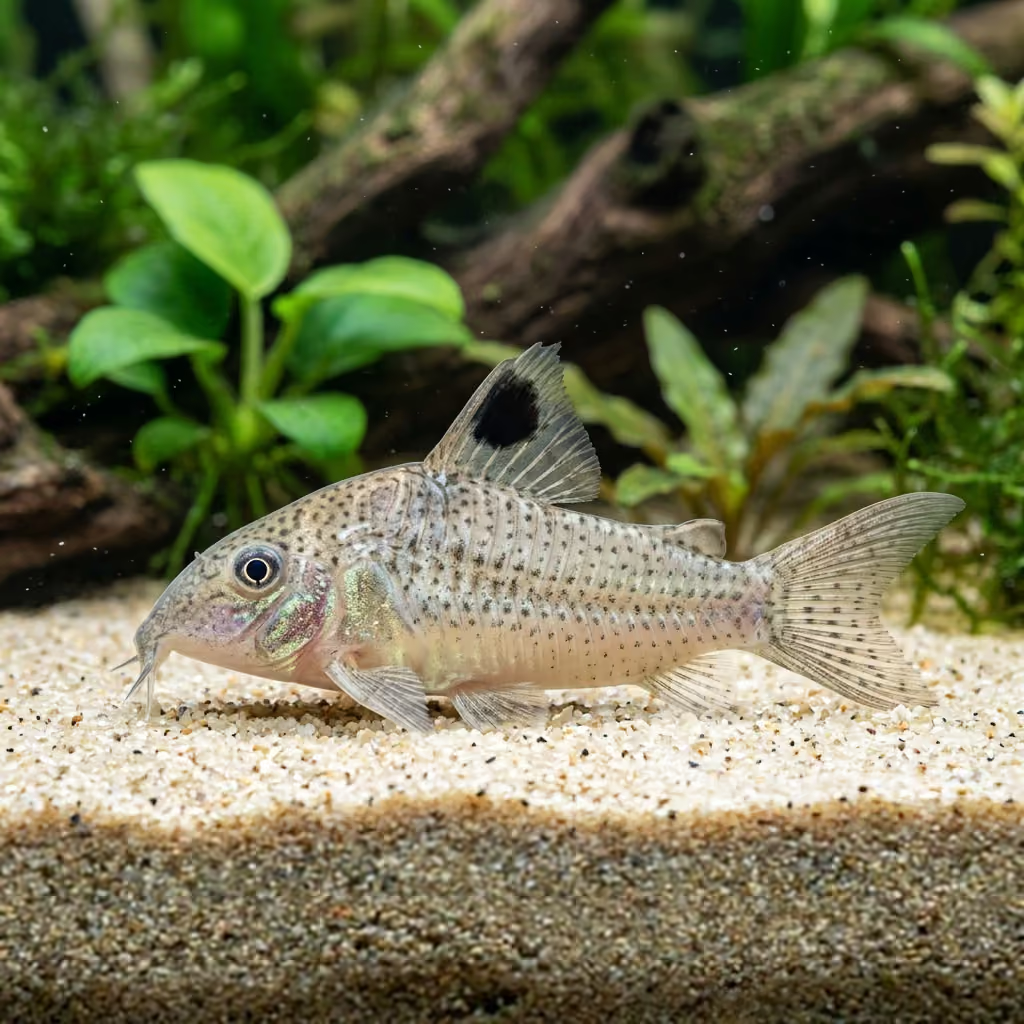
Coloration and Sexual Dimorphism: Peculiar minutely leopard/spotted livery: silvery base and head/back studded with very dense, very small round black spots. There is no dot (spot) on the dorsal fin. Females stand out to the naked eye for their visibly enlarged abdominal diameter.

Pflege, Zucht und Mitbewohner
Aquarium Setup: Being an unstoppable rooter it categorically needs single bottoms of very soft inert sand. Loves wide open digging spaces but surrounded by labyrinthine shading Jati/bog woods with large leaves (Catappa) as an optical shield.
Diet and Feeding: Omnivorous benthic micro-digger. A predominantly evening diet is recommended: split high-quality tablets must be combined with vital snacks (tri-weekly) of succulent baits such as daphnia, cyclops, microworms, or live nauplii.
Water Quality: Stable climatic standards at 22-26°C (72-79°F). The pH parameter must settle between weakly acidic and neutral (6.0 - 7.2) with soft GH (2-12). As a dwarf, chemical intolerance is high: failure to siphon or nitrite spikes cause lightning-fast bacterial death.
Compatibility and Cohabitation: Docile bottom sheep to be used only together with ethereal roommates (Nannostomus, Boraras, small slow Tetras, or Otocinclus). Defenseless and designated victim if placed in large biotopes inhabited by fierce Cichlids or very voracious diggers.
Aquarium Breeding: Spawning often follows conspicuous osmotic refreshments induced by the breeder in special tanks. Followed by the tight "T" mating with the gluing to the glass of single robust adhesive eggs. Isolate the brood because of the cruel parental cannibalism.
Risks and Diseases: Its very short and delicate tactile barbels lethally regress to necrosis if housed on unsuitable stony bottoms. Marked intolerance and lethality with massive antiparasitics in the tank (Malachite Green, Copper).

Geografische Herkunft und Verbreitung
Endemic to the endless Rio Xingu basin, in Brazil. Its schools populate shady shoals of streams, oxbows, or forest torrents with mild current, stationed on thick mounds of soft and very fine mud mixed with decaying plant remains.
Ursprung
Extra-Amazonas-Südamerika

Fischprofil
- Temperament
- Semi-aggressive
- This is an incredibly peaceful and timid species that thrives in the company of its own kind. Hoplisoma xinguenss should be kept in groups of at least six individuals to feel secure and display their natural, endearing behaviors. When kept alone or in too small a group, they can become highly stressed, lethargic, and prone to illness.
- Diät
- Omnivore
- As omnivorous bottom feeders, Hoplisoma xinguenss requires a varied diet that sinks to the substrate. High-quality sinking pellets or wafers should form the staple of their diet. Supplementing with live or frozen foods like bloodworms, brine shrimp, and daphnia will ensure optimal health and encourage natural foraging behaviors.
- Lebenserwartung
- 5-10 years
- Erwachsenengröße
- 4.5 cm
- Geschlechterverhältnis
- Specific M:F ratio
- A ratio of two or three males for every female is highly recommended, especially if breeding Hoplisoma xinguenss is the goal. Males are generally smaller and more slender than the plumper, rounder females. Maintaining a proper sex ratio ensures higher fertilization rates during the spawning process.
- Fütterungsfrequenz
- Twice daily
- Hoplisoma xinguenss should be fed small amounts once or twice a day, providing only what they can consume within a few minutes. Because they are nocturnal foragers by nature, dropping some food in just before the aquarium lights go out can be highly beneficial. Avoid overfeeding to maintain excellent water quality.
- Bioload
- Low
- This species produces a relatively small bioload, typical of most Hoplisoma xinguenss species. Their efficient scavenging behavior can actually help keep the substrate clean, reducing the overall accumulation of detritus. Regular water changes and a properly sized filter will easily manage the waste they produce.
- Fluss
- Stagnant
- These catfish prefer moderate water flow that provides adequate oxygenation without creating overpowering currents. A setup that mimics a slow-moving South American stream is ideal for Hoplisoma xinguenss. Ensure there are calmer resting areas where they can settle on the substrate without expending too much energy.
- Sprungrisiko
- No
- Reproduktion
- Oviparous
- Breeding Hoplisoma xinguenss in captivity can be achieved by simulating the onset of the rainy season with cooler water changes. The female will carry a few eggs in a pouch formed by her pelvic fins and deposit them on broad leaves or the aquarium glass. The parents exhibit no parental care and will eagerly consume the eggs if not separated.
- Kompatibilität & Tankkameraden
- Community
- Hoplisoma xinguenss is a peaceful and highly sociable schooling fish that makes an excellent addition to community aquariums. They do best when kept with other small, non-aggressive species such as tetras, rasboras, and dwarf cichlids. It is crucial to avoid housing them with large or aggressive bottom-dwellers that might outcompete them for food or stress them out.
- Tankfüllstand
- Bottom
- Like other Corydoras, Hoplisoma xinguenss are quintessential bottom dwellers, spending almost all of their time sifting through the substrate in search of food. They require a soft, sandy bottom to prevent damage to their sensitive barbels. Occasionally, they will make quick dashes to the surface to take in atmospheric air, a completely normal behavior.

Wissenschaftliche Modelle & Parameter
FishBase
Zugang zu den offiziellen wissenschaftlichen Daten der Art
FishBase v25.04Daten synchronisiert am: 15.06.2026
- Trophäenniveau
- 3 ± 0,4 se
- Belastbarkeit
- Hoch (weniger als 15 Monate)
- Phylogenetische Einzigartigkeit (PD50)
- 0.5
- Bayessche Längen-Gewichts-Beziehung
- a = 0.00741, b = 3.14
- AnfälligkeitGeringe Anfälligkeit (10 / 100)

Verwandte Arten
Empfehlungen gruppiert nach nahen Verwandten, Auswahl von Begleitern und ähnlicher Betreuung.