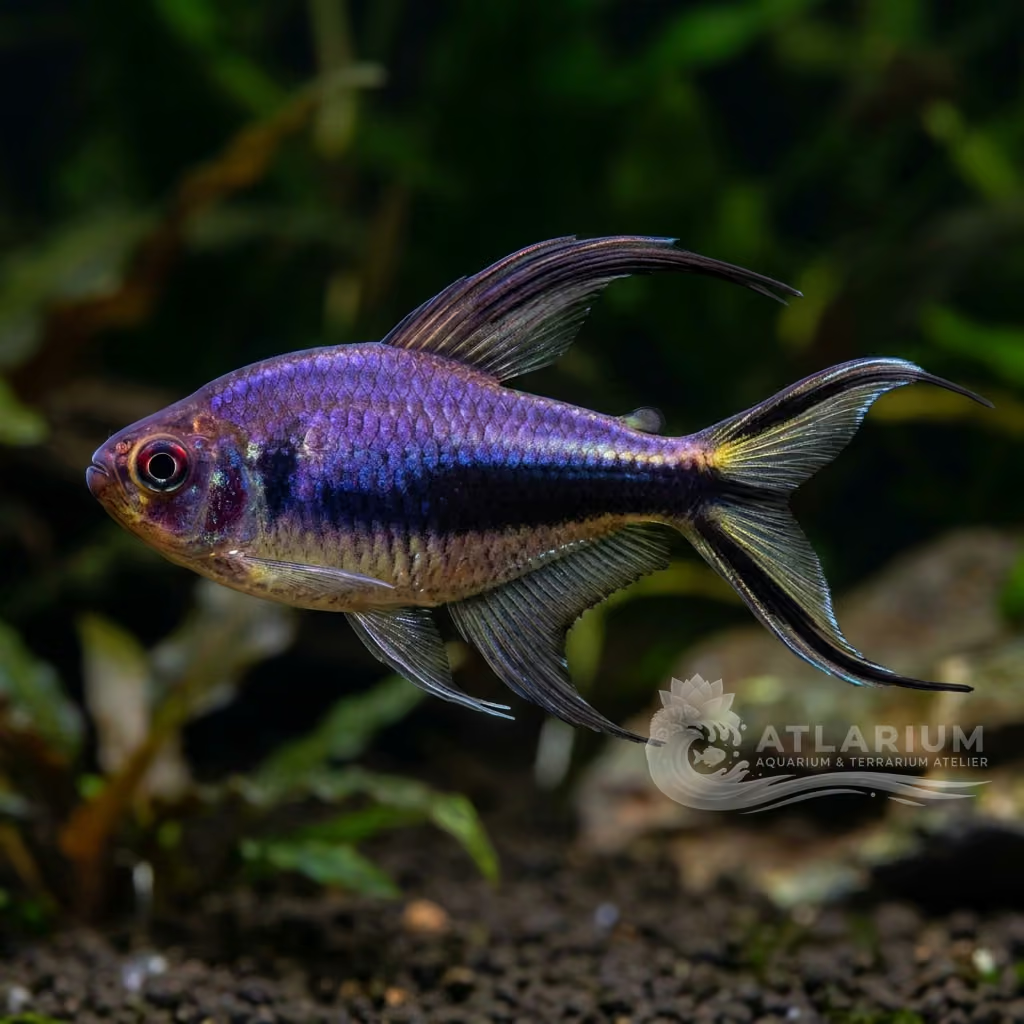
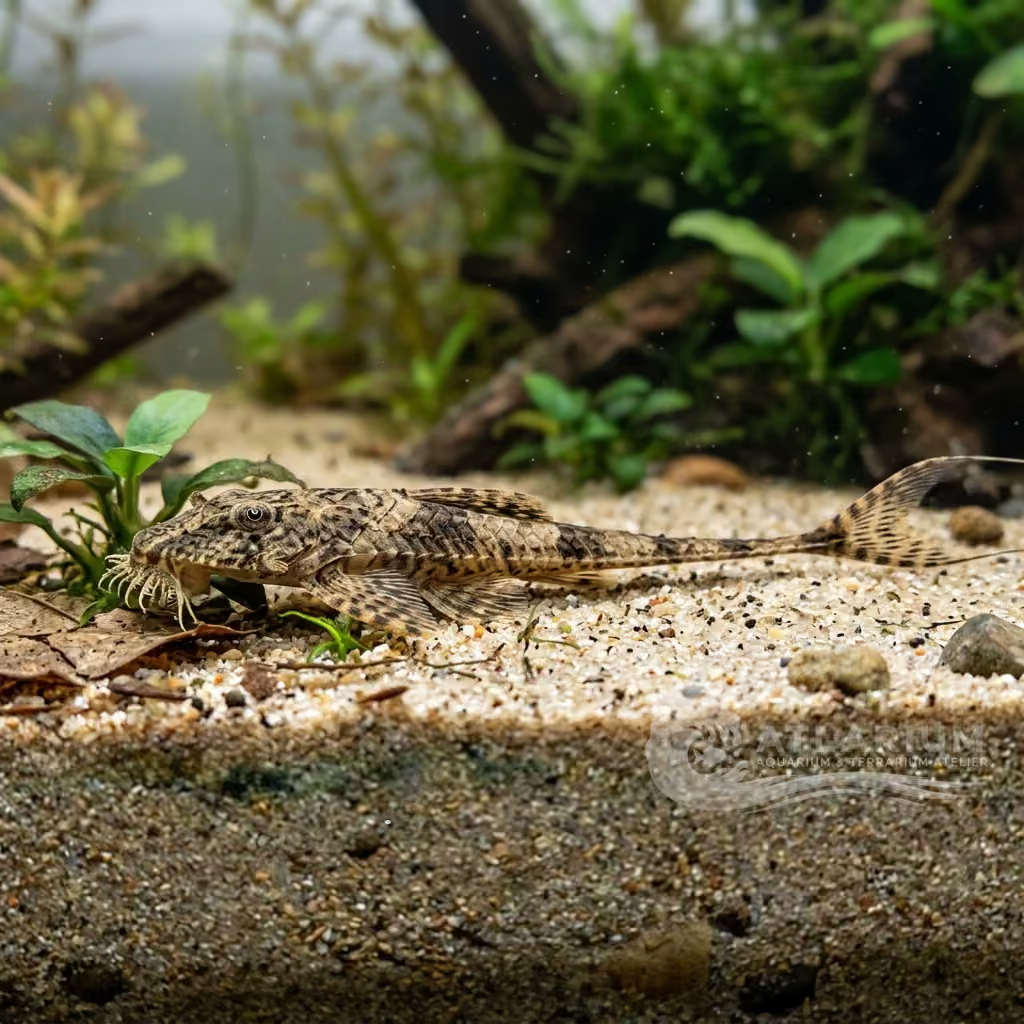
Glass Catfish
Kryptopterus vitreolus
The Glass Catfish is a striking transparent fish native to Thai peat swamps. It absolutely needs heavily planted tanks with shaded areas, as it will succumb to stress in bright, bare environments.
Temperatura da água
23 - 28 °C
Valor de pH
6 - 7.5
Tipo de água
Água doce
Nível do tanque
Meio
Tamanho adulto
7 cm
Volume mínimo do tanque
>= 60 L
Grupo mínimo
>= 1
GH
1 - 15 dGH
KH
1 - 7 dKH
TDS
25 - 295 ppm
Condutividade
39 - 461 uS/cm

Descrição da espécie
Geographical Origin and Habitat: Endemic to Thailand (Mae Klong River and Malay Peninsula). Lives in slow-flowing streams and swampy blackwater rivers (peat swamps), densely covered by vegetation.
Taxonomy and Morphology: Glass Catfish (Kryptopterus vitreolus). Historically often confused with K. minor or K. bicirrhis. It has an exceptionally laterally compressed and totally scaleless body, with two long maxillary sensory barbels.
Social Behavior: Peculiar "mid-water" behavior. Unlike almost all siluriforms, it constantly swims in cohesive schools (mandatory minimum 6, ideal 10+) undulating obliquely against the current.
Coloration and Sexual Dimorphism: Totally Transparent. Only the tiny silver sac of the internal organs behind the head and the entire white spine/bone are visible. No obvious external sexual dimorphism.

Cuidado, criação e companheiros de tanque
Aquarium Setup: Absolutely requires plant cover. Widely planted tanks with shaded areas generated by floating plants or large ferns (Microsorum). In bare or brightly lit tanks they die of pure stress in a few days.
Diet and Feeding: Insectivore Micro-predator. Often rejects flakes. Requires very small live or frozen food that floats in the water (Daphnia, Moina, Artemia or Grindal). Does not go down to eat on the bottom.
Water Quality: Very sensitive to medications and ammonia accumulation. Being scale-less, it absorbs toxins very quickly. Always filtered, slightly acidic or neutral water with moderate current.
Compatibility and Cohabitation: Extremely peaceful but very shy fish. Do not mix with frenetic or aggressive species (Barbs, large Cichlids, fast Danios). Excellent with Rasboras, small Anabantids (peaceful Colisa, Betta), and Pangio kuhlii.
Aquarium Breeding: Extremely rare and not sufficiently documented at the amateur level. Probably linked to the simulation of the monsoon season with sudden changes of fresh water.
Risks and Diseases: Lethal clouding. When a Glass Catfish falls seriously ill or is dying, its body loses its transparency becoming "milky" (opaque and white). An opaque fish is hardly salvageable.

Origem e distribuição geográfica
Endemic to Thailand (Mae Klong River and Malay Peninsula). Lives in slow-flowing streams and swampy blackwater rivers (peat swamps), densely covered by vegetation.
Origem
Sul e Sudeste Asiático

Perfil de peixe
- Temperamento
- Semi-aggressive
- They are extremely timid, peaceful, and easily stressed. They rely entirely on their school for a sense of safety. They will never bother other fish and prefer to be left alone in a dimly lit, heavily planted environment.
- Dieta
- Omnivore
- They are micro-predators that feed on zooplankton and tiny aquatic insects in the wild. In the aquarium, they thrive on a diet of frozen daphnia, baby brine shrimp, and cyclops. They may eventually accept crushed flakes, but live and frozen foods are essential.
- Expectativa de vida
- 5-8 years
- Tamanho adulto
- 7 cm
- Proporção sexual
- School
- They must be kept in groups of at least 6 to 8 individuals to feel secure. There is no specific required sex ratio as they are schooling fish and sexes are difficult to distinguish. Keeping them in smaller numbers leads to severe stress and premature death.
- Frequência de alimentação
- Twice daily
- Feed them small amounts once or twice daily. They are shy feeders and may not compete well for food, so ensure the food reaches their level. Dimming the aquarium lights during feeding can encourage them to eat.
- Carga biológica
- Low
- Glass Catfish produce a very low bioload due to their slender size and modest eating habits. However, they are incredibly sensitive to poor water quality and fluctuating parameters. A mature, fully cycled aquarium with gentle but highly effective filtration is mandatory.
- Fluxo
- Stagnant
- They originate from slow-moving rivers and strongly prefer a gentle, steady water flow. They often orient themselves facing the current while hovering together in a tight school. Strong currents will quickly exhaust and stress them.
- Risco de salto
- Yes
- They have a moderate jump risk, usually leaping when startled by sudden movements or bright lights. A well-fitting aquarium lid is strongly advised to prevent losses. Using floating plants to diffuse light greatly reduces their skittish behavior.
- Reprodução
- Oviparous
- Breeding Glass Catfish in a home aquarium is extremely rare and undocumented. They are believed to be seasonal spawners requiring specific environmental triggers like monsoon rain simulations. Currently, most specimens in the hobby are wild-caught or commercially bred using hormones.
- Compatibilidade e companheiros de tanque
- Peaceful
- They are completely peaceful and easily outcompeted by aggressive or fast-swimming tankmates. Excellent companions include small tetras, rasboras, and peaceful bottom-dwellers like Corydoras. Never house them with large, boisterous, or nippy fish.
- Nível do tanque
- Middle
- They are distinctively mid-level dwellers. They spend hours hovering in the middle of the water column in tightly packed schools, vibrating their tails. They rarely venture to the surface or the bottom.

Modelos e parâmetros científicos
FishBase
Acesso aos dados científicos oficiais da espécie
FishBase v25.04Dados sincronizados em: 15/06/2026
- Nível trófico
- 3,6 ± 0,6 se
- Resiliência
- Alta (menos de 15 meses)
- Unicidade filogenética (PD50)
- 0.5
- Relação bayesiana comprimento-peso
- a = 0.00562, b = 3
- VulnerabilidadeVulnerabilidade baixa (10 / 100)

Espécies relacionadas
Recomendações agrupadas por parentes próximos, escolhas de acompanhantes e cuidados semelhantes.